If you’ve lost your engagement ring, there’s no need to panic. Stop moving things, take a breath, and note the last place you remember seeing the ring. It’s helpful to search the most likely locations first, and then contact public places if you lost the ring while you were out. You may need to file a police report if you suspect theft, and contact your insurance provider if the ring is insured.
What to do if you lose your engagement ring:
- Stop and secure the area.
- Write down the last confirmed sighting.
- Search clothing, pockets, bags, car, sinks, and nearby surfaces.
- Retrace your steps in reverse order.
- Contact lost-and-found desks or recent locations.
- File a police report if theft is possible.
- Contact your insurance provider if the ring was covered.
If you have engagement ring insurance, you’re in good hands. Insurance or not, though, let’s break down every step you’ll want to take in order to get your engagement ring (or a replacement) back on your finger.
What You Will Learn
- Lost Engagement Ring? Take a Deep Breath and Secure the Area
- Retrace Your Steps Before You Expand the Search
- Search the Most Likely Places First
- Use Search Tools Before Giving Up
- Contact Public Places, Lost-and-Found, and Local Channels
- What If the Ring is Missing with No Clear Explanation?
- If Theft Is Possible, File a Police Report
- Contact Your Insurance Provider If the Ring is Insured
- What If You Lost the Ring and Do Not Have Insurance?
- Talk to Your Jeweler About Repair or Replacement Options
- Consider a Temporary Ring While You Decide
- How to Talk to Your Partner After Losing the Ring
- How to Prevent Losing the Ring Again
- FAQs About Lost Engagement Rings
- Conclusion: Start With the Search, Then Make the Next Right Move
Lost Engagement Ring? Take a Deep Breath and Secure the Area
As soon as you realize you’ve lost your engagement ring, stay calm and take a moment to make finding the ring more manageable. “The first thing you need to do is stop moving,” BriteCo jewelry expert Rachel Akmakjian says. “The more you walk around, the farther it could travel.”
Then, secure your immediate vicinity with these three quick steps:
- Avoid shaking out blankets, bags, clothing, or trash for now.
- Keep pets, kids, and other people out of the immediate area.
- Turn off fans or anything that might move lightweight items.
Wait before you begin any frantic searching and write down the exact moment you realized the ring was missing, as well as the last time you remember wearing or seeing it.
- Do: Pause, secure the room, write down details
- Don’t: Panic-clean, throw away trash, move furniture aggressively, or keep searching without a plan
Retrace Your Steps Before You Expand the Search
“Slowly retrace your last 10 to 15 minutes,” Akmakjian says. “Most lost jewelry is found within a small radius of where it fell, especially if you act quickly.” Focus on the most likely spots the missing ring might be hiding and ask yourself the following questions:
- Where did you last see the lost ring?
- What were you doing at the time?
- Did you wash your hands, apply lotion, clean, cook, travel, sleep, work out, or change clothes between the last time you saw the ring and when you noticed it missing?
- Did you remove the ring and set it somewhere “safe”?
- Who have you been around?
- Which bags or clothes have you interacted with?
- What rooms were you in?
It’s wise to create a timeline and search log, retracing your day in chronological order. Check pockets, clothing, gloves, bags, purses, coat linings, floors, and under furniture.
Your search log could look something like this:
| Time/Place | What Happened | Where to Check | Done? |
|---|---|---|---|
| Last confirmed sighting | The ring was on your finger | Sink, counter, towel, pocket | |
| Next location | Changed clothes | Hamper, closet, floor | |
| Later location | Drove somewhere | Car seat, floor mat, cup holder |
Search the Most Likely Places First
Prioritize searching for your ring in the most likely places first, such as:
- Your jewelry box or ring dish
- The bathroom counter
- Sink areas
- Nightstands
- Bed sheets and blankets
- Laundry baskets
- Your pocket
- Purse or bag linings
- Car seat gaps and floor mats
- Kitchen counters
- Gym bags
- Coat pockets
- Trash cans near sinks or counters
- “Safe place” secret hiding spots you might use
When searching at floor level, use your hands to feel the floor and furniture slowly.
Check behind and under furniture. When shaking clothing out, do so over a clear, clean surface, so you can easily see the ring if it falls out of a sleeve or neckline. Always check drains for lost jewelry before running any water.
Use Search Tools Before Giving Up
Rings are small, reflective, and easy to miss, so use the various resources at your disposal to search for a lost ring before giving up hope or assuming the ring is gone for good.
- Put a stocking or thin cloth over a vacuum nozzle to search rugs and carpet.
- Use a magnet to search for nooks and crannies (but do so with caution, as many precious metals are not magnetic).
- Use or rent a metal detector for searching yards, beaches, parks, and outdoor proposal spots.
- Call a plumber quickly if the ring may have gone down a drain.
- Ask venue staff to check the security footage.
- Shine a bright light to search across floors, carpets, baseboards, and car interiors.
“Turn off the lights, grab your phone flashlight, and shine it low across the floor,” Akmakjian says. “Not straight down, but sideways. Why? Because diamonds and metal catch and reflect light.”
In some cases, you can even hire a professional ring finder!
Contact Public Places, Lost-and-Found, and Local Channels
If you lost your ring outside of your home, you should quickly get in touch with the public spaces/businesses you visited, talk to security teams, and possibly even post about your loss on social media.
- Call any business, stores, restaurants, venues, hotels, gyms, salons, airports, rideshares, and/or workplaces you may’ve visited, and ask for lost-and-found, security, or management.
- Provide them with a clear (but not overly detailed) description of your item to check if it was handed in.
- Share the approximate time and location of the loss.
- Leave your name and phone number so they can get back in touch if needed.
- Check your local lost-property website or community groups to see if anything’s turned up, but post about your loss carefully. Include enough details to be helpful, but hold back one identifying feature so that you can verify ownership.
Not sure what to say? Use this short call script:
“Hi, I’m calling because I may have lost an engagement ring at your location today. Could you check lost-and-found or ask your staff if anything was turned in?”
What If the Ring is Missing with No Clear Explanation?
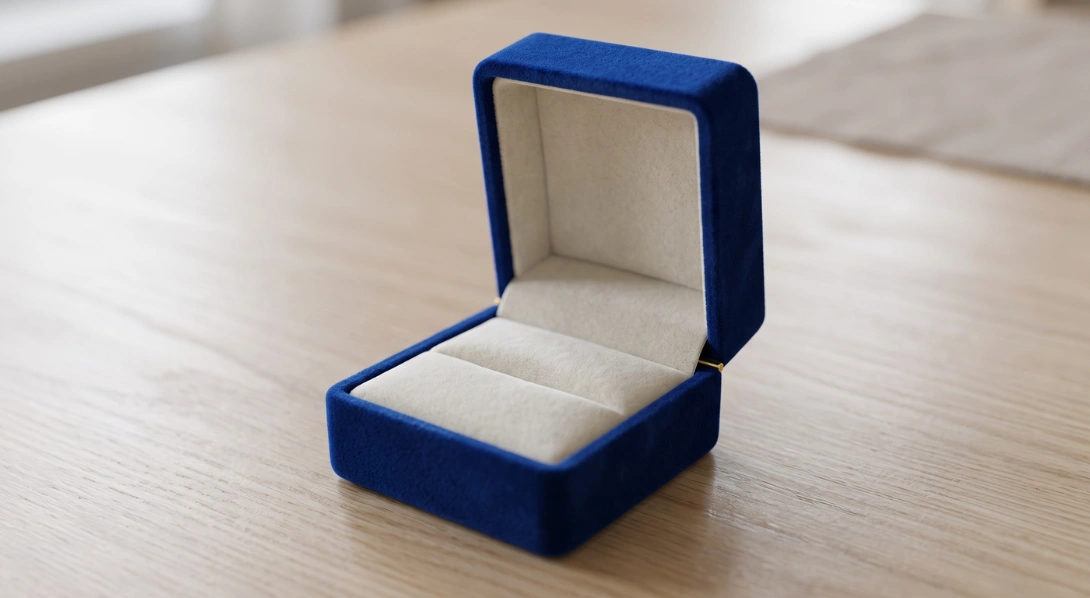
When a ring is missing, you don’t know how it happened, and you didn’t notice it for quite a while, it’s typically considered a case of mysterious disappearance. This almost feels worse than a known loss or theft, due to all the uncertainty. You don’t know whether the ring has been lost, stolen, dropped, thrown away, or left behind somewhere.
So here’s what you can do:
- Write down the best account of what happened possible.
- Document the last known location, even if it’s been a while.
- List people, rooms, vehicles, and public places that may have even slightly been involved in the disappearance.
- Save the ring’s photo, receipts, appraisal, and any search notes.
- Contact your insurance provider if the ring is insured.
- Avoid turning over the possible scenarios in your head, repeatedly, as that’s only going to increase your anxiety.
Luckily, jewelry insurance for mysterious disappearance is often included in stand-alone jewelry policies.
If Theft Is Possible, File a Police Report
You’ll likely need to file a police report if you suspect there’s been foul play. This may apply if the ring was stolen from your bag, car, hotel room, locker, or home, or if there are clear signs of theft. You may also need one if the ring is of especially high value, or your insurance company requests it. Do not file a theft report if it’s more likely that your ring was simply lost or misplaced.
How does engagement ring insurance work to process theft-related claims? Your insurer will ask you to provide a few key details and pieces of documentation:
- Photos of the ring
- Your appraisal or receipt
- Descriptions of the metal, stones, setting, and center stone
- The ring’s last known location
- Date and time range of when the theft occurred
- Possible witnesses
- Any security footage or the contact details of a business that may have footage
- Your police report number
Contact Your Insurance Provider If the Ring is Insured
Contact your insurance provider as soon as it is clear that an insured ring has been lost or stolen, or is otherwise not quickly recoverable.
When you reach out, you’ll want to give them:
- Your policy number
- Your appraisal or receipt
- Photos of the ring (read more about how to best take these here)
- The police report, if your claim is theft-related
- Your search log, as detailed above
- The ring’s last known location
- A written description of what happened
- Any record of reaching out to businesses about the loss, or lost-and-found communication
Your insurer can provide details on their claim processing timeline, documentation requirements, review processes, and replacement procedures, based on your coverage.
What If You Lost the Ring and Do Not Have Insurance?
If you don’t have insurance, you still have options if you’ve lost a ring, though you may incur out-of-pocket costs. Start by checking whether your renters or homeowners insurance policies offer coverage for lost jewelry. Often, these policies only cover theft, not loss, but you may still receive some support for a replacement, even if the payout is capped at $1,000-$2,000.
Contact your jeweler for the lost ring’s original records, specs, and photos, as well as estimates to replace the ring; ask if it can be created using the prior photos and appraisal. Decide whether or not you’d like to replace the ring, but don’t rush into it if emotions are high, and consider using a temporary ring in the meantime.
If you do spend the money on a replacement ring, learn how to insure an engagement ring and secure that coverage as soon as you can. When it comes to deciding when to insure an engagement ring, sooner is always better! Once you’re insured, you’ll no longer need to worry so much about the risk of loss or theft.
Talk to Your Jeweler About Repair or Replacement Options
If you can’t find your ring, your original jeweler may be the best starting point for purchasing a new ring. They may still have the original ring’s specifications on file, including the appraisal, photos, diamond certificate, and/or CAD/design files.
When you reach out, ask the jeweler about:
- The original setting style
- Center stone details
- Side stones details
- Metal type
- Ring size
- Appraisal records
- Similar replacement options
- Timeline for a remake
- Repair or reset options if part of the ring was recovered
- Written replacement quotes
If you’ve already had a wedding ring designed to match the original engagement ring, bring photos of the full wedding set to the jeweler, too. This helps them take your plans and preferences into account when giving you a quote for a new, matching engagement ring.
Consider a Temporary Ring While You Decide
Wearing a temporary ring can help some feel a little more emotionally grounded as they search for a lost ring or decide whether to replace a ring that’s clearly gone.
Options for a temporary ring include:
- Any inexpensive placeholder ring
- A simple band
- Borrowed family ring
- Silicone travel ring
- Replica-style temporary piece
Of course, you can always wear no ring for now, if that feels better. However, keep in mind that wearing a temporary ring does not replace the meaning of the original. Instead, it just helps you maintain that symbol of your relationship, as you consider your next steps.
While you weigh up your options for replacing your ring, it may also be a good time to consider whether you’d like to pursue insurance coverage for your replacement ring or overall jewelry collection. Not sure who pays for engagement ring insurance? Read more here.
How to Talk to Your Partner After Losing the Ring
It would be no surprise if your partner became upset upon learning about the lost engagement ring, so avoid minimizing the loss and focus on overcoming this speed bump together. You may want to reassure them that the loss does not erase the ring’s symbolism; the relationship, the proposal, and your love remain as they were.
Here’s how to approach the conversation:
- Say what happened clearly.
- Acknowledge the emotional importance of the ring.
- Share what steps you have already taken to recover the ring.
- Explain whether insurance or a police report is involved.
- Ask to decide next steps together.
- Avoid treating a replacement as a purely financial decision.
Every couple approaches replacing a lost ring differently. Before making a decision, it can be helpful to understand the distinct purposes and symbolism of engagement rings vs. wedding bands, especially if you’re considering a style different from the one you lost.
How to Prevent Losing the Ring Again
Once you have a new ring or have found your missing engagement ring, protect it from future loss with the following steps:
- Choose one consistent, safe place to store the jewelry at home.
- Avoid tucking jewelry in loose
- Do not place rings near sinks or drains.
- Wear a travel ring at the beach or gym, or during high-risk trips.
- Photograph the ring and keep records.
- Store your appraisal and receipt digitally.
- Insure the ring or replacement before you wear it regularly (and be sure to watch out for the top mistakes to avoid when insuring your engagement ring)
- Check if the ring size is correct, and if it slips.
- Visit a jeweler if any stones, prongs, or settings feel loose.
These simple steps can give you greater peace of mind.
FAQs About Lost Engagement Rings
What should I do if my ring went down the sink?
If a ring falls down the sink, such as when cleaning your engagement ring at home, call a plumber immediately and do not run any water in that sink.
Can a metal detector find a lost engagement ring?
Yes, if you lost your engagement ring in a yard, park, beach, etc., a metal detector may help you find it again.
Does insurance cover a lost engagement ring?
Homeowners insurance typically will not cover lost rings, but specialized jewelry insurance will.
Does homeowners insurance cover a lost wedding ring?
No. Homeowners insurance typically doesn’t cover lost rings. Instead, it only covers rings in the event of a theft from the home or damage caused by covered events, such as fires.
Should I file a police report for a lost ring?
If theft is a reasonable possibility, file a police report. If it’s not likely, though, avoid doing so.
Conclusion: Start With the Search, Then Make the Next Right Move
“A lost engagement ring is emotionally overwhelming, but the next step is practical: Secure the area, search with a system, document what happened, and use your insurer or jeweler to move forward if the ring cannot be found,” Akmakjian says.
If you’ve found your ring, replaced your ring, or just want to protect your ring before any future close calls, check your price for engagement ring insurance now.
Worried about how much engagement ring insurance costs? Most quotes come out to 0.5-1.5% of an engagement ring’s total value per year, meaning your policy could easily cost less than $5 per month!
Get a Quote:
The Easy Way to Insure Your Jewelry - and Save Money!

UP NEXT: What are the Odds of Losing or Damaging Jewelry?

Author