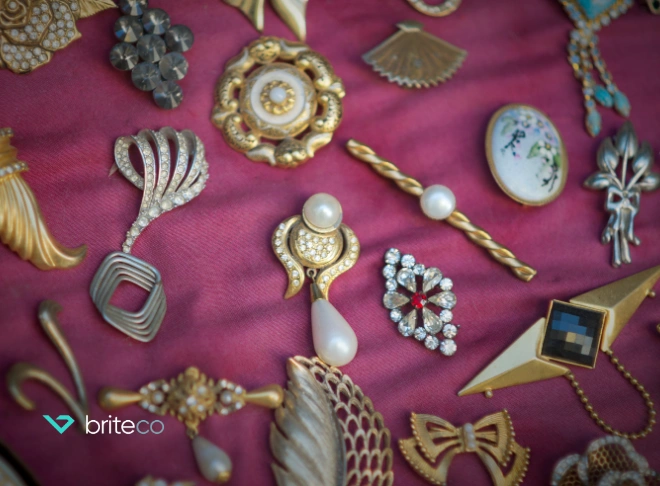
If you like to peruse estate jewelry at secondhand boutiques, an antique shop, or even estate sales, chances are you’ve come across your fair share of vintage pieces. However, knowing exactly how to identify vintage jewelry and separate it from reproduced fakes can mean the difference between buying a smart jewelry investment and a cheap rip-off.
So, how do you go about identifying vintage jewelry? Here’s a quick guide covering everything you need to know to buy the best piece and care for it so it lasts another lifetime.
What You Will Learn
Vintage Jewelry vs. Antique Jewelry
Before we get into vintage jewelry identification, it’s important to understand the differences between vintage jewelry and antique jewelry. While many of the methods for how to tell vintage jewelry apart from newer imitations can also be applied to how to identify antique jewelry and, in general, how to identify old jewelry, there are differences between these two styles that set them apart, particularly when it comes to the age of the piece.
What Is Vintage Jewelry?
Vintage jewelry is any piece that is as young as 50 years old but no older than 100 years old . As such, it’s considered “vintage” if it was produced between 1925 and 1975.
What Is Antique Jewelry?
On the other hand, antique jewelry is any jewelry that’s older than vintage jewelry, so it has to have been produced before 1925.
Antique jewelry includes any of the following styles, among others:
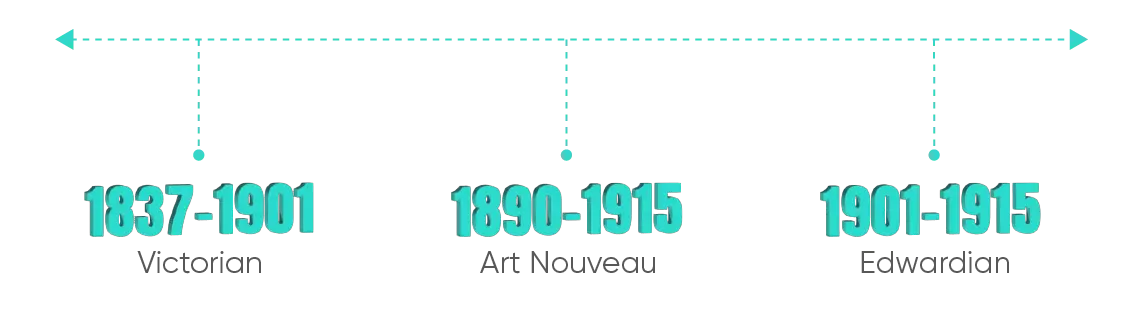
- Art nouveau jewelry (or jewelry produced between 1890 and 1915)
- Edwardian jewelry (or jewelry produced between 1901 and 1915)
- Victorian jewelry (or jewelry produced in the Victorian era between 1837 and 1901)
 Art Deco jewelry is a bit of a gray area. Depending on the exact production date, it may be considered either antique jewelry or vintage jewelry since the Art Deco period lasted from 1920 to 1935.
Vintage and Antique Jewelry Identification Guide
So, how do you identify a piece of vintage or antique jewelry while browsing a jewelry shop or antique shop (or even a relative’s jewelry box)?
An avid jewelry collector or professionally trained eye can often identify an older piece of jewelry (down to its monetary value and production period) based on factors such as distinct jewelry styles. But even beginners and non-professionals can look for a few key signs indicating if you have stumbled upon a vintage or antique piece. This includes a range of clues that you can use to find out further information about the discovery.
1. Look for Jewelry Hallmarks and Stamps
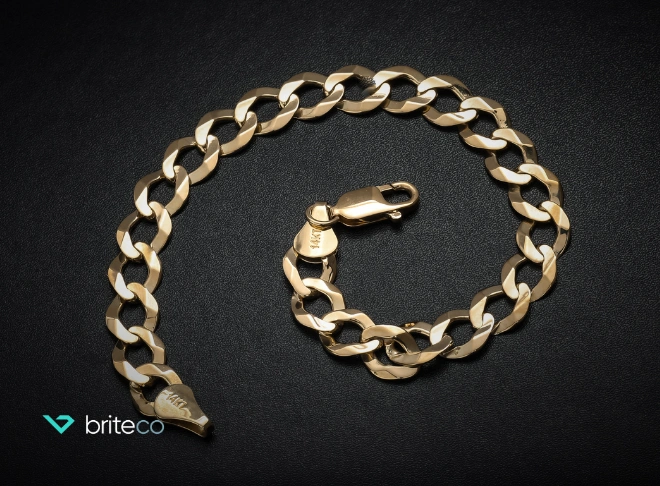
When examining a piece of jewelry that you suspect may be vintage or antique, examine the piece closely, looking for any stamps in the metal. These jewelry stamps range but may be purity marks, telling you how pure the precious metal used in the piece is (for example, this might appear as two digits and a “K” when you identify gold jewelry, which indicates the karats). The stamps may include maker’s marks, which tell you what brand or designer made the jewelry. Very old pieces like art nouveau works may include an assay mark, a mode of authenticity that specifies the origin or the country or city in which the jewelry was made.
2. Look at the Jewelry Design or Style
While jewelry trends come and go, and current fashion trends may mimic styles of the past, there are still a few standout design motifs that may clue you in to how old a piece truly is and if it’s actually vintage or a reproduction.
For example, nature-inspired designs, organic motifs, and romantic designs were popular during the Victorian era. This differs from Edwardian jewelry, which featured very elaborate designs, such as drop earrings and tiara-inspired pieces made with platinum and diamonds. Mid-century jewelry, meanwhile, produced from the 1940s to the 1960s, featured very clean, simple lines.
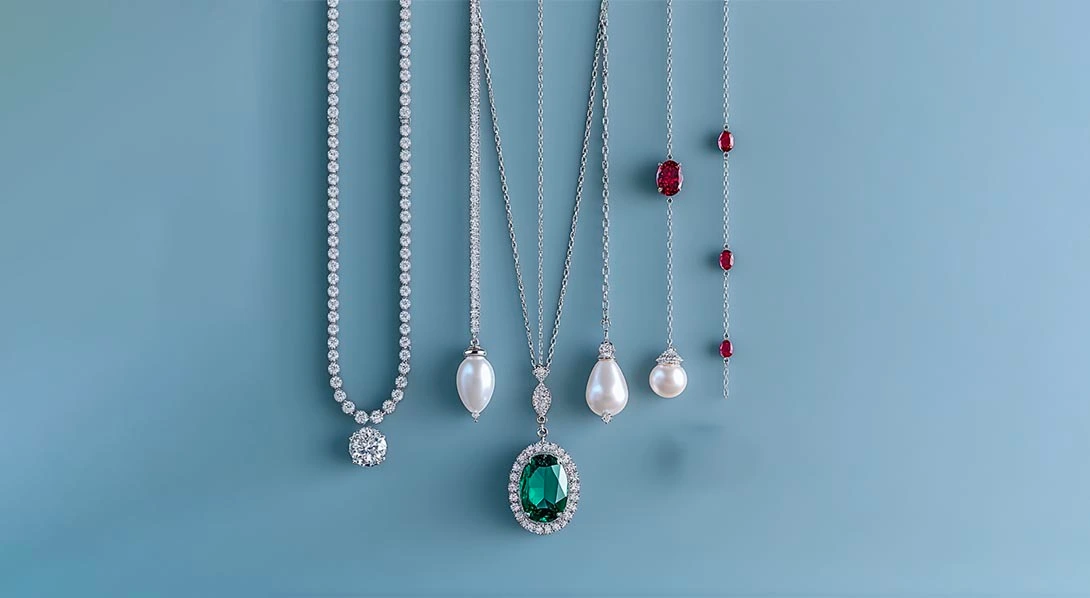
Beyond decorative variation, certain types of jewelry were in vogue in specific decades and centuries. For example, multi-stringed necklaces typically made with pearls were particularly popular in the 1920s.
3. Look at the Gemstones and Precious Metals
In order to identify vintage jewelry, you can also examine the type of colored gemstones used in the piece. Specific stones have likewise gone in and out of fashion and can hint at a particular era. While recognizable materials like diamonds and pearls were popular in the Victorian era, for instance, this time period also used items that aren’t quite as popular anymore, such as black glass and tortoise shell.
Similarly, precious metals have gone in and out of fashion in certain decades, too. For example, gold and sterling silver were primarily used in the 1800s, but newer materials came on the scene in the 1900s — even plastic was a popular option for jewelry for a time!
4. Look at the Construction
Beyond design, look at the actual construction of the jewelry to infer more about its time period. Chain styles, clasps, and hinges can tell you a lot; with some background, you can identify the differences between the various designs. When it comes to closures, for example, the lobster claw clasp came around early on in the 20th century, around the time of the fishhook clasp in the 1920s, whereas the barrel clasp is a mid-century design. On the other hand, the box clasp was more popular during the Edwardian and Victorian eras. And the hook clasp, particularly the hook-and-eye clasp, goes back even farther, across a couple of centuries.
How to Care for Vintage Jewelry
When you buy vintage jewelry or antique jewelry, it should be cared for with a light touch. As with anything that has been around for quite some time, retro pieces are delicate and sometimes fragile. Here are some basics for how to best clean and care for your jewelry investments so they continue to thrive:
- Refrain from using harsh cleaning supplies: That means no chemically powerful jewelry cleansers or anything made with bleach or ammonia. The power in these agents can eat away at the metal and filigrees and also take away the polish and shine of gems and pearls.
- Find the right environment for storage: Because of its age, vintage jewelry can be very sensitive to heat and light, so you’ll want to find a place to carefully store it away from direct sunlight and preferably in a spot with more temperature control. This is where a good-quality jewelry box can come in handy, particularly one made with velvet or another soft material and separate compartments to avoid tangling or friction with other pieces.
- Avoid too much cleaning: When you first buy or inherit your vintage or antique jewelry pieces, it’s a good time to clean it to remove any residue or tarnish and help it shine. But after that initial deep clean, only do so infrequently in the future to avoid wearing down the metals or gems. Really, a soft wipe-down after you wear your piece is sufficient. For the same reason, it’s best not to rub the jewelry with too much force or a rigid material — choose a soft cloth or even a toothbrush and apply light pressure only when necessary.
- Go to the pros: If you are unsure how to clean your antique or vintage jewelry properly, or have a very intricate design (such as a brooch with porcelain enamel highlights), seek out a professional jeweler. It’s always better to be safe than sorry, especially with delicate or heirloom pieces.
Vintage and Antique Jewelry FAQs
How Can I Tell if I Have an Antique Jewel?
One sign that a gemstone is on the older side is if it doesn’t quite look as flawless, shiny, and sparkly as a modern gemstone. Historical methods for cutting and polishing gemstones weren’t quite as advanced as today, so antique gemstones may not appear as perfect at first glance.
How Can You Determine Vintage Jewelry’s Value?
The best way to determine the value of a piece of vintage or antique jewellery is to take it to a professional for an appraisal. Do a little upfront research before working with an appraiser, and see if you can narrow down when you think the piece was produced. Then, look for someone with experience working with jewelry from that time period.
How Can You Tell if a Piece of Jewelry Is Old?
Some signs may tell you whether a piece of jewelry is old. Look for designs, gemstones, and metals that may have been more popular in past eras than they are today. Also, look for hallmarks and stamps on the jewelry (these are often found in an out-of-the-way place, like on a clasp or inside the ring band). For example, these stamps may tell you that the jewelry was produced in a certain year or by a brand that no longer exists.
What’s the Difference Between Antique and Vintage Jewelry?
In general, antique jewelry was produced more than 100 years ago, while vintage jewelry was produced between 50 and 100 years ago.
Is Antique Jewelry a Good Investment?
It all depends on the individual piece. To determine if a piece of antique jewelry is a good investment, speak with a qualified appraiser to learn more about the value of your piece.
Protect Your Antique or Vintage Jewelry with Specialized Jewelry Insurance
Just like you might have jewelry insurance for your engagement ring or a luxury watch collection, you also need insurance for your heirloom, antique, and vintage jewelry.
While it’s not always easy to find your perfect antique or vintage piece, finding the perfect insurance policy to protect it is. Get an online jewelry appraisal valuation suitable for securing jewelry insurance, and then purchase your BriteCo’s fine jewelry insurance policy all in one place. It’s easy, fast, and affordable.
Related Articles:
The Resurgence of 2000s Jewelry
A Quick Guide to Ammolite Gemstones
1950s Jewelry Trends: The Mid-Century Guide to Glamour
The ‘70s Jewelry Trends
Appraisal Tool:
The Easiest Way to Get a Professional Jewelry Appraisal Valuation!
UP NEXT: 1930s Jewelry Trends: A Guide to Art Deco Style

Author