Gemstone certificates reveal important information regarding a gemstone’s identity, including information related to gemstone quality, authenticity, and origin, depending on the certifier.
Various organizations will issue you a gemstone certification, but not all gemstone certificates are the same; some will be more valuable to you than others.
Keep reading to discover…
- How you can go about getting a gemstone certificate
- What information to look for on a gemstone certificate
- How much does a gemstone certificate cost
Plus, find out from Andrew Elawar, founder and owner of Chrysella Fine Jewelry and Diamonds in Woodbridge, VA, why having a gemstone certificate matters when you go to buy or sell a gemstone, or seek out appraisals.
What You Will Learn
Who Issues a Gemstone Certificate?
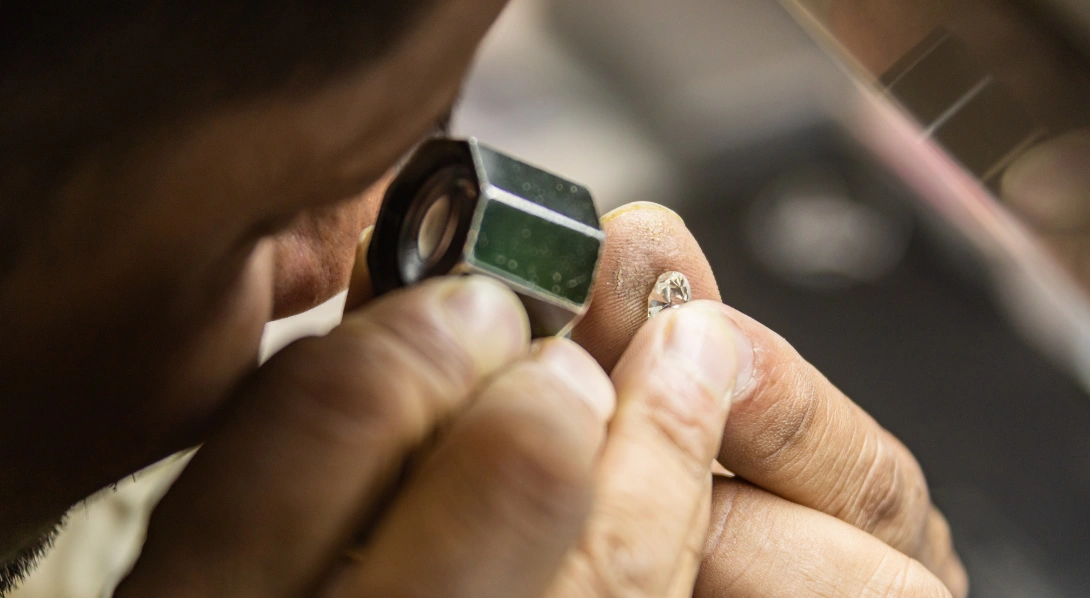
Gemstone certificates are issued by gemstone certification labs, which evaluate gemstones to provide buyers with a range of information related to a gemstone’s quality and value.
Organizations that provide gemstone certification include:
- The Gemological Institute of America
- The International Gemological Institute
- The American Gem Society
- The Gem Certification and Assurance Lab
- The European Gemological Laboratory
- The International Colored Gemstone Association
- Gemological Science International
Of these options, the most highly-regarded and trusted is generally considered to be the Gemological Institute of America (GIA). GIA gemstone certification is considered highly reliable, while the GIA might be most well known for its diamond grading (the organization actually mainstreamed the 4 Cs that the jewelry industry now uses overall to grade diamonds, based on carat weight, color, clarity, and cut), the organization also provides GIA gem certification for colored gemstones as well.
Suggested Read: IGI vs. GIA vs. GCAL: Key Differences Between the Labs
“The range of capabilities at the GIA is pretty wide compared to the other two,” says Elawar, a GIA graduate gemologist.
What is on a Gem's Certificate?
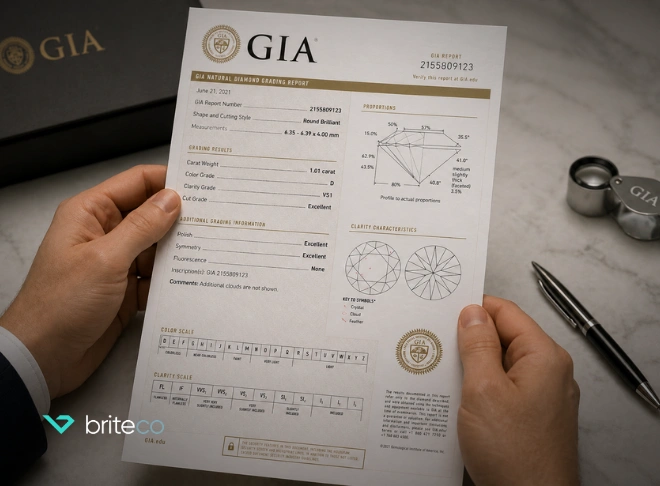
There’s a significant amount of important information often listed on a certificate for gemstones, and a standard report might include information related to gemstone type, gemstone origin, color grading, clarity, any enhancement or treatments used on the stone, stone size and shape, and more.
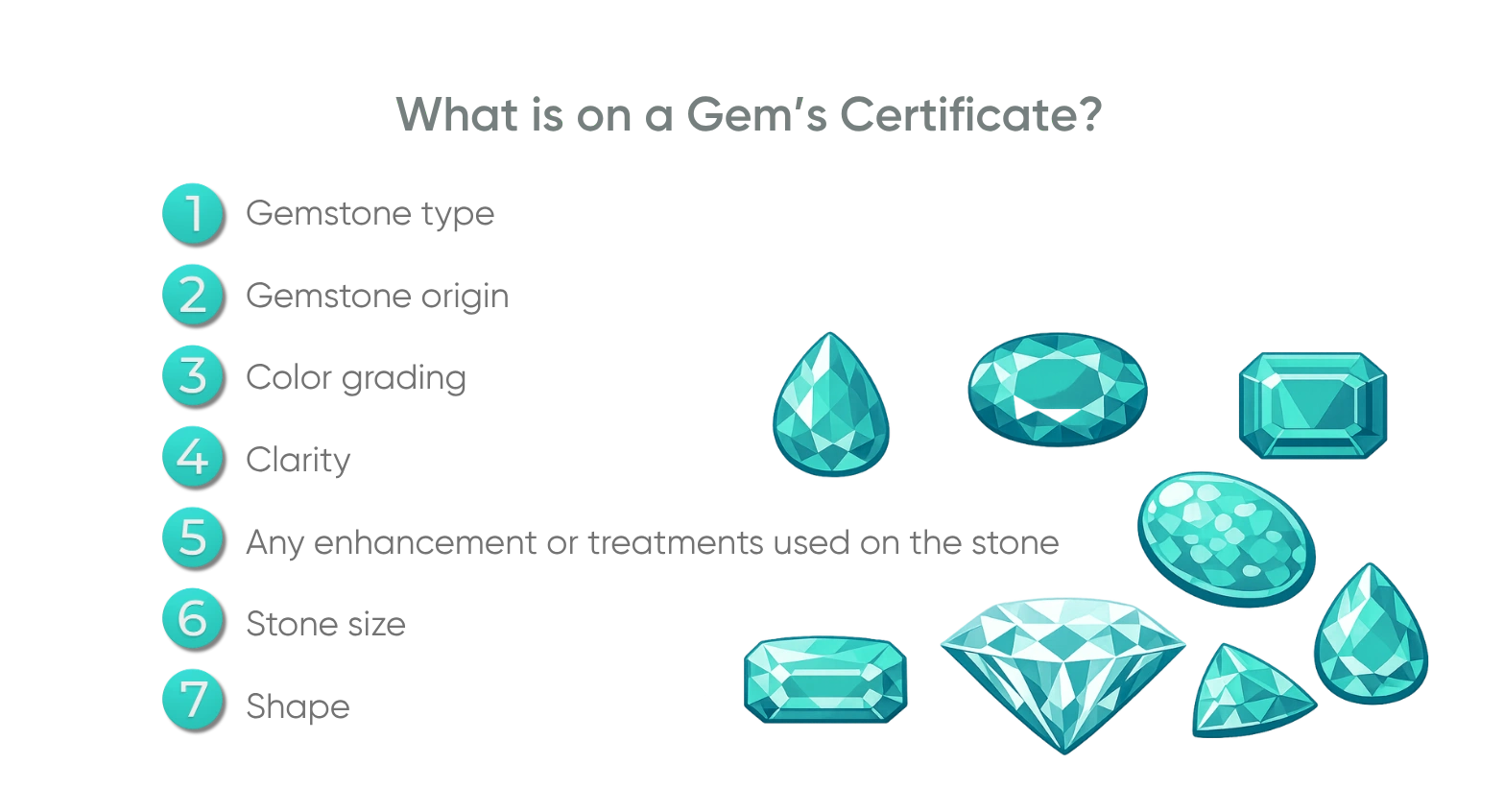
All of this information provides value and a greater level of transparency to buyers, allowing them to make more informed purchasing decisions.
- Gemstone type matters because the average layperson often can’t tell two similarly colored gemstones apart.
- Color grade is specifically important for diamonds, as it influences overall cost.
- Clarity tells you how flawless (or flawed) a gemstone is, thereby influencing cost as well.
- Treatments or enhancements, meanwhile, may lower certain gemstones’ value.
- Measurement and weight is useful not just in determining price, but also in helping you purchase settings for loose gemstones.
How Do You Tell If a Certificate is Authentic?
An authentic certificate will also list a report number and the lab who issued the report. So, for example, if you have a Gemological Institute of America certificate, you’d be able to check that the gemstones certification provided to you by a gemstone seller is accurate (and even exists in the first place!) by going to the GIA website and entering your report number.
Counterfeiting of reports “goes on quite a bit,” Elawar says. “Our industry is pretty tight-knit, and we’re usually able to work with the labs and trace these back to the original perpetrator.”
Why Does Diamond or Colored Gemstone Certification Matter?
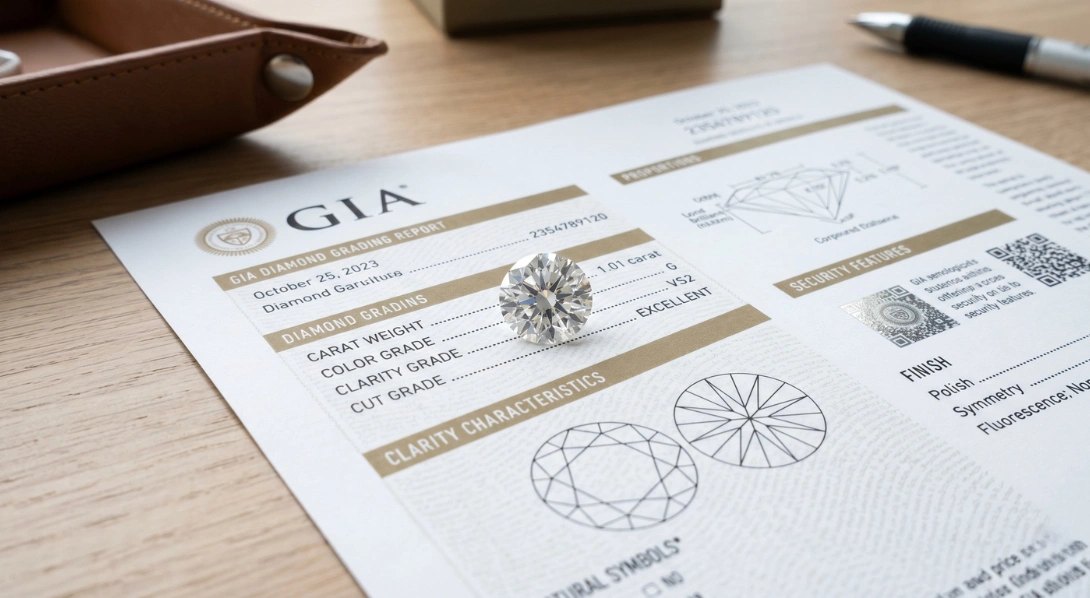
Gems certification matters because it third-party verifies that the stones you’re buying are actually what the seller says they are. “You can use the report to make sure that you’re getting a fair and accurate price from the jeweler that you’re dealing with,” Elawar says.
While we all might like to think that jewelers would never steer us wrong when purchasing a piece of jewelry, some less-scrupulous individuals, including private sellers, may not possess the business ethics that you’d hope for, when paying them thousands of dollars for an item.
However, not only does a gem certificate provide you with a higher level of consumer protection, but it can also make the process of getting an appraisal easier, as well the process of getting jewelry insurance easier.
Plus, whenever you go to resell a piece of jewelry (if you ever do), you can show any potential buyers that you can verify your jewelry is what you say it is.
How Do Labs Certify Gemstones?
A gemology lab uses a variety of techniques and tools to conduct its analysis of your gemstone, including using a microscope to observe the gemstone’s material up close, and a refractometer and spectroscope to examine how light interacts with the gemstone. A basic scale can reveal carat weight. Meanwhile, lab professionals can use the information gleaned from analyzing inclusions under a microscope to trace a gemstone’s origins.
While, you’ll ideally receive a certification for your gemstone upon the time of purchase, if you don’t have one, you can submit your gemstone to a lab for an independent certification. For example, if want to get a certificate from GIA, you need to fill out some forms online and then ship the gemstones to GIA for analysis.
How soon GIA can turn around your analysis depends on factors such as stone type, carat weight, and which lab you submit the gem to. GIA has labs in California, New York, Mumbai, Hong Kong, Bangkok, Johannesburg, Gaborone, Surat, Tokyo, and Dubai.
How Much Does GIA Certification Cost?
GIA gemstone certification cost varies wildly depending on factors such as type of stone, size of stone, and the degree to which you would like the gemstone analyzed. However, you can expect colored stone certification to start at around $70, colored diamond certification to start at around $150, and diamond certification (both for natural and lab grown diamonds) to start at around $50.
What Gemstone Certification Can Not Do for You
While gemstone certification can definitely protect your monetary investment upon purchasing a gemstone, it doesn’t guarantee your gemstone is perfect, nor does it provide you with information regarding concrete monetary value. For monetary value, you need an actual appraisal to get “a much more detailed description of the entire piece,” Elawar says.
However, as mentioned, having a certification at the ready can make the appraisal process easier and faster.
Moreover, gemstone certification does not guarantee a gemstone is of a certain quality or value. Any gemstone can be certified, regardless of how much it’s worth.
Gemstone Certification FAQs
What is the Best Gemstone Certification?
Certification from the Gemological Institute of America, or GIA, is broadly considered to be the best gemstone certification that you can purchase. GIA certification cost is relative to the type and size of your gemstone.
How Much is GIA Certification?
GIA certification price depends on your stone type and size, but you can expect your cheapest certification options to start at a cost of around $50.
How Can You Check a Gemstone Certificate?
If you’re worried that a certificate for a gemstone is not authentic, you can go onto the supposed gemstone certificate issuer’s website and most labs will have a database where you can input your report number and bring up the corresponding information. If the information is not in the official database, it means that your gemstone certificate is invalid and fake.
Is a GIA Certification Worth It?
Yes, a GIA certification is worth it if you ever plan on insuring or selling your jewelry, as it will make getting the necessary appraisal easier and will ensure any potential buyers that your gemstones are authentic.
What Does a GIA Certificate Tell You?
A GIA certificate can tell you lots of important information about your gemstone, including where it originated, whether it has any flaws (and to what degree), how well it was shaped/cut, how much it weighs, and whether or not it’s been exposed to any sort of treatments or enhancements that might lower the value and the gemstone’s durability.
Protect Your Gemstones
You’ve protected your gemstones by ensuring their authenticity via a gemstone certificate. Now, go a step further and ensure your gemstones are protected from anything that life might throw at you.
BriteCo’s specialized jewelry insurance will protect your jewelry collection from unfortunate incidents such as loss, theft, and mysterious disappearance. Get your quick jewelry insurance quote now.
Related Articles:
Top 10 1940s Jewelry Trends
8 Fun Facts About Diamonds
What is a Step Cut Diamond?
Are Lab Grown Diamonds Real?
Get a Quote:
The Easy Way to Insure Your Jewelry - and Save Money!
UP NEXT: Cost to Repair or Replace Jewelry Out of Pocket: What You Might Pay

Author