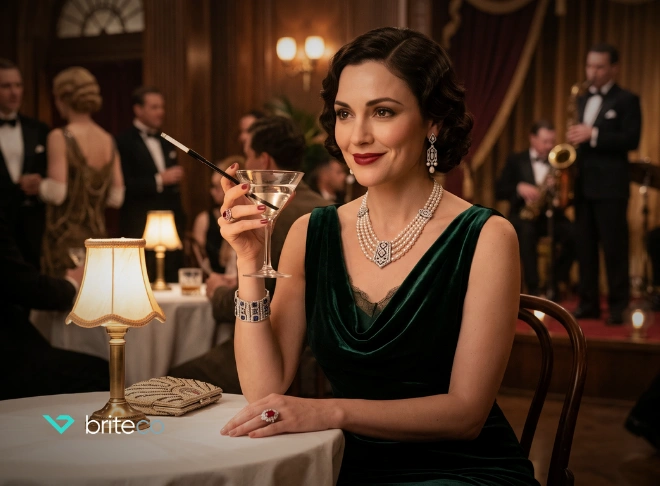
When exploring 1930s jewelry trends, you’ll find that the decade combined early Art Deco glitz from the 1920s with Depression-era practicality. Streamlined geometric shapes, lacy white-metal filigree, dramatic black onyx-and-diamond contrasts, and clever dress clips were key features of the era.
Below, you’ll find the 10 defining 1930s jewelry styles, modern styling ideas, and care guidelines so you can shop and wear vintage 1930s jewelry with confidence.
While you’re at it, explore jewelry trends from other decades as well, starting with the top jewelry trends from the 1970s, 1980s, and 1990s.
What You Will Learn
Top 10 1930s Jewelry Trends
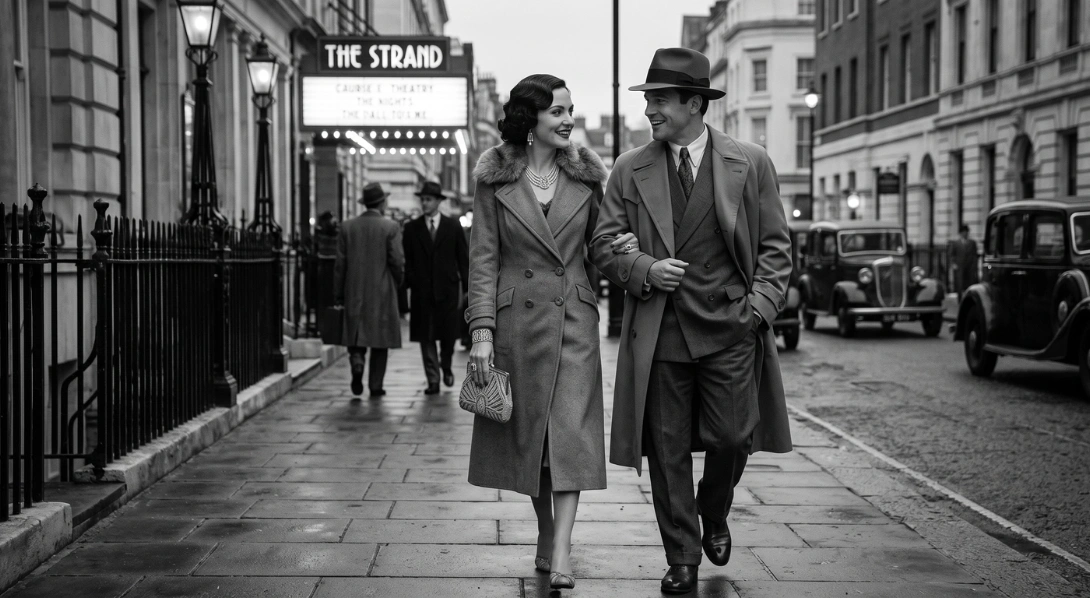
Here are the core features that’ll help you identify 1930s-style jewelry. Study up, and then incorporate these pieces into your wardrobe!
1. Streamlined Art Deco Geometry
The 1930s continued the Art Deco geometric jewelry trends that were already popular in the 1920s, with step cuts, chevrons, and fans aplenty.
To identify true 1930s Art Deco jewelry, look for chevron and fan motifs in the form of baguette or step-cut stones, paired with strong vertical or horizontal lines.
A bold ring or pendant with features like these pairs well with the clean silhouette of a blazer or slip dress, since the sharp Deco lines stay front and center.
2. Filigree and Milgrain
Many white gold and platinum pieces of 1930s jewelry incorporate fine, lacy filigree, or milgrain details into their overall design. If you find one such piece, let it be the star of your look; wear only one ring or pendant at a time. When wearing the piece, avoid knitwear or any other material that might snag on the filigree or milgrain, since this could potentially damage both your clothing and your jewelry.
3. Black and White Contrasts
1930s fashion jewelry often combined dramatic, contrasting colors like black and white in the form of either onyx and paste stones or onyx and diamonds. These materials would frequently be arranged in geometric panels or bars.
Wear one black-and-white piece to elevate a simple black dress. If you’re going for a more casual look, consider a white tee with jeans.
4. Sautoirs and Long Pendants
Necklaces of the day commonly featured tassels or lariat drops at the ends of long chains. Look for older clasp styles on these types of necklaces to confirm authenticity. When wearing them, layer a sautoir over a minimalist top or double wrap the long strands of these necklaces for a modern, maximalist look.
5. Line Bracelets and Dress Watches
As for what the fashionable of the 1930s might’ve worn on their wrists, line bracelets featuring slim, continuous rows of stones were popular, as were tonneau dress watches. Use these bracelets in a stack, alongside a modern watch, or wear them even just on their own.
6. Dress Clips and Duette Clips
Dress or duette clips were twin clips that could be worn separately as coordinating sets. Alternatively, the two clips could be combined to form brooches.
Authentic 1930s clips will feature, as the name suggests, clip mechanisms instead of the typical pin-backs you might see today. Wear them as they were intended or convert them into pendants for a necklace. You can also add them to your belt buckles to add a little Hollywood glamour.
7. Deco Engagement and Dinner Rings
Engagement and fine dinner rings of the 1930s featured low-profile or moderately raised settings, incorporating white metals with baguette stones, calibre-cut accents, halo settings, scroll motifs, or illusion heads. These rings can easily stand on their own today, but if you do want to pair them, opt for a simple band.
8. Colored Stone Accents and Calibre-Cut Gems
Vivid colors were everything in the 1930s, and jewelry was no exception to this trend. Colored gemstones, whether synthetic or natural, were often used in calibre-cut settings, with stones shaped precisely to fit against one another in channels around a central stone.
Popular gemstones included emeralds, sapphires, and rubies. Amethyst purples, topaz orange, and aquamarine gemstone hues were also highly prized in this era, even if they were just costume jewels rather than authentic rhinestones.
These elaborate, colorful pieces make for stunning dress accessories, and you want them to stand out. Pair them with a neutral outfit so they don’t have to share the spotlight; opt for a monochrome top with a simple neckline over something with floral designs, for example, since this can be distracting.
9. Early Plastics and Similar Faux Materials
If you’ve studied Great Depression history at all, then you know that many Americans made do however they could during this vintage era. This extended to fashion trends as well, and can be seen in the material choices jewelry designers made. Plastic jewelry made from Bakelite was popular, as were painted glass stones, as both of these were more affordable than even silver metal.
Affordable fashion was key, even if it meant using imitations or forgoing material quality.
Wear 1930s costume jewelry today with a combination of fine jewelry for a mix of casual and high-end fashion.
10. Screw-Back and Clip-On Earrings
Certain hardware can point towards a piece being authentic jewelry from the 1930s, including screw-back posts and clip mechanisms on earrings. If you find wearing these types of earrings uncomfortable, add silicone pads. Since these earrings are typically on the larger side, pair them with an updo or sleek bun to really show them off.
Quick Ways to Identify 1930s Jewelry
Real 1930s jewelry will often feature a few hardware and material tells that will clue you in to the fact that you’ve got the real deal on your hands.
Hardware
Look for…
- Older clasp styles, such as box and tongue, or early spring rings
- Screw-backs and clips for earrings
- Vintage-style pin backs and dress clip mechanisms
Materials
Look for…
- Platinum or white gold
- Diamonds
- Colored stones, either real or synthetic
- Glass or paste in costume jewelry
- Early plastics like Bakelite
Hallmarks
Look for…
- Maker’s marks and purity marks consistent with the era
As you shop, remember: just because a piece is being sold as an “estate” piece, that doesn’t offer any indication of age. “Estate” merely means that a piece was pre-owned.

Want a deeper dive into dating and authentication? See our guide to identifying vintage jewelry.
Identifying 1930s Jewelry vs. Jewelry From Other Decades
If you know a piece of jewelry is vintage, but you’re not sure which decade it comes from, consider the overall vibes and key jewelry features that you could expect from the 1930s and more recent decades.
| Decade | Overall Vibe | Key Jewelry Features |
|---|---|---|
| 1930s | Sharp yet elegant | Geometric Art Deco lines, white metals, filigree, sautoirs, line bracelets, dress clips |
| 1940s | Softer, sculptural, and retro | Bows, scrolls, sweetheart motifs, bolder cocktail rings, more rose and yellow gold |
| 1970s | Boho and earthy | Long chains, natural stones, organic textures |
| 1980s | Maximalist and bold | Big hoops, oversized costume pieces, bright colors |
| 1990s | Minimalist and sleek | Chokers, simple lines, playful charms, and delicate chains |
You can get more details about jewelry trends of decades past by checking out our guides to jewelry from the 1970s, 1980s, and 1990s.
How Much is a Piece of 1930s Jewelry Worth?
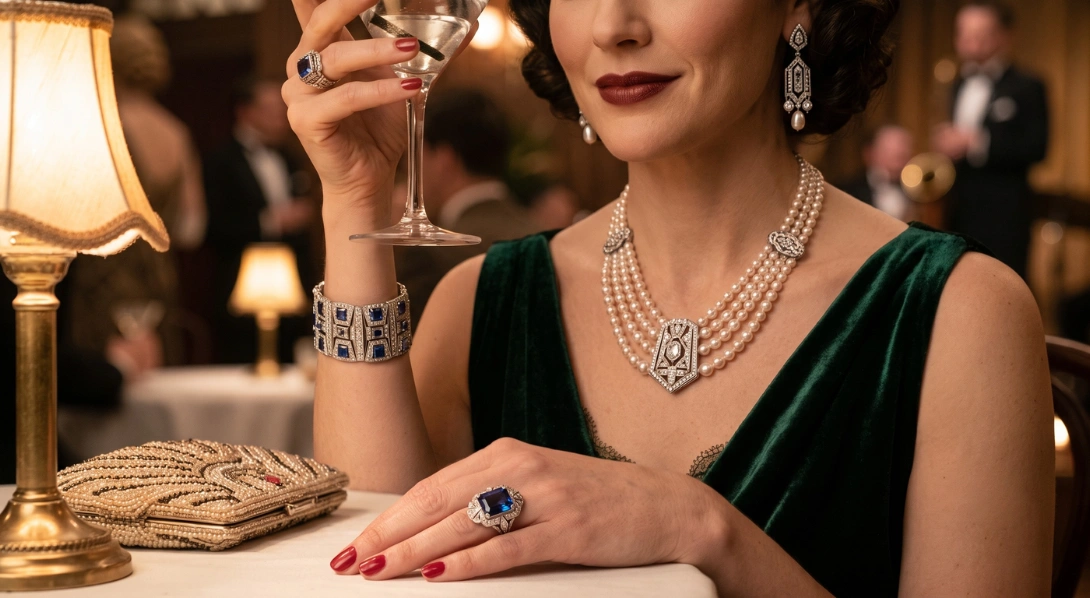
Jewelry from the 1930s will be worth more or less based on the piece’s originality, condition, and construction quality.
Intact pairs of earrings, full matched sets, and pieces with original boxes often carry more appeal than single or altered items.
Crisp milgrain, filigree without breaks, secure stones, minimal yellowing of white metals, and clean glass or onyx are all signs that the jewelry’s been kept in good condition. In contrast, signs of heavy repair, excessive glue, or badly worn/thinned settings are all red flags.
Look for well-finished backs, smooth solder seams, and neat stone settings. Very rough backs or obviously modern hardware may indicate that the piece is a reproduction or that it’s been repaired in the past.
Do You Need an Appraisal?
Any piece of jewelry that includes high-value metals, diamonds, or precious stones is worth appraising. Items that are designer-signed or heirlooms are also excellent candidates for professional appraisal, and potentially jewelry insurance as well.
Learn more about the appraisal process and what jewelry insurance entails.
Care and Store Your 1930s Jewelry Appropriately
If you’ve got a piece from the 1930s on your hands, you’ll want to take care of it. Avoid ultrasonic cleaners and opt for dry cleaning methods over soaking. Store your jewelry away from heat or direct sunlight, and inspect it regularly to ensure that it stays in the best condition possible for as long as possible.
1. Always Dry Clean First
Before trying to soak your jewelry to clean it, use dry cleaning methods. All you need is a soft brush and a microfiber cloth to brush and buff away any build-up. Avoid soaking filigree rings or jewelry with foil-backed stones.
2. Avoid Ultrasonic Cleaners
Ultrasonic cleaners aren’t recommended for many kinds of jewelry; especially avoid using one for any jewelry with glued, foil-back, or fragile settings, as well as plastic materials.
It’s best practice to have a jeweler thoroughly inspect the piece and give the all-clear before using an ultrasonic cleaner.
3. Metal and Stone Care
Be gentle with delicate filigree and calibre-cut stones. Avoid harsh chemicals and aggressive polishing on older white metals.
4. Plastics and Glass
Keep Bakelite and other early plastics away from heat and strong solvents. Store glass-heavy pieces where they won’t be knocked or chipped.
5. Hardware Checks
Inspect filigree for cracks, line bracelets for weak links, and clasps and earrings for tension several times a year. If you suspect that a piece may need to be repaired, take it to a jeweler. Alternatively, if you have jewelry insurance, let your policy provider know.
Learn more about safe jewelry cleaning at home.
FAQs About 1930s Jewelry
What jewelry did women wear in the 1930s?
Some of the most popular 1930s women’s jewelry included sleek Art Deco rings, line bracelets, long sautoirs, dress clips, and filigree white-metal pieces.
What is art deco jewelry?
Popular throughout the 1920s and 1930s, Art Deco jewelry features bold geometric shapes, symmetry, and streamlined designs, often in platinum or white gold with diamonds and colored stones.
How can I tell 1930s Art Deco pieces from 1920s styles?
In general, 1920s pieces skew a bit more ornate and playful, while 1930s designs are slightly more streamlined and “architectural”; hardware style and hallmarks can also help distinguish them.
Were clip-on and screw-back earrings common in the 1930s?
Yes, many earrings from this era use screw-back or clip mechanisms, especially for larger geometric or fan-shaped designs.
Are 1930s engagement rings valuable?
Condition, metal, stone quality, and the designer/maker all matter when it comes to engagement ring value, but well-preserved platinum or diamond rings from this period can be highly sought after.
Vintage Art Deco Jewelry Needs Modern Protection
There’s a timeless appeal to 1930s jewelry, with its blend of sharp geometry and delicate filigree, making it still suitable for pairing with today’s most popular styles. If you invest in a 1930s engagement ring or heirloom Deco bracelet, it’s worth protecting it with dedicated jewelry insurance.
Comprehensive and specialized jewelry insurance makes sure that everyday loss, theft, or damage won’t turn a piece of history into heartbreak, and you can get a jewelry insurance quote online in about a minute.
In the meantime, explore the top jewelry trends from the 1970s, 1980s, and 1990s. You might also like to brush up on your vintage jewelry identification basics and learn more about jewelry stamps and marks.
Related Article:
The 1960s Jewelry Styles Worth Bringing Back
Buying Guide:
The Secret to Diamond Buying: Natural vs Lab Grown

UP NEXT: What are the Odds of Losing or Damaging Jewelry?

Author