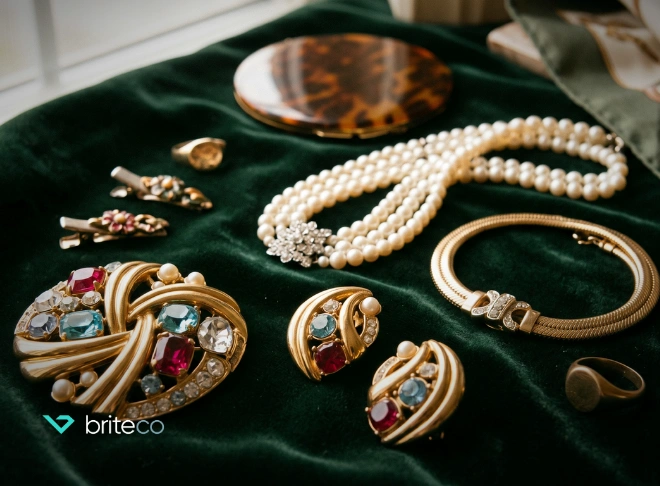
The kind of jewelry you wear can do a lot to affect your overall look, and there’s a reason vintage 1940s jewelry is still so popular, especially in women’s fashion. Historically, these pieces blended wartime practicality with the glamorous aesthetic of Hollywood actresses often featured in fashion magazines. Defining features included sculptural bows and scrolls, sweetheart and patriotic motifs, bold cocktail rings, sterling stand-ins for gold, screw-back earrings, and brooches.
If you…
- Define your style as vintage glam
- Are okay with (or even love) a little patina
- Enjoy statement rings and brooches
- Like hunting for novelty pieces at heirloom or estate sales
…then you’ll love jewelry from the 1940s!
Keep reading to discover core 1940s jewelry trends, modern styling ideas, care dos and don’ts, and more. Then, explore our full series on how jewelry styles have changed throughout history, with our guides to 1970s, 1980s, and 1990s jewelry.
What You Will Learn
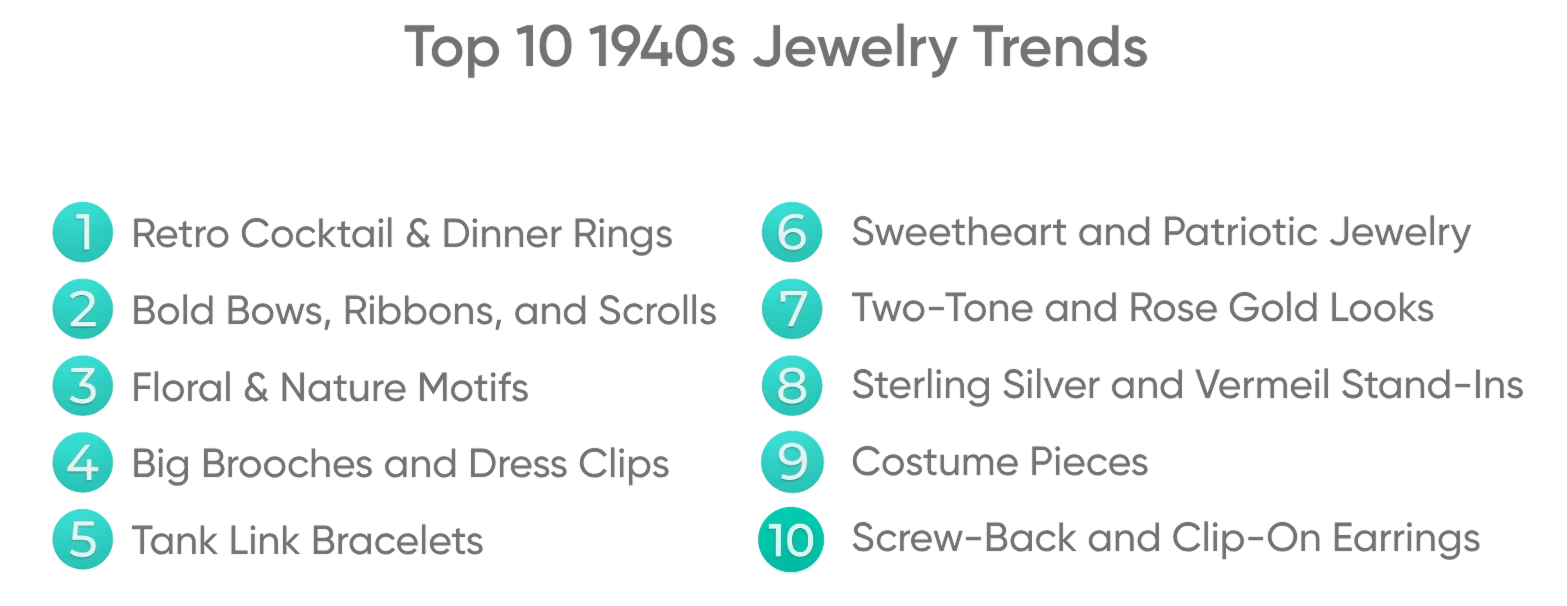
Top 10 1940s Jewelry Trends
1. Retro Cocktail & Dinner Rings
The terms “cocktail rings” and “dinner rings” are often used interchangeably and refer to large, statement-style rings. Dinner rings may be slightly more subdued and practical, suitable for elegant dining settings, as the name suggests, and can make for some stunning engagement rings if you find traditional round diamonds to be a little too mainstream or conventional for your taste.
The cocktail and dinner rings of the 1940s were characterized by raised illusion heads. This is a vintage setting that includes an engraved or faceted white gold metal plate surrounding a central diamond, giving the illusion that the diamond is much larger than it actually is. They also often featured chunky scrollwork, as well as synthetic ruby and sapphire alongside other precious stones like amethyst, citrine, or peridot for a little extra sparkle.
When wearing one of these rings today, place the statement ring on your dominant hand and keep your other jewelry to a minimum, so that it remains the main character.
2. Bold Bows, Ribbons, and Scrolls
Bows, ribbons, and scroll designs feature prominently across various pieces of vintage jewelry from the 1940s.
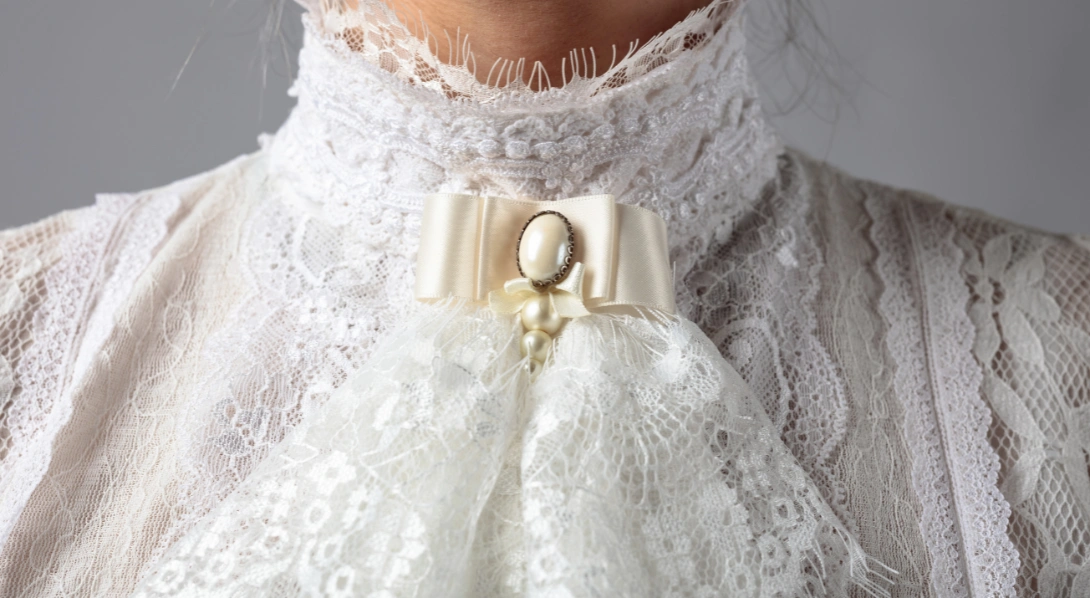
These sculptural elements have smooth curves and are crafted from rose gold or yellow gold, sometimes even being gold-filled. Higher-end pieces incorporate platinum, and occasionally, they’re complemented by accent stones.
If you find a 1940s brooch that features one of these elements, wear it on a blazer lapel, dress sash, or hat band for a subtle 1940s nod.
3. Floral & Nature Motifs
Floral and nature motifs, incorporating flowers, plants, animals, etc., into jewelry designs, have been a long-standing fashion trend. You’ll spot them across multiple decades; pieces with such exquisite designs tend to be timeless if cared for correctly.
In the 1940s, these motifs often focused on layered petals and leaves, or clusters of stones in varied shapes, and could appear on prong-set or pavé rings also featuring diamonds and/or glass.
If you wear such a ring today, pair it with subtler or simple designs, so that the floral and nature motif stands center stage.
4. Big Brooches and Dress Clips
Just as big rings were in vogue in the 1940s, so were big brooches and dress clips. If you’re not as familiar with the latter, these were twin pins often worn on the opposite sides of a dress’s neckline or shoulder straps.
To ensure that a brooch or dress clip is truly from the 1940s, and not just one of the readily available vintage reproduction jewelry styles, look for a brooch or clip that has a bit of weight to it, and strong, not flimsy, pin backs. Additionally, look for wear and tear on the pin that would be consistent with a piece of this age.
If you do find an authentic 1940s brooch or dress clip, you can wear it on a coat, knit item, or even your handbag. You can also repurpose brooches and dress clips for more versatile ways to wear them, such as by converting them into pendants for your necklaces.
Suggested Read: How to Style Brooches For Modern Times
5. Tank Link Bracelets
Perhaps inspired in part by World War II, tank link bracelets feature interlocking links that resemble a military tank track pattern.
These link bracelets are chunky and heavy, and an authentic bracelet will feature wide, articulated links that are gold, gold-filled, or gold-plated.
While you can certainly wear these bracelets as part of a bracelet stack with slimmer bangles or alongside charm bracelets, they’re bold enough to stand alone.
6. Sweetheart and Patriotic Jewelry
Another product of World War II, sweetheart and patriotic jewelry gave a nod to romantic partners serving overseas, as well as honored those who served in general, by incorporating hearts, flags, eagles, service insignia, and “Remember Me” motifs alongside symbolic charms.
Authentic sweetheart and patriotic jewelry from this era would have been made with inexpensive metals, enamel, or glass.
Wear one of these pins on a denim jacket or bag for a casual vintage touch.
7. Two-Tone and Rose Gold Looks
While we may think of rose gold as a relatively recent trend, it was a popular option in the 1940s as well, often paired with yellow or white gold.
Two-tone and rose gold jewelry from the 1940s would naturally feature some of the other themes and design trends already discussed, such as those retro scroll or bow designs.
Style these pieces with other mixed metal jewelry for an updated, modern look that incorporates highlights from the past.
8. Sterling Silver and Vermeil Stand-Ins
During wartime rationing, women may not have had access to certain precious metals, making more accessible options, like sterling silver or vermeil (wherein a thin layer of gold is applied to a sterling silver base), more popular.
Look for jewelry hallmarks on a piece that may identify it as sterling silver, such as simply the word “sterling” or the numbers “925.”
Today, you can style these sterling pieces with modern silver pieces for an easy, monochrome stack.
9. Bakelite and Early Plastic Costume Pieces
Around the mid-century, plastic costume jewelry became a fashion favorite, including Bakelite jewelry, made from the world’s first fully synthetic plastic.
True Bakelite and plastic costume pieces will be solid-colored and feel warm to the touch. You may find that the piece has metal inserts or screw-back fixtures.
Incorporate Bakelite and other plastic pieces into an otherwise monochrome or neutral look for a touch of color and whimsy. Be sure, though, to care for plastic pieces properly. They don’t tolerate high heat or harsh cleaners very well.
10. Screw-Back and Clip-On Earrings
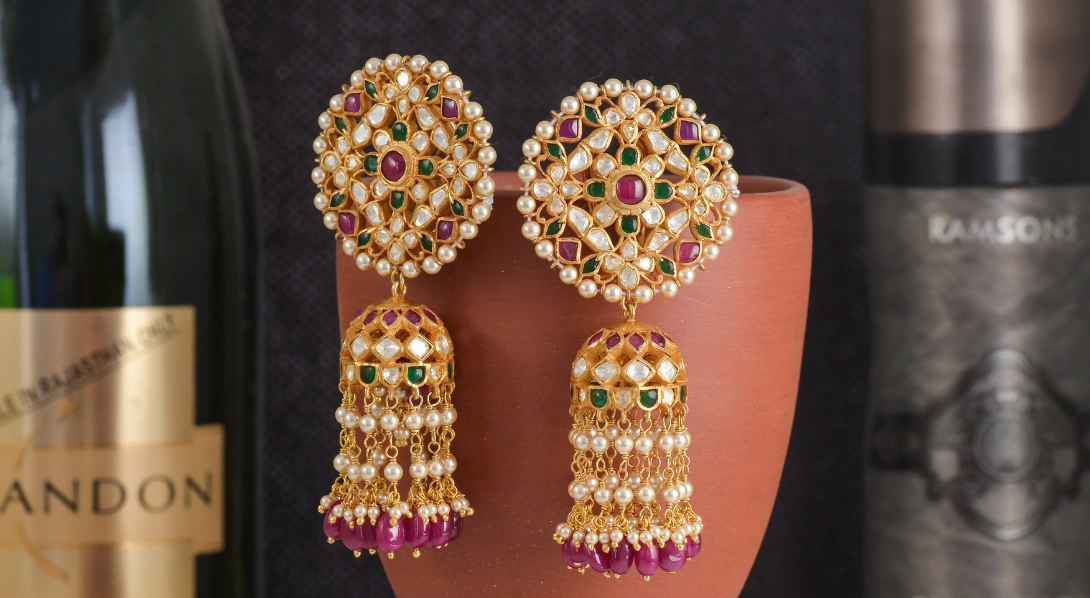
Lastly, screw-back and clip-on earrings were popular, as were heavier drop or cluster earrings.
Look for earrings with those tell-tale screw-back posts or hinged clips, complete with comfort pads.
If you purchase 1940s earrings without the comfort pads, you can add some yourself, and then pair these dramatic earring designs with swept-back hair and updos, for true 1940s glamour.
How to Identify Authentic 1940s Pieces
- Look for hardware tells, such as screw-back posts or hinged clips on earrings, C clasps and safety pin hardware on brooches, and fold-over or box clasps, as well as safety chains, on bracelets.
- Keep in mind the popular materials of the day, including rose and yellow gold, sterling silver, vermeil, glass stones, and plastic.
- Examine jewelry hallmarks, including maker’s marks, stamps, and purity marks.
- Look out for 1940s styles and motifs, such as bows, florals, and sweetheart or patriotic themes.
When shopping for vintage jewelry, make sure you’re aware that, even if a seller refers to an item as “estate jewelry,” that’s not a guarantee that it’s authentic. Estate jewelry is any jewelry that was previously owned; it doesn’t signify a particular time period.
Want a deeper dive into age and authenticity? See our guide to identifying vintage jewelry.
How Much Will You Pay for Jewelry From the 1940s?
What you’ll pay for 1940s jewelry is based on factors such as piece completeness, condition, and construction. It’s best to get an appraisal on vintage pieces if you have any questions regarding quality and price.

- Completeness and originality
Matching pairs and sets, such as matching earrings and brooches, or pieces that come in their original boxes, will cost more.
- Condition clues
Pieces featuring secure prongs, intact plating or vermeil, minimal patina, and no chips will be worth more, too.
- Construction quality
If the piece was well-constructed to begin with, with well-finished backs, clean soldering, and neatly set stones, that adds to its value.
Any antique piece that’s been designer-signed, is made from high-value materials (such as high-karat gold or diamond), or is a particularly notable heirloom, is worth a professional appraisal, as well as jewelry insurance.
Care and Storage Basics for 1940s Jewelry
Cleaning and storing these pieces appropriately is integral to preserving their value, especially if you’re planning on selling them or passing them down to someone else in your family in the future.
Reduce the likelihood of accidental damage to your vintage 1940s jewelry by following the care and storage suggestions below:
- Always dry clean your jewelry first, using just a soft brush and a microfiber cloth. No water!
- Don’t use ultrasonic cleaners to clean your vintage jewelry.
- Wipe down pearl jewelry after every wear, as well as any jewelry featuring soft colored stones.
- Keep Bakelite and plastic jewelry away from high heat, sunlight, and harsh chemicals, storing pieces in breathable pouches or lined compartments.
- Every few months or so, examine all your vintage jewelry, including pin backs, clasps, and earring mechanisms, to ensure no repairs are needed before wearing.
Any vintage jewelry that you buy today carries significance that goes beyond monetary value. These are pieces with history, so it’s important to care for them correctly. For more tips, check out our full guide to cleaning jewelry at home.
FAQs About Vintage Jewelry
What jewelry did women wear in the 1940s?
Bold brooches, sweetheart pins, cocktail rings, screw-back earrings, and sterling or gold-filled bracelets were everyday staples for women in the 1940s.
What is retro-era jewelry?
Retro jewelry typically refers to pieces from the late 1930s through the 1940s.
How can I tell if a piece is from the 1940s?
Check the findings, materials, motifs, and hallmarks, then compare them to known 1940s trends and use a vintage ID guide for backup.
Were clip-on earrings common in the 1940s?
Yes, most earrings in the 1940s were clip-on or screw-back, especially for larger cluster or drop earrings.
Is Bakelite jewelry from the 1940s valuable?
Condition, color, carving, and design all affect the value of Bakelite jewelry. Unusual colors and well-kept bangles or brooches are most sought-after.
Can I clean 1940s rhinestone jewelry in an ultrasonic cleaner?
Avoid ultrasonic cleaners for jewelry featuring foil-back or glued stones. Stick to gentle, dry cleaning methods instead.
What do jewelry stamps and symbols mean on 1940s pieces?
Maker’s marks and purity stamps can give you insight into a piece’s metal composition and sometimes, its origin. For decoding help, check out the BriteCo guide to jewelry stamps and symbols.
Vintage Jewelry Needs Modern Coverage
Retro-era pieces are unique, expressive, and surprisingly wearable with today’s wardrobe. There are no hard-and-fast rules as to how you wear them, either; you can pair them with watches, wear them alone, or repurpose them entirely for a unique look. Life’s too short for boring accessories!
If you fall in love with a 1940s engagement ring or heirloom, dedicated jewelry insurance can help protect it from loss, theft, or damage. Get an easy online jewelry quote in about a minute.
In the meantime, explore our adjacent decade guides for styling inspiration from the 1970s, 1980s, and 1990s.
Related Articles:
The Most Famous Stolen Jewelry in History
The 1960s Jewelry Styles Worth Bringing Back
Does Mood Jewelry Really Work?
Quiz:
The Engagement Ring Calculator You’ve Been Searching For and it’s FREE!

UP NEXT: What are the Odds of Losing or Damaging Jewelry?

Author