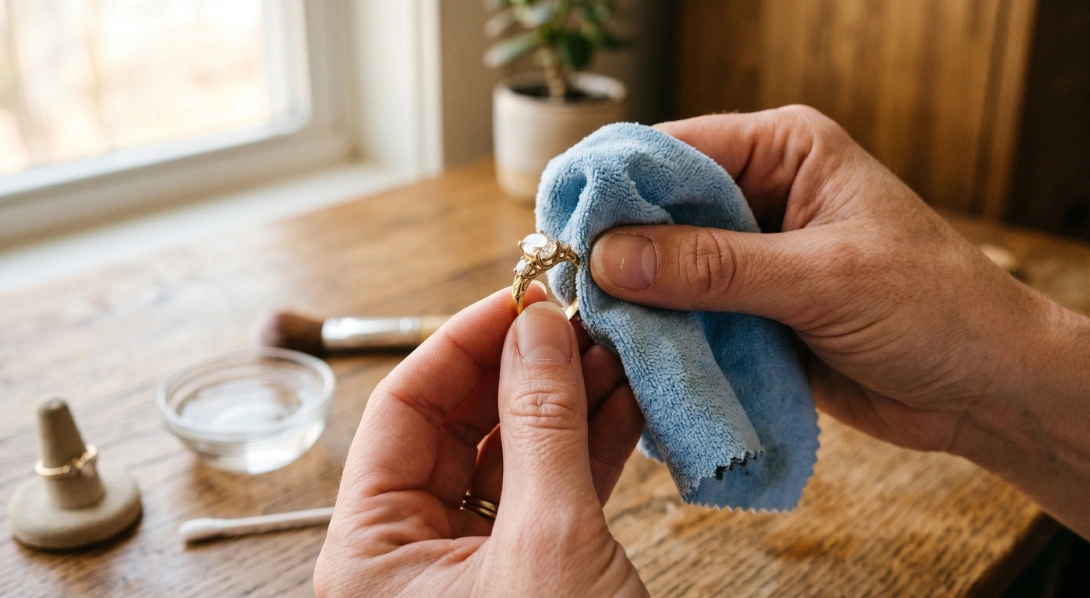
Some gold-plated jewelry tends to tarnish quickly owing to how thin the plating is, though this also depends on the metal content that lies underneath. If you want to restore and clean your gold-plated jewelry at home, skip the harsh cleaning agents and wash it in a warm water and mild soap solution. Then, rinse it clean, and use a soft jewelry cloth (like a silver cleaning cloth) to dry and buff.
While cleaning gold-plated jewelry is technically simple, there are mistakes you should avoid. Bear in mind that if the jewelry’s gold layer is completely worn through, you won’t be able to restore it on your own, and no cleaning methods are going to bring that gold back. You’ll need to see a professional for re-plating.
Keep reading to learn from Vincent Spilotro, vice president of Arezzo Jewelers in Elmwood Park, Ill., how to restore gold-plated jewelry at home, how to prevent causing damage in the process, and how to decide if you need to see a pro.
What You Will Learn
- Know Your Metal: Plated vs. Vermeil vs. Filled
- Step-by-Step Guide: How to Restore Gold-Plated Jewelry at Home
- What to Avoid When You Clean Gold-Plated Jewelry
- Quick Tricks for Shinier Gold Plated Jewelry
- When to Choose Professional Cleaning for Gold-Plated Jewelry
- Keep Your Gold-Plated Jewelry Looking Newer for Longer
- FAQs About Tarnished Gold-Plated Jewelry
- Is it Time to Re-plate Your Gold-Plated Jewelry?
Know Your Metal: Plated vs. Vermeil vs. Filled
Plated, vermeil, and filled gold pieces all feature gold applied to a base metal, but they differ in terms of the amount of gold applied to the base metal. Gold-filled jewelry contains the largest amount of gold, and gold-plated pieces contain the least.
- Since gold-filled jewelry contains significantly more gold than plated or vermeil, it stands up longer to wear and tear, likely won’t need to be restored as often (or if ever), and is the closest of the three to solid gold jewelry.
- Gold vermeil is a sterling silver base covered with a thin gold layer. True vermeil must feature a layer of 10k (or better) gold that’s at least 2.5 microns thick. (A micron is one-millionth of a meter.)
- Gold plating can feature a range of cheap base metals covered in, typically, the least amount of real gold overall. As such, gold-plated jewelry is the least durable of the three, as well as generally the most affordable. You may find that a lot of costume jewelry is gold-plated.
Given the differences between these three, the cleaning requirements may likewise differ. For example, when comparing vermeil against plated gold, the vermeil may be able to handle more intensive cleaning, though caution is still required.
Step-by-Step Guide: How to Restore Gold-Plated Jewelry at Home
If you’re sure that you have a piece of gold-plated jewelry on your hands, clean any tarnished areas using the following steps:

“You can’t polish gold plating because it will take the plating off immediately,” Spilotro says. “But cleaning it with regular dish soap, like Dawn, or a cleaner sold by a jeweler is perfectly safe.”
If you choose to make a homemade jewelry cleaner, always opt for the gentlest options for plated jewelry.
What to Avoid When You Clean Gold-Plated Jewelry
Whenever you’re cleaning gold-plated jewelry, there are products you’ll want to specifically avoid using. “Toothpaste is not a good idea,” Spilotro says. “You’ll get some shine in there, but toothpaste is very abrasive. So it will scratch the metal.”
Here are some other things likely to damage jewelry:
- Baking soda
- Abrasive cleaners
- Magic Erasers and similar cleaning products
- Metal polishes
- Ultrasonic and steam cleaners
While some of these products may be recommended as part of jewelry cleaning “hacks,” they can remove the gold plating from your jewelry completely. While the end result may be shiny, you’re essentially cleaning away the material that gives your jewelry its value.
Quick Tricks for Shinier Gold Plated Jewelry
There are ways to make your gold-plated jewelry shinier if it hasn’t quite reclaimed its original gleam even after a simple soak and wash:
- Always use a microfiber soft cloth to buff pieces after cleaning and drying
- Clean around stones using a soft-bristle toothbrush, as oils can stick to stone settings and dull your piece’s overall sparkle
- Clean gold-plated jewelry regularly, rather than waiting for the jewelry to become dull before cleaning
- Use a gentle, soapy soak regularly, rather than just constantly relying on buffing alone
You can use these tricks for any kind of gold-plated jewelry.
When to Choose Professional Cleaning for Gold-Plated Jewelry
If your gold-plated jewelry almost looks silvery at high-friction spots, like along clasps or around the ring shank, then that means the plating has worn through. In that case, you need to consult a professional. Cleaning the jewelry at home will not help you restore the jewelry’s original color; it needs to be re-plated.
Jewelers use professional solutions and equipment tailored to the specific materials in your piece, and can re-plate your jewelry to give it a refreshed finish. These professionals can also address other issues you may be having at the same time, such as any deep scratches or worn prongs.
Keep Your Gold-Plated Jewelry Looking Newer for Longer
Whether your gold-plated jewelry has been recently professionally re-plated or you’ve just given it its first real at-home deep clean, it’s best to keep it out of the shower, pools, and natural bodies of water.
“Chlorine in the water will ruin the finish,” says jeweler Vincent Spilotro. “So if you have anything that’s plated, chlorine will destroy the plating. Another chemical used in hot tubs, bromine, is safer for humans but more damaging to metals. It’s caustic to gold and platinum. If you have thin prongs, like on a micro pavé piece, it will eat away at those prongs.”
You can keep your jewelry looking newer for longer by:
- Putting it on last when getting ready for the day, and taking it off first when getting ready for bed
- Avoiding contact with cosmetics, perfumes, lotions, hair products, and similar products
- Not wearing it while working out (or any other time you might be sweating)
- Storing it in a jewelry box, in lined, individual compartments, or soft pouches to prevent scratches
- Wiping it down with a soft cloth after every wear
It’s wise to take these same precautions with any fine jewelry to preserve its shine and longevity.
FAQs About Tarnished Gold-Plated Jewelry
Will baking soda or toothpaste restore gold plating?
No, both are abrasive to gold plating and can remove the thin gold layer from the other metals in the piece.
Can I use a polishing cloth on gold-plated jewelry?
Yes, but only use a very soft, non-abrasive cloth. Avoid cloths that contain a commercial cleaning solution or similar harsh chemicals.
Is vinegar or lemon safe to clean gold-plated jewelry?
No, avoid using any acidic ingredients on plated jewelry. Stick to a mixture of mild soap and water.
How do I know if gold-plated jewelry needs to be re-plated?
If you can see the piece’s base metal or if the piece’s color does not restore after a gentle cleaning, it needs to be replated.
Can I use an ultrasonic cleaner on gold-plated jewelry?
You shouldn’t use an ultrasonic cleaner on plated jewelry that contains glued stones, as the ultrasonic cleaner can loosen the jewelry’s settings and strip its finishes.
Is vermeil different from gold-plated jewelry?
Yes, vermeil jewelry features a thicker layer of gold over a sterling base, whereas plated jewelry features an array of base metals and a thinner layer of gold.
Is it Time to Re-plate Your Gold-Plated Jewelry?
Most plated pieces revive beautifully with gentle cleaning and retain their shine with careful wear. When that gold color is gone, though, re-plating is the fix. Your local jeweler can re-plate your jewelry and have it looking good as new, as well as inspect your piece for other damage while they’re at it.
Explore our cleaning guides and consider protecting your treasured pieces from risks like accidental damage, loss, and theft with BriteCo jewelry insurance. Get your quick and easy jewelry insurance quote now.
Related Articles:
The Most Famous Stolen Jewelry in History
How to Identify Authentic 1940s Pieces
The Most Expensive Jewelry Brands in the World
What is Filigree Jewelry?
Buying Guide:
The Secret to Diamond Buying: Natural vs Lab Grown

UP NEXT: What are the Odds of Losing or Damaging Jewelry?

Author