15 Types of Ring Settings
When shopping for an engagement ring (or any other important ring, like a promise ring or statement ring), you might not think much about different types of ring settings — but different ring setting styles can significantly influence a ring’s appearance.
Here’s everything you need to know about 15 popular diamond settings for rings.

What You Will Learn
15 Setting Types for Rings
When considering the ring setting for diamond or other gemstone, what exactly does “setting” mean?
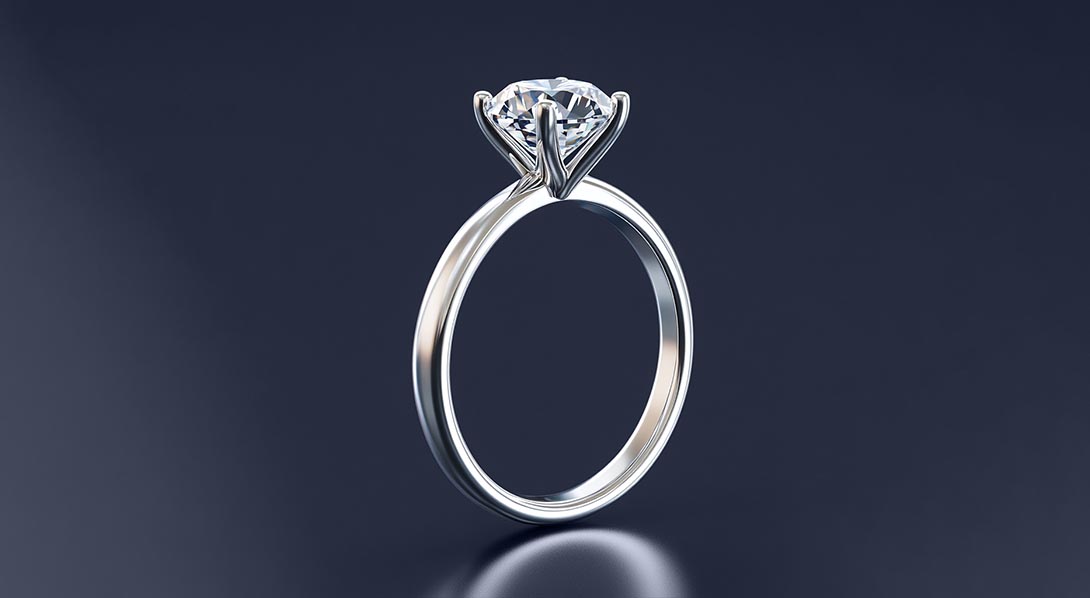
What holds a stone to a ring’s band? That is the setting. A ring’s setting consists of a few key parts. First is the head, or the crown, which features the ring’s center stone. Then, the prongs keep the stone, plus any other adjacent stones, in place.
Settings come in various designs to match multiple popular engagement ring styles. Here are a few of the most popular options.
Prong Settings
The traditional prong setting is a classic for the many ring settings types out there.
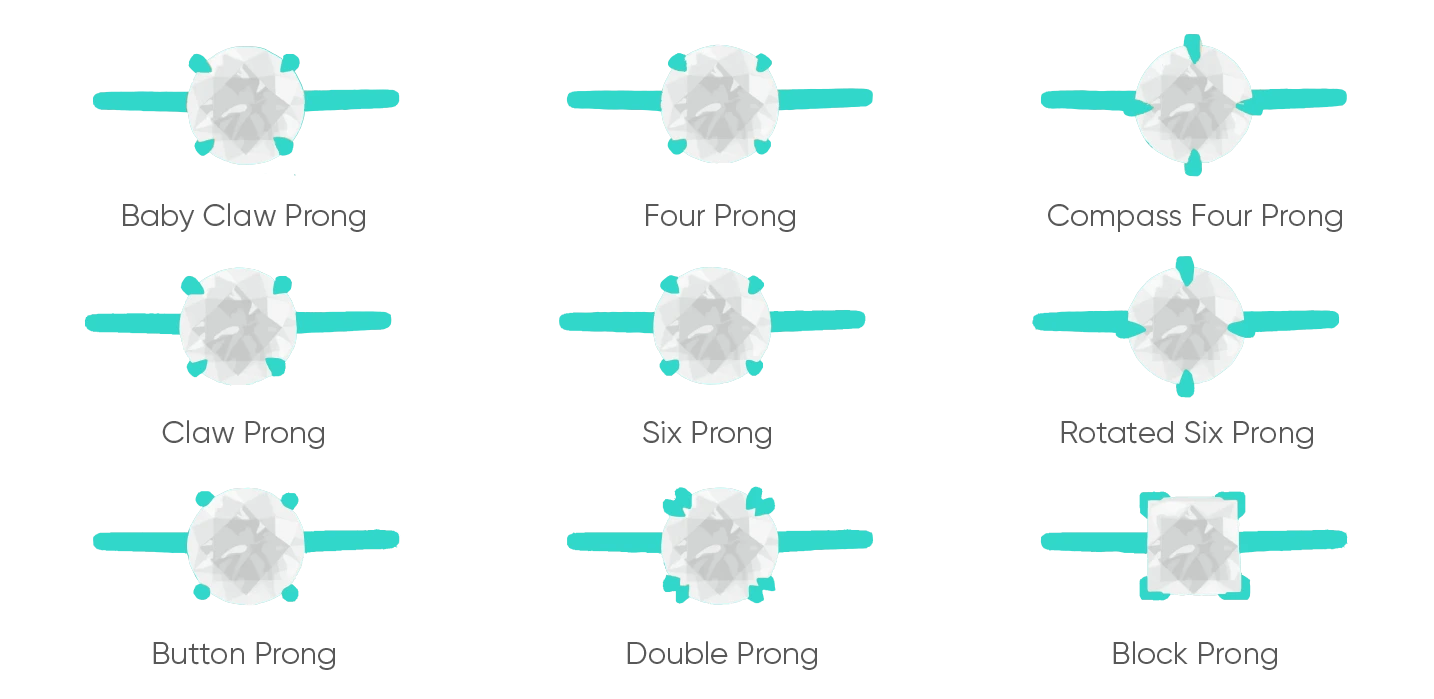
In this setting, a series of prongs hold the center diamond or another center stone in place. However, the prong setting isn’t as straightforward as that. There are different types of prong settings.
For example, there are:
- Four-prong setting has a metal arm near each corner to hold the center stone
- Six-prong setting (also called the Tiffany setting) has six prongs spaced equidistant around the center stone
- Double prong settings have eight prongs in total, with two at each corner of the center stone
- Claw prong settings have pointed tips on their prongs (typically four or six) and are slightly longer than other prong types
- Double claw prong settings have a total of eight-pointed prongs, with two at each corner of the center stone (can be twelve, but it is not common)
- V-prong settings frame the corners of angular diamond shapes with double-edged prongs (think of a picture frame effect)
- Diamond-tipped prong settings feature smaller diamonds within each prong tip
The Basket Setting
The basket setting incorporates the typical prongs but also includes bands that go between the prongs, creating a basket to hold the large center stone.
The Trellis Setting
The trellis setting takes the prongs and weaves them together to form a trellis-like pattern. This is a popular choice for any diamond engagement ring with a larger center stone and smaller diamonds surrounding it (think a three-stone ring).
The Cathedral Setting
Similar, but not quite the same, this engagement ring setting features a thin metal element that swoops up from each side of the metal band to connect with the outer edges of the prongs on either side of the center stone. The cathedral is like the solitaire setting, a ring with a singular stone or one central diamond.
The Peg Head Setting
The peg head setting features a diamond atop a small post and sits above the band. When you add the two small decorative elements on the sides, the peg head setting becomes the cathedral setting.
The Bezel Setting
The bezel setting holds your center stone in place by securely surrounding it with a thin metal rim, usually the same precious metal as the ring. This engagement ring style is remarkably durable because the precious metal bezel protects the center stone from knocks, dings, and scratches.
The Half-Bezel Setting
The half-bezel setting is similar to the bezel, with a twist. With the half-bezel, the center diamond or gemstone has the ring’s precious metal cover half the stone. Typically, only the sides of the stone that sit parallel to the band will have the bezel casing.
Bar Setting (or Channel Set)
These two types of engagement ring settings can be interchangeable.
Rather than being held up by posts, the diamonds are secured into place within the band via channels. This setting style creates a line or bar of identically sized diamonds. In other variations, the bar or channel setting can have two horizontal parallel channels of diamonds.
The bright-cut setting is very similar to the bar setting. It features gemstones set within a channel but held in place by bead prongs. This placement allows for greater reflection and, as the name suggests, lends a greater brightness to each diamond.
The Tension Setting
Among popular engagement ring settings, the tension style setting is unique and not always suited to every wearer. However, it can be a real eye-catcher for those who find this setting suitable to their personal style. The band’s two sides come together to seemingly hold the center stone in place, mid-air, via tension alone.
Halo Setting
The halo diamonds’ setting features a central stone surrounded by a ring of smaller stones, creating a “halo” effect. This setting can accommodate any center stone shape and can make it appear larger.
The Pavé Setting
The pavé setting — derived from the French word for “paved” — features smaller diamonds covering the band’s exterior, the main diamond, and the ring’s sides.
Bridge Accent Setting
The bridge accent setting uses extra metal to lift the center and adjoining stones—for a floating effect. This bridge can have more gemstone embellishments.
The Split Shank Setting
A split shank setting features a split band, with four arms surrounding the stone. Sometimes, the band also features curvatures or twists that lend the ring a romantic or whimsical touch.
The Tapered Baguette Setting
The tapered baguette setting has two or more baguette-shaped diamonds on either side of the center stone and sits within the metal of the band with or without prongs. The elongated baguette diamond cut allows for more sparkle and frames the center stone for an elegant, old-world feel.
The Cluster Setting
A cluster setting is an effect that makes a series of smaller, similarly sized stones look like one large stone.
Setting for Engagement Rings FAQs
What is a vintage setting for rings?
You can use any ring setting, but you can embellish it with more decorative objects to make it look or feel vintage. For instance, take the modern look of a solitaire setting and add a bridge accent or tapered baguette diamonds that can transform the clean lines into a classic, vintage-inspired style.
How do you know what the right engagement ring is?
When shopping for an engagement ring, consider your partner’s style, preferences, lifestyle, and, of course, your budget. Consider talking to your loved one before shopping to gain a greater understanding of their jewelry preferences and tastes.
What is the most expensive ring setting?
Generally, a ring setting with more gemstones and decorative elements (such as a halo ring versus a solitaire ring) or uses more metal (double prong settings) will be more expensive. Of course, a variety of factors go into determining a ring’s cost, including the main diamond’s 4 C’s.
What is the safest ring setting?
If you’re worried about ring damage, use a secure ring setting like the bezel setting.
What is the most common ring setting?
For engagement rings, the most common ring setting is definitely the solitaire.
Protect Your Favorite Rings
Whether shopping for an engagement ring, a statement ring, or anything in between, be sure your precious pieces have protection against loss, damage, and unforeseen accidents.
BriteCo’s comprehensive coverage will protect a range of jewelry pieces. Get your free and fast quote now.
Once you’ve chosen your favorite ring setting, make sure you know the correct size before placing an order. BriteCo’s free online ring Size calculator makes it easy to find a comfortable fit from home.
Related Articles:
High vs Low-Setting Engagement Ring
Different Types of Ring Mounts
The Only 5 Engagement Gift Ideas You Need
Best Types of Engagement Ring Storage
When to Take Off Your Engagement Ring
Why We Love Dove Cameron’s Engagement Ring
Types of Rough Diamonds
Get a Quote:
The Easy Way to Insure Your Jewelry - and Save Money!
UP NEXT: What are the Odds of Losing or Damaging Jewelry?

Author