Side stones can appear on a number of jewelry pieces, from earrings to bracelets to necklaces. But they are most common on wedding bands and engagement rings (in fact, side stone engagement rings are considered the most popular engagement ring type after the simple solitaire).
However, exactly what are side stones on rings and other jewelry pieces? And how do they really impact the appearance of jewelry or its durability? Here’s everything you need to know.
What You Will Learn
What Are Side Stones?
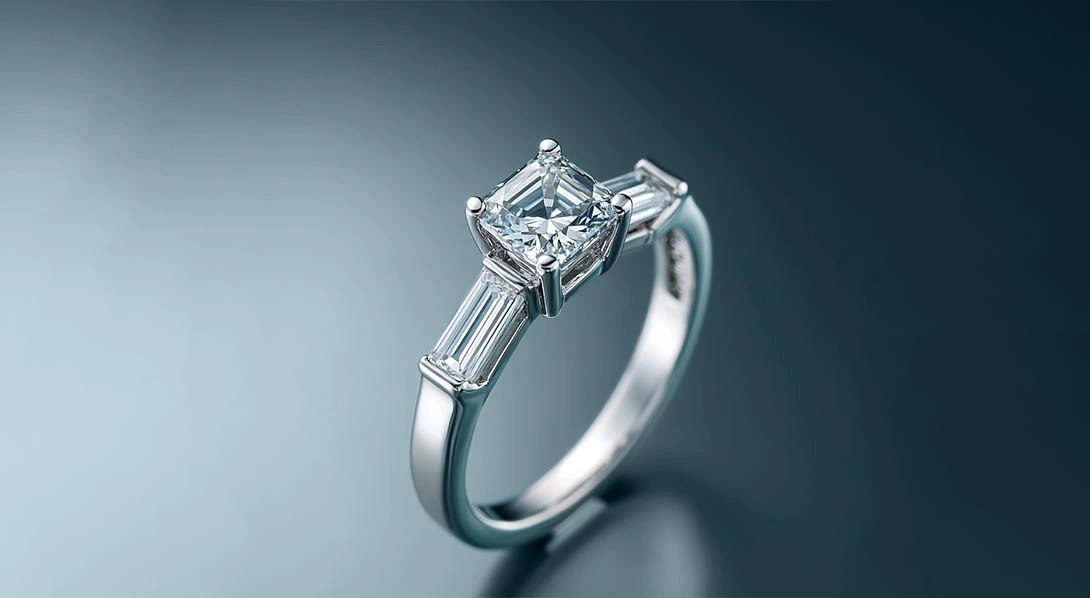
Put simply, side stones are exactly what they sound like: gemstones that appear on the sides of a larger, central stone. So, when it comes to side stone rings, these are any rings that feature smaller, matching gemstones positioned on opposite sides of the center stone.
Rings with side stone settings often include one or two pairs flanking the center gem, so when you view the ring from above, it will appear as a total of three or five diamonds.
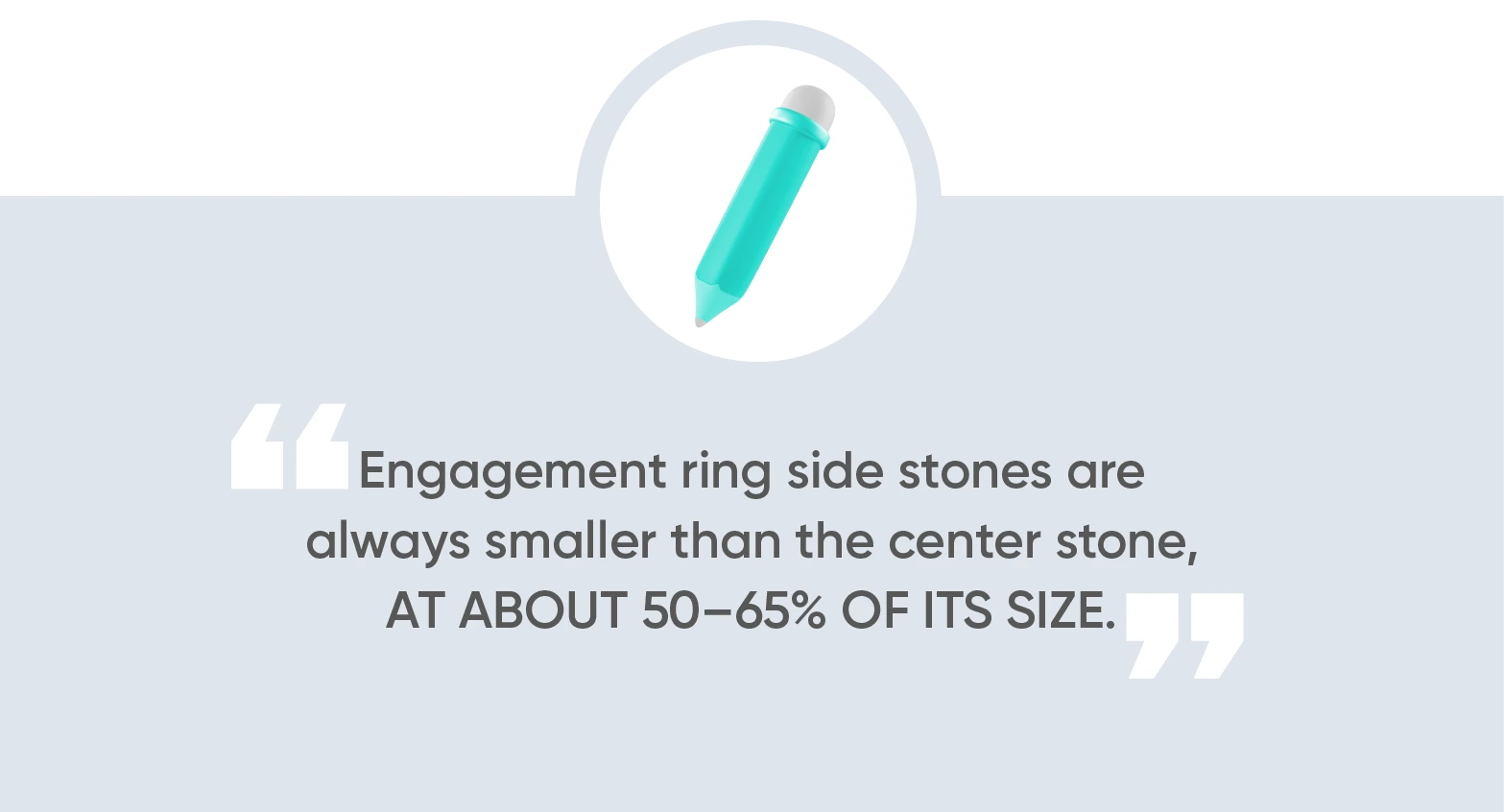
When shopping for this kind of jewelry at family-owned shops or larger retailers, it’s important to pay attention to the size and shape of the accessorizing components and how well they complement the center gem. The most elegant designs will ensure that the side stones add to the overall appearance without detracting from the beauty of the center element or overwhelming it. (For example, engagement ring side stones are always smaller than the center stone, at about 50–65% of its size.)
Smaller side stones are typically slightly less valuable than the center stone, especially when you consider the elements of the 4 Cs of diamonds, such as clarity and color. When shopping for a piece of jewelry with both a center stone and side stones, most of the price will be determined by the larger gem and its cut, clarity, color, and carat size.
Side Stone Shape Options
Side stones on engagement rings or any other piece of jewelry come in a variety of shapes. Often, a complementary side stone shape will be paired with a differing center stone shape to add greater visual interest.
Here are some shape options you might come across while shopping.
 1. Baguettes
 1. Baguettes
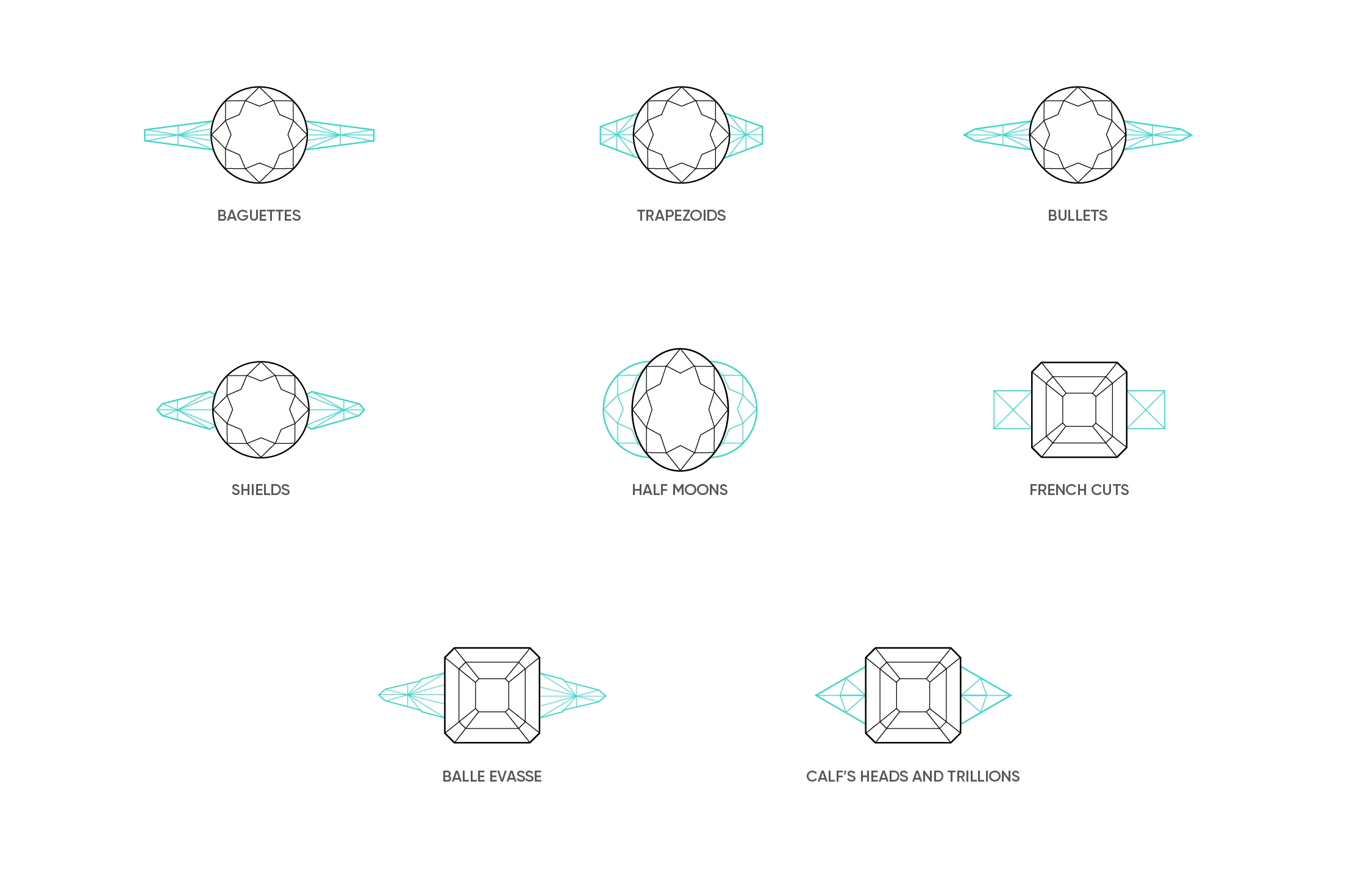
These lengthy side stones stretch away from the center stone and along the ring band. They are incredibly versatile and pair well with just about any center stone shape.
2. Trapezoids
This shape provides both length and width, making the ring appear larger overall. While this can be good if you opt for a slightly smaller center stone, be careful not to choose a ring with trapezoid side stones that overwhelm the more substantial gem. In general, trapezoids work well with square and rectangular center stones.
3. Bullets
Similar to baguette side stones, bullet shapes have more girth and shape. They’re not as traditional as baguette side stones, either, so they may be a good option if you like the length of a baguette side stone but want something slightly more unique and contemporary.
4. Shields
Like trapezoids, shields are larger complimentary side stones that, like their name sounds, are shaped like armor.
5. Half Moons
Half-moon side stones can complement a round or oval center stone and add a nice contrast to a square or rectangular center stone.
6. French Cuts
These square side stones, similar to half-moon side stones, can either complement a center stone in a similar shape or nicely contrast against a different shape, such as a round or oval center stone.
7. Balle Evasse
This shape is what you’d get if you combined a bullet and trapezoid style. You get a wider initial shape near the center, but the side stones then taper down along the shank.
8. Calf’s Heads and Trillions (or Trilliant)
Both of these side stone shapes are triangular. The trillions shape (sometimes called the trilliant shape) has pointed edges, while the calf’s head shape features slightly rounded edges on each side of the triangle. In both instances, the shape’s flat side juts against the center stone, with the triangle’s pointed end positioned outward along the ring shank.
Should You Choose Jewelry with Side Stones?
When shopping for any fine jewelry, you’ll have to weigh many options. Do you go with 14k yellow gold or 14k white gold, and do you like yellow gold or rose gold for the band? Do you want a ring with a plain band but multiple rows of side stones? Or would you prefer a solitaire center stone but a flashier band with an elegant touch, such as delicate pave-set diamonds?
When deciding whether or not to buy a ring with side stones (or any piece of jewelry for that matter), consider the pros and cons.
Pros
- Side stones increase the appearance of the overall ring and your center stone’s size, which may be an advantage for more elevated engagement rings with side stones.
- Side stones can sometimes be customized for a unique look without designing a ring from scratch.
Cons
- Depending on the design and shape, some side stones may be vulnerable to damage and unsuitable for wearers with certain lifestyles, such as if you use your hands a lot for work.
- While certainly not the biggest cost factor, side stones can increase the cost of the ring by a small degree.
Side Stone FAQs
What Are the Side Stones on a Ring Called?
Side stones may also be called accent stones. They sit on either side of the center stone and along the shank.
What Size Should Side Stones on a Ring Be?
A good rule of thumb is to opt for side stones that are about 50–65% the size of your center stone. Anything larger than that can actually make the center stone look smaller!
Can You Add Side Stones to a Ring Later?
Yes, you can add side stones to many existing ring settings. However, note that any time you change the appearance of a ring dramatically — even when just changing the size of the band — you risk inadvertently damaging it. If you think you’d like side stones on a ring, it’s best to set engagement ring processing with the side stones already in place.
Can Engagement Rings with Side Stone Settings Be Resized?
Yes, they can technically be resized. However, you do run the risk of the side stones loosening over time as the setting is adjusted.
How Much Do Side Stones Impact Ring Cost?
The center stone is the most expensive part of a ring, which will impact your overall cost the most; however, if you begin adding large or intricate side stone designs, that can raise the price as well.
Protect All of Your Favorite Rings with Jewelry Insurance
Whether you’re shopping for an engagement ring, a statement ring, or anything in between, ensure all your precious pieces are protected from loss, damage, and unforeseen accidents.
BriteCo’s comprehensive jewelry insurance coverage will protect a range of pieces — or your entire collection. Get your free and fast quote now.
Related Articles:
A Quick Guide to Gem Inclusions
What Is Spinel? A Quick Guide to the Gemstone
High vs Low-Setting Engagement Ring
Who Buys the Wedding Bands?
Most Expensive Diamond Cut
Are Rose Cut Diamonds Good for an Engagement Ring?
Quiz:
The Engagement Ring Calculator You’ve Been Searching For and it’s FREE!
UP NEXT: What are the Odds of Losing or Damaging Jewelry?

Author