What are Gem Inclusions? A Quick Guide
If you’ve ever shopped for jewelry, you’ve probably heard of gem inclusions. If you’re particularly shopping for a diamond, then you may have heard gem inclusions discussed negatively, as a factor that can lower the price and value of a diamond, as gem inclusions negatively impact the diamond’s clarity.
However, there’s so much more to know about inclusions in gemstones. What even are gemstone inclusions? How do they get there? And are they always bad?
What You Will Learn
What is a Gem Inclusion?
First and foremost, what even are inclusions in gemstones?
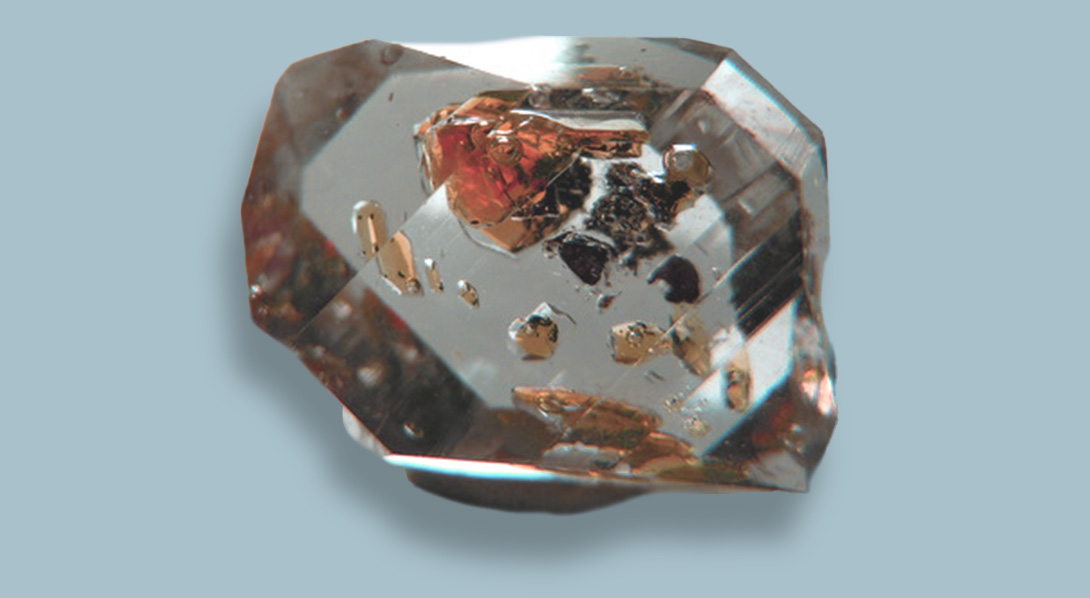
Put simply, gemstone inclusions are a foreign material trapped inside a host gemstone. The foreign materials made their way into the gemstone during the time of gemstone formation. There are many different types of inclusions, and depending on the type of inclusion and the particular gemstone, the presence of many inclusions might not necessarily be a bad thing. In fact, some popular gemstones can thank their inclusions for their desirable appearance.
Types of Inclusion in Gemstones
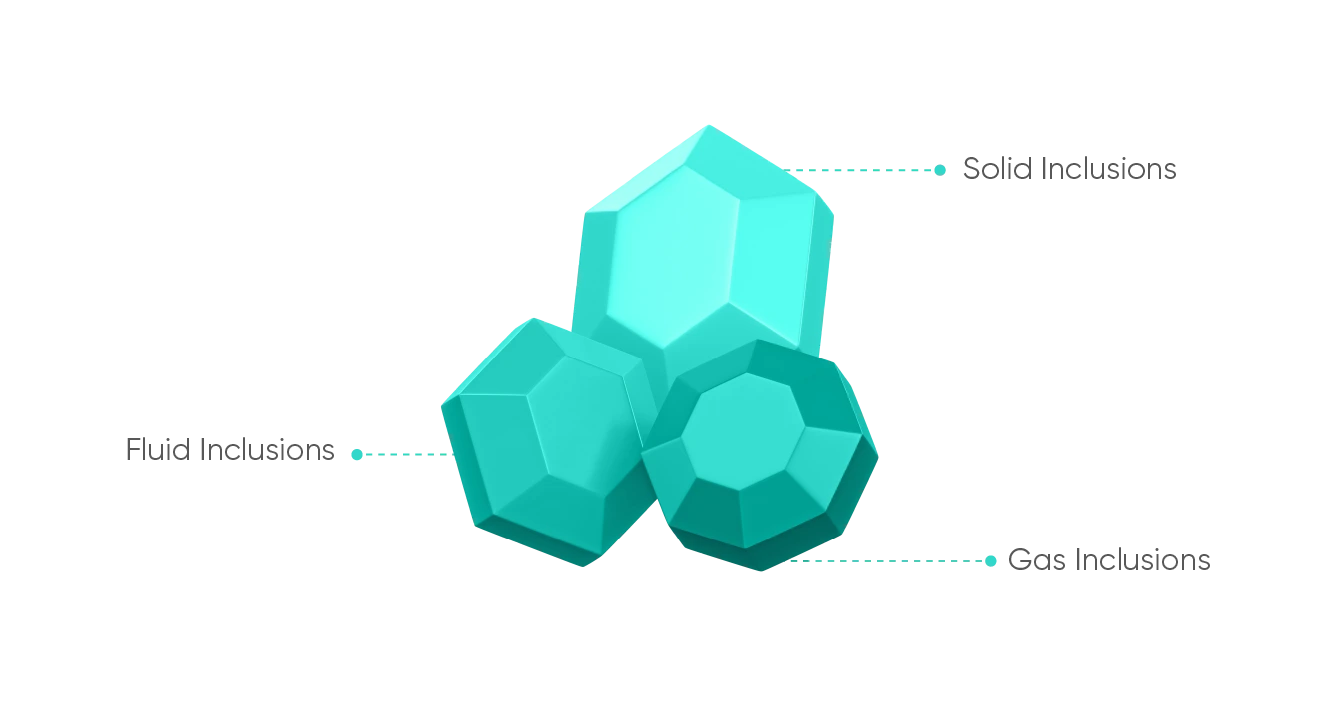
So what are the various types of inclusions in gem varieties? Common gemstone inclusions are broken down into three categories: solid inclusions, fluid inclusions, and gas inclusions.
 Solid Inclusions
 Solid Inclusions
Solid inclusions are exactly what they sound like. They’re a solid piece of some other substance, trapped within the gemstone. What exactly the solid inclusion is may differ, but possibilities include pieces of other minerals or microscopic crystals, or even biological materials.
Fluid Inclusions
Fluid inclusions, meanwhile, are the opposite. They’re a liquid trapped within the crystal, typically in the form of a tiny bubble.
Gas Inclusions
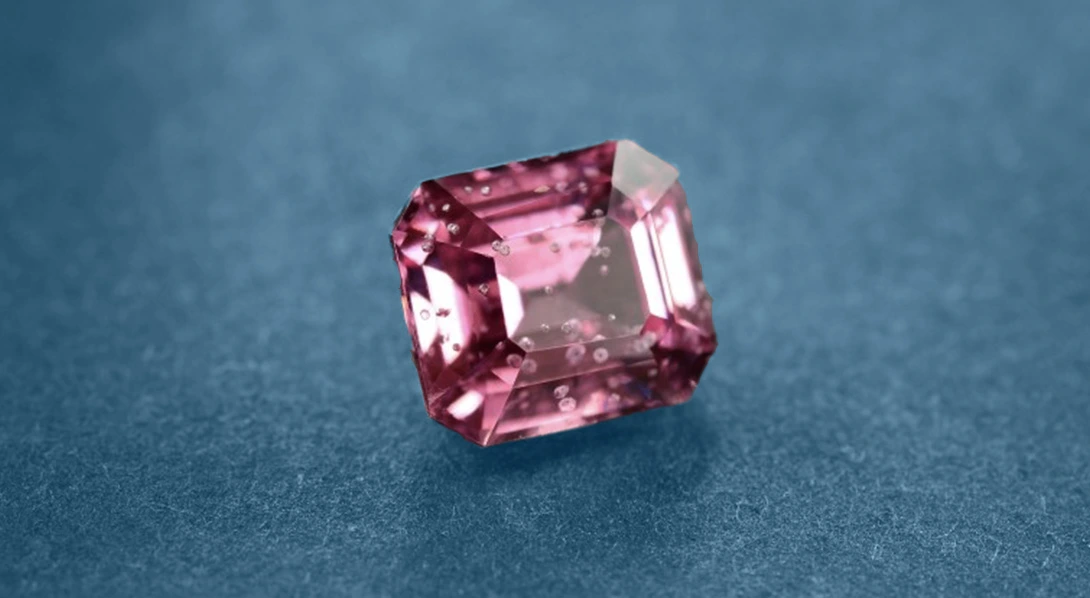
Likewise, gas inclusions occur when gas bubbles are trapped within the gemstone. Gas inclusions are common in natural glass gemstones but may otherwise be a sign that gemstones with inclusions like these have been produced in a lab.
Other Subtypes of Inclusions
While all inclusions are either solid, gas, or fluid, there are other subtypes of common inclusions.
Needle-Like Inclusions
Needle-like inclusions are long and thin, and caused by the presence of certain minerals. Needle-like inclusions are one of the few inclusions that can actually add to a gemstone’s value, as is the case with star rubies and star sapphires, both of which gain their unique appearance thanks to the presence of rutile needle inclusions.
Horsetail Inclusions
Similarly, horsetail inclusions are thin and delicate, with a feathery appearance that, as the name suggests, resembles a horse’s tail. Horsetail inclusions are most commonly found in certain varieties of garnets.
Negative Crystals
Negative crystals are a type of inclusion that essentially looks like negative space. The miniscule inclusion may be liquid, gas, or solid.
Gemstone Identification via Inclusions
Professional gemologists like those at the Gemological Institute of America often use inclusions to identify gemstones. By examining crystal inclusions using a high-powered microscope and special lighting, they can more accurately not only identify a gemstone, but also sometimes determine whether or not a gemstone is real or a fake.
Beyond telling professionals about the chemical composition of a gem, inclusions can also reveal interesting geological information, such as the temperature at which the gemstone formed, the pressure at the time the gemstone formed, and the geologic age of the gemstone.
Suggested Reads:
A Complete Guide to Gemstone Certification
IGI vs. GIA vs. GCAL: Key Differences Between the Labs
Inclusion Phases
Professionals not only identify inclusion types. They also break down inclusions within a single gemstone into inclusion “phases.” These include single-phase, two-phase, and three-phase inclusions.
Single-phase inclusions refer to inclusions within a gemstone that only represent one of the primary inclusion types — so solid, liquid, or gas. However, most single-phase inclusions are solid inclusions.
Two-phase inclusions refers to inclusions within a gemstone that represent two of the inclusion types. Often, in this case, the two types of inclusions are liquid and gas, and the gas inclusion may actually be trapped within, and capable of moving within, the liquid inclusion.
Then, a three-phase inclusion in gemstone varieties refers to gemstone inclusions representing all three inclusion types: solid, liquid, and gas. As is the case with a two-phase inclusion, the three-phase inclusions may be contained within one another, such as the solid and gas inclusions being trapped within the liquid inclusion.
Are Gem Inclusions Good or Bad?
As mentioned, gem inclusions are often seen as a negative, as most know them simply in relation to diamonds. In the context of diamonds, inclusions are typically merely defined as imperfections, as the inclusions can negatively impact the diamond’s clarity and brilliance. (Though, in the outlying case of salt and pepper diamonds, the inclusions are actually a good thing!)
Beyond diamonds, though, gem inclusions can sometimes add value to a gem, or might even be responsible for a gem’s characteristic appearance. Gem inclusions like those in star rubies and star sapphires are one stand-out example of this. Rutilated quartz likewise features needle-like inclusions that give the crystal its unique appearance. You can even consider insects trapped in amber as an example of a gem inclusion, and these stones are particularly popular with some collectors.
What are Inclusions in Gemstones FAQs
What is an Inclusion in a Gemstone?
An inclusion in a gemstone is a foreign object trapped within the gemstone. The object is trapped during the gemstone’s formation.
Are Gemstone Inclusions Good or Bad?
It depends on the gemstone and the type of inclusion. While inclusions can negatively affect a gemstone’s clarity, this may be desirable in some cases.
Is an Inclusion the Same Thing as a Crack in the Gemstone?
No, a crack in a gemstone affects the gemstone’s exterior and can weaken the gemstone and put it at risk for further damage. An inclusion is a foreign object trapped within the gemstone. While cracks are visible, inclusions are not visible to the naked eye. Inclusions may also not weaken a gemstone, if the inclusion is small enough.
Do Fake Gemstones Have Inclusions?
Yes, it’s entirely possible for a fake gemstone to feature inclusions. It all depends on how the fake gemstone was made.
Do Lab-Grown Diamonds Have Inclusions?
While a lab-grown diamond may have fewer overall inclusions than a naturally formed diamond, it will still typically feature some inclusions, as a lab-grown diamond is still a “real” diamond and chemically and structurally the same as a mined diamond.
Protect Your Investment
While jewelry insurance won’t protect your gemstones from inclusions, it can protect them from a large number of other worries and dangers, such as damage, loss, and theft.
Learn more about BriteCo’s comprehensive coverage and get your quote now.
Related Articles:
What Is the Rarest Crystal?
What Is Spinel? A Quick Guide to the Gemstone
What Is a Tourmaline Gemstone?
What is Morganite?
What is zircon gemstone?
Are Green Sapphires Rare and What Do They Offer?
What Are Beryl Gems?
Get a Quote:
The Easy Way to Insure Your Jewelry - and Save Money!
UP NEXT: Cost to Repair or Replace Jewelry Out of Pocket: What You Might Pay

Author