At its most basic, tourmaline is a semi-precious gemstone known for its vast array of colors that come together in a prismatic rainbow. This newer October birthstone is beloved for its colorful jewelry and tourmaline properties, which are thought to aid in certain health and spiritual matters.
Want to know more? Keep reading to learn:
- What is tourmaline?
- Where does the name tourmaline come from?
- What are tourmaline stones’ chemical properties?
- What is tourmaline used for?
- Can tourmaline heal the body?
- And more!
What You Will Learn
What Is a Tourmaline Gemstone?
The name tourmaline is derived from the ancient Sinhalese word turmali, meaning “mixed colors” — a fitting description for this stone. Understanding the chemical composition of tourmaline explains why this phenomenon occurs.
Tourmaline is part of a complex family of borosilicate mixed with iron magnesium, aluminum, potassium, lithium, or sodium. Depending on the exact chemical composition, the tourmaline crystal may exhibit different colors, though these chemical properties aren’t always the root of tourmaline’s vast range of hues. For example, radiation may sometimes affect the gemstone’s color.
Gemologists use these varying chemical compositions to divide tourmaline into several different species, including elbaite, liddicoatite, dravite, uvite, and schorl.
Schorl is the most common, by far, but it’s not the most common for tourmaline gems that are suitable for use in jewelry. In fact, schorl is not always fit for jewelry (though it has appeared in mourning pieces) since it’s often very dark in color, nearly or totally black, and contains a high amount of iron.
By contrast, the most common form of tourmaline for gems is elbaite (named for Elba Island, Italy) since it comes in the greatest variety of colors.
Tourmaline Colors
Whereas some gemstones may only come in a handful of colors, tourmaline’s colors run the gamut. There’s green tourmaline, pink tourmaline, blue tourmaline, black tourmaline, dark brown tourmaline, and more. Sometimes, a combination of specific chemical properties can make the gemstone appear multi-faceted whether that’s red-pink, yellow-brown, pink-yellow, brown-black, green-blue, yellow-brown, black-green, or some other interesting color contrast.
Here are a few tourmaline sub-types, categorized by color:
- Chrome tourmaline has a rich green color, with the green stones taking their hue from naturally occurring vanadium.
- Paraíba tourmaline is green, blue, or violet and always comes from Paraiba, Brazil.
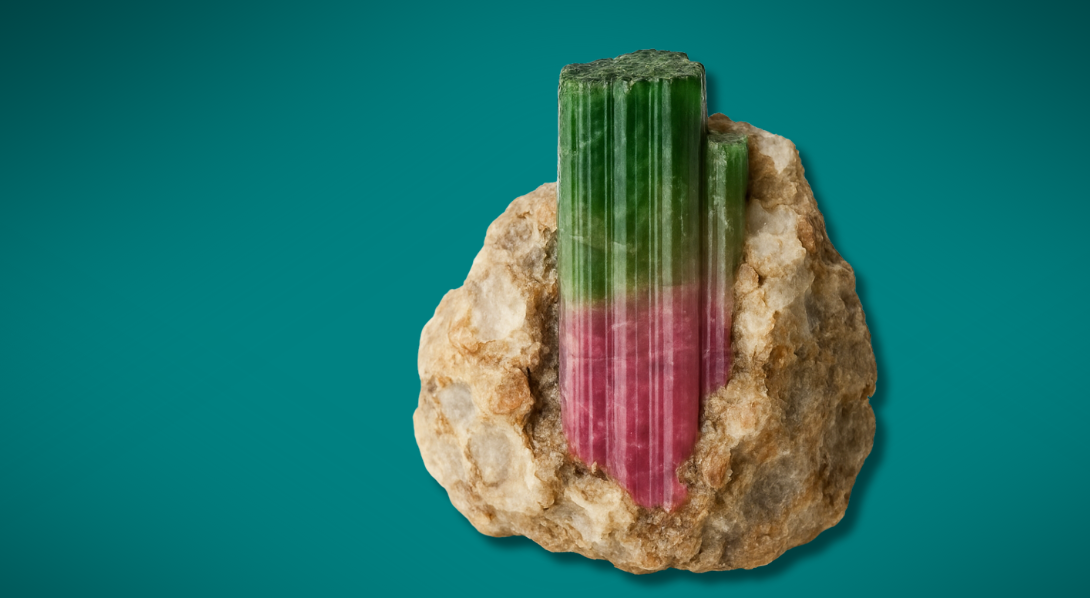
- Watermelon tourmaline uniquely features a pink center and dark green exterior to mimic the look of the fruit.
- Savannah tourmaline is a bright yellow color.
- Rubellite tourmaline is, as the name suggests, pink or red, like a ruby.
Tourmaline History
As is the case with many semi-precious gemstones throughout history, tourmaline was often mistaken for another, more valuable gemstone: emeralds. However, while the Spanish conquistador who discovered tourmaline’s blue and green stones in Latin America may have assumed he had emeralds on his hands, scientists determined some 300 years later that tourmaline is its own distinct gemstone.
Since its discovery, tourmaline has been mined nearly everywhere in the world, including the United States, Brazil, Africa, Asia, and the Middle East.

What Is a Tourmaline Stone Used for in Healing Practices?
Beyond jewelry, this mixed-color precious stone is often used for its supposed metaphysical properties, which differ according to tourmaline color.
For example, pink stones supposedly may reduce stress, help with sleep issues, provide calm, balance the mind, soothe the heart, and encourage empathy and compassion.
Green tourmaline, meanwhile, is supposed to provide strength and motivation and reduce panic. It also supposedly has other properties, with some saying it encourages courage, diminishes fear.
Blue tourmaline is supposed to bring peace, honesty, courage, and truth. It’s also said to provide clarity and open the mind.
With its green and pink hues, watermelon tourmaline is often used to bring joy, provide protection, and offer connection.
What Factors Impact Tourmaline’s Value
Just as the 4 Cs — cut, clarity, color, and carat weight — impact the overall value and price of diamonds and other precious gemstones, they also affect the value and cost of tourmaline.
Cut
You may not find an extensive selection of tourmaline cuts and shapes when you shop since a tourmaline crystal is naturally somewhat long and narrow and typically cut into long and narrow shapes.
Clarity
A gemstone will generally boast a higher value if it boasts a greater clarity with fewer inclusions or internal imperfections. However, sometimes inclusions are responsible for unique aesthetics, as is the case when looking at a cat’s eye tourmaline. It features what looks like a long, slit pupil filled with bright light in the center of the stone.
Unless you’re specifically shopping for one of these cat’s eye tourmalines, you’ll find that the general rule holds true: The fewer the inclusions and greater the clarity, the higher the gemstone value.
Color
As discussed, tourmaline comes in a wide variety of colors, but some are more valuable than others. Paraiba tourmaline is the most highly valued, with its blue-green hues. That said, rubellite tourmaline, green tourmaline, and chrome tourmaline are also highly sought-after. Chrome tourmaline is sometimes purchased as a more affordable alternative to an emerald or tsavorite. A darker tourmaline gemstone, such as those almost black in hue, is the least prized.
Carat Weight
As might seem obvious, even with tourmaline, the adage holds true: The bigger the rock, the bigger the price. The largest tourmaline is the Ethereal Carolina Divine Paraiba, which weighs just under 200 carats. The tourmaline stone was set into a necklace and is worth up to $125 million.
Suggested Read: A Complete Guide to Gemstone Certification
What Is A Tourmaline Stone FAQs
What Is the Rarest Tourmaline Color?
With so many tourmaline colors, is there a rarest, most valuable kind? Yes, Paraiba tourmaline, particularly in shades of neon blue, is the rarest variety in the world. As such, it’s also the most expensive tourmaline color on the market.
How Can You Easily Tell if Tourmaline Is Real?
Tourmaline is pretty hard, coming in at 7–7.5 on the Mohs scale, so if you can easily scratch the stone’s surface, it’s likely not real. Additionally, tourmaline typically includes a few inclusions, even as clarity is highly prized in this stone. So, it may be a fake if you can’t spot any inclusions within the stone.
Can You Wear Tourmaline Every Day?
Yes, tourmaline is hard and durable enough to be worn daily. Many people do so for its supposed healing properties.
Is Tourmaline a Precious or Semi-Precious Gemstone?
Tourmaline is a semi-precious gemstone. The only precious gemstones are diamonds, rubies, emeralds, and sapphires.
How Expensive are Tourmalines?
It depends entirely on the color, clarity, cut, and carat weight. The most expensive tourmalines can easily go for more than tens of thousands of dollars per carat.
Protect All Your Jewelry with Specialized Insurance
Whatever type of jewelry you’re in the market for, tourmaline or otherwise, keep it safe with specialized jewelry insurance.
BriteCo offers comprehensive policies that protect your collection from theft, accidental loss, and damage, no matter what life throws at you. Learn more and get a quick and easy quote today.
Related Articles:
Perfect Graduation Jewelry Gift
What Is Inlay in Jewelry?
What Is a Chalcedony Stone?
What is Morganite?
What is zircon gemstone?
What Is a Moldavite Stone?
Understanding Unique Malachite Properties
Appraisal Tool:
The Easiest Way to Get a Professional Jewelry Appraisal Valuation!

UP NEXT: What are the Odds of Losing or Damaging Jewelry?

Author