Mohs Scale Meaning: A Quick Guide
If you’re in the market for a new piece of jewelry, and you’re comparing and contrasting various gemstones, you’ve probably come across the Mohs scale. This scientific scale ranks materials according to their hardness. In other words, the higher the number on the Mohs scale, the more durable and difficult to scratch the gem in question.
Here’s a quick guide to everything you need to know about the Mohs hardness scale, including how it was created and why it’s impactful on the jewelry you buy.
What You Will Learn
- Who Is Behind the Mohs Scale?
- How Does the Mohs Scale of Hardness Work?
- Examples of Mohs Scale Rankings
- What Does Mohs Hardness Scale Mean for Jewelry?
- Comparing Hardness of Popular Gemstones
- What About Other Hardness Scales?
- Mohs Scale FAQs
- Protect Your Jewelry, Regardless of Where It Ranks on the Mohs Scale
Who Is Behind the Mohs Scale?
The Mohs Scale is named for its creator, Carl Mohs. Born in the late 1700s, Carl Mohs was a German mineralogist and chemist. Throughout his career, he identified and catalogued different mineral collections. It was over the course of this work that he developed the Mohs Scale for the purpose of identifying minerals based on their physical characteristics — like mineral hardness — rather than their chemical makeup, which was the norm at the time.
How Does the Mohs Scale of Hardness Work?
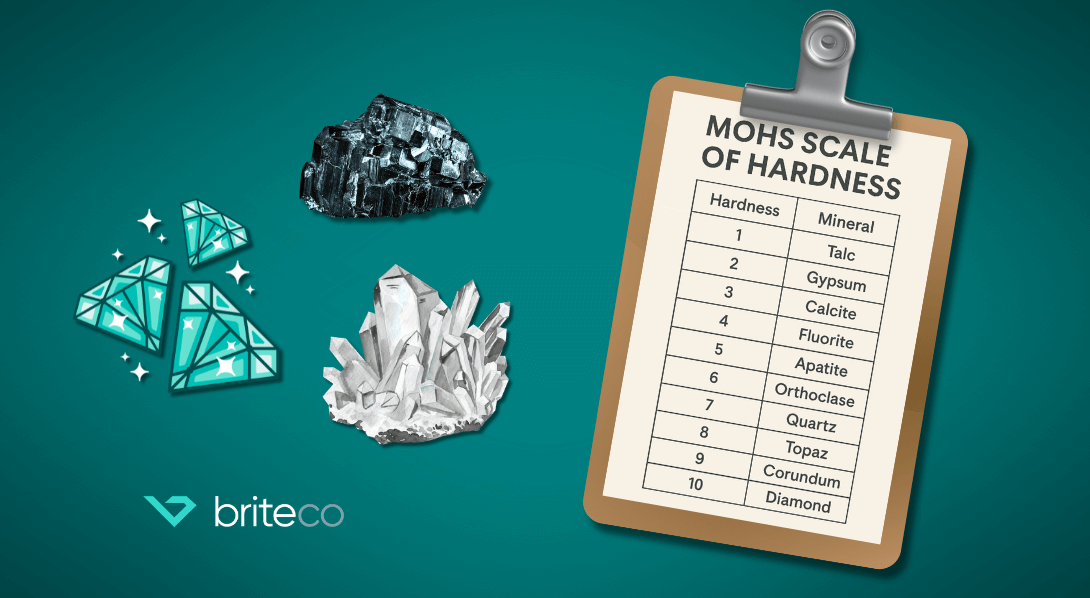
The Mohs scale ranks mineral hardness on a scale of 1 to 10. Softer specimens have a lower value, while harder minerals have a higher value. The scale is used professionally but can also be a reference for regular people, particularly when shopping for jewelry.
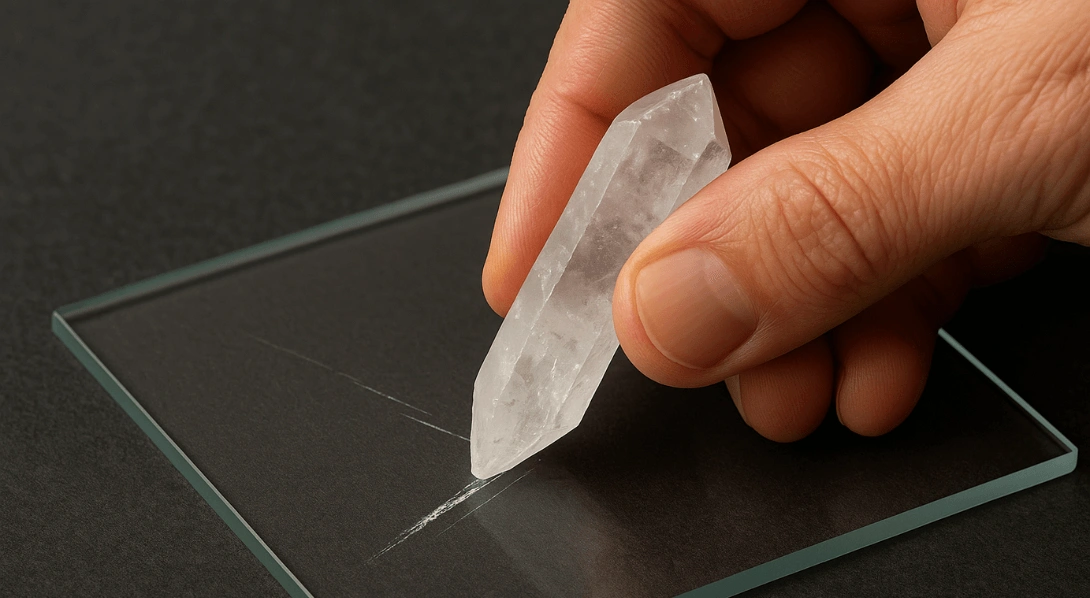
When testing where a material might lie on the Mohs scale, a professional will scratch two minerals together or scratch one with common objects. Based on how easily scratched it is, geologists can make calculated guesses as to what the mineral in question might be.
Examples of Mohs Scale Rankings
Talc: Score of 1
A mineral like talc that can be scratched simply with one’s fingernail is at the bottom of the scale, ranked at 1 or 2.
Calcite: Score of 3
When a copper penny can scratch the mineral, but a fingernail cannot, then it’s ranked around a 3. Calcite is a good example of this.
Fluorite: Score of 4-6
Minerals around the 4 to 6 rankings can usually be scratched by a knife, but not with a penny. Examples include fluorite, apatite, or feldspar.
Quartz: Score of 7-9
Once we’re in the higher rankings, like a 7 to 9, a steel nail or drill bit may be some of the only materials that can scratch the minerals’ surface. Examples include quartz, topaz, and corundum.
Diamond: Score of 10
Finally, at the very top of the Mohs scale is the hardest material: a diamond. Only a diamond can scratch another diamond.
However, Graduate Gemologist Kaitlyn Rigdon cautions, “Diamonds can be damaged even though they’re really hard. The hardness scale rating just refers to how easily they can be scratched. Think of it like a gemstone getting scratched and looking dull, versus breaking and becoming chipped. A diamond can chip just like an emerald, even though their hardness ratings are different.”
What Does Mohs Hardness Scale Mean for Jewelry?
So why should this matter to you if you’re shopping for jewelry? It all comes down to durability.
Most of us wouldn’t want to invest a large amount of money in a beautiful piece of jewelry only to find out that our lifestyle isn’t exactly compatible with a center gemstone that’s going to scratch easily. There are also other situations to consider, such as storing a softer gemstone with other jewelry or wearing it in combination with other jewelry.
“The Mohs scale should have an impact on what gemstones you’re buying to wear daily,” says Rigdon. “So if you’re buying an emerald or opal, it might not be best to put it in a ring you’ll wear daily because it’s soft and will become scratched easily. Rings with opals and emeralds can be scratched more easily because you wear them on your hand, and people talk with their hands. We see damage to those gemstones the most. Reserve those for jewelry you wear for special events or place them in earrings or a necklace instead.”
If you’re considering purchasing jewelry that includes gemstones other than diamonds, check where each stone ranks on the Mohs scale. This will help you decide if it’s a good durability fit for how and where you plan to wear the piece.
(Although, no matter the durability, it’s always a good idea to remove any jewelry before performing certain tasks, such as cleaning, working out, gardening, etc.)
Suggested Read: A Complete Guide to Gemstone Certification
Comparing Hardness of Popular Gemstones
Now that you know a diamond ranks at a 10 on the Mohs scale, you may wonder: Where do other popular gemstones fall? Here are a few popular gems and their rankings.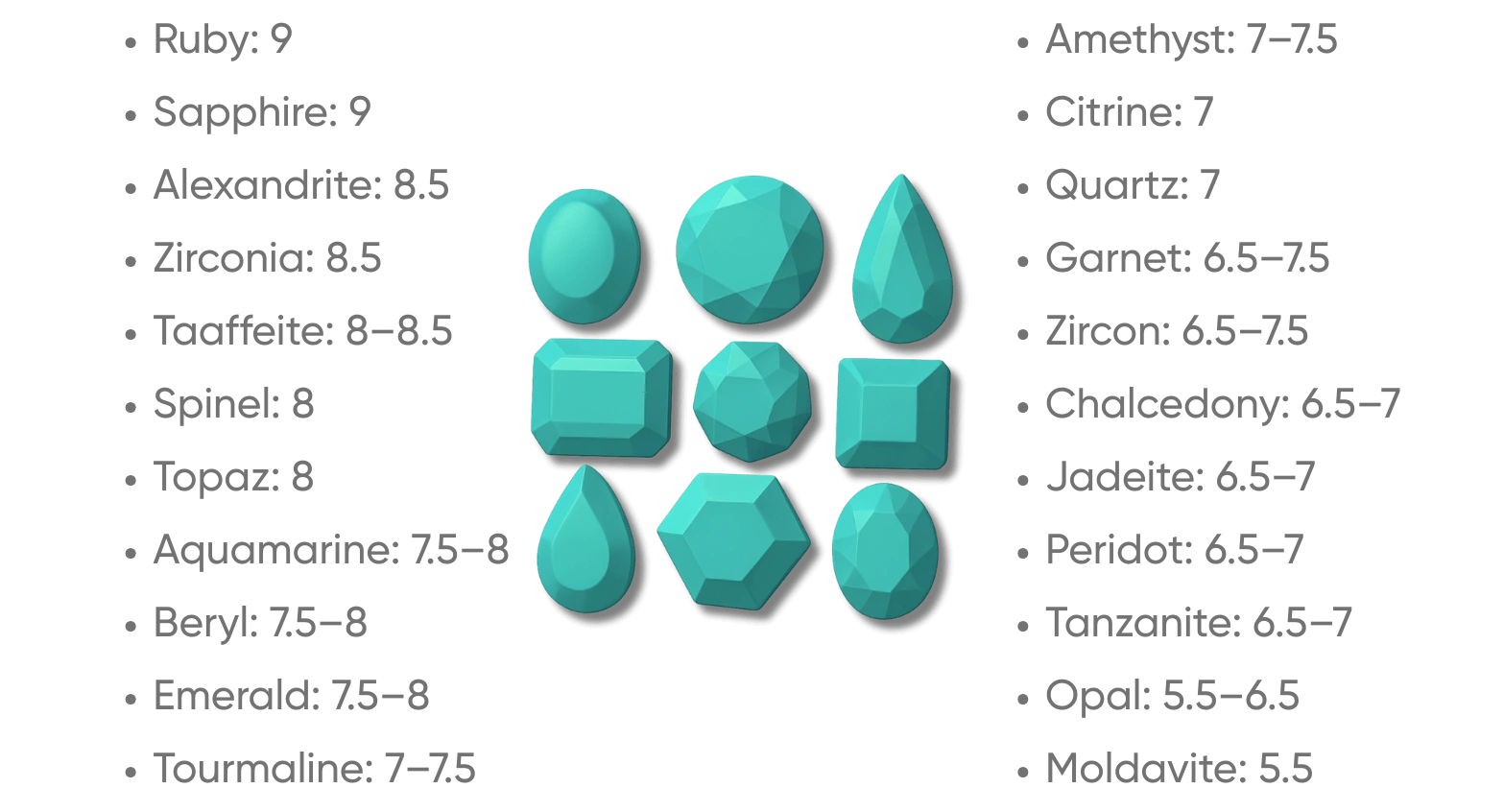
If you want a durable piece of jewelry but don’t necessarily prefer diamonds or have the budget for them, you might consider buying something with rubies or sapphires. In contrast, if you love softer stones, like opal or moldavite, you’ll need to take special care not to damage them when wearing or storing them.
What About Other Hardness Scales?
Other hardness scales, beyond the Mohs scale, are used to determine durability, although the Mohs scale has become the universal standard.
Other hardness scales used throughout various industries include:
- The Vickers hardness test, used for a range of materials, including metals
- The Janka hardness test, commonly used to test wood
- The Rosiwal scale, an alternative to the Mohs scale
Mohs Scale FAQs
What Is the Mohs Scale?
The Mohs scale is a method for testing or determining the hardness of crystalline materials, ranking them on a scale of 1 to 10. It helps buyers and professionals determine the durability of a particular gemstone.
What Does Mohs Scale Mean for Jewelry?
The Mohs hardness scale is important for the jewelry industry and for jewelry shoppers because it can be used to determine the durability of a precious stone. The more durable the jewelry, the more likely you’ll be able to avoid damaging it.
What Is the Hardest Material on the Mohs Scale?
The hardest material on the Mohs scale is a diamond. Unlike other gems that can be scratched by fingernails, pennies, or drill bits, only a diamond can scratch another diamond.
What Is the Softest Material on the Mohs Scale?
The softest material on the Mohs scale is talc; it’s so soft that you can easily scratch it with your fingernail.
Is It Possible to Damage a Diamond?
Even though diamonds are the hardest material on the Mohs scale, it is still possible to damage them. For example, if you store multiple pieces of diamond jewelry together, they could scratch each other. Likewise, many chemicals and similar substances could discolor your diamond through exposure, which is why it’s important to take proper care of your diamond jewelry and insure it to cover any repairs that may be needed.
Protect Your Jewelry, Regardless of Where It Ranks on the Mohs Scale
Once you’ve found your perfect piece of jewelry, regardless of where its stones fall on the Mohs scale, ensure it is protected from all the scratches, dings, dents, and other damage that might occur.
BriteCo offers comprehensive, worldwide jewelry coverage that can repair or replace your treasured pieces when this happens. The best part is that policies come with zero deductibles.
Get your free jewelry insurance quote now!
Related Articles:
A Complete Guide to Lab-Grown Gemstones
How Much Is Opal Worth?
What People Love About Heart Cut Diamonds
Appraisal Tool:
The Easiest Way to Get a Professional Jewelry Appraisal Valuation!
UP NEXT: What are the Odds of Losing or Damaging Jewelry?

Author