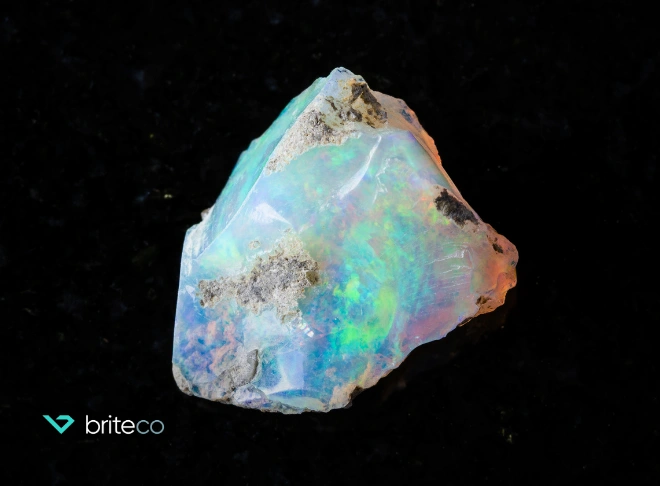
How Much Is Opal Worth? All the Price Factors & Value Ranges
Opal prices range significantly, from less than $20 per carat to hundreds or even thousands of dollars per carat, based on factors such as the type of opal, opal brightness and play of color, as well as pattern, tone, and condition.
The lowest-value opals are synthetic opals, treated opals, and assembled opals like doublets and triplets, while the highest-value opals are vibrant solid opals that exhibit bright color play.
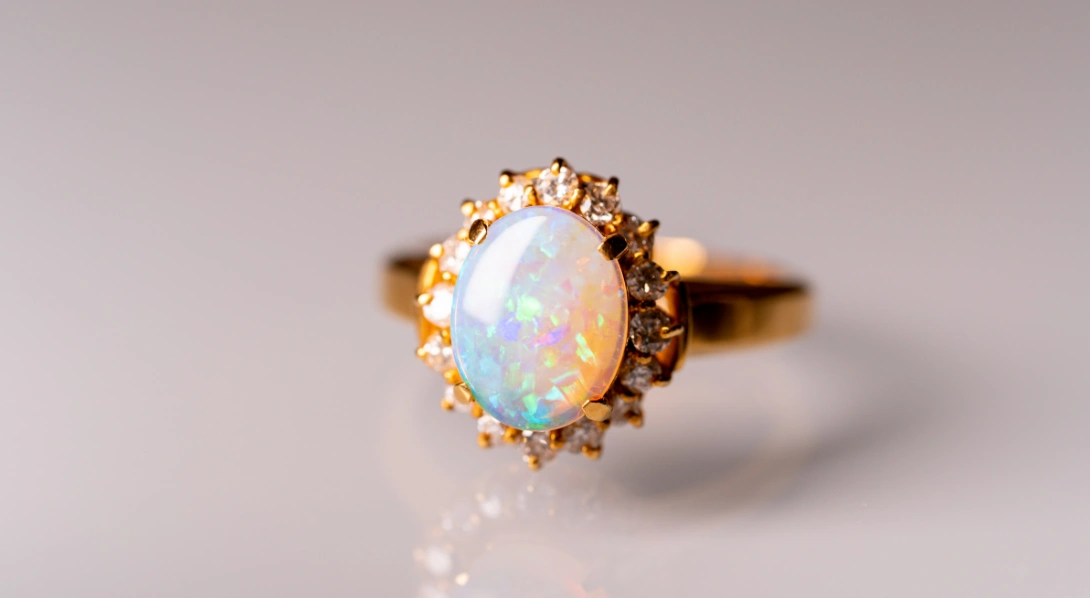
Keep reading to learn how much is opal worth in general, what factors most impact value, and how to find out the value of your particular piece, plus the best way to protect opal jewelry with jewelry insurance.
What You Will Learn
What Determines How Much Opal Stone Is Worth?
The three most important things that impact opal quality, and therefore value, are color/body tone, the play-of-color pattern, and clarity. Whether you’re hoping to find out how much is opal per carat because you’re looking to sell a piece, or because you want to insure it, these three factors will ultimately inform the total value.
What Is Play-of-Color Pattern?
The play-of-color effect in opal is the visual phenomenon you’ll notice when you turn the stone from side to side, as the colors inside shift and flash and are distributed across the stone. When determining opal value, an appraiser or jeweler is going to look at both the intensity of the play-of-color, as well as this pattern.
Play-of-color patterns vary widely: They may be small and cramped; broad and geometric; or sweeping and elongated.
What Is Opal Body Tone?
Opal body tone refers to the background color that sits beneath the play-of-color pattern. Popular opal background colors include black, white, yellow, orange, and red; some are also clear or transparent.
What Is Opal Clarity?
An opal’s clarity refers to the transparency or opaqueness of its background. Neither option is 100% more valuable than the other; it all depends on the individual stone.
Other Factors Determining How Much Opal Is Worth
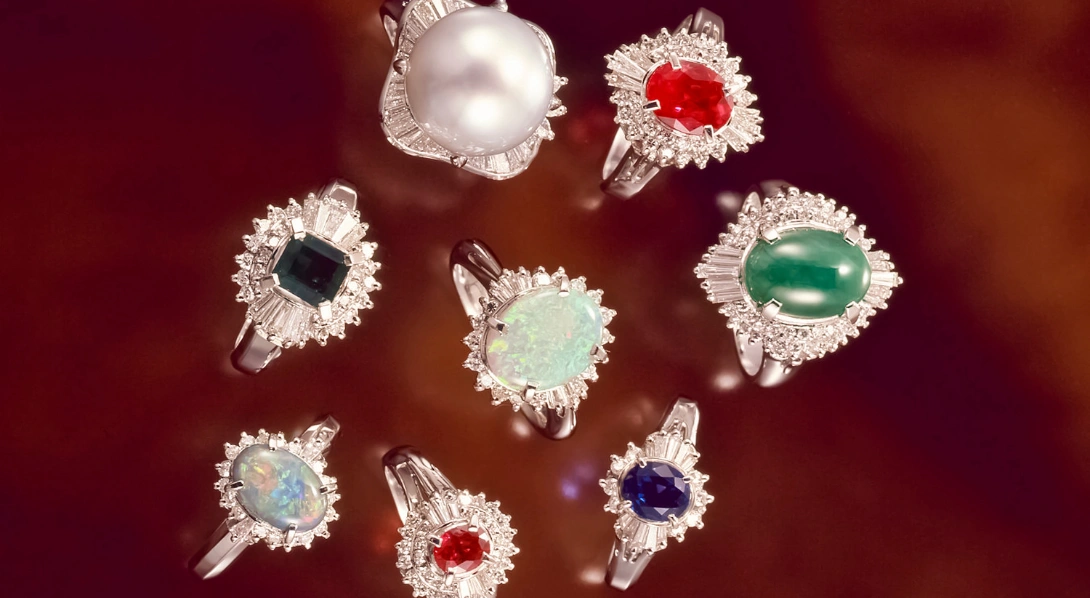
In addition to the primary factors — body tone, play-of-color pattern, and clarity — that distinguish a high-quality opal from lesser quality opals, a few other factors can impact overall value:
- Country of origin: Australian opal is generally considered the most valuable.
- Treatments and assembly: Double and triplet, or similarly treated opals, as well as synthetic opal, are not worth as much as natural opals.
- Condition: Any cracks, chips, or crazing (which refers to fine cracks on the surface of the stone) can reduce the opal’s value.
Deciding How Much Is an Opal Worth and If You Need an Appraisal
The best way to know the value of your opal piece is by taking it in for a formal appraisal; a qualified professional can tell you exactly what type you have (as there are many opal varieties) and its value.
If you find that your opal is quite valuable, you may want to protect it with jewelry insurance. You can get a free jewelry insurance quote now, with plans starting at just $125.
Estimating Opal Worth at Home
Before you take your opal in for an appraisal, though, ask yourself a few questions so that you’re a little more knowledgeable regarding what you have on your hands and can moderately estimate its worth at home:
- Does the opal’s face show obvious play-of-color, and does it flash colors as you tilt it against a light source? Opals with an intense play-of-color, with dominant hues and a large closely arranged pattern, are more valuable.
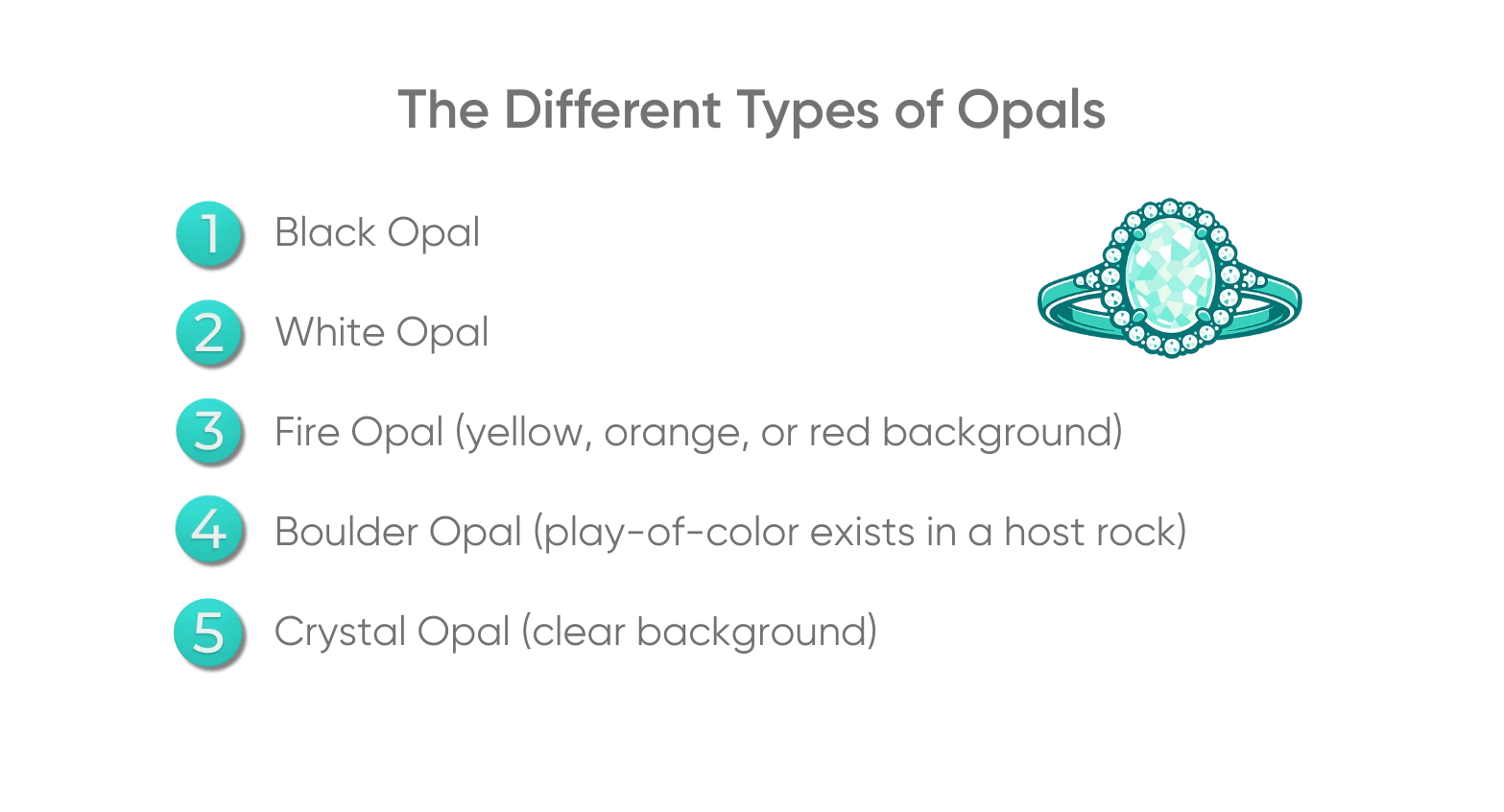
- What is the background opal color? Black opal is highly sought after, but opals can exhibit multiple colors and backgrounds, and may also be considered white opals (white background), fire opals (yellow, orange, or red background), boulder opals (where the play of color exists within a host rock), or crystal opal (clear background).
- Is the opal solid or does it look layered? Doublet or triplet opals are worth less.
- Are there any cracks or chips? Damage can reduce the opal’s value.
Answering these questions can give you a starting point as you consider just how much your opal is worth, and whether it might trend more or less valuable.
Opal Replacement Value Vs. Resale Value
It’s important to note that there will be a difference between the appraisal value of an opal and its resale value. Appraisal value will determine the cost needed to replace the opal with a similar-quality stone while the resale value is what you might be able to get when reselling it on the secondhand market.
If you want to understand how these figures compare, here’s a full breakdown of appraised value vs. replacement value vs. market value.
The appraisal value is what you need for jewelry insurance. The resale value, in contrast, is often less.
Step-By-Step: How to Valuate and Protect Your Precious Opal
- Identify the type of opal you have on your hands.
- Examine the opal’s play-of-color brightness and pattern under normal indoor light.
- Inspect the stone for layers that might indicate it’s a doublet/triplet opal.
- Look for any damage like crazing or cracking.
- Compare the opal to similar opals and their market price, being sure to compare against opals of the same color and pattern, and carat weight.
- Get a professional appraisal so that you know the replacement value.
- Insure the opal if you wear it often or if an official appraiser deems it valuable.
Opal Valuation Do’s and Don’t’s
- Do compare your opal only against other opals of the same type, body tone, brightness, pattern, and size.
- Don’t try to determine your opal’s worth based solely on color.
- Don’t assume a layered stone is going to hold the same value as a solid opal.
How Much Is Real Opal FAQs
How Much is Raw Opal Worth Per Carat?
Opal’s worth can vary heavily, from under $20 per carat all the way up to hundreds or thousands of dollars per carat. To know the true value, you’ll need to closely examine your stone and its characteristics, as well as take it to a professional appraiser for professional assessment.
What’s the Most Valuable Type of Opal?
Black opals sourced from Australia and featuring a rare pattern and bright colors are among the rarest and most valuable.
How Do I Know if My Opal Is a Doublet or Triplet?
Carefully examine your opal from the side, looking for any layering, as that can be an indication of a doublet or triplet opal.
Do Cracks or Crazing Reduce Opal Value?
Yes, damage such as cracks or crazing can reduce opal value, but opal value isn’t based on condition alone. A lot of other factors are at play, so don’t brush off a cracked or crazed opal as invaluable just due to these issues.
Do I Need an Appraisal to Insure Opal Jewelry?
Yes, most jewelry insurance providers will request an appraisal in order to insure any jewelry, including opal jewelry. It’s best to get an appraisal, not only for jewelry insurance purposes, but also to verify the type of opal you have on your hands and its value.
Confirm Your Opal’s Worth, Then Protect It!
Opal type, brightness, pattern, and condition all play a role in determining an opal’s worth. Talk to a qualified appraiser to find out how much your opal is worth. If it’s worth a substantial amount or if it’s a particularly meaningful piece, protect it with specialized jewelry insurance.
You can get a jewelry insurance quote in seconds. And with BriteCo, you’ll get up to 125% of appraised value replacement insurance coverage, so you don’t have to worry about paying out-of-pocket costs in the event of a claim.
Related Article:
How to Clean Pearl and Opal Jewelry?
Get a Quote:
The Easy Way to Insure Your Jewelry - and Save Money!
UP NEXT: Cost to Repair or Replace Jewelry Out of Pocket: What You Might Pay

Author