What Is Chalcedony?
Maybe you know about quartz, and you probably know a bit about silica (if you don’t, it’s basically one of the most common minerals on Earth, making up everything from silicone to glass to beach sand). But have you heard of chalcedony? It’s a form of silica (silicon dioxide, to be exact) that blends quartz and the oxide mineral moganite to form a waxy stone, often appearing in a grayish-blue color on the retail market.
So, what is a chalcedony stone, and why do many people love it? Here’s everything you need to know.
What You Will Learn
What Is a Chalcedony Stone?
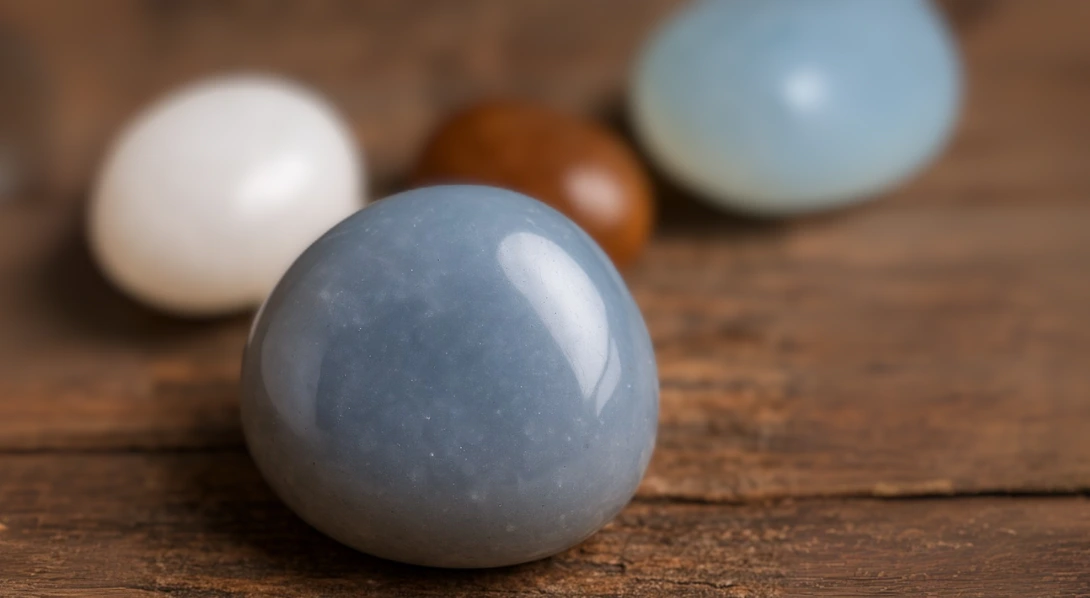
Sometimes called microcrystalline or cryptocrystalline quartz, chalcedony is a silicon dioxide material that appears either translucent or opaque. It comes in many colors, including:
- white chalcedony
- grayish-blue chalcedony
- brown chalcedony
Some of the brighter colors you might see, like pure blue chalcedony, are typically treated to achieve that color versus naturally occurring.
However, it’s not entirely impossible to find this variety in nature, as is the case with holly blue chalcedony, which is pale blue, very valuable, and a rare version typically found in Oregon, according to the International Gem Society.
The name chalcedony comes from Chalcedon, Turkey, and records of the stone date back to the Roman Empire. Today, chalcedony is sourced from around the world, including in Africa, Asia, and the Americas.

Chalcedony Throughout History
Chalcedony has been used throughout history in various ways, both decorative and practical.
Before the modern era, a chalcedony stone was often used to make tools like knives. In other instances, ancient humans ground the material into a powder, mixed it with a moist substance, and used it for cave paintings.
Later on, chalcedony appeared in decorative items and jewelry. And in the Middle Ages, the land that we now know as Germany began actively mining, carving, and selling chalcedony, particularly agate varieties.
Varieties of Chalcedony
The chalcedony gem comes in a handful of varieties, and some of them may be slightly more familiar to you by name than chalcedony.
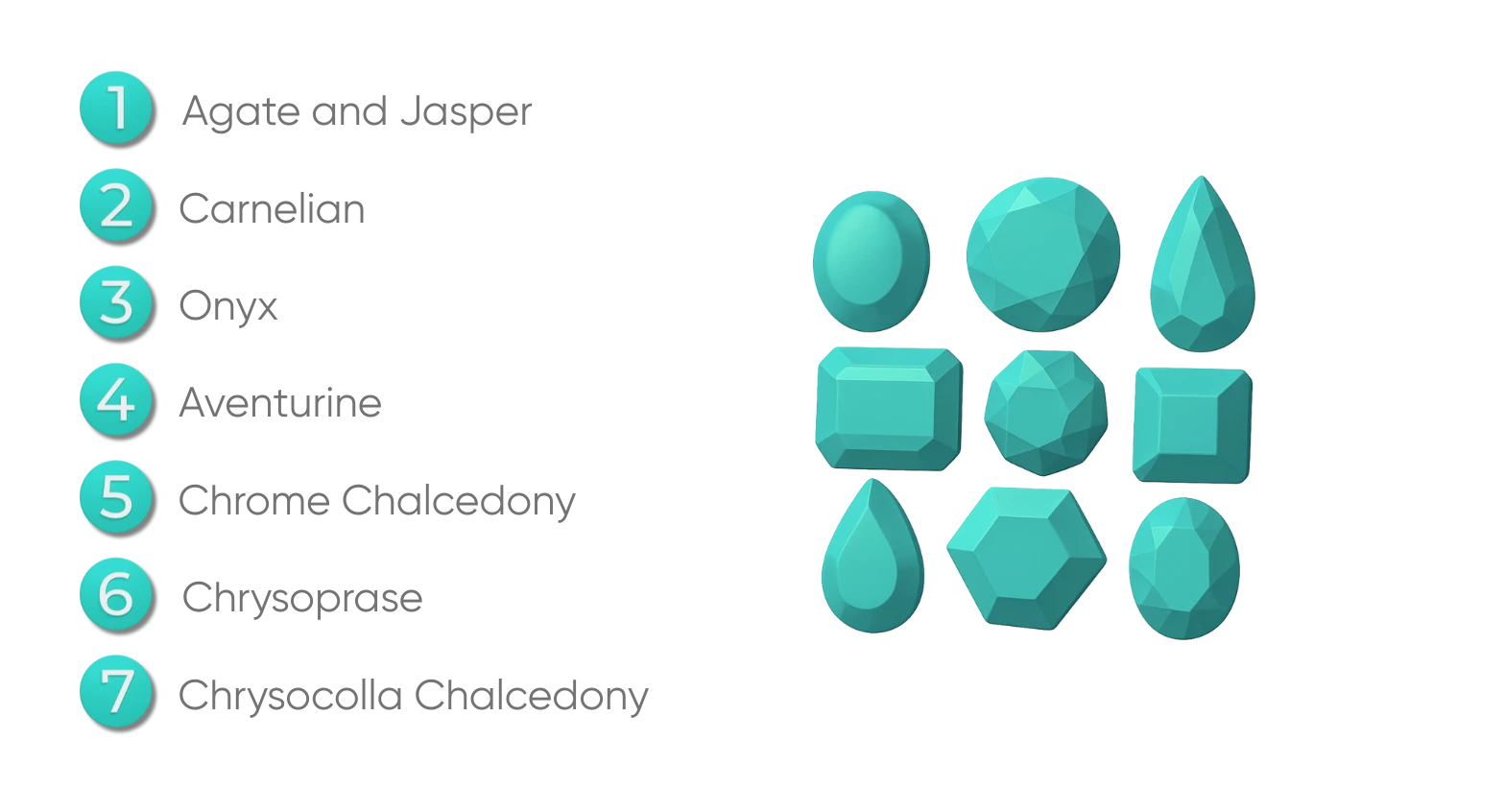
 1. Agate and Jasper
 1. Agate and Jasper
One of these more familiar varieties of the stone is agate. Standard agate is a banded chalcedony that shows dramatic color patterns reminiscent of those formed by Jupiter’s storms. Fire agate, meanwhile, has some iridescence to it. On the other hand, jasper is a totally opaque form of agate.
Agate and jasper may display several colors, but reds and browns are standard. There’s also moss agate, which, as the name suggests, features a moss-like pattern in the requisite green. A subset of jasper is bloodstone or heliotrope, which features similar coloring, with the same reds and browns, but also a sometimes green backdrop and red “bloody” speckles.
2. Carnelian
Carnelian doesn’t feature the dramatic patterns of agate, but it’s still pretty in its own way. These stones are somewhat translucent and feature a red or brown hue.
3. Onyx
Like agate, onyx is banded chalcedony, but in this instance, the colors are limited to black and white. Solid black onyx is available, but it is often not found naturally; instead, it’s typically color-treated or dyed.
4. Aventurine
This variety of chalcedony is formed when the mineral meets feldspar, giving it a greenish color. The opaque body contains a bit of “aventurescence,” or a glittery, metallic shine that you’ll find in some gemstones.
5. Chrome Chalcedony
This form of chalcedony is always green with the exact shade ranging from light to deep emerald green. The most common source is from Africa.
6. Chrysoprase
Chrysoprase is also green, but has a milky appearance. Like holly blue chalcedony, this variant is extremely rare.
7. Chrysocolla Chalcedony
Speaking of rare and very valuable varieties of chalcedony, chrysocolla chalcedony is one of the most valuable. With bright, almost neon blues, deep greens, and a mix of transparency and opaqueness, this stone is like glimpsing into a vibrant underwater pool.
What Are the Metaphysical Properties of Chalcedony?
If you believe in crystal healing, you may want to purchase chalcedony for related purposes. Chalcedony symbolizes stability and is thought to help remove negative energies, fear, and dark magic. It can also help with more day-to-day maladies, such as allergies.
You’ll be in good company when using the chalcedony gemstone for this purpose. It has long been prized for its symbolism, even back to the Ancient Roman days, and not just with the Romans but the Celts and Indigenous peoples of America also recognizing its powers.
What Is Chalcedony Gemstone Maintenance Like?
Whether you use this gemstone for its metaphysical properties or have a piece of jewelry or decorative chalcedony, it’s one stone that’s easy to clean and care for.
Any time you suspect the stone needs cleansing, use warm water, mild dish soap, and a soft brush to gently remove dirt, debris, or residue. Then, thoroughly dry it with a soft cloth.
If you have a treated or dyed chalcedony gemstone, avoid exposing it to high heat and chemicals. Don’t use ultrasonic cleaners to clean the stone, either. If you are doing an activity that has you sweating, remove any chalcedony jewelry beforehand and always store it away from direct sunlight.
What Is Chalcedony Stone FAQs
Where Is Chalcedony Found?
This unique material is mined worldwide, including in Asia, Africa, Australia, and the Americas. Stateside, it’s primarily limited to the West and Southwest, with Arizona, Nevada, and Oregon all producing various types. Europe has limited chalcedony deposits, such as in Iceland.
How Much Does Chalcedony Cost?
It depends on where you buy it and the type of chalcedony you’re after, but generally, it’s relatively cheap, given its abundance. You might pay less than a dollar per carat for some types of chalcedony. For the most expensive varieties, you might pay over $100 per carat.
What Are the Rarest Colors of Chalcedony?
The rarest chalcedony color is deep blue. Some of the more common colors include white and gray or a grayish-blue.
Is Chalcedony a Real Gemstone?
As a type of quartz crystal, chalcedony is a real gemstone, even though it’s not precious like diamonds, emeralds, rubies, or sapphires.
What Birthstone Is Chalcedony?
Aqua chalcedony is a March birthstone. It features a deep aquamarine, cloudy color that suits a Pisces.
Protect All Your Jewelry with Comprehensive Jewelry Insurance
Whatever jewelry you purchase, chalcedony or otherwise, specialized jewelry insurance can keep all of it safe from loss, theft, or accidental damage.
BriteCo offers comprehensive policies that keep you covered, no matter what life throws at you (or at your jewelry). Learn more and get a quick and easy quote today.
Related Articles:
What is a Bench Jeweler?
What is zircon gemstone?
What Is a Moldavite Stone?
What Is Malachite?
What Is a Spinel Gemstone?
What Are Beryl Gems?
What Is Cameo Jewelry?
Appraisal Tool:
The Easiest Way to Get a Professional Jewelry Appraisal Valuation!

UP NEXT: Cost to Repair or Replace Jewelry Out of Pocket: What You Might Pay

Author