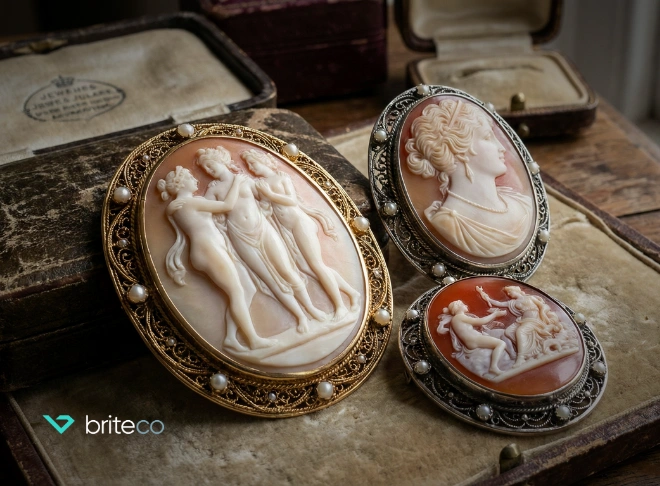
Cameo jewelry is any design, including rings, earrings, necklaces, bracelets, brooches, pendants, or even a stick pin that features a relief carving raised above the background of the piece. (This is the opposite of intaglio jewelry, like signet rings, which depict a similar profile or portrait that’s carved into the jewelry.)
Traditional cameos are famous for depicting the side profile of an individual, but other options can include scenes from nature like flora and fauna as well as religion and mythology. This style is often crafted from a range of materials, including shell, agate, onyx, coral, lava, and glass.

As jewelry trends evolve, cameo jewelry has come in and out of fashion throughout history, particularly traceable to ancient times and experiencing popularity throughout the Renaissance and Victorian era. Today, cameo jewelry still enjoys niche popularity among collectors for its historic appeal and craftsmanship.
If you’re evaluating a piece of antique cameo jewelry that you inherited or found at an estate sale or market, here’s what you need to know about how the material, craftsmanship, and condition can impact is value, plus how to care for antique cameos, and how you can protect them with comprehensive jewelry insurance.
What You Will Learn
- How Is Cameo Jewelry Made?
- Types of Cameo Jewelry & How to Care for Them
- Caring for Cameo Jewelry
- Antique Vs. Vintage Vs. Modern Cameos
- Cameo Meanings & Motifs
- Authenticity: Is Your Cameo Real Or a Reproduction?
- How Much Are Cameos Worth?
- Cameo Jewelry FAQs
- Get an Appraisal and Insurance for Vintage Cameo Jewelry with BriteCo
How Is Cameo Jewelry Made?
Cameo jewelry can be hand-carved from all sorts of materials, including sardonyx shell (in which cameo jewelers might contrast a light upper layer of sardonyx with a darker base), onyx, glass, and stone.
The carved cameo is then set within a precious metal like gold or sterling silver. However, costume cameo jewelry often uses a more affordable material, such as brass for the base metal, and is not hand-carved; instead, it may be made from a mold.
You can tell the difference between authentic vintage cameo jewelry and costume cameo jewelry by looking for mold lines as opposed to the delicate tool marks that you’d see in an authentic vintage piece.
Types of Cameo Jewelry & How to Care for Them
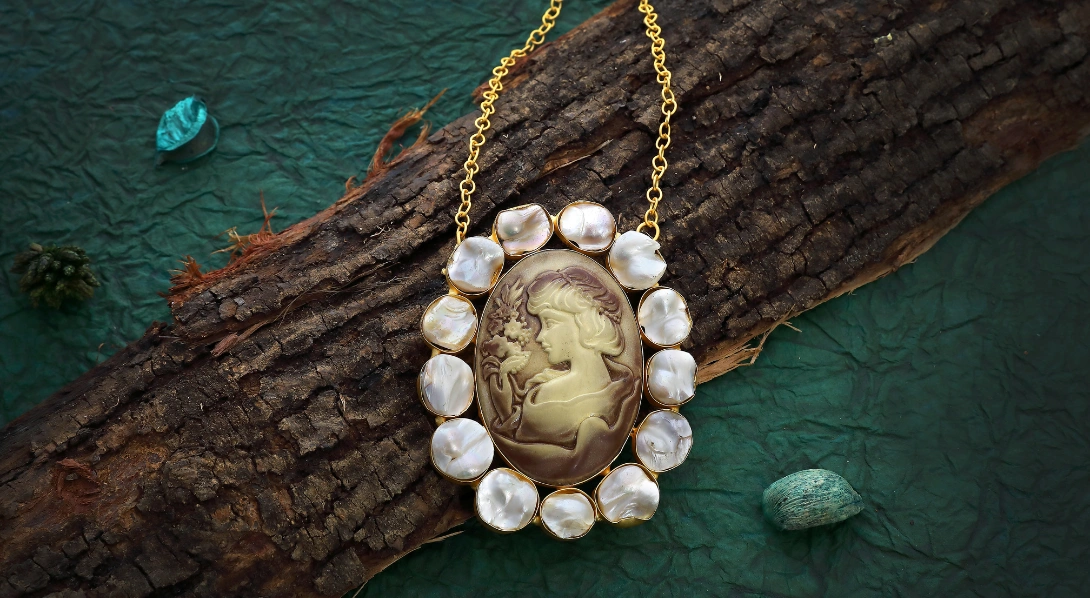
Common types of cameo jewelry include stone cameos (i.e. agate cameos), shell cameos, lava cameos, and imitation cameos. Each type will offer differences in appearance, durability, and value.
Shell Cameos
Shell cameos are often made from a helmet or queen conch. They’re lightweight and offer a slight translucence and warm luster. You may be able to see growth striations from the original shell and the back of the cameo may be slightly concave.
To care for shell cameos, be sure to avoid any harsh cleaning methods, including hot water or other heat sources as well as ammonia, ultrasonic cleaners, or prolonged soaking. Instead, only use lukewarm water and a soft brush to clean, if necessary. Then, pat dry.
Shell cameos should be stored away from direct sunlight, when they’re not being worn.
Stone Cameos
Stone cameos are often made from agate, onyx, or sardonyx. These cameos are often heavier and more durable than shell cameos. Still, you’ll want to avoid ultrasonic or steam cleaners to protect the adhesives and layering within the cameo construction.
Lava Cameos
Made from porous volcanic tuff, lava cameos have a unique appeal and were particularly popular in Italy in the 1800s. They offer a matte surface, but they can chip easily. Always clean them with a barely damp cloth; never soak them.
Imitation Cameos
Imitation cameos may be made from pressed glass, plastic, or paste. They offer a bright, even color with none of the variations that come from authentic, hand-carved pieces. You may be able to see bubbles or mold seams from the construction process.
If you suspect you have an imitation cameo on your hands, refrain from using a heat or pin test to confirm your suspicions, as that may ultimately damage it if it’s real.
Caring for Cameo Jewelry
Here are some best practices so you can enjoy your cameo for many years to come.
Do:
- Dust your cameo with a soft brush and clean it with lukewarm water and a drop of mild soap.
- Use a microfiber cloth to pat the jewelry dry before letting it air dry further.
- Store your cameo jewelry in a lined jewelry box, away from heat and sunlight; also separate from harder gems to avoid scratches.
- Schedule professional cleanings and periodic checkups for settings.
Don’t:
- Use ultrasonic/steam cleaners, ammonia, alcohol, bleach, or toothpaste to clean your jewelry.
- Soak shell or coral jewelry.
- Leave your jewelry damp after cleaning.
- Attempt glue repairs at home.
Antique Vs. Vintage Vs. Modern Cameos
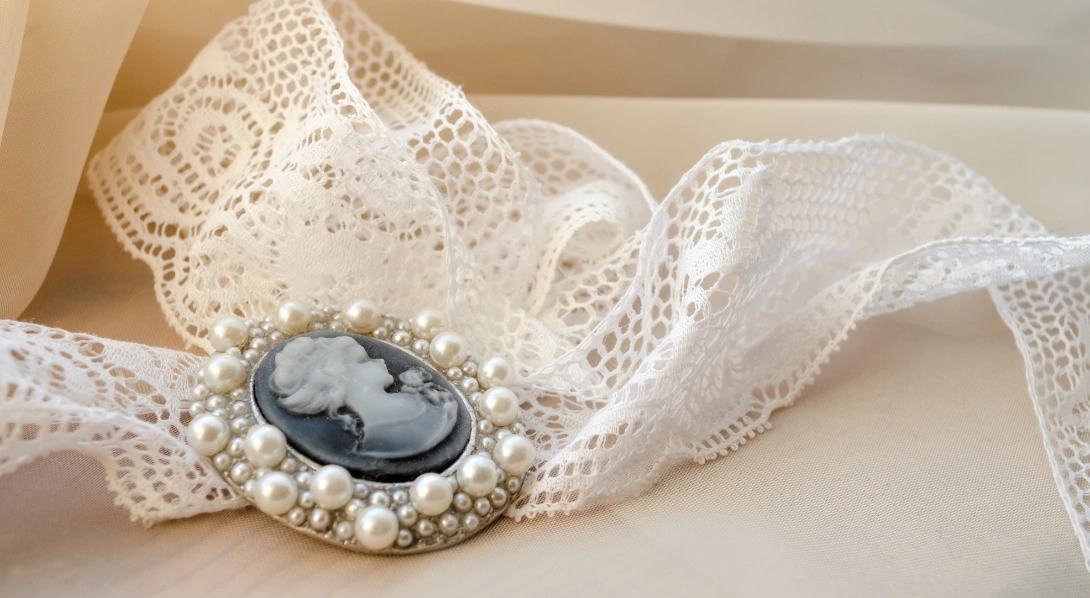
A cameo collection can be further broken down by age. An antique cameo is considered anything produced more than a century ago. Meanwhile, vintage cameos are any produced between 50 and 100 years ago. Anything younger than that is a modern cameo.
You can look at tell-tale signs such as the clasp or jewelry hallmark to determine a likely age of your cameo. Just know that estate jewelry can be antique, vintage, or modern, as it’s simply any jewelry that’s pre-owned.
Looking at the motif of a piece of cameo jewelry, or even the specific style of hair depicted in a profile, can also clue you into the cameo’s age, whether it’s a piece of ancient jewelry from the Roman Empire or merely a modern reproduction.
Cameo Meanings & Motifs

Authenticity: Is Your Cameo Real Or a Reproduction?
There are a few things you can do to determine whether your cameo is authentic or a reproduction, as well as the material it was made from:
- Look for tool marks. A handcrafted cameo will show tiny, parallel lines from the carver’s tools, whereas a costume piece will be smooth except for potential mold lines.
- Break out your magnifying glass. A stone or shell cameo will show crisp edges under magnification, whereas a plastic cameo will feature edges that appear slightly melted.
- Examine the back of the cameo. Shell cameos are often concave, while stone and glass cameos are often flat.
- Look for layer lines. These should be visible in sardonyx cameos.
- Look for hallmarks or metal stamps in the cameo’s setting. These will reveal information regarding the piece’s material, age, and maker.
When you’re unsure of your piece’s authenticity, or if you suspect you’re dealing with something that may be exceptionally valuable — such as a piece that includes a rare motif, fine setting, or a maker’s or brand signature — enlist the professionals by securing a jewelry appraisal.
Important tip: Avoid any jewelry tests that could damage the piece, including any tests that recommend applying chemicals or solvents to test the material.
How Much Are Cameos Worth?
Many factors play into how much a cameo is actually worth, including the materials, level of intricacy, the designer, condition, and setting metal. Rare motifs and fine gold settings increase a cameo’s value, while visible damage including chips and cracks may reduce it. Meanwhile, a stone cameo, on average, is worth more than a shell cameo.
Your best bet is to get a professional appraisal that can provide a better assessment of your piece’s value. To streamline the process, take clear, comprehensive photos (including pictures of the front, back, sides, and any hallmarks) and then provide them to your appraiser along with measurements and any associated provenance. The more information you can provide, the more accurate your valuation will be.
Cameo Jewelry FAQs
Are Cameos Always Made Of Shell?
No! You can also find cameos made from stone (sardonyx), lava, coral, and glass, too.
How Can I Tell If My Cameo Is Real?
Look for tool marks, layered colors, and the absence of mold seams. When in doubt, get an appraisal for an official opinion.
What’s the Difference Between Cameo and Intaglio?
Cameo features a design with a raised relief while an intaglio design is engraved into the material.
Do Cameos Have Hallmarks?
The setting may have a hallmark that can provide more information about your piece. Check the stamps and symbols inside the frame or pin.
Can I Clean a Cameo with an Ultrasonic Cleaner?
No! Avoid ultrasonic and steam cleaners, which can damage all of the intricate detail. Instead, use mild soap, a soft brush, and a quick rinse and gently pat dry.
Are Victorian Cameos Valuable?
Often, yes! The subject depicted, the materials used, overall condition, and any gold settings can affect its value. Always get a professional appraisal for a professional opinion.
Is a Pre-Owned Cameo “Estate Jewelry”?
Yes! “Estate jewelry” is simply a term that means the piece was previously owned, regardless of its age.
How Do I Insure a Cameo Brooch?
After you have an appraisal and documentation, you can purchase speciality jewelry insurance and get coverage as soon as today. BriteCo’s free quote takes just minutes to receive. Once you accept it, you simply have to make your first premium payment and you’re covered.
Get an Appraisal and Insurance for Vintage Cameo Jewelry with BriteCo
Whether you inherited a beautiful shell cameo ring from your mother, or you came across one of these miniature works of art at an estate sale, there are a myriad of benefits to getting an appraisal and jewelry insurance. Doing so provides peace of mind by knowing exactly where your piece came from and what it’s made of, while protecting from loss, damage, and theft.
Plus, appraisal documentation will ensure you get the full replacement value of your piece, if the worst happens. With BriteCo, you can even get 125% of the replacement value to account for market shifts and zero deductibles if you need to file a claim.
Get your appraisal and a free jewelry insurance quote now from BriteCo!
Related Articles:
How to Solder Jewelry?
How to Store Jewelry When Moving
How to Get Custom Jewelry Made
The Biggest Jewelry Heists in History
What Is Meteorite Jewelry?
How Rare are Diamonds?
How to Identify a Raw Diamond
Get a Quote:
The Easy Way to Insure Your Jewelry - and Save Money!

UP NEXT: How to Remove a Link from a Jewelry Chain Bracelet

Author