What is Diamond Fluorescence? A Quick Guide
If you’re in the market for a diamond, you’ve probably heard about the 4 C’s — diamond color grade, cut, clarity, and carat weight — and how they impact a diamond’s quality and price.
what about fluorescence in diamonds?
What You Will Learn
- What is Fluorescence in Diamonds?
- Measuring a Diamond’s Degree of Fluorescence
- Is Diamond Fluorescence Good?
- Can the Average Person See Diamonds Fluoresce?
- What is Fluorescence Diamond Cost?
- What is Fluorescence in a Diamond FAQs
- Now That You Know About the Fluorescence Diamond Jewelry Can Emit, Protect All Your Jewelry
What is Fluorescence in Diamonds?
If you plan to shop for diamonds, you may encounter the term diamond fluorescence. But what is fluorescence of a diamond, and why does it matter? Let’s start with the basics and break it down for you.
If an object is fluorescent, it can absorb light or radiation and then emit its own light in turn. It sounds highly technical and scientific, but it’s pretty simple, and you can see fluorescence in work in myriad places in your daily life, from lightbulbs to highlighters.
So, where do diamonds come in?
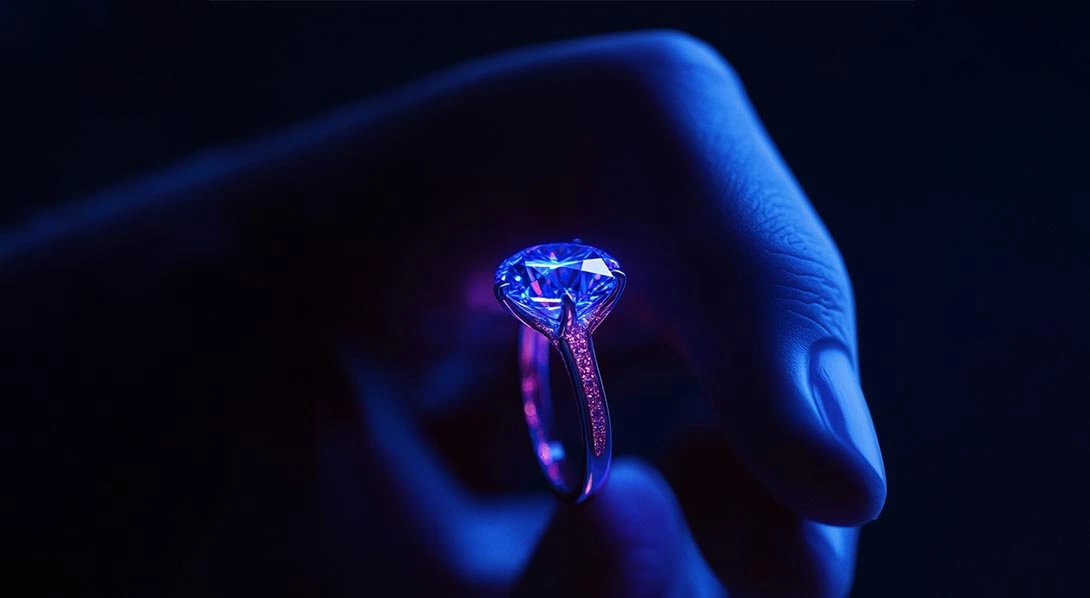
Exposing a diamond to certain types of light (like ultraviolet light) may show diamond fluorescence (though not every diamond can produce its own light). Most fluorescent diamonds submitted for grading produce a blue light, with fewer diamonds producing a yellow or green light.
What is the Fluorescence in a Diamond Mean?
It doesn’t really mean anything significant. The fluorescence indicates no structural integrity or anything necessarily wrong with the diamond. Instead, the fluorescence stems from traces of boron (or other elements like aluminum or nitrogen) that the diamond picked up during its formation process.
Measuring a Diamond’s Degree of Fluorescence
While a diamond’s fluorescence is not among the central pillars of the 4 C’s of diamond grading, you may find that diamond grading reports do include information regarding the fluorescence in a diamond. This information is gathered by exposing the diamond in question to a UV light (like a black light) and then comparing the diamond’s fluorescent properties against a scale.
Fluorescent diamonds fall into the following categories:
 As you could assume, with a faint fluorescence, diamonds exhibit only a very faint fluorescent glow. As you move up the scale, the diamond emits an even stronger and stronger amount of visible light.
Is Diamond Fluorescence Good?
If you send off your diamond jewelry for a grading report and it comes back noting that your diamonds glow with strong blue fluorescence, is that a good thing? It depends on a few factors, not least of which is who you ask and the original color of the diamond.
For white diamonds that exhibit a small amount of yellow, such as an I-color diamond, the blue hue created by fluorescence can counteract the yellow and thus make the diamond appear to be of a higher quality and better color than it is.
However, the fluorescence can do more harm than good for diamonds with a higher, more desirable color grade, including D to H-color diamonds. The slight fluorescence can give the diamond a milky appearance. As such, diamond prices react accordingly. These fluorescent stones may go for a lower price point than diamonds without this characteristic.
Can the Average Person See Diamonds Fluoresce?
No. In normal light, the average person cannot tell a fluorescent diamond from a non-fluorescent diamond, even when the former shows a very strong blue fluorescence. But under UV light the average person would definitely be able to see the fluorescence of a strong fluorescent diamond. As such, it’s not a characteristic you should worry about too terribly when choosing a piece of diamond jewelry like an engagement ring.
If you want to know if your natural diamonds fluoresce blue, you’ll need to check the diamonds’ grading report (if applicable).
What is Fluorescence Diamond Cost?
As mentioned, a diamond with a yellow-tinted fluorescence can appear of higher quality. Meanwhile, fluorescence could make a fluorescent diamond with an original high color grading appear milky or cloudy.
As such, the diamond’s value and price could increase or decrease accordingly. However, it’s unlikely that the value and prices will increase or decrease to any significant degree. Therefore, you don’t need to increase or decrease your diamond-buying budget just because you want to buy or avoid a fluorescent diamond.
What is Fluorescence in a Diamond FAQs
What is Fluorescence in Diamond, and How Can You See It?
Fluorescence in a diamond refers to the diamond’s ability to produce a glowing light when exposed to certain types of other light, like UV or black light.
Is Fluorescence in a Diamond Good or Bad?
It depends on the diamond as well as your personal preference. Fluorescence can make some diamonds appear whiter (as with diamonds that already have a faint yellow color) but can make diamonds with a high color grade appear milky or cloudy. As such, fluorescence presence can increase or decrease the diamond’s cost and value depending on the diamond’s existing color grade.
Are All Diamonds Fluorescent?
No, only about 25-35% of natural diamonds display some level of fluorescence.
Can Most People Tell if a Diamond is Fluorescent?
No. You won’t be able to tell if a diamond is fluorescent with the naked eye or in most lighting you would come across in your everyday life. The fluorescence may only be visible if you expose the diamond to a UV or black light.
Do Diamond Grading Reports Include Fluorescence?
Yes, diamond grading reports from the Gemological Institute of America include information about this characteristic.
What is the Fluorescence of a Diamond Impact on Structural Integrity?
A diamond with fluorescence does not impact the structural integrity.
Now That You Know About the Fluorescence Diamond Jewelry Can Emit, Protect All Your Jewelry
Whether or not fluorescence is an identifying characteristic for your diamond, protect all your diamond jewelry from damage and loss with comprehensive specialty jewelry insurance from BriteCo.
You’ll receive worldwide coverage with zero deductible. Choose either a monthly or annual (with a discount) payment option. Plus, you’ll receive a free, automated value update every year to keep your coverage current. These are benefits your typical jewelry warranty or homeowners or renters insurance just can’t offer.
Get your quick quote now.
Related Articles:
What is Citrine, and What is Citrine Good For?
Step Cut Diamonds: A Timeless Choice for Your Engagement Ring
What Are Beryl Gems?
What Are Side Stones on Rings?
What Is Spinel? A Quick Guide to the Gemstone
Black Diamond Engagement Ring Meaning
How are Diamonds Formed?
What Is a Moldavite Stone?
Get a Quote:
The Easy Way to Insure Your Jewelry - and Save Money!
UP NEXT: What are the Odds of Losing or Damaging Jewelry?

Author