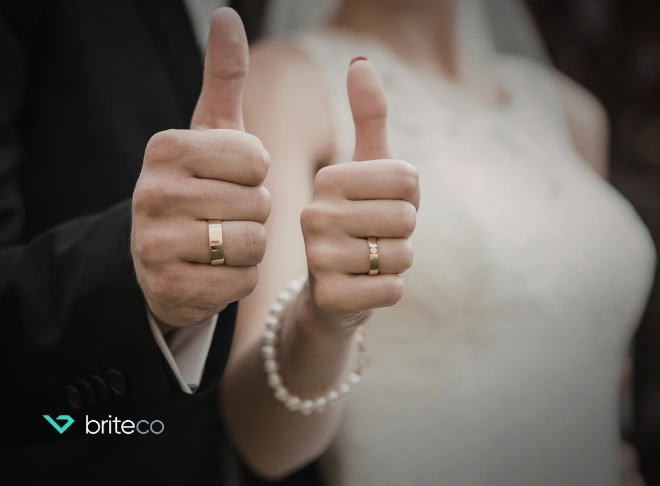
Who Buys the Wedding Bands?
Traditionally, couples would pay for one another’s wedding bands, so the groom would buy the bride’s wedding ring and the bride would buy the groom’s wedding ring.
However, everything about weddings, and especially how couples pay for wedding expenses, is changing and that’s no longer a rule today. The traditional route, while perfectly fine, isn’t your only option.
Here are some tips as you dive into this aspect of wedding planning, including:
- How to go about shopping for your wedding rings.
- What to consider in terms of wedding ring cost.
- How to make sure your rings are protected.
What You Will Learn
Who Buys the Wedding Bands? The Pros and Cons
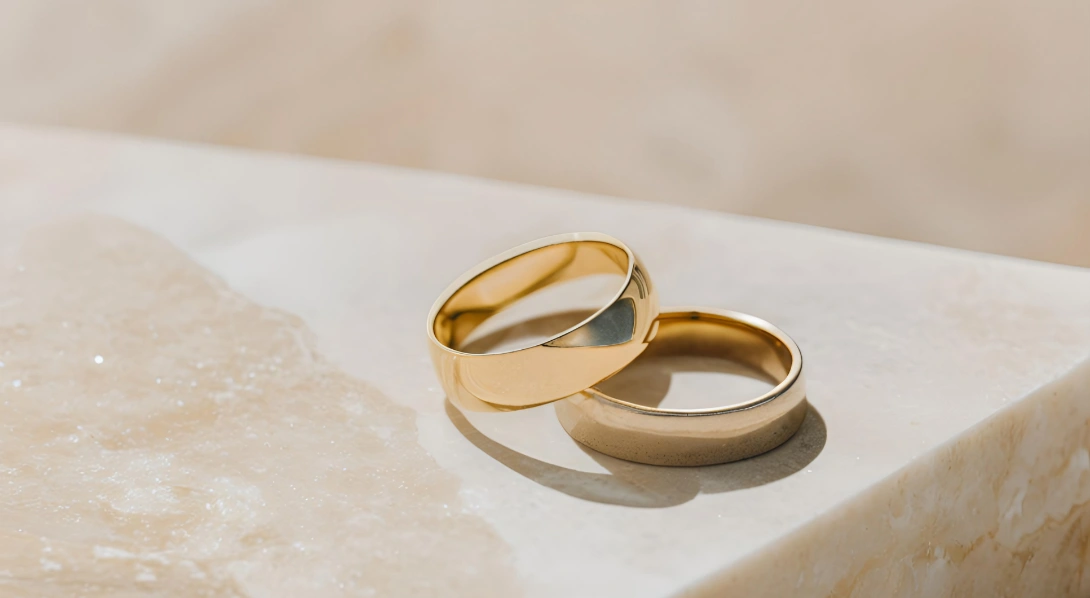
The short answer is, anyone can buy the wedding bands for the big day. You can purchase wedding bands for each other. You can shop together and make the purchase as a couple. Or, you can buy your own ring. If a family member is footing the bill for the wedding, they might ultimately be the one covering the cost.
While deciding who purchases the engagement ring is more straightforward — it’s the person doing the proposing — the answer to who purchases the wedding bands varies. Just like every aspect of your wedding journey, it will depend on your individual circumstances.
 Option 1: You Buy Wedding Bands for One Another
 Option 1: You Buy Wedding Bands for One Another
The tradition of buying wedding bands for one another has its advantages. You’re able to purchase a ring for your partner representing a gift that was chosen with love, and you’re able to select one that fits your personal budget. In contrast, the downside is that you could end up purchasing a ring that doesn’t quite fit your partner’s sense of style.
Additionally, if you and the other person in the relationship have very different finances, you could find that one of you is capable of spending quite a lot of money on a ring, while the other is not.
Option 2: You Shop for Wedding Bands Together
In recent years, many couples prefer to shop for wedding bands together. The outing makes for a unique bonding experience, where everyone can get a ring that reflects their style (and ring size). This way, too, you can either cover the price via your overall wedding budget, or you can split the total bill down the middle.
However, you do lose out on the surprise element of purchasing rings for one another and then exchanging them for the first time when you tie the knot.
Option 3: You Buy Your Own Wedding Band
Of course, you could also decide on a wedding band all on your own. This allows you to shop for something that will reflect your style and budget, as you’re ultimately the one who will wear it. However, this takes away from the sentimental aspects of the process.
How Should We Decide Who Buys the Wedding Bands?

It’s important to make the decision as a couple. Deciding who is responsible for buying the wedding bands will require discussing a few factors, including your overall wedding budget and how you’re funding it, your individual finances and preferences.
At the end of the day, the wedding bands should take up a minimal portion of your overall wedding budget, and buying them should also be an enjoyable process, rather than a stressful one. There’s absolutely no wrong way to go about the matter.
How Much Will Wedding Bands Cost?
The average cost of a wedding band ranges from $700 to $1,200, according to experts who spoke to Brides in 2025.

Generally, the groom’s band will cost less, as designs for these rings are often simpler and contain fewer precious gemstones. However, there are various factors that will impact how much you ultimately pay for your wedding bands, and these are important to consider before you head to the nearest jewelers, so you don’t experience any sudden sticker shock!
Factors Influencing How Much Your Wedding Bands Will Cost
The factors that could influence how much your wedding bands cost might include:
- Geography, with couples in larger cities often paying more
- Materials used in the design, including precious metals and gemstones
- Design and the overall intricacy
Luckily, there are ways that you can save on your wedding band costs, if you’re thinking you won’t be able to foot the average cost of $700 to $1,200.
Ways to Save on Wedding Bands
The easiest way to save on wedding bands is to pick more affordable materials and designs.
For example, choose simpler designs rather than intricate designs like those with inlays or those shaped to hug your engagement ring on either side. You can also choose white gold or yellow gold rather than platinum.
Additionally, consider more affordable gemstones, like lab-grown diamonds rather than mined diamonds. BriteCo data shows that, in 2025, the average 1-carat, lab-grown diamond cost $1,000 or less, compared to about $4,200 for a natural diamond.

More and more couples are turning to lab-grown diamonds for more affordable wedding jewelry, too. Over the past five years, BriteCo has observed explosive growth in lab-grown diamond jewelry. Today, 42.1% of all diamond jewelry sold is made of lab-grown stones. Thus, the relative market share has grown 709.6% over the past five years!
Buying Wedding Rings FAQs
Who Buys the Man’s Wedding Band?
Traditionally, the groom’s future spouse would buy their wedding band and vice versa. But like many past rules for wedding etiquette, this idea is outdated and you can pay for your wedding bands however works best for you.
How Can You Get More Affordable Wedding Bands?
Look for simpler designs, choose more affordable materials like yellow gold or white gold, and opt for lab-grown diamonds instead of natural diamonds.
Can the Parents Pay for the Wedding Bands?
Sure, if the parents volunteer to pay for the wedding bands, that’s totally fine. However, you should refrain from allowing any parent to pick out the wedding bands, as this is a sentimental decision that should be left to the couple.
How Much Should You Expect to Pay for Wedding Bands?
Expect to pay a total of about $1,500–$2,400 for both wedding bands, dependent upon factors such as geography and ring design.
How Much Will Wedding Band Insurance Cost?
Wedding band insurance will start at a cost of about 1-2% of your rings’ total value, per year.
Don’t Forget Wedding Ring Insurance!
No matter how you pay for your wedding bands, or how much you spend, make a point of getting them covered by comprehensive jewelry insurance that will ensure you can repair or replace them in the event of loss, theft, or damage.
BriteCo’s wedding ring insurance — which can be bundled with insurance for your engagement ring — will be one of the most affordable costs in your entire wedding budget, starting at just 1% of the jewelry’s total value per year.
Then, if you ever need to file a claim, you can get up to 125% of your rings’ appraised value. That means you can replace lost rings with identical styles or rings of equal value, or you can repair them with the jeweler of your choice, at absolutely no cost to you.
Learn more and get your quick, free jewelry insurance quote from BriteCo now.
Related Articles:
How Much Does a Wedding Cost?
How Long are Weddings?
Wedding Jewelry Trends for 2026
Buying Guide:
The Secret to Diamond Buying: Natural vs Lab Grown

UP NEXT: What are the Odds of Losing or Damaging Jewelry?

Author