Rose gold has become one of the most popular metals in modern jewelry, offering a warm and elegant alternative to traditional yellow gold and white gold. Its romantic hue and versatility have made it a favorite choice for engagement rings and other fine jewelry pieces.
But what is rose gold made out of, and how is it different from other types of gold jewelry? We explore all there is to know about this precious metal.

What You Will Learn
What Is Rose Gold?
Rose gold has a fascinating history that spans several centuries and cultures. While rose gold pieces may seem like a modern trend, the soft, blush-pink jewelry has been cherished since taking root in 19th-century Russia.
The Early Russian Influence on Rose Gold
The term “Russian gold” became widely associated with the advent of rose gold in the country during the 19th century. During this time, rose gold jewelry reached new heights of popularity under the influence of famous artisans such as ”jeweller to the czars” Carl Fabergé (per Sotheby’s) — the master craftsman behind opulent Fabergé eggs.
These eggs, often decorated with precious gemstones, gold plating, and intricate settings, featured the blush tones of rose gold, and it soon became a hallmark of luxury during the Russian Empire.
However, Fabergé’s creations also introduced this precious pink gold to a wider audience, where it likewise was seen as a symbol of elegance and prestige. So, even though the distinctive metal became known as “Russian gold” during this period, it was not exclusive to Russia.
The Rise of Rose Gold in the 20th Century
In the early 20th century, rose gold gained further prominence through the Art Deco movement, a style that embraced bold geometric shapes and luxury materials like the precious metal. During this time, designers began to appreciate the warm, romantic tones of rose gold metal for its ability to pair beautifully with diamonds and other precious gemstones. This versatility made it popular at the time for a diamond engagement ring as well as other fashionable gold rings.
Cartier especially embraced the pinkish hue, incorporating rose gold into many of their high-quality designs of the 1920s and setting off a trend.
As times changed, so did rose gold’s stature. Here are three key developments in the past 100 years.
- Rose gold largely died out around the time of the Great Depression as jewelers leaned into using less expensive metals to make jewelry.
- However, when World War II necessitated using these other metals for combat purposes, gold and rose gold came back into fashion. The eye-catching color of rose gold, in particular, became a statement of confidence and style, perfectly in sync with the bold, expressive trends that many were embracing.
- Fast forward to the 21st century, and rose gold has experienced a resurgence once again. This revival is attributed to its versatility: Rose gold complements all skin tones and adds a unique charm to both casual and formal attire.
What Is Rose Gold Made Of?
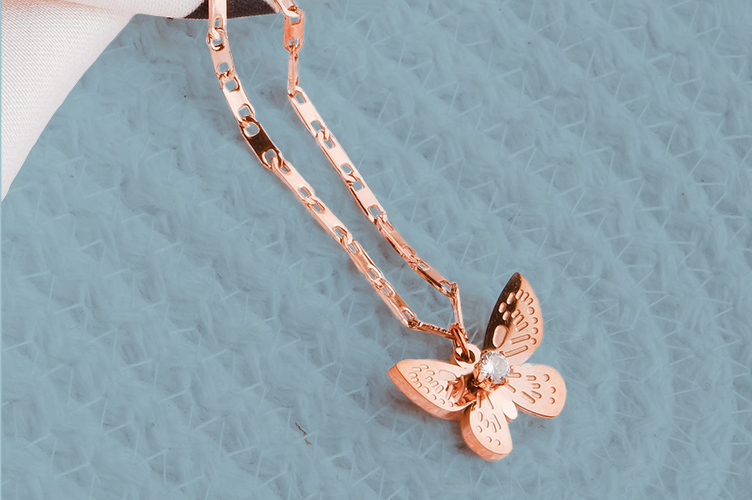
Rose gold is made by blending pure gold with other metals, specifically copper, and sometimes a minimal amount of silver. This blend creates a sturdy and vibrant gold alloy that is both beautiful and durable.

The exact ratio of gold to copper creates the varying shades of rose gold:
- The more copper it has, the more it will appear like red gold.
- The less copper, the more mild pink tone it will take.
The other key about what is in rose gold is that the composition can vary depending on its weight in karat gold. For example, 18k rose gold consists of 75% pure gold and 25% copper and silver. The higher the karat, the more pure gold is in the mix, giving the metal more value and a slightly softer feel.
This combination of metals not only gives rose gold jewelry its distinctive color but also makes it more durable than yellow gold, since copper is a stronger metal. The result is a resilient material perfect for pieces like an engagement ring and other fine accessories.
And, unlike white gold, rose gold maintains its lovely hue over time, developing a patina that enhances its vintage appeal.
Rose Gold vs. Other Metals
When it comes to choosing jewelry, many people wonder how rose gold compares to other metals like white gold, sterling silver, and platinum jewelry. Each of these metals has its own unique properties, making them appealing in different ways.
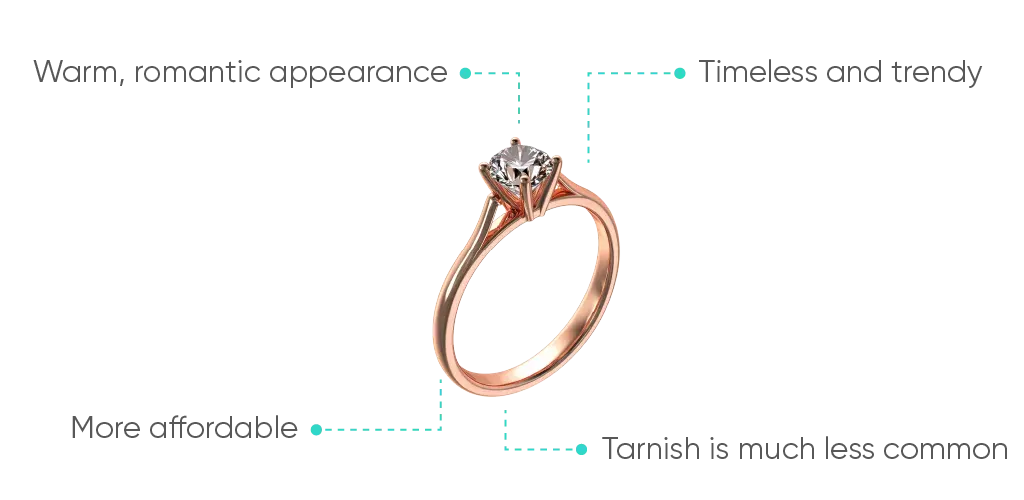
- Rose gold stands out because of its warm, romantic appearance. Its blend of gold and copper gives it a blush tone that’s both timeless and trendy.
- In contrast, white gold is created by combining gold with metals like palladium or nickel, and then it’s often coated with rhodium plating to achieve a bright, silvery finish. White gold is popular for its resemblance to platinum, but it requires more maintenance due to its penchant for gold tarnish and the need for touch-ups to keep its shine.
- When compared to platinum jewelry, rose gold is also more affordable. Platinum is a denser, more expensive metal, but it shares similar durability with gold alloys. Both platinum and white gold are great choices for those who prefer a cooler-toned look.
- Sterling silver and metals with gold plating are other common features in fine jewelry, but it’s much less expensive than a rose gold setting. It’s prone to tarnishing more easily, whereas rose gold tarnish is much less common due to the alloy’s strength and composition.
Each metal has its pros and cons, but rose gold is unique in that it combines the warmth of copper with the luxury of gold, making it a versatile and long-lasting option for everything from engagement rings to everyday fine jewelry.
Is Rose Gold Real Gold?
Yes, rose gold is indeed considered real gold. It’s a popular misconception that colored gold options like rose gold and white gold are less valuable, but that’s not the case.
The amount of pure gold in rose gold depends on its karat, just like any other gold jewelry. Despite its color, it retains the same inherent value and strength as traditional gold alloys. So, rest assured, when you see rose gold pieces, you’re investing in genuine, high-quality gold jewelry.
Rose Gold FAQs
What Is a Rose Gold Jewelry Piece, And Why Is It So Popular?
Rose gold is a blend of gold, copper, and sometimes silver, creating a warm, pinkish hue that has a unique vintage-inspired appeal. Its unique color and durability have made it a popular choice for engagement rings and fine jewelry.
How Is Rose Gold Made, and What Gives It Its Distinct Color?
Rose gold is made by mixing pure gold with copper and occasionally silver, giving it a beautiful pink tint. The amount of copper in the alloy affects its color, with more copper creating a deeper red gold tone.
What Makes Rose Gold Different from Other Metals Like White Gold and Platinum?
Unlike white gold, which requires rhodium plating for its bright finish, rose gold maintains its natural color over time without extra maintenance. Rose gold’s warm tone sets it apart from the cool tones of platinum and white gold, offering a softer, more vintage feel.
Is Rose Gold Considered Real Gold, and Does It Have the Same Value as Traditional Gold?
Yes, rose gold is real gold, with its value based on the karat weight, similar to yellow or white gold. Despite its color, it retains the same intrinsic gold content and value as other gold alloys.
Rose Gold Is A Stunning Addition to Any Jewelry Collection
Rose gold is a charming jewelry choice, blending tradition and trend-setting, and adding a touch of warmth to any jewelry collection. So whether you’re picking out an engagement ring or simply treating yourself to a new piece for your collection, rose gold is always a good choice!
When you want to protect your rose gold jewelry, turn to BriteCo. We provide comprehensive, affordable jewelry insurance to protect your valuables against loss, theft, and damage. Use our online tool, and within 60 seconds, get a personalized insurance quote.
Related Articles:
Does White Gold Tarnish?
What Are Side Stones on Rings?
What Is Spinel? A Quick Guide to the Gemstone
What Is Recycled Gold? A Quick Guide
What is a Bench Jeweler?
Why Does Gold Fluctuate in Price?
Are Rose Cut Diamonds Good for an Engagement Ring?
Appraisal Tool:
The Easiest Way to Get a Professional Jewelry Appraisal Valuation!
UP NEXT: What are the Odds of Losing or Damaging Jewelry?

Author