When choosing the perfect metal for your engagement ring, wedding bands, or any fine piece of jewelry, it’s easy to get overwhelmed by the options. Among the more modern choices, palladium jewelry is a sleek, sophisticated, and highly desirable option with a luxurious finish.
But one question often pops up: Does palladium tarnish? We dive into everything you need to know about palladium in jewelry — from its properties and durability to how it compares to other metals like white gold and as an alternative to platinum.
Whether you’re eyeing a palladium wedding band or simply curious about this rare metal, this guide will walk you through the ins and outs of palladium jewelry, from cost to style to its long-wear capabilities.
What You Will Learn
What Is Palladium?
Let’s start with the basics of what is palladium jewelry and why it’s becoming increasingly popular in the world of fine jewelry.
Palladium is a rare metal that belongs to the platinum group of metals (PGMs), which also includes platinum, rhodium, and iridium. Known for its natural white sheen, palladium jewelry doesn’t require rhodium plating, unlike white gold. It’s also a durable and hypoallergenic metal, making it a great choice for those with sensitive skin.
Key Features of Palladium:
- Very durable metal with excellent resistance to wear and tear.
- Naturally white, maintaining its shiny white palladium color without the need for rhodium plating.
- Lightweight yet strong and ideal for everyday wear, especially for those with sensitive skin.
- Part of the platinum family, sharing many qualities with platinum group metals.
- Fantastic alternative to platinum for those looking for a slightly more affordable option.
A Brief History of Palladium
Palladium was discovered in 1803 by English chemist William Hyde Wollaston, who also discovered rhodium. Named after the asteroid Pallas, which was named after the Greek goddess of wisdom, palladium quickly gained recognition for its unique properties.
Initially used in scientific and industrial applications, palladium’s potential in jewelry remained untapped until the early 20th century. During World War II, when platinum was reserved for military use, palladium emerged as an alternative metal for fine jewelry, particularly in wedding bands and engagement rings.
Over time, jewelers began to appreciate palladium’s natural white sheen and its status as a hypoallergenic metal, along with its durability, solidifying its place as one of the most valuable precious metals commonly used in modern jewelry making.
Does Palladium Tarnish?
Now to the million-dollar question: Will palladium tarnish? The simple answer is no — at least, not in the way other precious metals like sterling silver or white gold might. Palladium is highly resistant to corrosion, meaning it won’t oxidize or lose its shine over time.
Why Doesn’t Palladium Tarnish?
White gold relies on rhodium plating to maintain its silvery-white color, but pure palladium retains its natural white sheen without additional layers. It’s also highly resistant to scratches, which helps preserve its appearance even after years of everyday wear. It’s one of the most low-maintenance precious metals you can choose.
However, while palladium jewelry doesn’t tarnish, it can develop a slight patina over time — a subtle change in texture that some people love for its antique, vintage look. If you prefer your palladium pieces to stay as shiny as day one, a quick, professional polish will do the trick.
Is Palladium Better Than Other Metals?
When comparing platinum vs. palladium, white gold, and sterling silver, each metal has its pros and cons. However, palladium as jewelry offers some advantages that set it apart. Here’s how it stacks up.
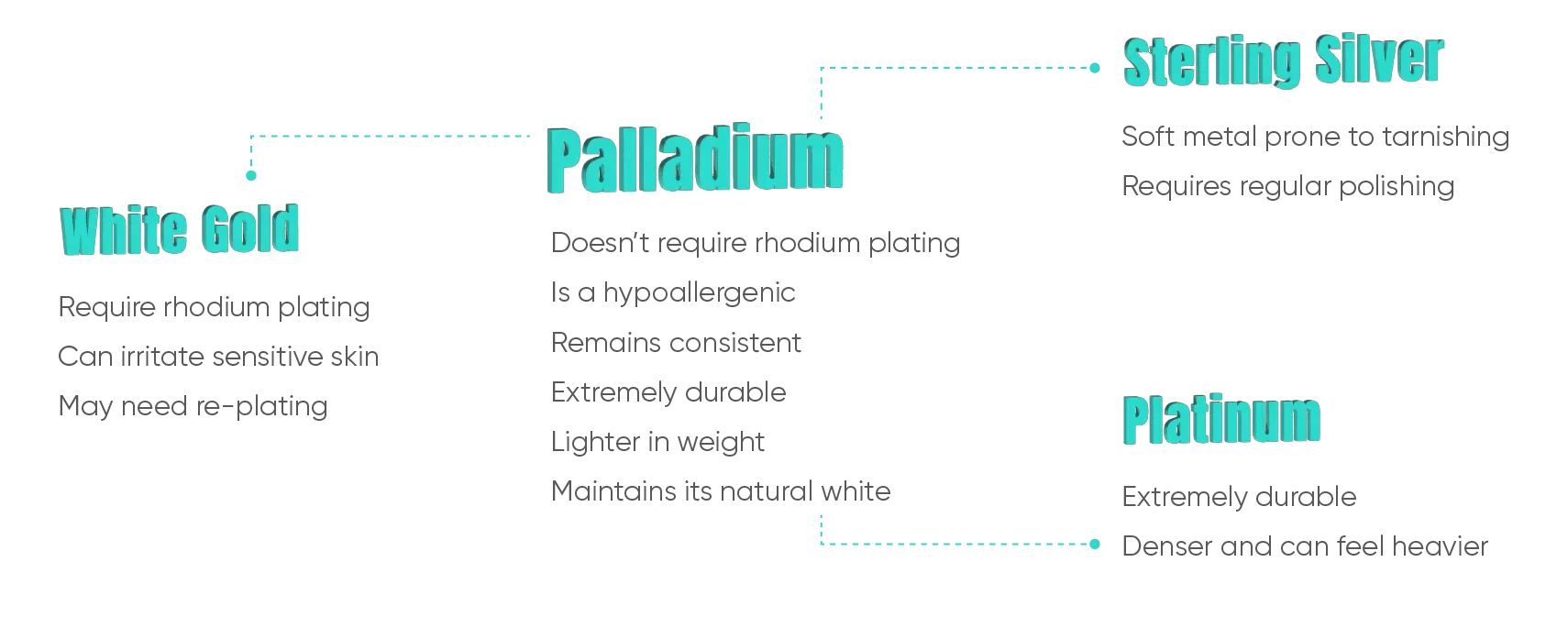
Palladium vs. White Gold:
- Unlike white gold, palladium doesn’t require rhodium plating to maintain its color.
- Palladium is a hypoallergenic metal, whereas white gold may contain nickel, which can irritate sensitive skin.
- Over time, white gold may need re-plating, while palladium remains consistent.
Palladium vs. Platinum:
- Both are platinum group metals with a finish that makes them extremely durable.
- Palladium is lighter in weight, making it more comfortable for everyday wear.
- By contrast, platinum rings are denser and can feel heavier on the finger.
Palladium vs. Sterling Silver:
- Sterling silver is a soft metal prone to tarnishing, while palladium is a very durable metal.
- Palladium maintains its natural white sheen better over time.
- Sterling silver is more affordable but requires regular polishing.
When it comes to wedding bands or a platinum engagement ring, both palladium and platinum are excellent choices, but palladium offers a lighter, more cost-effective option.
Why Choose Palladium for Engagement Rings and Wedding Bands?
If you’re in the market for an engagement ring or wedding rings, palladium is an excellent choice. This rare metal offers elegance, durability, and practicality, making it ideal for modern couples looking for both style and substance.
Couples who value practicality and long-lasting quality appreciate how palladium jewelry stands up to daily wear and tear. Its hypoallergenic nature also makes it perfect for anyone with sensitive skin, ensuring comfort without irritation. The natural white sheen of palladium provides a timeless and elegant appearance, maintaining its bright finish without requiring rhodium plating.
Additionally, palladium’s status as a rare metal adds an element of uniqueness and prestige to wedding rings. Whether you love its modern appeal, durability, or lightweight comfort, palladium wedding bands are more than just a piece of jewelry — they’re an investment that lasts a lifetime.
How Much Does Palladium Cost?
Palladium has steadily gained value over the years, and its price often fluctuates based on market demand, mining availability, and global economic factors. Historically, palladium has been more affordable than other metals commonly used for jewelry. But in recent years, its rarity and increasing demand have pushed its price closer to platinum.
Currently, palladium jewelry tends to fall into the mid-to-high price range for precious metals, generally costing more than white gold but slightly less or occasionally on par with platinum. A palladium wedding band or engagement ring typically costs between $500 and $3,000, depending on the design, craftsmanship, and any colored gemstones.
While the price may seem steep, palladium’s extremely durable features and hypoallergenic nature make it a long-lasting investment. Its natural white sheen also eliminates the recurring costs associated with rhodium plating sometimes required for white gold.
Palladium Jewelry FAQs
Does Palladium Tarnish Like Other Precious Metals?
No, palladium tarnish is not typical. This rare metal is highly resistant to blemishes compared to other precious metals like sterling silver. Its natural luster remains intact over time, making it a popular choice for fine jewelry and engagement rings.
Is a Combination of Platinum Palladium an Option in the Same Ring Design?
Yes, platinum and palladium can be used together in the same ring, offering a mix of strength, durability, and elegance. Jewelers sometimes use palladium for intricate details due to its lighter weight, while platinum can serve as a robust base.
Why Is a Thin Layer of Palladium Sometimes Applied to Other Precious Metals?
A thin layer of palladium is often used to coat other precious metals like white gold in order to enhance durability and prevent tarnishing. This layer creates a protective barrier, ensuring the base metal maintains its shine and reduces maintenance needs. It’s a common technique used in fine jewelry to prolong the lifespan of delicate pieces.
Are Colored Gemstones Suitable for Palladium Settings?
Yes, colored gemstones are an excellent choice for palladium settings because of the metal’s natural white hue, which enhances the vibrancy of the stones. Palladium’s strength also ensures the gemstones are securely held in place. This combination creates eye-catching and long-lasting jewelry.
How Does Palladium Compare to Other Precious Metals in Terms of Maintenance?
Compared to other precious metals like silver or white gold, palladium requires significantly less maintenance. Its resistance to tarnishing and natural luster means it doesn’t need frequent polishing or re-coating. This makes palladium a low-maintenance choice for everyday wear.
Palladium Jewelry Is a Rare Gem Worth Protecting
For those with sensitive skin or anyone looking for the look of white metals without constant upkeep, palladium jewelry is a stellar choice. As part of the platinum family, it also carries an air of timeless elegance. So, make space in your jewelry box for your next favorite piece.
Protect all your palladium jewelry with a comprehensive jewelry insurance plan, and get peace of mind that you’ll be covered in the case of theft, loss, or damage. Get a free personalized quote from BriteCo today!
Related Articles:
The Best Homemade Jewelry Cleaner Recipes
Does White Gold Tarnish?
How to Clean Tarnished Jewelry?
Appraisal Tool:
The Easiest Way to Get a Professional Jewelry Appraisal Valuation!
UP NEXT: What are the Odds of Losing or Damaging Jewelry?

Author