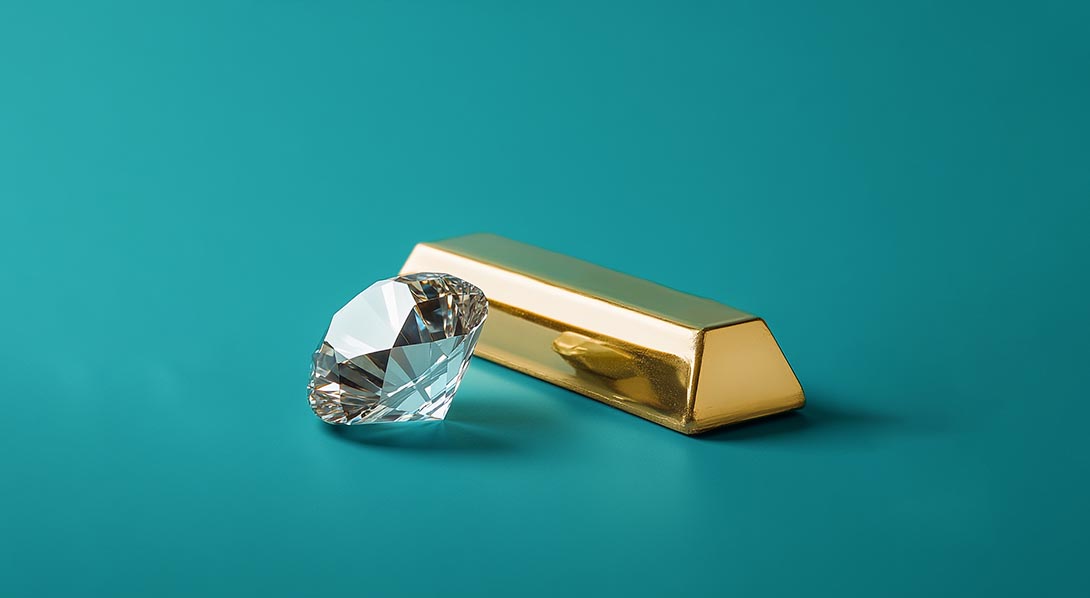
Carat vs Karat: What’s the Difference?
When shopping for jewelry, you’ll encounter two terms: carat and karat. They sound the same and have similar spelling. However, these commonly confused words have very different and distinct meanings. Knowing the differences is crucial when looking at a piece of jewelry, such as a diamond and gold ring.
Here’s what you need to know about carat vs karat.
What You Will Learn
What is a Carat?
Carat is the weight of a stone. Carat is a measurement commonly associated with diamond jewelry. However, carat weight is also a marker for other gemstones. To explain the difference between karat and carat, we’re just going to talk about carats as related to a diamond’s weight.
One carat is 200 milligrams or 0.2 grams.
Where Does This Unit of Weight Come From?
So why do we use the term “carat” instead of saying that a diamond weighs 200 milligrams or 0.2 grams?
Hundreds of years ago, before the dawn of precise instruments, traders used the carob bean as a small weight to compare the weights of other items, like precious stones. A carob’s seed weighs approximately the same as what we now know as one carat — or 200 milligrams or 0.2 grams.
Over time, “carob” changed to “carat” (today’s spelling derives from medieval French). Even though we have more precise instruments for measurement, we still use the carat base unit for weight when evaluating fine jewelry.
Essential Things to Know About Carat Weight
While carat refers to the weight of a diamond, it’s savvy to understand a few nuances. Carat weight isn’t as straightforward as it might sound.
For example, beyond just referring to a diamond piece by its carat weight, a seller may also refer to a piece by its total combined carat weight or CTTW. The total weight is the carat weight of all the diamonds within a piece. In contrast, single-carat weight refers to just the weight of one single diamond. Something to note, if your piece contains diamonds and other gemstones, the CTTW may lump all stones together and you may need to request a more detailed carat weight for each stone.
Additionally, note that a higher carat weight isn’t always better, and a diamond with a higher carat weight isn’t always bigger despite the added weight. Other factors influencing a diamond’s grade and value include the 4 Cs beyond carat weight — color, clarity, and cut. Depending on the cut, a diamond could appear more prominent, even with a smaller carat weight.
What is a Karat?
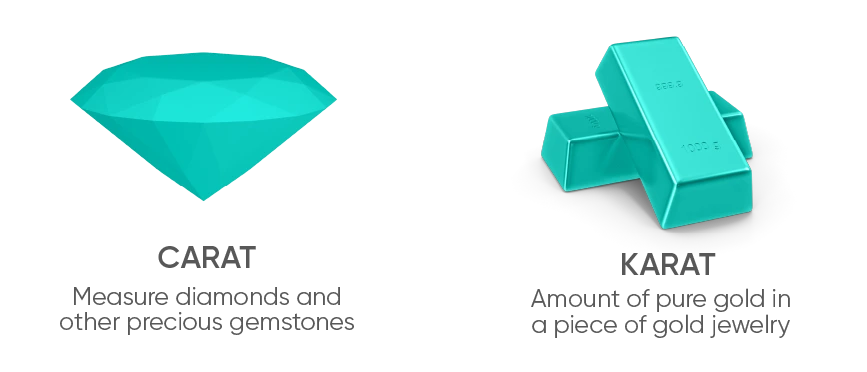
So what about karats? When considering carats vs karats, while the former represents diamond weight, the latter is a measurement indicating the proportion of pure gold in a piece of gold jewelry.
You’ll rarely find a piece of jewelry made with entirely pure gold, as pure gold is soft and not suitable for jewelry use. As such, most manufacturers or designers use gold in an alloy, which mixes other metal(s) with pure gold. The karat weight will tell you the proportion of gold in a piece compared to other metals.
For example, pure gold is 24 karats. As such, gold jewelry and its karats are measured in 24 total parts, so 18k gold is 18 parts pure gold with 6 parts of other metals.
Do note that while a karat measures the purity of gold, it might not reveal much about a particular piece other than the proportion of gold in it. A piece may still be gold-filled, gold-plated, or gold vermeil, so be sure to brush up on these types of gold as well before buying your next piece.

A Word on Variant Spelling
There is one little issue when it comes to karat vs. carat. Despite most of the jewelry industry separating these terms so that they refer to diamond carat vs. gold karat, that’s not the case in a few countries that use British English spelling, such as Australia and Great Britain. There, jewelers use “carat” not just when it comes to precious stones but also to refer to the fineness of gold.
If you’re shopping in one of these destinations and are confused about what carats or karats are referring to, ask a local expert!
Karat or Carat FAQs
What is the difference between carat and karat?
Carat is a unit of weight used to measure diamonds and other precious gemstones. Karat measures the amount of pure gold in a piece of gold jewelry compared to other metals within a gold alloy.
Where did carat weight come from?
This method for measuring precious stones was around long before the modern era. In ancient times, traders would weigh valuable items against the relatively constant weight of a carob seed. In regard to precious stones, “carob” or “carat” weight became connected with the diamond gemstone; it was designated later on to use the carat weight system worldwide that we know today.
What does 18 karats mean?
An 18-karat gold ring consists of 18 parts pure gold and 6 parts of some other metal.
How much does carat weight matter?
While carat weight is one of the 4 Cs of diamonds and does impact a diamond’s value and cost, it’s not the sole deciding factor. Two diamonds can weigh the same, but one may appear larger due to the cut. The cut, color, and clarity also highly impact a diamond’s value and cost.
Does karat measure gold weight?
No, karat measures the amount of pure gold within a gold alloy piece. Karat does not calculate weight. However, the carat system used for diamonds applies to weight, measuring either an individual diamond’s weight or the total weight of diamonds in a single piece with multiple diamonds.
Whether You’re Shopping for Diamonds or Gold, Protect Your Favorite Jewelry!
Whether you’re shopping for a beautiful diamond engagement ring or a gold vintage piece, after purchase, protect your investment. Make sure you’re protecting all your jewelry with jewelry insurance that keeps you covered in events that your homeowners or renters’ insurance may not.
BriteCo’s comprehensive coverage applies to engagement rings, fine jewelry, fine watches, and other pieces worth protecting. It will give you peace of mind in the event of loss, theft, or accidental damage—it’s all covered.
Learn more and get a quick and easy quote today!
Related Articles:
Moissanite vs Diamond vs Lab
Cubic Zirconia vs. Moissanite
Tungsten vs Stainless Steel
Platinum vs White Gold
Kashmir Sapphire Vs. Ceylon Sapphire
Mohs Scale Meaning & How It Impacts Gemstones
Difference Between a Jewelry Warranty and Jewelry Insurance
Appraisal Tool:
The Easiest Way to Get a Professional Jewelry Appraisal Valuation!

UP NEXT: What are the Odds of Losing or Damaging Jewelry?

Author