What “Worth It” Actually Means for Jewelry Insurance
Jewelry insurance is worth it for any piece valued above your homeowner’s policy’s sub-limit, which is around $1,500 to $2,000, per the Insurance Information Institute. At 1% to 2% of appraised value per year, insuring a $6,000 engagement ring with a specialized jewelry insurance provider costs around $60 to $120 annually.
This is a fraction of the $4,500-plus coverage gap you’d face with a homeowner’s policy alone if the ring were lost or stolen.
If replacing a piece out of pocket would cause real financial strain, then getting proper coverage is certainly worth it. However, if the pieces are inexpensive, have little sentimental value, or are easily replaceable, you might be comfortable going without it.
The 3-Question Decision Tree
Is jewelry insurance worth it for you? If you answer ‘yes’ to any of these questions, it very well may be.
- Is any single piece of your jewelry worth more than $1,500, which is the approximate homeowner’s sub-limit?
- Would replacing the piece out of pocket cause real financial strain?
- Does the piece carry irreplaceable sentimental value?
If you opt to forego typical insurance coverage, be mindful that if you ever want to replace or repair a piece, you’ll need to pay out of pocket.
Cost-Benefit at Four Value Tiers
More valuable jewelry pieces require more protection. Is jewelry insurance worth it based on your piece’s current retail replacement value?
| Jewelry Value (Collection/Single Piece) | Typical Annual Premium | Do You Need Jewelry Insurance? |
|---|---|---|
| $1,000 | $10–$20 | Coverage optional |
| $5,000 | $50–$100 | Coverage recommended |
| $10,000 | $100–$200 | Coverage strongly recommended |
| $25,000 | $250–$500 | Coverage essential |
BriteCo founder and GIA-credentialed jeweler Dustin Lemick notes that coverage is absolutely worth it for high-value items that exceed your homeowner’s sub-limit. Coverage is optional for costume jewelry, pieces under the sub-limit, and pieces that can easily be replaced without causing you financial strain. “Our rule of thumb is that it’s OK to skip insurance for a jewelry piece valued under $1,000,” Lemick says.
What You Will Learn
- How Jewelry Insurance Works (A Quick Orientation)
- Jewelry Insurance vs. Homeowner’s and Renter’s Coverage
- How Much Jewelry Insurance Costs, and Why That Matters for the Worth-It Math
- Who Should Insure Jewelry (and Who Probably Shouldn't)
- What Happens When You File a Claim
- Is Jewelry Insurance Worth It? | FAQs
How Jewelry Insurance Works (A Quick Orientation)
A jewelry insurance policy is a form of scheduled personal property coverage; each piece is listed individually, valued via appraisal, and covered against a defined set of events. Jewelry insurance works similarly to many other types of insurance coverage: you have your piece(s) appraised, the insurer gives you a premium based on that appraised value, and then, if something happens, you file a claim backed by your appraisal documentation.
Covered events include:
- Accidental loss
- Theft
- Damage
- Mysterious disappearance
Specialized jewelry insurance with BriteCo offers worldwide coverage. This differs from home-bound homeowner’s coverage, which only protects you at your insured address.
When policyholders file claims, they’re covered for the true replacement value of their item. True replacement coverage differs from actual cash value: the former is the cost to replace your item with an identical one at the store at any given moment, while the latter is replacement cost minus depreciation.
Jewelry Insurance vs. Homeowner’s and Renter’s Coverage
Specialized jewelry insurance covers what existing homeowner’s insurance and renter’s insurance policies will not, addressing very specific gaps and coverage limits.
| Homeowner’s/Renter’s Policy | Homeowner’s/Renter’s Policy + Rider | Specialized Jewelry Insurance Policy | |
|---|---|---|---|
| How much coverage does it offer? | Most insurance companies limit payouts to $1,500–$2,000, regardless of the jewelry’s value | Coverage protects the full appraised value of the item | Coverage protects the full appraised value of the item |
| Events covered | Theft, fire, and similar events | Potentially theft, accidental damage, mysterious disappearance | More comprehensive coverage overall; will cover accidental loss, theft, accidental damage, and mysterious disappearance worldwide |
| Deductible | The homeowner’s deductible, it will apply | May or may not apply | Typically, a $0 deductible for most dedicated jewelry insurance plans |
| Claims impact | Affects your existing policy and can raise premiums | Affects your existing policy and can raise premiums | Claims on a standalone jewelry insurance policy have no impact on your homeowner’s policy |
| Geographic boundaries | Home-bound homeowner’s coverage applies only to events that occur at home | Dependent upon policy restrictions | Worldwide coverage |
In short, a homeowner’s or renter’s policy offers limited coverage compared to the more comprehensive protection provided by specialized jewelry insurance.
The Sub-Limit Math
“Most people assume their homeowner’s policy automatically covers their jewelry,” Lemick says. “But what they don’t realize is that those policies usually have strict limits. So even if you think you’re covered, there’s a good chance you’re not covered for the full value.”
According to the Insurance Information Institute, a typical homeowner’s policy offers an average sub-limit range of $1,500–$2,000 total (not per piece).
Per these coverage limits, if you make a theft claim on your homeowner’s insurance for a $5,500 ring and your sub-limit is $1,500, you’ll be left to pay the remaining $4,000 to replace that ring.
Don’t forget you’ll also have a deductible in this case. So, even if your ring fits within the sub-limit (e.g., $2,000), if there’s a $1,000 deductible to pay out of pocket, you really only have $1,000 of actual coverage.
When considering how much coverage you need to fully protect your jewelry with as few out-of-pocket costs as possible, include your sublimit and deductible in your calculations.
Events Homeowner’s Policies Typically Exclude
A homeowner’s policy will not cover:
- Mysterious disappearance
E.g., a necklace clasp breaks and the necklace disappears, or a ring vanishes from your finger. - Accidental loss in many scenarios
E.g., dropping a ring down a drain or misplacing it while traveling. - Worldwide claims
Even if a homeowner’s rider does cover accidental loss, coverage doesn’t extend to international travel.
In contrast, specialized jewelry insurance provides more comprehensive coverage for all these scenarios.
When a Homeowner’s Rider Is Enough, and When It Isn’t
A scheduled personal property endorsement (a rider or floater) on your existing homeowner’s/renter’s policy can increase your policy sublimit and add per-piece coverage, but it’s not a perfect option.
A homeowner’s or renter’s insurance policy rider is sufficient if you’re comfortable with coverage exclusions (such as mysterious disappearance), still paying a deductible, and the fact that filing a claim can affect policy renewal pricing.
Specialized jewelry insurance is ideal for more comprehensive coverage with no deductibles and consequence-free claims.
How Much Jewelry Insurance Costs, and Why That Matters for the Worth-It Math
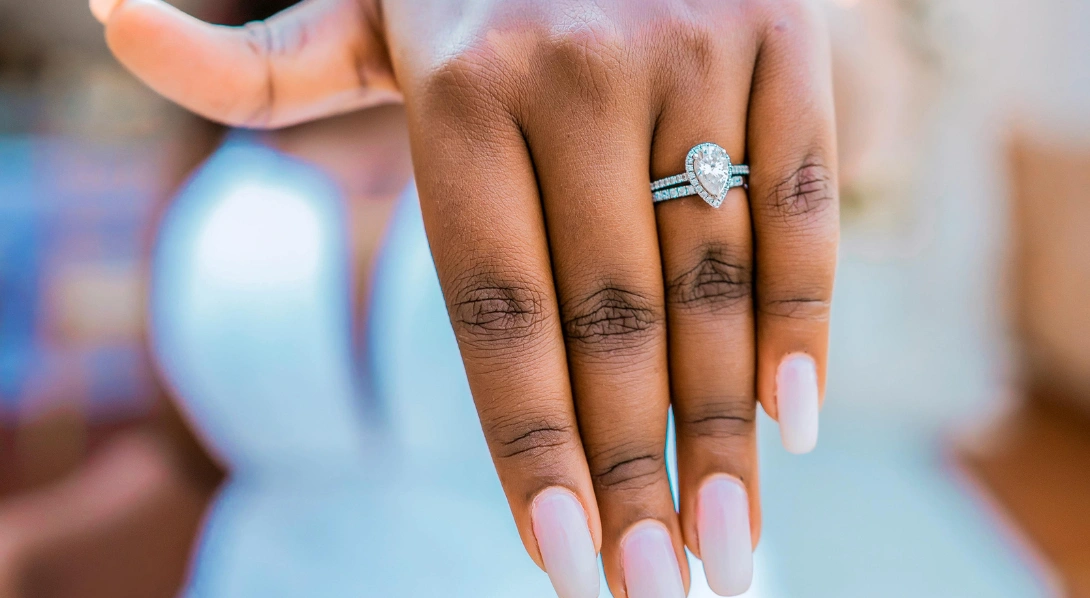
You can expect to pay an annual premium based on 0.5%-2% of your piece’s appraised value. Depending on where you buy jewelry insurance, your premium can further vary based on deductible options and whether you want to incur any out-of-pocket costs at claim time.
Cost by Jewelry Value
Estimate your annual premium based on your piece’s value. Most policies cost 1–2% of jewelry’s appraised value per year, or 0.5%-1.5% with BriteCo.
| Jewelry Value | Insurance Premium |
|---|---|
| $3,000 ring | $30–$60/year |
| $6,000 ring | $60–$120/year |
| $15,000 ring | $150–$300/year |
Compare the cost of jewelry insurance against the out-of-pocket replacement costs, and you’ll quickly see how much it can save you. If you lose your $6,000 engagement ring while on your honeymoon, even a homeowner’s rider can’t help. In contrast, jewelry insurance, for which you’ve only been paying $60–$120 per year, can save you from writing a $6,000 check to replace the ring.
The BriteCo Jewelry, Diamond, & Watch Price Index 2026 shows a median engagement ring sales price of $6,939 in 2025 and a median appraised value of $9,676. The gap provides useful context for how engagement ring replacement value may differ from the original purchase price.
“That’s an incredible value for peace of mind,” Lemick says.
What Affects the Rate?
Expect your annual premium to vary based on factors such as:
- Your jewelry’s appraised value
- Chosen deductible (BriteCo offers a $0 deductible, unlike the homeowner’s deductible that applies to most jewelry)
- Your location
- The number of pieces insured
Furthermore, some carriers will reduce your premium if you’re implementing other safety measures like an in-home security system, a safe, or a safe deposit box.
Who Should Insure Jewelry (and Who Probably Shouldn't)
When it comes to insuring jewelry, there are four groups of people who should always insure their valuable jewelry pieces (engagement rings, family heirlooms, wedding rings, etc.), and one type who might not need to worry about their uninsured jewelry, even for a wedding band or sentimentally valuable pieces.
The Four Profiles That Should Insure
- The Recent Engagement Ring Buyer: With the median price of engagement rings in the United States being ~$5,500, these valuable pieces are well above the $1,500 homeowner’s sub-limit. They’re worth insuring, and you can easily add your wedding rings to the same policy later!
- The Heirloom Owner: If you own family heirlooms with high sentimental value, it’s worth insuring them, even if they’re not objectively valuable jewelry pieces.
- The Collection Owner: Insuring jewelry is a must for collectors with multiple high-value items that collectively exceed their homeowner’s or renter’s sub-limit.
- The Single High-Value Piece Owner: Whether it’s a wedding band, watch, pendant, or even loose gemstone, if you own even just a single piece that’s above your sub-limit, insure it.
The One Profile That Probably Doesn’t Need It
Jewelry owners with a total collection worth less than $1,500 (where the monetary value isn’t that great and the pieces are treasured for sentimental reasons) probably don’t need a specialized policy.
If uninsured jewelry could be easily replaced or repaired using an emergency fund, and a repair or replacement would not cause financial strain, you could skip the additional coverage.
What Happens When You File a Claim
Once you’ve secured specialty coverage, you can easily file a jewelry claim in four steps without paying a penny for replacements or repairs.
1. Check your coverage.
When you file claims, check your policy to ensure your claim will be covered. For example, verify whether your policy covers a clasp replacement if a clasp breaks, or repairs if you break an earring post.
2. Gather your documentation.
To process your claim, your provider requires some paperwork. This may include appraisal documentation, photos, or a police report. This is why it’s important to have an appraisal and photos before anything goes wrong!
A police report is only required for thefts or suspected thefts; it won’t be necessary if your claim is simply for a lost ring.
3. File your claim online.
Submit all of your claim details to your provider.
4. Secure your repair or replacement.
Work with your preferred jeweler to start the repair process or replace the piece with an exact match, at no cost.
“Typically, a claim, from start to finish, should be a very quick process — somewhere in the range of two weeks or so,” Lemick says.
To help you avoid the need to make a claim in the first place, preventive maintenance coverage, such as stone tightening or prong re-tipping, is included in the standard BriteCo policy value.
Is Jewelry Insurance Worth It? | FAQs
1. Is it worth getting jewelry insurance?
Jewelry insurance is worth it if a piece is worth more than your homeowner’s policy sub-limit, is expensive to replace, or has significant sentimental value. Coverage may be unnecessary for inexpensive pieces that can be easily replaced out of pocket.
2. Is jewelry insurance worth it for an engagement ring?
Absolutely! The median engagement ring value is around $5,500, which is well above the typical homeowner’s coverage limit of $1,500–$2,000 and a hefty amount to pay out of pocket.
3. How much does jewelry insurance cost?
Most jewelry insurance policies cost about 1%–2% of a piece’s appraised value annually. For example, a $6,000 ring typically costs about $60–$120 per year to insure.
4. What does jewelry insurance cover?
Specialized jewelry insurance covers accidental loss, theft, damage, and mysterious disappearance. It also provides worldwide coverage and replacement value protection.
5. Does homeowner’s insurance cover jewelry?
Yes, but coverage is usually limited to about $1,500–$2,000 total and may be subject to a deductible. Many homeowner’s policies also exclude events like mysterious disappearance and certain accidental losses.
6. What is the best way to insure jewelry?
Specialized jewelry insurance is your best bet for the most comprehensive protection. A policy typically offers full-value coverage, worldwide protection, no deductible, and claims that don’t affect your homeowner’s policy.
7. Can you insure jewelry without an appraisal?
Not typically. Appraisals are used to value jewelry to determine the extent of your coverage, so they’re an important piece of documentation that’ll be referenced during the claims process.
8. What happens if you lose insured jewelry?
You can file a claim, submit the required documentation, and work with your jeweler to replace the item. A police report is generally not required unless theft is involved.
9. Does jewelry insurance cover a lost diamond?
Yes, specialized jewelry insurance covers accidental loss and mysterious disappearance, which is what a lost diamond would fall under. Coverage depends on the specific circumstances of the loss and the policy terms.
10. Is jewelry insurance worth it if I have homeowner’s insurance?
Often, yes, because homeowner’s insurance typically has deductibles, low jewelry limits, and coverage exclusions. Specialized jewelry insurance fills those gaps with broader protection and full-value coverage.
Related Articles:
Video camera equipment insurance
Bvlgari Jewelry Insurance
Appraised Value Vs. Replacement Value Vs. Market Value for Jewelry Insurance
Get a Quote:
The Easy Way to Insure Your Jewelry - and Save Money!
UP NEXT: What are the Odds of Losing or Damaging Jewelry?

Author