How to File a Jewelry Claim in 3 Steps
Filing a jewelry insurance claim with a specialty carrier like BriteCo requires only three steps. Confirm your policy will cover the claim you wish to make, submit the claim with documentation, and work with your preferred jeweler to have the piece of jewelry repaired or replaced.
Most claims can be submitted in under five minutes using BriteCo’s online portal, and BriteCo’s claims teams typically contact you within four hours.
How to file a jewelry claim:
- Check your coverage.
Check your policy to ensure your claim is covered. - Begin the claims process.
File a claim online, including photos and documentation. - Secure your repair or replacement.
Work with a jeweler to repair or replace your piece with an exact match.
Step 1 — Check the Terms of Your Insurance Coverage
A typical jewelry insurance policy covers lost jewelry, stolen jewelry, and accidental damage. With BriteCo, coverage applies worldwide. Most policies, however, do not cover claims for preventive maintenance, normal wear and tear, or manufacturer defects already covered by jewelry warranties.
Check coverage before you submit claim details to your insurer to avoid unnecessary back-and-forth and expedite the process. This helps to ensure that your jewelry is replaced or repaired as soon as possible.
Step 2 — Submit Your Claim
The claims process takes under five minutes with BriteCo. Submit the necessary documentation in the claims portal (such as photos, police reports, or written accounts), check your state’s DOI guidance on required documentation for personal property claims if you’re unsure of what’s needed, and then the claims team will contact you within four hours.
No matter who your insurance provider is, most insurance companies aim to get back to you quickly.
As soon as you submit claim documentation, your examiner contact will add your claim to their queue for processing as soon as possible, so you can repair or replace your jewelry fast.
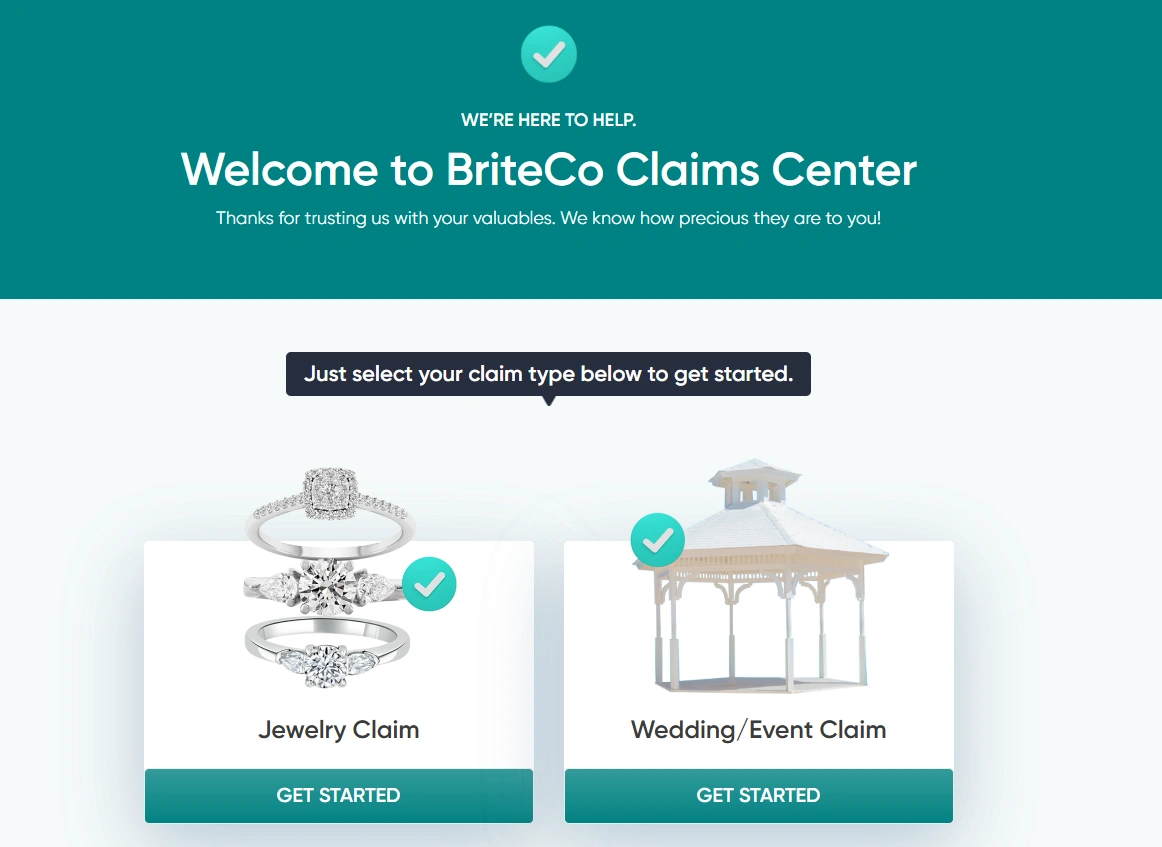
Step 3 — Get Your Jewelry Repaired or Replaced
An approved claim (repair or replacement) with your insurance provider is necessary for the jeweler’s work to begin. Once you have the sign-off from your examiner contact, you can then schedule your jeweler appointment and proceed with working with your original jeweler, or another jeweler of your choosing, to have the item repaired or replaced.
The replacement item can be either an exact match to the previous piece or one of equal value. The value is based on a prior appraisal, which is why it’s important to get your jewelry appraised before securing coverage. It helps to understand how appraised value vs. replacement value vs. market value differ, since your payout is tied to replacement value.
What You Will Learn
- What Documentation You Need to File a Jewelry Claim
- When You Need a Police Report (and When You Don't)
- How Long Does a Jewelry Claim Take?
- Jewelry Insurance Claim vs. Homeowners or Renters Insurance Claims
- Can Filing a Jewelry Claim Affect My Homeowners Insurance?
- Common Claim Scenarios — Travel, Mysterious Disappearance, and Heirloom Damage
- What to Do If Your Jewelry Insurance Claim Is Denied
- FAQs About Filing a Jewelry Claim
- Get Your Jewelry Covered with BriteCo
What Documentation You Need to File a Jewelry Claim
The necessary documentation for filing a jewelry insurance claim will depend on the type of jewelry claim you’re making. Common necessary documentation includes a police report for a theft claim and details from an independent appraiser for a lost jewelry claim.
An appraisal is required to confirm a piece’s replacement value, and a written account is required for a mysterious disappearance claim. Photos are helpful as well, providing both evidence of ownership and, if applicable, evidence of damage.
Read through the claims checklist below so you know what you’ll need when it’s time to make a claim.
| Claim Type | What You’ll Typically Need |
|---|---|
| All Claims | Description of what happened; date, time, and location of the loss, damage, or theft; supporting documentation such as repair estimates, receipts, or other information related to the loss. |
| Accidental Damage | Photos of the damaged item; repair estimates (if available); supporting documentation. |
| Loss/Mysterious Disappearance | Description of what happened; date, time, and location; supporting documentation. A written account may also be requested. |
| Theft (or Suspected Theft) | Description of what happened; date, time, and location; police report; supporting documentation. |
| Travel-Related Crime | All applicable claim documentation above, plus travel records such as flight itineraries, hotel reservations, or other documentation confirming your travel, if requested. |
Ensure your documentation is as helpful as possible in the event of a claim. A newer, fresher appraisal is always best, as regular appraisal updates confirm that your coverage reflects the current value of your jewelry and that your policy will pay out an amount sufficient to replace or repair a piece of jewelry.
Photos should always be well-lit, with multiple angles and, if possible, a scale reference. Receipt alternatives, such as credit card statements, warranty cards, or a dated photo of the piece, can likewise come in handy if your original receipt is lost.
“If they were traveling somewhere, they might be requested to show airline tickets or hotel receipts of that trip,” says BriteCo’s Director of Claims and Customer Success Christine Belling. “A lot of times, that surprises people.”
When You Need a Police Report (and When You Don't)
You need a police report to file a jewelry insurance claim when you’re specifically making a theft or theft-related claim; all other claims do not require a police report.
- For a clear theft or suspected theft claim, such as if your jewelry disappeared under suspicious circumstances, like from a hotel room or gym locker, a police report is necessary. (Yes, even if it’s just a suspected theft, that results in a police report requirement, too.)
- A police report is not required for accidental damage claims or mysterious disappearance claims with no indication of theft. Mysterious disappearance claims, however, can require a written account of the disappearance or a waiting period to see if the piece turns up.
If your jewelry insurance policy includes worldwide theft coverage and you want to submit a travel theft claim for a theft that you believe occurred during transit or in your hotel room, you’ll need a local jurisdiction report.
How Long Does a Jewelry Claim Take?
Most jewelry insurance claims resolve within a few days to a few weeks, from the time you submit a jewelry insurance claim to the time your repaired or replaced jewelry is in your possession.
“Our average is 30 to 44 days,” Belling says. The final timeline is based on several factors.
- First 4 Hours: You submit claim details and wait to hear from the insurance provider examiner contact (within 4 hours for BriteCo customers)
- 1-5 Days: The examiner starts the claims process, reviewing your claim and gathering documentation (carrier response windows differ, but should align with state Department of Insurance regulations; most states require carriers to acknowledge claims within 10–15 days)
- 3-10 Days: Examiner contact approval is required for a jeweler appointment for repair or replacement, but once they give the go-ahead, you can often expect to meet with a jeweler within 3-10 days, depending on your availability.
- A few days to a few weeks: The time required to get jewelry replaced or repaired will depend on your needs and the jeweler.
“If it’s an easy repair, it could be done in a week,” Belling says.
Full resets, stone replacements, and special orders can take weeks. When it comes to replacements, you can get the jewelry right then if it’s in stock. On rare occasions, such as if you’re replacing a custom piece of jewelry, the timeline may extend to months.
Jewelry Insurance Claim vs. Homeowners or Renters Insurance Claims
Specialty jewelry insurance differs from renters and homeowners insurance in a few key ways, especially regarding claim deductibles, premium impacts, and coverage scope. Overall, a standalone policy for jewelry provides greater financial protection and comprehensive coverage that applies to a wider array of claims.
- Deductibles: With home insurance, you’ll always pay a deductible when filing a jewelry claim. With specialty jewelry insurance, you’ll pay either no deductible or a lower deductible.
- Premium impacts: Filing a homeowners or renters insurance claim for jewelry theft or damage can increase your future premiums. Claims through BriteCo, however, are not reported to insurance databases, preventing these negative premium impacts.“You won’t be able to switch companies and get a good price,” Belling says, “because they will ask if you have had a personal property claim in the last five years, and you will have to disclose that.”
- Coverage scope: A homeowners policy provides limited coverage, often limiting claims to in-home theft or damage caused by covered events such as house fires. Note that natural disasters are not always included with this type of personal property coverage; you’ll want to verify your specific circumstance with your state Department of Insurance or a similar source. In contrast, dedicated coverage for jewelry provides a much more comprehensive level of protection, including for theft, mysterious disappearance, loss, and accidental damage worldwide.
What about scheduled personal property vs. standalone insurance? It’s worth noting that scheduled personal property coverage is a part of a homeowner’s policy (when added), so you’ll still have a similar claims and coverage limit.
A standalone, separate policy dedicated to jewelry and other high-value items is always the best way to go to avoid a higher deductible and similar claim headaches.
Can Filing a Jewelry Claim Affect My Homeowners Insurance?
No. BriteCo does not report jewelry or watch claims to loss-history data services such as CLUE or A-PLUS. Because the claim is not reported to these loss-history databases, it will not become part of the claims information commonly reviewed by homeowners insurance companies. Most homeowners and renters insurance companies use CLUE or A-Plus reports to evaluate risk, set rates, and determine eligibility.
Before you buy jewelry insurance, ask the provider exactly where your claim history is reported.
Common Claim Scenarios — Travel, Mysterious Disappearance, and Heirloom Damage
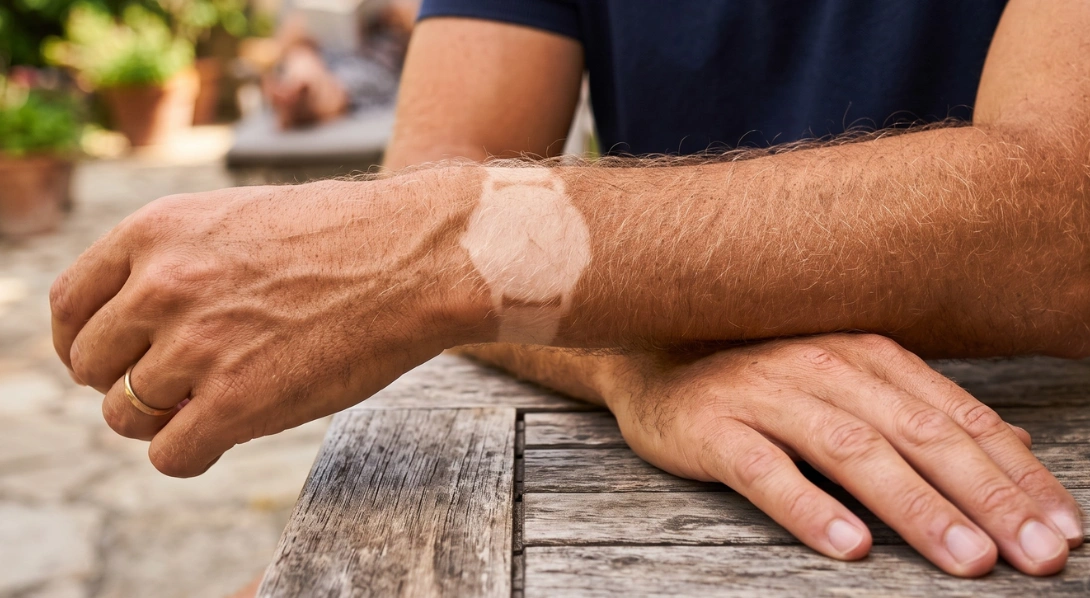
Hotel room theft is one of the more frequent travel claim scenarios. You left an expensive piece of jewelry or a luxury watch in your locked hotel room, maybe even a safe, and now it’s gone, suspiciously.
What BriteCo covers: BriteCo covers theft and mysterious disappearance worldwide, so you’re protected no matter where an incident takes place.
What documentation is needed: A police report filed in the local jurisdiction if your claim is theft-related.
Your valuable jewelry mysteriously disappears. Maybe you left your engagement ring in your gym locker, or your wedding band on the countertop, and now it’s vanished. (Gym locker loss is also one of the more popular mysterious disappearance scenarios.)
What BriteCo Covers: Specialty coverage includes mysterious disappearance coverage, something homeowner’s insurance rarely does.
What Documentation is Needed: A written account of how the jewelry went missing, as well as a police report, if theft could be to blame for the misplaced jewelry.
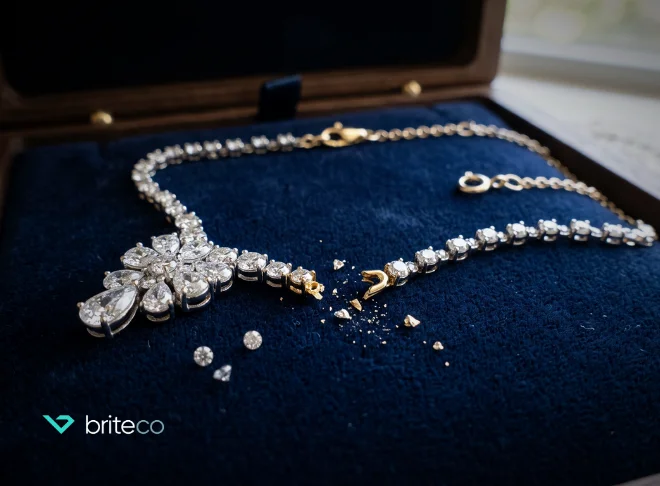
You accidentally damaged a prized piece of your jewelry collection, a family heirloom ring. The band is bent, a prong is broken, or a stone is lost.
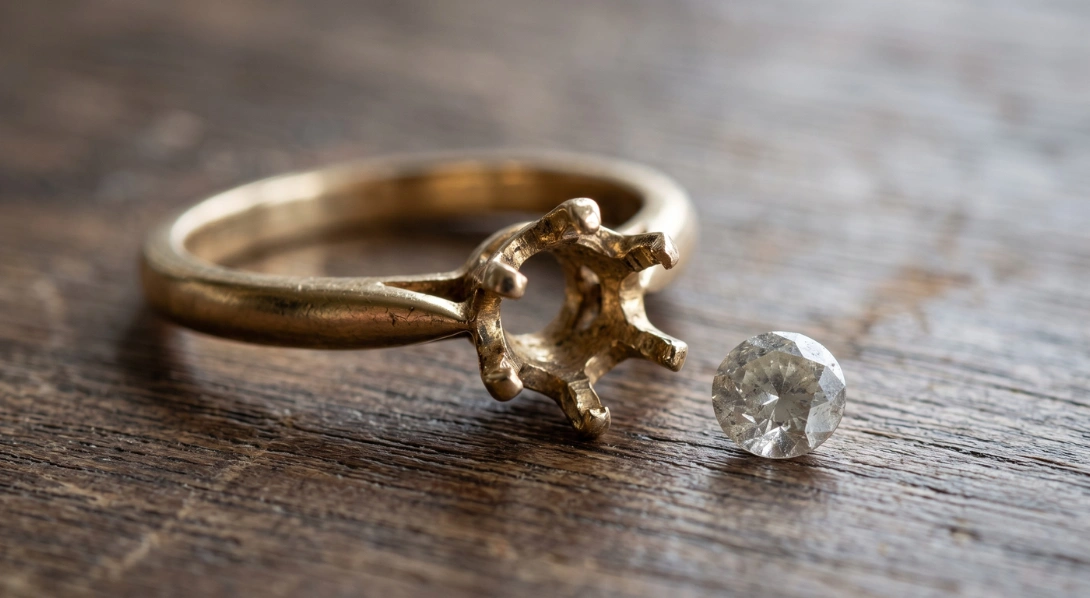
What BriteCo Covers: Specialized jewelry insurance covers these common occurrences, allowing you to schedule jewelry repair at a local jewelry store at no cost to you. What Documentation is Needed: No police report is necessary. However, you will need an accurate, updated appraisal and documentation, such as photos and receipts.
“I think the biggest thing most people don’t realize is just how comprehensive jewelry insurance coverage is,” says Belling. “It covers mysterious disappearance, or if you knock your jewelry on something, and a diamond is loose, that’s covered, even if you’re missing a small diamond in your ring. Just about everything is covered.”
What to Do If Your Jewelry Insurance Claim Is Denied
Jewelry claims are rarely denied; when they are, it’s usually for missing documentation, the claim falling outside the policy’s covered events, or the item not being insured at the time of the loss. If your claim is denied, though, you have options.
Potential reasons for claim denial during the claims process include:
- Missing details or documentation from when you filed a claim
- Insurance coverage does not apply to the claim (a covered event is required for an approved claim)
- The claim is related to an incident occurring before the insurance policy purchase
- The claim is for an item not covered
- The policy has lapsed
- The claim was not submitted in a timely manner
All of these can result in a jewelry insurance claim denial, but you still have the option to appeal. A formal appeal is required for insurance companies’ internal reconsideration of your claim, at which time you can address the reason for denial. If the company continues to deny your claim, you can file a complaint with the Department of Insurance or consult a qualified attorney.
FAQs About Filing a Jewelry Claim
How do I file a jewelry insurance claim?
Check that your policy covers the claim, then submit your claim online with the required documentation. Once approved, work with your preferred jeweler to repair or replace the item.
What do I need to file a jewelry insurance claim?
The required documentation depends on the claim type but may include photos, an appraisal, a written account, or a police report. If you don’t have a receipt, documents like credit card statements, warranty cards, or dated photos may help.
How do I make a claim for lost jewelry?
Confirm your policy covers the loss, then submit your claim with the required documentation. After approval, you can have the item repaired or replaced through your chosen jeweler.
Do I need a police report for a jewelry insurance claim?
A police report is required for theft or suspected theft claims. It is not required for accidental damage or mysterious disappearance claims with no indication of theft.
What happens after I file a jewelry insurance claim?
Your claim is reviewed by an examiner after you submit your documentation. Once approved, you can arrange for your jewelry to be repaired or replaced.
How long does a jewelry insurance claim take?
Most jewelry insurance claims are completed within a few days to a few weeks. The exact timeline depends on claim approval and the repair or replacement process.
Can I file a claim if I lost my engagement ring?
Yes, if your policy covers the loss or mysterious disappearance. You’ll need to submit the required documentation to begin the claims process.
Will insurance replace stolen jewelry?
Yes, if the theft is covered under your policy and your claim is approved. The replacement can be an exact match or an item of equal value, as determined by your appraisal.
Can I file a jewelry claim without a receipt?
Yes. Credit card statements, warranty cards, or dated photos of the jewelry can help if you no longer have the original receipt.
Can a jewelry insurance claim be denied?
Yes, claims may be denied if documentation is missing, the incident isn’t covered, the item wasn’t insured, the policy has lapsed, or the claim was submitted too late. If your claim is denied, you can file a formal appeal.
Get Your Jewelry Covered with BriteCo
A handful of specialty carriers sell valuable jewelry insurance, including BriteCo, Jewelers Mutual, and Chubb. With BriteCo’s coverage, your specialty jewelry insurance cost is just 0.5–1.5% of your jewelry’s appraised value, annually, meaning you can expect to pay $100–$500 per year for a jewelry insurance policy covering a $10,000 piece. Your jewelry coverage will protect you worldwide, and BriteCo never charges a deductible.
Get your quick online jewelry insurance quote from BriteCo now. Protect your jewelry collection from theft, loss, mysterious disappearance, and accidental damage, knowing that if you ever need to make a claim, the process will be quick, simple, and exceptionally convenient.
Related Articles:
How Does Location Affect Jewelry Insurance Cost?
Do Home Security Systems Lower Jewelry Insurance Costs?
What does jewelry insurance cover?
The Most Famous Missing or Stolen Watches
Video camera equipment insurance
Bvlgari Jewelry Insurance
Get a Quote:
The Easy Way to Insure Your Jewelry - and Save Money!

UP NEXT: Cost to Repair or Replace Jewelry Out of Pocket: What You Might Pay

Author