Losing jewelry can be very emotionally painful, as jewelry often is representative of a special person, promise, memory, life milestone, identity, or family story. But it is possible to cope with the loss by recognizing the piece’s importance and processing your connected emotions.
Jewelry loss isn’t just about a missing object; you’ve lost something that carries strong emotional weight, something that holds relational and symbolic value beyond its material worth. It makes sense, then, if the hurt you feel is intense. ”People can be really attached to a piece of jewelry that might not have much intrinsic value,” says jewelry consultant Nicole Strong of Boonville, Missouri. “But it had a lot of value to them because it belonged to whoever, it came from whoever or it represented this moment in their life.”
This article focuses on the emotional impact of losing jewelry, including:
- Why jewelry loss can feel so personal
- Why guilt, worry, and panic after a loss are common
- What sentimental jewelry often represents
- How to cope emotionally
- Whether to replace, redesign, or preserve the memory after a loss
- Other practical steps to take following a loss

What You Will Learn
- Why Losing Jewelry Can Hurt So Much
- Jewelry as Memory, Identity, and Connection
- The Guilt That Often Comes with Jewelry Loss
- When the Jewelry Belonged to Someone Who Passed Away
- When the Lost Jewelry is an Engagement Ring or Wedding Ring
- The Pain of Losing Heirloom Jewelry
- Spiritual Meaning, Symbolism, and Superstition After Jewelry Loss
- Replacing Lost Jewelry Vs. Keeping the Memory
- How to Cope with Losing Sentimental Jewelry
- Practical Steps to Take After Jewelry Goes Missing
- When Jewelry Disappears Without an Explanation
- How Jewelry Insurance Helps with the Financial Side — Not the Emotional Loss
- FAQs About the Emotional Impact of Losing Jewelry
- Conclusion: The Jewelry Is Gone, But the Meaning Is Not
Why Losing Jewelry Can Hurt So Much
Losing jewelry can hurt significantly, because so many pieces of jewelry act as a physical representation of something very personal: a memory, a love story, a part of one’s identity, one’s personal safety, or the continuity of something important.
You may feel significant emotional distress after losing a piece of jewelry if:
- The jewelry represents important relationships.
- The jewelry marks milestones from your life.
- The jewelry carries memories of someone who is gone.
- The jewelry was a significant expression of your identity or personal style.
- The jewelry was physically small but emotionally huge.
Often, jewelry sits close to your heart or body with every wear, and losing that item can leave a very noticeable void.
Jewelry as Memory, Identity, and Connection
Jewelry often carries multiple layers of meaning at once, combining memories with personal identity and connections. A piece of jewelry can represent the person who gave it to you, the moment in time when you received or purchased the jewelry, what was happening in your world at the time, and how you see yourself as related to the jewelry. “Your engagement ring, your mother’s ring — jewelry’s a gift that’s generally given on some sort of momentous life occasion that usually has some emotional attachment to it as well,” says Strong.
Regardless of jewelry’s replacement value, a piece often holds sentimental value that far outweighs any monetary amount. For example, an heirloom piece passed between family members holds generations of sentiment, stories, and memories.
(Not sure what is heirloom jewelry? It doesn’t have to be a wildly expensive or old piece. It’s any piece passed and beloved through generations.)
The Guilt That Often Comes with Jewelry Loss
Guilt is common after losing jewelry, especially if the item was a gift, heirloom, engagement ring, or wedding ring, or if it belonged to someone who passed away.
Why Guilt Feels Stronger with Sentimental Jewelry
Sentimental jewelry isn’t just a piece of fashion jewelry that you purchased on a whim. Whether it’s a bracelet, earrings, or pendant, it holds deep personal meaning and so it makes sense that losing it can feel like a personal failure.
It can wreak havoc on your mental health, as you blame yourself for not only losing the jewelry, but, in some ways, what it stood for and the connection it provided to loved ones, memories, etc.
“You were trusted with, say, an heirloom piece, and now you’re the one that lost it,” Strong says. “Or if somebody spent a lot of money on it, that can be where that guilt comes from as well.”
How to Forgive Yourself for Losing Jewelry
To forgive yourself after losing a piece of important jewelry, a degree of self-awareness is key — you must realize that losing the jewelry is not a moral failing and the loss does not reflect on you as an individual.
- Separate the responsibility of loss from your intentions.
- Acknowledge the item’s meaning and your feelings.
- Recognize that the item’s loss does not erase its meaning.
- Decide on a constructive next step.
- Avoid punishing yourself with looping, repeated “what if” thoughts.
While it may take some time to achieve full emotional release, these steps can bring you a greater sense of peace in the days ahead, and help you approach next steps with a clear mind.
When the Jewelry Belonged to Someone Who Passed Away
The guilt of losing jewelry can be especially intense if the piece originally belonged to a loved one who passed away, as the jewelry may be intertwined with not only memories, but also grief. In this case, it may be worth considering speaking with a mental health professional who can help process these emotions.
When the Lost Jewelry is an Engagement Ring or Wedding Ring
Losing an engagement ring or wedding ring (or even promise rings) can feel especially devastating because the ring symbolizes you and your partner’s commitment, love, and shared history.
Why Ring Loss Can Feel Like Relationship Loss
For many, an engagement or wedding ring is their favorite ring, worn daily, representing the most important relationship of their entire life, so losing it can feel like a blow to the relationship itself. However, this is not the case.
Losing an engagement or wedding ring should not affect your relationship in any negative way. It doesn’t say anything negative about your relationship. It’s just a life mishap that you and your partner can address together.
What to Say to Your Partner After Losing a Ring
- Be honest about what happened.
- Acknowledge the emotional importance of the ring.
- Do not minimize or brush off the loss.
- Share what steps you have already taken to find or replace the ring.
- Discuss replacement, redesign, or memorial options together.
“They’re probably going to be upset, especially if they spent a lot of money on it,” Strong says. “But at the same time, hopefully they would be understanding and work toward replacing it with you.”
Replacing the Ring Without Replacing the Meaning
While it may feel strange to replace a lost engagement ring or wedding ring with a new one, realize that you are not replacing the original ring’s meaning when you do so. A replacement ring, whether it’s identical to the last or not, still represents the same commitment, love, and relationship.
The Pain of Losing Heirloom Jewelry
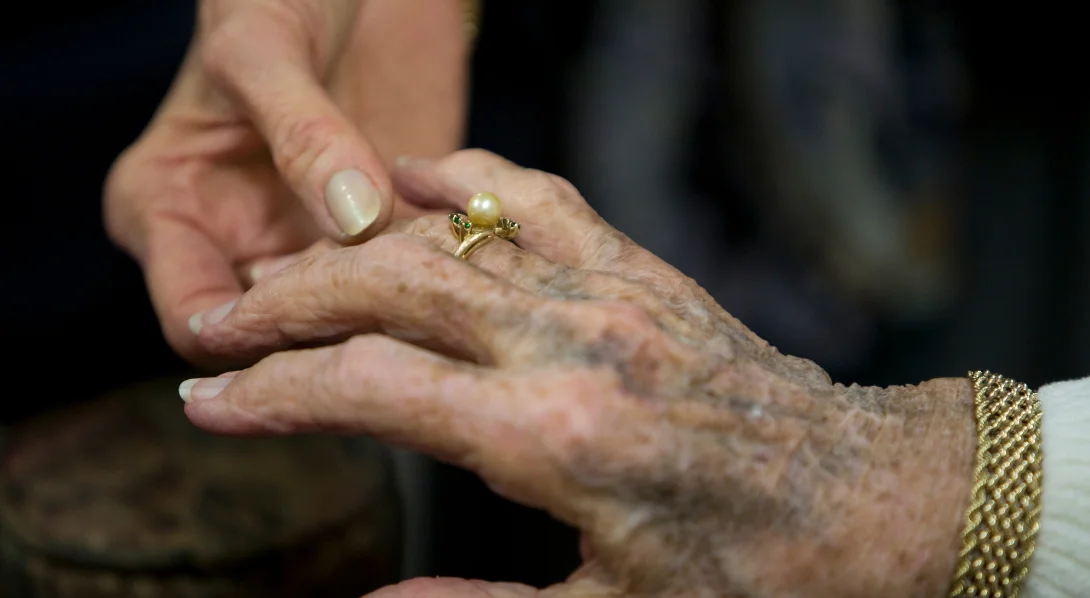
Heirloom jewelry can feel irreplaceable, representing both the original person who owned it and the family story attached to it, and so the loss may feel like losing access to one’s historical roots, memories, traditions, and family connections.
Again, this is not like losing newly purchased jewelry that represents just one chapter of one person’s life; heirloom jewelry can represent many lives lived. ”People have jewelry that gets handed down for generations after generations after generations,” Strong notes, “especially if it’s taken care of, and especially if it’s high quality.”
Additionally, losing heirloom jewelry can affect more than just the individual who lost it. If the original owner is still alive, they’ll likely experience their own grief over the loss. Other family members may likewise mourn the loss or even place blame.
If you’ve lost one heirloom, documenting any remaining heirlooms (by, for instance, acquiring appraisals that detail the items’ gemstones, gold, silver, and other metals used) can help restore your sense of control. It assures that if another loss happens in the future, you have the documentation necessary for an insurance claim and/or replacement (even though a replacement will never hold the same emotional weight as the original).
Spiritual Meaning, Symbolism, and Superstition After Jewelry Loss
Some may try to find symbolic and spiritual meaning if jewelry breaks or disappears, interpreting it as a sign, warning, bad luck, negative energy, or a loss of divine protection against evil spirits or the evil eye.
These symbolic interpretations are based on personal or cultural meanings, not facts. Sometimes, broken jewelry is simply due to mundane reasons — loose clasps, metal fatigue, rushed handling, jewelry falling from your bag during travel, or storage issues.
Consider these potential reasons for jewelry loss or damage, rather than superstitions that may bring you greater anxiety.
| What You’re Dealing With | Possible Superstitious, Spiritual, or Symbolic Meanings | What You Should Do Instead of Worry |
|---|---|---|
| Your ring slips off your finger | An impending relationship change or loss of control | Check for incorrect sizing or, for stone loss, damaged prongs |
| You have a broken necklace | A spiritual or energy connection has been interrupted | Check for a broken clasp, chain wear, or metal fatigue |
| You lose a piece of protective jewelry | Negative changes are coming | Consider a replacement or, if it makes you feel better, a protective ritual that aligns with your beliefs |
| An heirloom disappears | Grief, guilt, and family memory pain will be unavoidable | Search for the heirloom, document remaining heirlooms, and discuss the loss with family |
Replacing Lost Jewelry Vs. Keeping the Memory
Replacing lost jewelry does not mean you’re replacing the person, relationship, or memory attached to the original piece — but whether or not you replace the piece will depend on if it will be symbolic (good or bad), practical, emotional, or even necessary, depending on your unique situation.
“You probably have to draw a line somewhere of how often you’re willing to replace something if it gets lost more than once,” Strong says. “But I think with something as important as an engagement ring or a sentimental piece of jewelry, it would be worth replacing at least once.” 
Your options after losing a piece of jewelry:
- Replace the lost piece as closely as possible, using photos to re-create key details.
- Redesign a new piece inspired by the lost one.
- Create a different memorial object altogether.
- Keep the memory without replacing the item at all.
Before deciding whether or not to replace jewelry, wait until after the initial grief has passed.
How to decide:
- Replace the lost jewelry if you still want to wear it daily or if its symbolism is still important to you.
- Redesign the lost jewelry if its original meaning matters more than getting an exact replica.
- Remember the piece’s connection in a different way, if the emotional connection is ultimately more important than the physical item.
- Pause if making any decision feels rushed or guilt-driven.
How to Cope with Losing Sentimental Jewelry
- Allow yourself to have a real reaction.
- Don’t replay the moment of loss endlessly in your head.
- Write down the jewelry’s story and reflect on its meaning.
- Save any photos or memories connected to the jewelry.
- Tell the person who gave the jewelry to you, if needed.
- Create a small ritual of goodbye or remembrance.
- Decide later whether replacing the jewelry feels right.
- Protect your remaining meaningful pieces.
After completing these steps, you should be able to approach the next steps with a greater sense of personal growth and hope.
If, though, the loss triggers overwhelming distress, ongoing panic, or unresolved grief, it may help to speak with a trusted person or mental health professional.
Practical Steps to Take After Jewelry Goes Missing
- Pause and avoid panic-searching the same places repeatedly.
- Retrace the jewelry’s last confirmed location.
- Check common spots: vanities, nightstands, gym bags, cars, pockets, hotel rooms, etc.
- Contact any recently visited businesses.
- File a police report if theft is a possibility.
- Contact your insurer if the item was covered.
- Document the loss while details are fresh.
Lost ring? Here’s what to do next.
When Jewelry Disappears Without an Explanation
Unexplained jewelry loss can feel especially upsetting because there is no clear reason for the loss and you’re just not sure if the piece will turn up again. You may keep replaying the possibilities in your head. Was the jewelry stolen, misplaced, lost during travel, accidentally thrown out, moved by someone?
The uncertainty can intensify your distress, as your mind keeps searching for an explanation (because the mind does not like uncertainty). However, continually looking for the lost piece can become emotionally exhausting as your emotions remain in a heightened state. Put together a defined search plan and decide when to call the search off, for your mental health’s sake (the step-by-step guide above can help you do so).
If you have mysterious disappearance jewelry insurance (meaning protection in the event jewelry that has been misplaced, disappeared, or gone missing, often provided via a specialized policy), document the loss as soon as possible. Write down a detailed account of when the jewelry was last seen, where it could have possibly gone missing, and efforts taken to find the jewelry.
How Jewelry Insurance Helps with the Financial Side — Not the Emotional Loss
Jewelry insurance coverage cannot help with the emotional devastation that comes with the loss of jewelry, but it can reduce the financial burden of repairing or replacing lost or damaged jewelry. Being able to afford that replacement piece may also allow you to restore that emotional connection and symbolism that the original jewelry provided.
Even if you’ve already lost a piece, consider documenting and covering other existing meaningful pieces now, to protect them in the future.
FAQs About the Emotional Impact of Losing Jewelry
Why does losing jewelry hurt so much?
In modern American culture, jewelry is often symbolic of relationships and life milestones, and so losing a piece of jewelry is almost like losing a piece of that relationship or memory.
Is it normal to grieve lost jewelry?
Yes, many Americans grieve for lost jewelry, especially if that jewelry is related to one’s belief system, relationship, personal identity, or something equally emotionally relevant.
Is losing a wedding ring a bad sign?
Modern Americans seldom believe that losing a wedding ring is a bad sign from the universe.
Should I replace lost sentimental jewelry?
If you feel it would be emotionally satisfying to replace the piece, and if it’s possible given the unique circumstances (some pieces may be too expensive or difficult, in the case of heirlooms, to replicate), then do so.
Can jewelry insurance replace sentimental value?
No, jewelry insurance can help you recover the financial value of a lost piece of jewelry, but it can never replace a piece’s sentimental value.
Conclusion: The Jewelry Is Gone, But the Meaning Is Not
Grief over jewelry loss is valid, as often jewelry represents something bigger than itself. However, the memory, relationship, or milestone connected to a piece of jewelry is not erased just because the physical object is lost. You still have all that the piece carried: memory, love, identity, family history, and the story of a moment that mattered.
Consider protecting remaining meaningful pieces for jewelry that would be painful to lose. Get your quick online jewelry insurance quote today.
Get a Quote:
The Easy Way to Insure Your Jewelry - and Save Money!
UP NEXT: What are the Odds of Losing or Damaging Jewelry?

Author