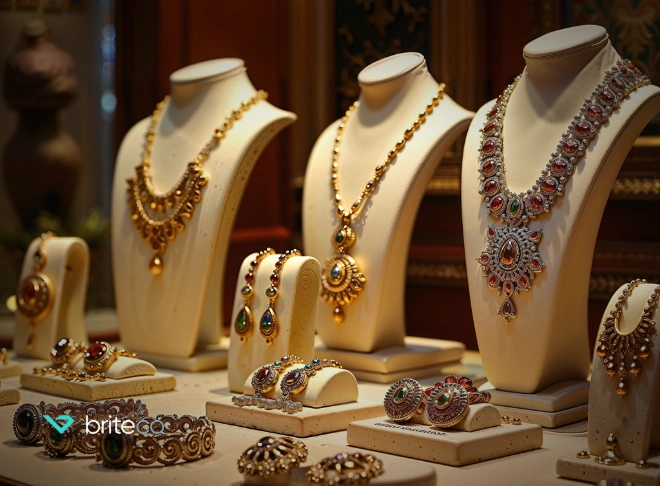
Jewelry’s appraised value is a professional valuation that’s been made for a specific purpose, while replacement value is what it would cost to replace the jewelry with a comparable item at the store. Fair market value is what the jewelry could realistically sell for today on the secondary market.
Jewelry’s appraised value, replacement value, and market value will often all differ because each requires a different valuation method. For example, the replacement cost of an item at a retail store will generally be higher than what your specific piece of jewelry would sell for on the secondary market, so the replacement value will be higher than the market value. The purposes for your valuation — insurance, resale, estate planning, or claims purposes — will dictate what type of valuation you need.
Which Valuation Do You Need?
- For purchasing insurance: Replacement value or appraised replacement value
- For selling the jewelry: Market or fair market value
- For making an insurance claim: Your policy wording will decide whether replacement value or actual cash value applies to your claim
Let’s take a closer look at the differences between these values and how to decide which applies to your specific circumstances.
What You Will Learn
- Appraised Value Vs. Replacement Value Vs. Market Value: The Short Answer
- What Does Appraised Value Mean for Jewelry?
- What is Replacement Value in Jewelry Insurance?
- What is Market Value or Fair Market Value for Jewelry?
- Why Jewelry Appraisals are Often Higher Than Selling Prices
- Actual Cash Value Vs. Replacement Value for Jewelry Claims
- Which Value Matters for Jewelry Insurance?
- Which Value Matters When Selling Jewelry?
- Which Value Matters for Estate, Tax, or Divorce Situations?
- How Appraisers Choose the Right Value Type
- Appraisal Reports Vs. Insurer Replacement Estimates
- How Often Should You Update Appraised Value?
- Examples: How the Three Values Can Differ
- Common Mistakes When Comparing Jewelry Values
- FAQs About Appraised Value, Replacement Value, and Market Value
- Appraised Value Vs. Replacement Value Vs. Market Value: Final Takeaway
Appraised Value Vs. Replacement Value Vs. Market Value: The Short Answer
The primary difference between these values is that each answers a different question: What is the jewelry professionally valued at, what would it cost to replace, and what could it sell for? As such, each value is used for different purposes.
Let’s take a look at a few key points.
| Value Type | What It Means | Best Used For | Usually Higher or Lower? |
|---|---|---|---|
| Appraised Value | A value stated in a professional appraisal for a specific purpose | Appraisals are used for a wide range of purposes, from insurance to selling | N/A |
| Replacement Value | The cost to replace a piece with one of its like kind and quality | Purchasing insurance on a piece of jewelry | Usually higher |
| Market Value | The likely selling value in the current market | Plans to resell or divide assets | Usually lower |
Note that an appraisal can be written for different purposes, so “appraised value” should not be treated as one universal number that’s suitable for all circumstances. Learn more about similar terms via the BriteCo Insurance Glossary.
What Does Appraised Value Mean for Jewelry?
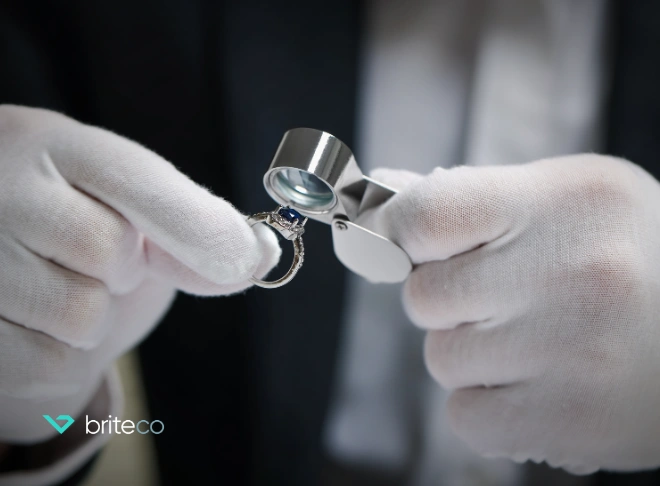
“Appraised value” refers to the value that qualified appraisers have assigned to a piece of jewelry based on the purpose of the appraisal, item details, market data, and professional judgment.
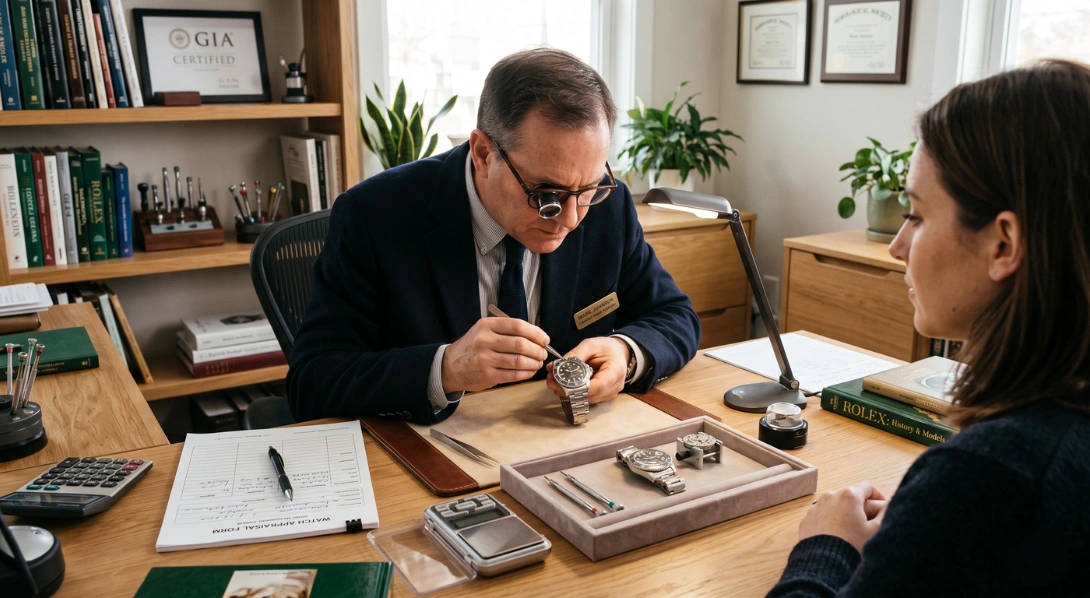
If you purchase an appraisal, it will be an official document detailing the appraiser’s examination, how they arrived at the value, and the final appraised value. A professional jewelry appraisal should identify the item, describe its materials and stones, note its condition, include photos, and state the purpose of acquiring the appraisal value (whether for insurance, resale, etc.).
Along these lines, since one can seek a property valuation like this for a myriad of purposes, it’s important to realize that, if you get an appraised value for your insurance, that number may not be the same as your piece’s true resale value on the free market.
Need an appraisal? Find a local appraiser now.
What is Replacement Value in Jewelry Insurance?
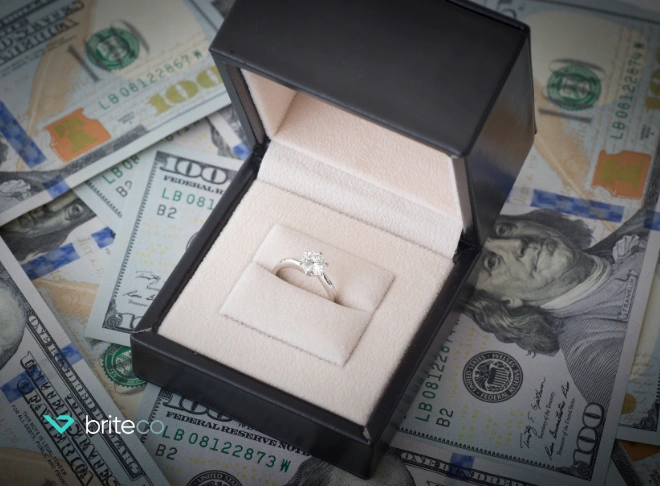
Replacement cost value refers to the estimated cost required to replace your jewelry with a comparable item of like kind and of equal quality, if it is ever lost, stolen, damaged, or mysteriously disappears. This value is often used for insuring jewelry.
The replacement cost estimate may factor in the original item’s retail pricing, materials, gemstone quality, and craftsmanship, as well as the current cost of obtaining a comparable replacement.
So, for example, while a ring with a $6,000 appraised replacement value may not sell for $6,000 used, that number may still be appropriate for insurance purposes.
Online jewelry appraisals, like those offered by BriteCo, can provide a quick replacement-cost valuation.
Retail Replacement Value Vs. Replacement Cost
Sometimes, insurance policies distinguish between retail replacement value and replacement cost; in these cases, “retail replacement value” usually refers to the cost of buying a comparable item at retail, while “replacement cost” is the broader insurance concept of replacing the item.
What is Market Value or Fair Market Value for Jewelry?
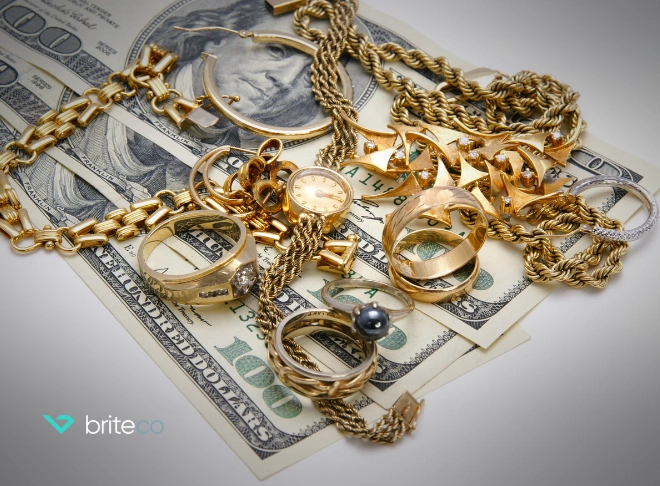
Market value, often discussed as fair market value, is what a willing buyer would realistically pay for the jewelry to a willing seller in the current open market.
“Let’s say I walked in somewhere,” says BriteCo founder and CEO Dustin Lemick, “and said, ‘Hey, I want to sell this.’ When I’ve got three prices, let’s just say, from three different places, I can average that together. That would be something like a market value.”
Market value is often lower than replacement value because resale buyers typically do not pay the full retail price for secondhand items. However, you may sometimes seek a professional appraisal when selling jewelry at a fair market price or when buying from a private seller, which further illustrates the different situations in which appraisal value may come into play.
You might refer to your jewelry’s market value or fair market value when:
- Selling an inherited ring
- Dividing estate assets
- Conducting a private-party sale
- Dividing assets during a divorce or similar property division
Again, remember that if you have an insurance-related replacement appraisal, do not assume that it reflects what your piece will sell for on the secondary market. An insurance replacement appraisal often lists a higher figure.
Why Jewelry Appraisals are Often Higher Than Selling Prices
A jewelry appraisal for insurance purposes is often higher than a piece’s selling price because insurance replacement value and resale market value are built for different purposes: The former considers the price of replacing the piece with a new one, under ideal conditions, while the latter must take into account current demand, market conditions, economic conditions, and similar factors that can result in a less-than-desirable price on the resale market.
Factors that can create a stark difference between your jewelry appraisal valuation and a piece’s selling price on the secondary market include:
- Jeweler’s overhead and markup, which increases the retail replacement value
- Insurance policy prioritization of like-kind replacements
- The differences in demand and pricing within the new and resale markets
- Brand and designer premiums on the new market vs. the resale market
- Buyer demand
- The condition of the pieces to be resold
- Estate or liquidation situations that demand lower prices
In short, an insurance-focused jewelry appraisal tells you what it may cost to replace the jewelry; it does not guarantee what someone might pay to buy it from you in the future.
Actual Cash Value Vs. Replacement Value for Jewelry Claims
If your insurance company uses actual cash value for jewelry claims, you may see a smaller payout in the event of a claim. This is because actual cash value refers to the cost of repairing or replacing an item with like kind and quality, but only after deducting for physical deterioration, depreciation, and obsolescence. In contrast, a policy that uses true replacement value will pay out what it actually costs to replace the item with one of like kind and quality, at a retailer, today.
So, for example, if you’ve insured an engagement ring that would cost $8,000 to replace at the jewelry store, but the ring’s actual cash value after depreciation is $5,000, and your policy uses actual cash value for jewelry claims, you’ll be left with a $3,000 gap that you must pay for out of pocket in the event of a claim.
Meanwhile, a policy that relies on replacement value would pay out the full $8,000, resulting in no out-of-pocket costs for you.
As you’re learning just how jewelry insurance works and shopping for a policy, it’s vital to ask whether a policy uses replacement value, actual cash value, or another settlement method.
Which Value Matters for Jewelry Insurance?
For jewelry insurance policies, replacement value is the most important number because the goal is to have enough coverage to fully repair or replace your item after a covered loss. “You’re not going to want to insure it for market value or estate value,” Lemick says, “because that’s going to be really low, and you won’t be able to replace it for that value.”
BriteCo requires every item it covers to be insured for its appraised value and does not consider fair market, liquidation, or estate values as acceptable for insuring jewelry. In fact, BriteCo provides insurance coverage for up to 125% of a piece’s appraised value, with zero deductibles.
To assure you have enough coverage:
- Always keep a current and updated insurance-focused replacement value appraisal on hand
- Confirm your insurance policy features like-kind replacement language
- Ask your insurer if their coverage adjusts for market changes
- Always keep receipts, photos, and grading reports stored with your policy
Unlike most insurance companies, BriteCo has developed algorithms that can track the value of jewelry even if it has not been recently appraised.
“We can take 20-year-old paperwork,” Lemick says, “because as long as it’s got the correct details of the item, we can just run it through the algorithms in our systems, and it’ll tell us what today’s market replacement value will be. It’s a huge advantage for what we’re able to provide for our policyholders.”
Which Value Matters When Selling Jewelry?
When selling jewelry, market value or fair market value matters more than insurance replacement value.
When selling a piece, your potential buyers and jewelry dealers will typically consider current market conditions, comparable sales, the piece’s metal content, gemstone demand, brand, condition, and resale margins, thereby setting the market value for you. This value can differ heavily from the replacement value shown on your insurance appraisal.
If you plan on selling a piece of jewelry:
- Get an appraisal that lists the item’s resale or fair market value
- Compare multiple offers before you determine where or how to sell
- Keep realistic expectations
- Do not rely only on a retail replacement appraisal for a resale price
- Understand that you’ll often get a lower price during a fast sale or liquidation situation
Which Value Matters for Estate, Tax, or Divorce Situations?
Estate, tax, and divorce situations often use fair market value or another legally appropriate valuation for personal property like jewelry, rather than insurance replacement value.
When dealing with estate distribution (considering that estate jewelry includes any jewelry inherited from another owner, and is not limited to jewelry of a certain age), probate inventory, divorce or similar property division, charitable donations, and/or tax documentation, you should always ask an attorney, tax professional, court, or estate administrator which valuation standard is required.
How Appraisers Choose the Right Value Type
A good appraiser will choose the correct valuation method for your appraisal based on why exactly you need that appraisal.
Before doing anything else at all, the appraiser should ask you why you need to obtain the appraisal and what you’re going to use it for. Based on your answer, they’ll move on to the rest of the appraisal process, including inspecting the jewelry to document its quality, materials, stones, and provenance. Relevant market data and other relevant factors will be used to estimate a value, clearly stated in the report, which will be signed and dated.
As such, when you work with a local appraiser, tell them upfront your intended purpose for the appraisal, whether it’s:
- Insurance
- A sale
- Estate distribution
- Divorce
- Donation
- Making a claim necessary to repair damage or replace a total loss
Appraisal Reports Vs. Insurer Replacement Estimates
An appraisal report and an insurer’s replacement estimate may differ due to different assumptions, suppliers/data, and/or policy limits or rules.
Possible reasons for a discrepancy include:
- The appraisal is outdated
- The appraiser and insurer relied on different sources for replacement data
- Market changes have occurred between the two valuations
- There are missing gemstone details somewhere
- Your insurance policy has relevant coverage limits
- The insurance policy uses actual cash value language
- There is incomplete documentation
If you’ve come across a discrepancy between an appraisal and an insurer’s replacement estimate, and you don’t feel that your jewelry’s correct value has been recorded in one or the other, there are a few things you can do:
- Review line-item details for differences between the two
- Compare stone and metal specifications to ensure they line up
- Ask each provider for an explanation of the differences
- Provide an updated appraisal, photos, and receipts to your insurer
- Request a second opinion if appropriate
Before you tackle learning how to file a jewelry insurance claim, be certain that your insurer’s replacement estimate is correct.
How Often Should You Update Appraised Value?
You should update jewelry appraisals every 2 to 3 years because replacement value, market value, and the price of materials can change over time.
Update your appraisal even sooner if you’ve made upgrades to the piece, the piece has been damaged, there are major value changes in the market, and/or your insurer requests it.
You should have your jewelry reappraised immediately if you:
- Upgraded a ring’s center stone
- Invested in a resetting or redesign
- Inherited a new piece of jewelry
- Noticed market changes, such as in the supply and availability of gold, platinum, diamonds, or gemstones
- Realized your last appraisal lacks photos or certain details
- Plan to renew your insurance or make a claim soon
Your replacement value appraisal should always reflect the current cost of replacing your piece.
Read more about how often jewelry should be appraised here.
Examples: How the Three Values Can Differ
The same piece of jewelry can technically have three different values, depending on whether you’re looking to insure it, replace it, or sell it.
| Type of Jewelry | Replacement Value | Appraisal Value | Resale Value |
|---|---|---|---|
| An engagement ring | The replacement value is usually highest for engagement rings, as it’s the exact cost of replacing the ring with its identical counterpart at a jewelry store, right now | The appraised value will completely depend upon the recorded reason for appraisal | Market value will be lower than the replacement value, as engagement rings on the secondary market generally go for less |
| An antique brooch | Replacement value will be more difficult to confirm, as buying a like-kind and quality antique in the event of a loss or damage is often very difficult | The appraised value will completely depend upon the recorded reason for appraisal | The resale value will depend on factors such as whether the antique appeals to collectors, whether it’s in good condition, whether it’s from a notable brand, etc. |
| An inherited diamond necklace | This will still usually be the highest value, even if it’s difficult to sometimes replace items of a certain age, like inherited pieces, with like-kind and quality | The appraised value will completely depend upon the recorded reason for appraisal | The resale or estate value will likely differ based on myriad factors, but primarily on what a willing buyer will pay |
In each example above, the jewelry owner will want to ask themselves exactly what they will use the valuation for before seeking out or relying on any one type.
Common Mistakes When Comparing Jewelry Values
The biggest mistake when comparing jewelry values is treating appraised value, replacement value, and market value as interchangeable. Others, however, include:
- Using a jewelry or home insurance appraisal to set a resale price
- Assuming the market value is enough to confirm jewelry or homeowners insurance coverage
- Confusing actual cash value with replacement value
- Using an outdated appraisal to assign value to a piece
- Ignoring condition or provenance as related to value
- Not telling your appraiser the appraisal purpose
- Assuming sentimental value affects payout in the event of a claim
- Forgetting to update the valuation with your insurance after upgrades
Always choose the valuation method best suited to the situation you’re in and the decisions you need to make.
FAQs About Appraised Value, Replacement Value, and Market Value
Is fair market value the same as appraised value?
No, in jewelry terms, fair market value is the price someone would pay on the secondary market for your jewelry, while an appraised value can be based on a range of valuation methods.
Is replacement value higher than market value?
Replacement value is generally always higher than market value. The former assumes you’re buying a new replacement from a retailer, while market value applies to reselling a previously owned item, which often won’t sell for as much.
Why is my jewelry appraisal higher than what I can sell it for?
Jewelry can be appraised for a variety of reasons, so if your jewelry was appraised for, say, replacement value or insurance purposes, that number may be higher than what someone will pay for the jewelry on the resale market.
What is the ‘actual cash value’ of jewelry?
Actual cash value is the value of the jewelry minus depreciation.
How often should jewelry values be updated?
Always have your jewelry appraisal updated every 2–3 years, but get an appraisal sooner if the piece changes in any way or if market conditions fluctuate.
Appraised Value Vs. Replacement Value Vs. Market Value: Final Takeaway
Appraised value, replacement value, and market value can all be applied to the same jewelry, but these values often differ and should not be used interchangeably. For insurance, focus on current replacement value. For selling, focus on the market or the fair market value. For estate or legal situations, ask the professionals that you’re working with which valuation standard is required.
Next steps:
- Decide what kind of valuation you need.
- Get the right type of appraisal from a certified appraiser.
- Update your insurance or selling expectations based on the valuation you receive.
Get an online appraisal or check your price for jewelry insurance now.
Appraisal Tool:
The Easiest Way to Get a Professional Jewelry Appraisal Valuation!
UP NEXT: What are the Odds of Losing or Damaging Jewelry?

Author