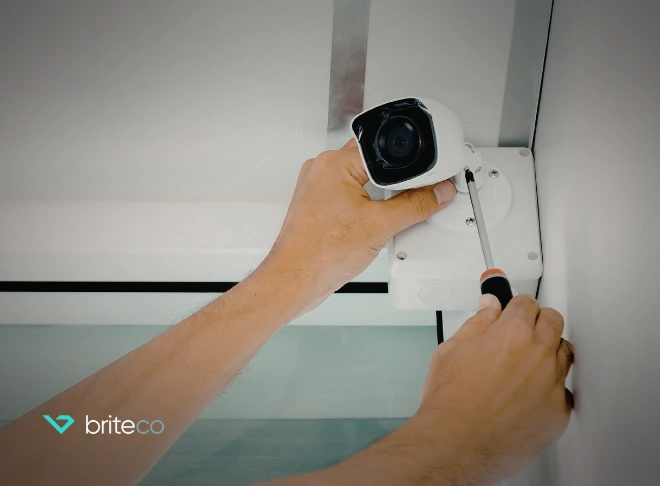
A qualifying home security system may lower your jewelry insurance cost if the insurer offers a security discount and your alarm meets the insurer’s monitoring requirements.
For example, BriteCo offers a 5% insurance discount for security systems with a 24/7 human-monitored burglar alarm, as well as a 5% discount for the use of qualifying, secured home safes. Paying your insurance premium annually (versus monthly) will also help you save money beyond this, with an additional 5% savings.
So, do home security systems lower jewelry insurance costs? Yes, and here are the discounts you can expect, summarized:
- Monitored burglar alarm = possible 5% discount
- Qualifying and secure home safe = possible additional 5% discount
- Annual payment = another possible 5% discount
“The discounts make a lot of sense,” says BriteCo founder and CEO Dustin Lemick. “If you’re going to be storing your items in a safe, that’s going to be more secure, and you should be eligible for a better price. Or if your home is protected by an alarm, that’s material to this line of business.”

Learn about alarm and safe requirements, underwriting reviews, and how to get even more discounts via annual payments.
What You Will Learn
- Do Home Security Systems Lower Jewelry Insurance Costs? The Short Answer
- What Kind of Alarm Qualifies for a Jewelry Insurance Discount?
- Monitored Vs. Unmonitored Security Systems
- Does a Home Safe Lower Jewelry Insurance Cost?
- Can You Stack Alarm, Safe, and Annual Payment Discounts?
- Home Security Discounts Vs. Homeowner's Insurance Discounts
- What Security Details Does BriteCo Ask For?
- What Documents Prove You Qualify for a Security Discount?
- Do Cameras, Smart Locks, or Video Doorbells Lower Jewelry Insurance Costs?
- Can Home Security Help With Jewelry Insurance Claims?
- When Security Requirements Become Mandatory
- Other Ways to Lower Jewelry Insurance Cost Without Reducing Coverage
- Security Discount Examples: What Could You Save?
- Common Mistakes When Trying to Get a Jewelry Insurance Security Discount
- FAQs About Home Security Systems and Jewelry Insurance Cost
- Do Home Security Systems Lower Jewelry Insurance Costs? Final Takeaway
Do Home Security Systems Lower Jewelry Insurance Costs? The Short Answer
Yes, having a home security system can result in insurance discounts, but not every alarm will qualify; the system usually needs to meet the insurer’s monitoring and documentation requirements to affect your coverage price.
With BriteCo, a home burglar alarm system may lower your jewelry insurance cost by 5% if it’s monitored by humans 24/7 (add a qualifying safe to your home, and you can save up to 10%).
Your security system may qualify for a jewelry insurance discount if:
- It’s professionally monitored or human-monitored 24/7
- A burglar alarm function is included
- The monitoring agreement or similar proof is available
- Your current address matches the insurance policy
- An underwriter can review and approve your proof of security
What Kind of Alarm Qualifies for a Jewelry Insurance Discount?
Monitored burglar alarms are more likely to qualify for an insurance discount than a basic, unmonitored alarm, because professional or human monitoring can result in a faster response time in the event of a break-in.
There are four types of alarms that your home security system might currently feature:
- 24/7 Monitored Alarms: With humans who monitor your home’s safety 24/7 (like what you’ll get with the services offered by ADT), this is going to be the strongest fit for an insurance discount.
- Central Station Monitoring Center Alarms: Similarly, these security systems send alarms to a central station for evaluation and dispatch, which, in most cases, qualifies them.
- Self-Monitored Smart Alarms: While useful for theft prevention, an insurer may not accept them as qualifying alarms for a discount.
- Local-Only Sirens: Again, this type of alarm reduces your risk, but you’re less likely to receive an insurance discount.
Ask your insurer whether your specific setup qualifies for a discount on your premium.
Monitored Vs. Unmonitored Security Systems
The key difference between a monitored vs. unmonitored security system is the response and verification times: Monitored systems route alerts to a monitoring service that can dispatch first responders to your property, while unmonitored systems rely on you or someone nearby to respond and protect your property.
| Type of Security System | Likelihood of an Insurance Discount? | Proof Needed? | Theft Deterrence Value | Claim Support Value |
|---|---|---|---|---|
| 24/7 Monitored Burglar Alarm | Highly likely | Monitoring certificate or contract, with insurer verification from the alarm company | Very high, with strong burglar deterrence | Moderate to high, with logs and dispatch records helping establish a timeline and forced entry |
| Self-Monitored Smart Alarm | Less likely | Proof of installed system and screenshots or receipts | Moderate to high | Moderate – App notifications may help in the event of a claim |
| Camera-Only Setup | Less likely | Proof of installed cameras, subscription, receipts, etc. | Moderate | High – Recorded footage of a break-in is ideal for claims |
| Door/Window Sensor-Only Setup | Less likely | Receipt or installation confirmation | Moderate | Low to moderate – Sensors provide support but little proof |
| Local Siren | Less likely | Proof of installation | Moderate | Low – Sirens can be set off for any number of reasons |
If it’s your goal to save as much as possible on your insurance premium, confirm your policy’s savings requirements before buying and installing any particular security system.
Does a Home Safe Lower Jewelry Insurance Cost?
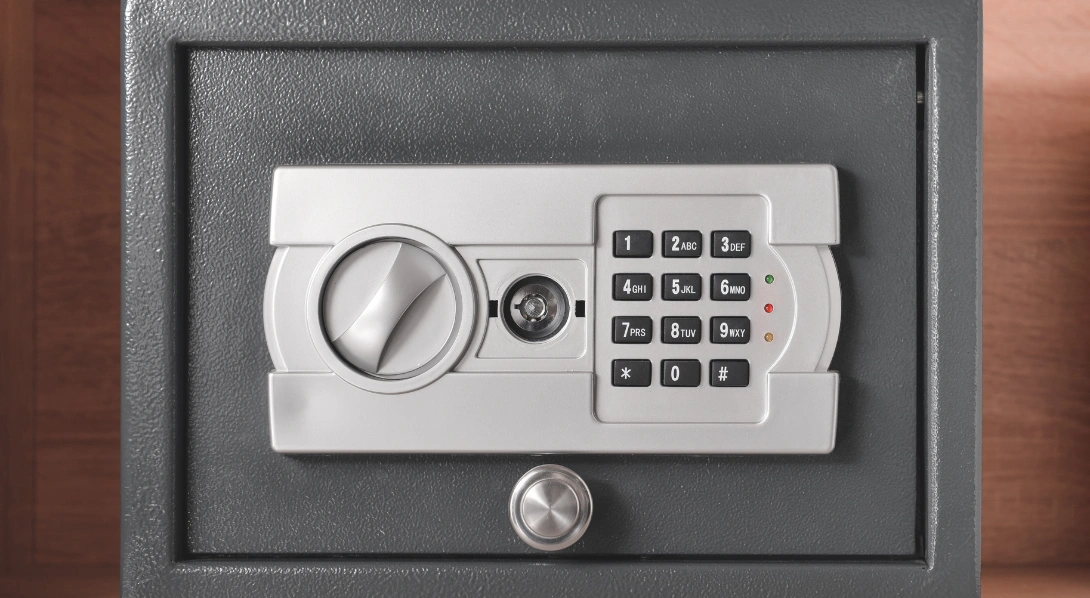
Yes, having a qualifying, secure home safe on your property may lower your BriteCo jewelry insurance cost by 5% if the jewelry is stored there while not being worn and the safe is securely attached to the floor or installed in a wall within your house, thereby limiting access and increasing your jewelry’s safety.
“Investing in a high-quality jewelry safe offers several benefits,” Lemick says, “from protection from theft and disasters to a controlled environment shielding your pieces from humidity and temperature fluctuations that can damage jewelry over time.”
In order for your home safe to qualify for a jewelry insurance discount:
- It should be securely attached to a floor or wall
- It should be used when jewelry is not being worn
- You should be able to supply safe details and specs
- You should provide safe details within your insurance provider’s customer portal
- An underwriting review must occur
Then, policy documents must be reissued if you’re approved for a discount.
Can You Stack Alarm, Safe, and Annual Payment Discounts?
BriteCo discounts and savings may be applied separately and stacked if you have a qualifying monitored burglar alarm and home safe, and are paying for your premium annually — resulting in as much as 15% of your money saved — but eligibility ultimately depends on a policy review.
| Way to Save and Pay Less | Amount You Can Save |
|---|---|
| Install a home burglar alarm that’s human-monitored 24/7 | Up to 5% |
| Install a qualifying secured safe | Up to 5% |
| Pay for your premium in a single annual payment | Up to 5% |
Note that these discounts do not reduce coverage in any way, but are payment-related adjustments that reflect the measures you’re taking to reduce your risk. Additionally, updates to your policy and price may require a new underwriting review and the reissuance of insurance policy documents.
Home Security Discounts Vs. Homeowner's Insurance Discounts
A home security discount on a homeowner’s insurance policy is not automatically the same as a similar discount on standalone jewelry insurance. While home insurance discounts may apply if you install a security alarm or similar, there will still ultimately be stark differences between your home insurance costs (rider or no rider) and jewelry insurance costs.
With a discounted homeowner’s policy, you’ll still deal with low jewelry sub-limits, deductibles, and claim consequences that negatively affect your future premiums. For example, a standard homeowners policy often limits personal item coverage to $1,000–$2,000, which will not replace most engagement rings.
As such, that home security discount won’t be enough to make up for the out-of-pocket costs you’ll be facing if you need to replace an engagement ring after, say, a theft.
In contrast, specialized jewelry insurance will cover the full cost of your jewelry’s value (no matter what discounts you’ve enjoyed), and will come with no deductibles and no future negative impacts on premiums.
What Security Details Does BriteCo Ask For?
BriteCo, like any insurance provider, may ask where your jewelry is stored and what security measures are in place. Insurers use this information to assess risk and price their services and coverage accurately.
When you contact an insurance agent regarding coverage and potential security-related discounts, expect them to ask:
- Whether you have a burglar alarm
- Whether monitoring is 24/7 and human-monitored
- For alarm provider or monitoring proof
- Whether you use a safe
- About the safe’s installation method
- Where jewelry is kept when not worn
- Whether the policyholder has moved or changed storage
BriteCo customers can update their security details in the BriteCo customer portal, but changes to the actual policy require underwriting review and the issuance of reissued policy documents.
What Documents Prove You Qualify for a Security Discount?
To qualify for a security discount from any of your insurance companies, be ready to show proof that the alarm, safe, or monitoring setup exists and matches your policy address.
Required documentation may include:
- Your monitoring agreement
- The alarm provider invoice
- An installation receipt
- Photos of the safe installation
- Safe model and specs
- Confirmation that the jewelry is stored in the safe when not worn
- The policyholder’s address
From there, you’ll want to hold onto your customer portal update confirmation and reissued policy documents, if your security discount qualifies and is approved. Save these documents with your appraisal, photos, and jewelry insurance policy.
Do Cameras, Smart Locks, or Video Doorbells Lower Jewelry Insurance Costs?
Cameras, smart home devices like smart locks, and a video doorbell may reduce theft risk and help with claim documentation, but they may not qualify for the same discounts as a monitored burglar alarm or secured safe.
- Security cameras: May come in handy during an insurance claim, but don’t reduce risk enough to often qualify for insurance discounts.
- Video doorbells: Because they rely on in-the-moment human protection, they are not often enough to qualify for insurance discounts.
- Smart home security systems: Smart home technology and similar security devices may qualify for an insurance discount, depending on the provider.
- Motion detectors: Aren’t often enough for an insurance discount, but may be handy when making an insurance claim.
- Door/window sensors: Like motion detectors, these often aren’t enough for an insurance discount either, but may be handy when making an insurance claim.
- Smoke/water damage sensors: Aren’t often enough for an insurance discount, but may be useful when making an insurance claim specifically related to accidental damage or loss.
Again, remember: while some devices may deter or document theft, they still may not be enough to qualify you for an insurance discount. This all depends on your insurer’s rules. Before you purchase and connect a security device with the hopes of receiving a discount, ask your insurer if the device qualifies.
Can Home Security Help With Jewelry Insurance Claims?
Even if a device does not qualify for a discount to lower your premium, it may still help support a jewelry insurance claim by documenting a break-in, property damage, or storage conditions.
Home security devices can provide valuable claim-related documentation, such as:
- Alarm or alert logs
- Monitoring center records
- Surveillance footage
- Video doorbell footage at your front door
- Safe installation proof
- A timeline of the incident
Alongside police reports and/or appraisals, receipts, and photos of your jewelry, this documentation can help expedite and strengthen an insurance claim. When it comes to learning how to file a jewelry insurance claim, keep these helpful documents in mind.
When Security Requirements Become Mandatory
For certain types of very high-value jewelry or large collections, security measures may become an underwriting requirement rather than just an opportunity to potentially reduce your insurance fees.
Requirements vary based on insurer, item value, and risk profile, and BriteCo has no such mandate.
“We might ask where you’re storing your items if you don’t have a safe, but we would never require it,” Lemick says. “You just don’t get a discount. It’s very actuarial-driven. We incentivize you to use a safe through price. If you don’t, you just pay a higher fee.”
When insuring especially high-value items, expect an underwriter to ask for:
- Home safe or vault details
- Alarm monitoring and safety devices status
- Storage location
- Item’s wear frequency
- Items and your personal travel frequency
- Prior insurance claims
- Total scheduled value
Before purchasing a new home safe or alarm, do not assume it will give you a discount or meet your insurer’s requirements; do your research and confirm the details with your insurer directly.
Other Ways to Lower Jewelry Insurance Cost Without Reducing Coverage
Security discounts are only one way to lower jewelry insurance costs; you can also reduce your costs by keeping your documentation accurate and choosing smart payment options that help you save.
BriteCo’s jewelry insurance policies generally cost 0.5%-1.5% of your jewelry’s appraised value per year. In addition to purchasing a qualifying monitored burglar alarm or a qualifying secured safe, you can often save money by also:
- Paying for your policy annually
- Keeping your appraisals current
- Insuring your item for the correct replacement value
- Comparing standalone jewelry insurance vs. a homeowners rider to see what’s most cost-effective
- Asking if your insurer will offer discounts or similar benefits before accepting a quote
These steps help you save a little money both when paying your premium as well as when making a claim, so you have peace of mind about your coverage and your budget.
Security Discount Examples: What Could You Save?
A 5% discount sounds small, but it can add up over time and save you a significant percentage on your total premium — especially for higher-value rings, watches, or collections.
For example, let’s look at the savings you can expect on premiums of $100–$1,000 (which is enough coverage to potentially protect jewelry worth $ 20,000 or more).
| Annual Insurance Premium | 5% Alarm Discount | 5% Safe Discount | 5% Annual Payment Discount | Total Estimated Savings if Eligible |
|---|---|---|---|---|
| $100 | $5 | $5 | $5 | $15 |
| $300 | $15 | $15 | $15 | $45 |
| $1,000 | $50 | $50 | $50 | $150 |
Actual premiums and discounts will depend on item value, location, policy details, and underwriting approval.
Common Mistakes When Trying to Get a Jewelry Insurance Security Discount
The most common mistake when trying to get a jewelry insurance security discount is assuming any security device automatically qualifies for a discount.
Other mistakes include:
- Not being able to prove 24/7 human monitoring
- Using an unsecured portable safe
- Not storing jewelry in a safe when unworn
- Forgetting to update your information in your insurance provider’s customer portal
- Expecting instant approval for a discount without an underwriting review
- Not saving your installation or monitoring documents
- Confusing homeowner’s alarm discounts with standalone jewelry discounts
Always confirm any potential discount and its terms with your insurer first. Then, acquire all necessary documentation for a policy update.
FAQs About Home Security Systems and Jewelry Insurance Cost
Do home security systems lower jewelry insurance costs?
You may be able to get a discount on jewelry insurance if you use a certain type of home security system, but not all systems qualify. For example, smart technology may be iffy, and non-burglary related systems, such as monitored fire alarms or smart smoke detectors, may not qualify.
How much is BriteCo’s burglar alarm discount?
If you have a qualifying burglary alarm, you may be eligible for a 5% discount on your BriteCo premium.
Does a home safe lower jewelry insurance costs?
Yes, some insurers may offer a discount if you have a qualifying home safe and store your jewelry in it when not wearing it.
Can I stack the alarm, safe, and annual payment discounts?
With certain insurers, such as BriteCo, you can stack discounts, including those for alarms, home safes, and annual payments, resulting in a 15% discount on your premium.
Do cameras or video doorbells lower jewelry insurance costs?
While smart home features like cameras and video doorbells at your front door may help deter theft or be helpful when making a jewelry insurance claim, they aren’t often enough to result in a discount on your jewelry insurance.
Do Home Security Systems Lower Jewelry Insurance Costs? Final Takeaway
Yes, a qualifying home security system can lower jewelry insurance costs when it meets the insurer’s discount rules; for BriteCo, a 24/7 human-monitored burglar alarm may qualify for a 5% discount.
A qualifying secured safe may add a separate 5% discount, and paying annually may add another 5% savings. Note that updates may require underwriting review and reissued policy documents.
Next steps:
- Confirm whether your alarm is monitored by humans 24/7
- Confirm whether your safe is securely attached or wall-installed
- Update your policy details and request a discount review
Not insured just yet? Check your jewelry insurance price now, with quotes delivered all online for your convenience, and get comprehensive jewelry insurance coverage, fast.
Related Articles:
What does jewelry insurance cover?
Video camera equipment insurance
Get a Quote:
The Easy Way to Insure Your Jewelry - and Save Money!
UP NEXT: What are the Odds of Losing or Damaging Jewelry?

Author