How to Tell if Pearls are Real: Separating the Real Deal from the Fakes
Genuine pearls are a beautiful, classic, and elegant addition to any jewelry collection. Unfortunately, fake pearls aren’t always easy to spot, especially for the jewelry novice. So, how can you tell if pearls are real or not?
Here’s what you need to know about real pearls vs fake.
What You Will Learn
Cultured Pearls vs. Natural Pearls vs. Artificial Pearls
Before we get into how to tell if pearls are real or fake, it’s important to distinguish between the various types of pearls.
Natural and Cultured Pearls
Both natural and cultured pearls are authentic pearls. Both share the same natural pearl makeup and composition. The only difference is the formation process.

Natural pearls form, well, naturally. An irritant enters an oyster somewhere in a body of water. The oyster releases something called nacre to protect itself, and, over time, a pearl forms. Making this natural process a rare occurrence.
Cultured pearls form the exact same way, with one exception. The irritant doesn’t just naturally enter a mollusk; instead, a human places the irritant within a controlled environment.
Natural pearls are more expensive than cultured pearls because they’re rarer, but also often small and sometimes misshapen. If you have a cultured pearl instead of a natural pearl, don’t let anyone tell you it’s a fake pearl. The two are both entirely real pearls.

Saltwater and Freshwater Pearls
Saltwater or freshwater pearls can be natural or cultured pearls— in this case, either is a real pearl. The distinction comes down to where the pearls formed. Freshwater pearls form in freshwater. Saltwater pearls formed in saltwater. Freshwater pearls are more affordable than saltwater pearls. South Sea and Tahitian pearls are extremely valuable because they come from saltwater.
Imitation Pearls
Then, of course, there are imitation pearls. Imitation pearls can consist of plastic, glass, or shell on the inside. However, there is an exterior coating that will do its best to mimic the one-of-a-kind appearance of a real pearl.
How Do You Know Pearls Are Real?
How do you know if pearls are real or if your new pearl necklace is a fraud? You can perform a few simple tests at home to determine real from faux pearls.
First Things First, Give the Pearls a Quick Look
Before you perform any tests on your pearl jewelry, give all the pearls a quick look over. There are often sure signs of imitation pearl if you know what to look for.
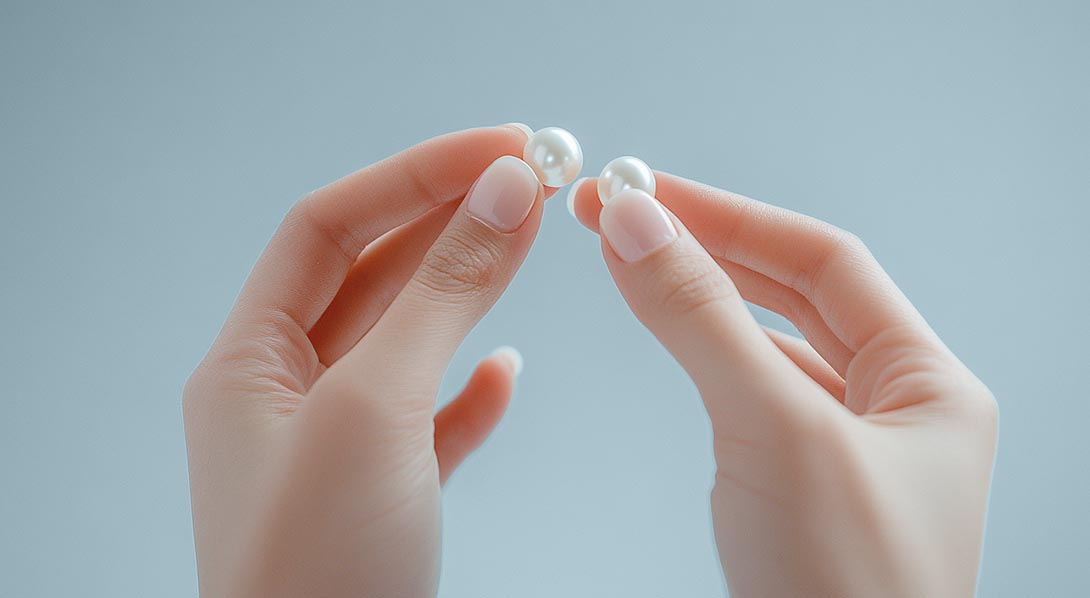
For example, a real pearl necklace will not contain perfectly round pearls. When comparing one to another, natural pearls are rarely perfectly round and often show a few inconsistencies in size and shape. If you see any irregularities among your pearls, chances are higher that they’re real. However, fake plastic pearls will show a completely round, identical, smooth surface across the entire strand of pearls.
Likewise, look for any chipped paint, especially around the drill hole, which pearl necklaces and bracelets require for stringing. As mentioned, fake pearls have a painted coating or similar substance that gives them a pearl-like luster. This substance can begin to chip away, indicating a fake.
Look at the coloring, too. Fake pearls may have a discolored surface. However, this method isn’t always foolproof, as real pearls can similarly display discoloration if they haven’t received proper care over the years.
Common Internet Pearl Tests and What We Recommend
1. The Pearl Tooth Test
Yes, you read that right. The tooth test involves rubbing the pearl onto your tooth to feel for any grainy texture. However, we do not recommend performing this test. The tooth test could damage your tooth enamel and be unsanitary. Additionally, this test could harm the pearl itself. Natural and cultured pearls are very delicate and can scratch easily.
2. The Touch Test
Another test you might find online is the touch test. This test involves checking the temperature of a pearl in your hand to see if it absorbs your body heat or stays the same temperature. Unfortunately, the temperature check will not tell if a pearl is real or fake. Real and fake pearls can be too hard to distinguish when only checking the temperature.
The other portion of the touch test involves rubbing the pearls together. The test claims that if the pearls feel gritty, they are authentic, while a smooth rubbing texture would imply a fake pearl. However, rubbing real and fake pearls together or against each other is never a good idea because of the high potential for damage.
3. The Sound Test
Finally, the last test you might find online is the sound test for pearls. The test states that if you hold pearls against your ear and knock them around, a hollow sound would mean they are fake. Again, we do not recommend this because pearls are so fragile that this simple movement could cause irreversible damage.
What Test Do We Recommend Then?
The only tests we recommend are those done by the professionals. If you’re still unsure how to tell if a real pearl is what you’ve got, visit an expert. A jeweler, jewelry appraiser, or gemologist can safely and definitively tell you whether or not a piece of pearl jewelry is authentic.
How Do You Tell if Pearls are Real? FAQs
TL;DR? Here are the quick answers to “How can you tell whether pearls are real or not?”
How Can You Tell if the Pearls Are Real on a Necklace?
You can use a few tricks to identify fake vs real pearls. One of the most popular methods is the tooth test. Simply rub the pearl against a tooth. If the feeling is gritty, it’s more likely a real pearl. If it’s smooth, it’s more likely a fake.
Are Cultured Pearls Real Pearls?
Yes! A cultured pearl is still a real pearl. It still has the same composition as a natural pearl; the formation process was slightly different and helped by a human.
Should You Use Vinegar to Test If a Pearl is Real or Not?
If you are questioning a pearl necklace, how to tell if real or not should never involve using vinegar. Vinegar will dissolve or erode a real pearl. So, suppose you test your pearl utilizing this method. In that case, while you’ll confirm if a pearl is real, you’ll also damage your precious real pearl in the process.
Does Discoloring Prove a Pearl isn’t Real?
Not necessarily. While fake pearls can become discolored, real pearls can also become discolored due to lack of proper care.
Can You Test a Pearl with a Lighter?
Like the vinegar test, this test is not advised, as you risk damaging your jewelry (or causing a fire!). While you can hold a little lighter to a pearl to test it, if the pearl is fake, the flame will damage the fake pearl and possibly burn it if it consists of wax or plastic. In contrast, real pearls will not burn at all, as they’re fire-resistant to a degree.
Are Your Pearls Real? Protect Them!
If you’ve decided that your pearls are real, protect them properly. Invest the time in getting a jewelry evaluation and then purchase the right jewelry insurance accordingly.
BriteCo offers affordable coverage for all types of jewelry, including pearl jewelry. Get your quick quote today.
Related Articles:
How Do You Tell a Diamond from Cubic Zirconia?
How to Tell if a Diamond is Real
How to Test if a Garnet Is Real?
Largest Pearl in the World
Different Pearl Colors: A Quick Guide
The Rise of Pearl Jewelry Trends in Fashion
Get a Quote:
The Easy Way to Insure Your Jewelry - and Save Money!
UP NEXT: What are the Odds of Losing or Damaging Jewelry?

Author