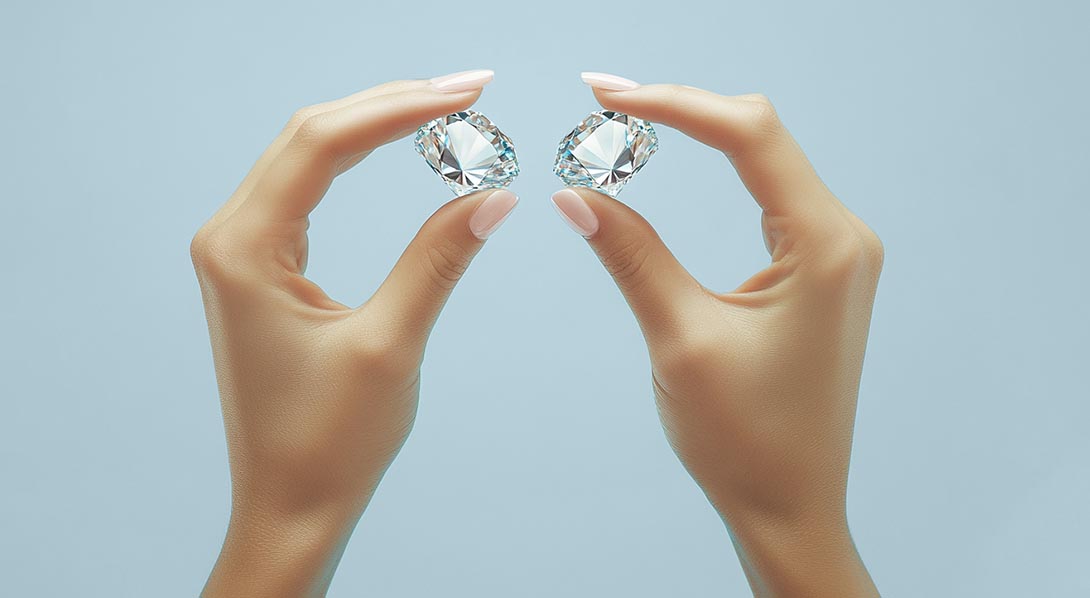
Put them side by side—if you’re the average person, you might not be able to tell the difference. Both stones sparkle. The two stones appear in a range of jewelry, from daily wear earrings and bracelets to engagement rings. However, one is far more valuable than the other. How do you tell a diamond from cubic zirconia? Keep reading to find out.
What You Will Learn
How Do You Tell a Cubic Zirconia from a Diamond? The Differences
First, you should know what a diamond and a cubic zirconia stone is.
A real diamond, whether lab-grown or natural diamonds (because, yes, lab-grown diamonds are real diamonds), is formed from carbon. Diamonds are the hardest gemstones in the world, according to the Mohs scale, and also one of the most popular. Given diamonds’ popularity and value, it just makes sense that a man-made stone would arise that offered the appearance of a diamond but at a mere fraction of the cost.
Enter, cubic zirconia, or, as it’s commonly referred to, “CZ.” CZ stones derive from zirconium dioxide. Zirconium dioxide is a synthetic material produced in a lab.
Key Differences
The inherent difference in the building blocks of diamonds and cubic zirconia stones results in slight differences in appearance, durability, and price.
If you look at both stones under a light, cubic zirconia will appear to have a fiery sparkle, whereas diamonds can have a fiery sparkle but will give off a white light (referred to as brilliance). Additionally, cubic zirconia is more likely to appear flawless, with no visible inclusions. A mined diamond will contain natural inclusions due to its formation — inclusions that are avoidable when manufacturing cubic zirconia in a lab.
In terms of durability, cubic zirconia does lose its sparkly appearance over time. Generally, a CZ stone can retain its appearance for about two years. What alters their appearance? Cubic zirconia can be scratched relatively easily and can absorb substances that alter its appearance, such as if you expose the stone to chemicals or oils.
The cost difference, however, is likely the most notable way these two stones stand apart. You can have two stones of the same size, and a cubic zirconia stone will cost less than $50, while a diamond will easily cost over a thousand dollars.
How Do You Tell a Real Diamond from Cubic Zirconia? There are Two Methods
Given the above differences, you cannot confidently tell that one stone is carbon-based and one is from zirconium dioxide. You’ll need to look for a few other tell-tale signs and employ a few trusted testing methods.
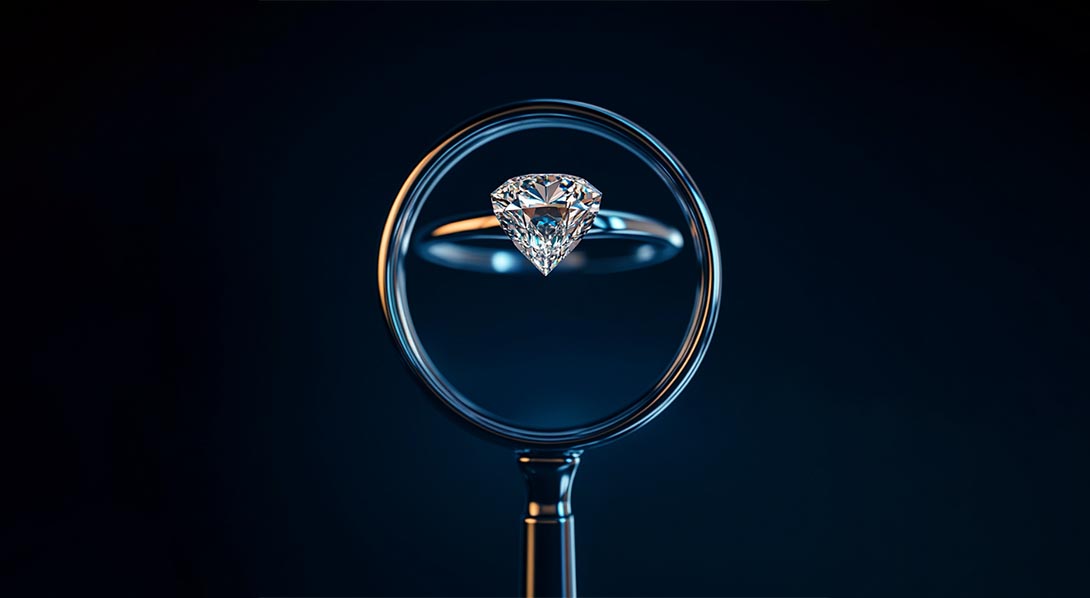
Break Out the Magnifying Glass
The first and simplest method is to grab a magnifying glass and give the stone a good, hard look. Most diamonds will not show heavy wear or tear. If you see a lot of scratches or scuffs, chances are good that you have cubic zirconia.
Then, look at the facet junctions. A diamond’s facets are very sharp, while CZ stone facets have a more rounded appearance.
Additionally, look at the way light passes through the stone. Diamond has a higher refractive index than CZ (though not doubly refractive). If the light reflected from the stone is more orange and blue, the stone could be cubic zirconia.
Use a Diamond Tester
If you have access to one, a diamond tester can be an excellent tool to determine whether a diamond is real.
Diamond testers use electrical and thermal conductivity tests to differentiate between diamonds and other substances. A small tool that looks like a pen with a metal tip and a light-up panel on the side, a diamond tester sends heat or electricity through the stone when it makes contact. Then, it measures how the stone reacts to that heat or electricity.

Quickly dissipating heat can signal that the stone is a diamond because diamonds have a higher thermal conductivity. Likewise, if the substance resists electrical current, it indicates that the material is a diamond. If the opposite is true, the material is likely cubic zirconia or another diamond simulant.
FAQs: How Do You Tell a Diamond from a Cubic Zirconia?
How Do You Tell a Diamond from Cubic Zirconia?
The most reliable way to tell if a stone is a diamond or cubic zirconia is to use a diamond tester, inspect it under a magnifying glass, or visit an expert. Otherwise, you can send your stone away for a diamond grading report courtesy of an organization like the Gemological Institute of America.
Is It Possible to Buy an Engagement Ring with Cubic Zirconia?
While buying an engagement ring containing CZ rather than diamonds is possible, we do not advise it. In about two years, cubic zirconia loses its appearance and is very susceptible to daily wear and tear. As such, you’ll find that your engagement ring loses its shine, sparkle, and beauty very quickly — and that’s not something you want for such a vital piece of jewelry.
Is Cubic Zirconia Jewelry Considered Cheap?
Yes, cubic zirconia jewelry is typically considered affordable. CZ stones are often a feature in low-end jewelry that makes it look more expensive than it is. For example, a pair of gold-and-cubic-zirconia earrings typically does not contain 24K gold. They will most likely be gold-plated or gold-filled at a much lower cost.
Is There Anything Wrong with Buying Cubic Zirconia?
Not always! In some instances, cubic zirconia jewelry is a great fit. The stone is ideal for costume jewelry and everyday jewelry. You can wear it without worrying about damage because you will only wear it briefly. However, the stone is not a good fit for pieces with a high sentimental value, such as engagement rings or jewelry gifts.
Can the Average Person Tell the Difference Between Cubic Zirconia and Diamond?
They likely won’t notice the difference at first glance. However, if they look closer, they’ll realize the stone isn’t quite the same as your average diamond. To a novice, the shine and reflective properties may not indicate if the stone is a diamond or CZ. However, closer inspection of the facets and overall durability will be the biggest determining factor between the two stones.
Do You Need Diamond Insurance?
Now that you’ve determined whether or not you have a diamond or cubic zirconia on your hands if you have the former, it’s time to protect it.
Learn more about BriteCo’s extensive diamond coverage options and get a quote today!
Related Articles:
Cubic Zirconia vs. Moissanite
Step Cut Diamonds: A Timeless Choice for Your Engagement Ring
What Is Malachite? A Look at the Stone’s Power and Beauty
A Complete Guide to Gemstone Certification
Get a Quote:
The Easy Way to Insure Your Jewelry - and Save Money!
UP NEXT: Cost to Repair or Replace Jewelry Out of Pocket: What You Might Pay

Author