How to Measure Ring Size? (Both Your Own and Someone Else’s)
Maybe you’re shopping for a new piece of jewelry online, and before you place your order, you’re wondering how to know your ring size to purchase the perfect fit. Or, maybe you’re planning a proposal and shopping around for an engagement ring, but as you look at all these engagement rings, you realize you need to know your partner’s ring size.
Luckily, finding your own or someone else’s ring size measurement is likely easier than you think.
What You Will Learn
Ring Size Measurement: How are Ring Sizes Determined?
Before we can get into how to measure ring size, it’s helpful to understand ring sizes overall.
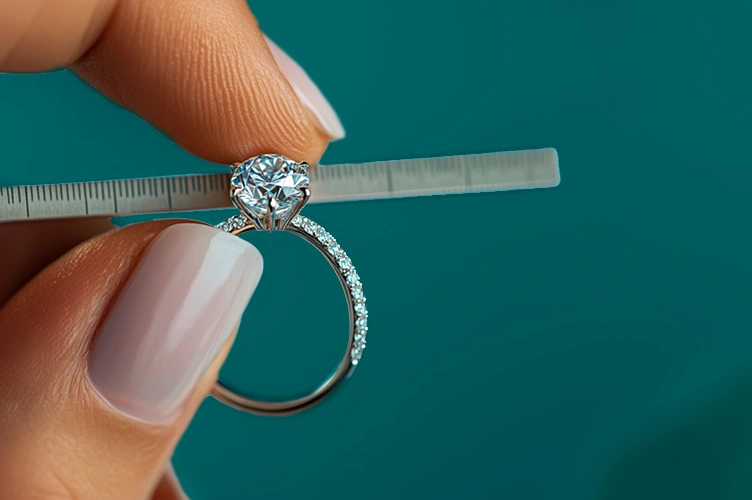
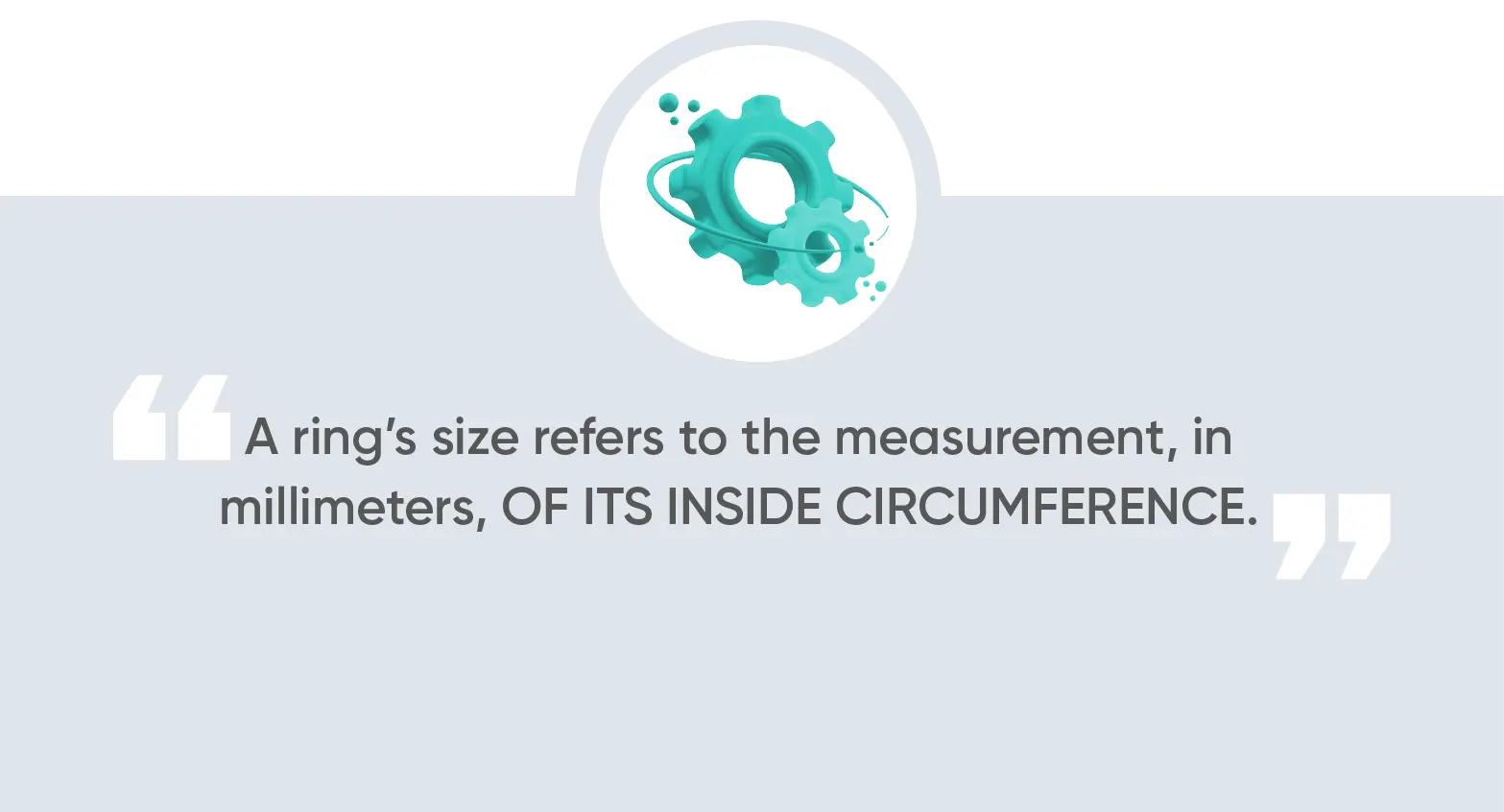
A ring’s size refers to the measurement, in millimeters, of its inside circumference. Due to factors like band thickness or stone size, two rings can look very different in size when placed side by side, but if they have the same inside circumference, then the ring measurements will be the same.
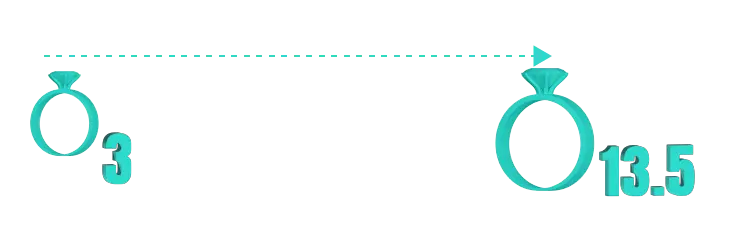
Ring sizes generally start at a size 3 and go up to 13.5. Each ring size splits into a half size. A size 3 ring has an interior circumference of 44.2 millimeters, while a size 13.5 ring has an interior circumference of 71 millimeters. Unlike with shoes, men’s ring sizes and women’s ring sizes are the same. The average ring size for a woman is a size 6 and the average ring size for a man is a size 10.

How to Measure Ring Size at Home
The easiest way to find out your ring size is to simply go to nearby jewelry stores and ask if they can measure it for you. They’ll use a metal ring sizer to measure your ring size in just a few seconds, conveniently and accurately.
Unfortunately, suppose you’re not planning to buy a ring at that jewelry store. In that case, you might feel awkward asking them to perform this service for free. Thankfully, you can use a few different methods to measure your own ring size at home.
Wrap String Around Your Finger
For this method, you’ll just need a few items:
- A piece of string or floss
- A ruler or tape measure
- A marker or pair of scissors
Take a piece of string or floss and wrap it around your ring finger (or whatever other finger you want to measure). Wrap the string or floss so it’s about as tight as you would prefer your ring to be. Mark where the end of the string or floss touches the length on the other side, then cut it there. Then, stretch out the string or floss next to your measuring tape (be sure to use one that features millimeters).
After you’ve found this measurement, compare the measurement to a ring size chart to find your ring size. (You can find a ring size chart below, though it’s not difficult to find a printable ring sizing chart elsewhere online.)
Print Out a Flexible Measuring Tape
No string, floss, ruler, or tape measure on hand? You can print a measuring tape onto flexible paper (standard printer paper will work) and cut out that printed measuring tape. Congratulations — you now basically have a printable ring sizer.
Wrap the paper around your finger and see where the end of the paper tape lines up once it’s wrapped snugly around your finger. Make sure the printed measuring tape displays millimeters. Then, compare the measurement to a ring size chart to find your ring size.
How to Calculate Ring Size for Someone Else
However, the above methods for measuring ring size aren’t helpful if you’re attempting to buy an engagement ring secretly. If you’re struggling to find out how to measure a ring size for someone else, here’s what to do.
Measure an Existing Ring
If you’re close to this individual, you can likely very easily grab a piece of their existing jewelry to measure. Make sure the ring fits before determining your recipient’s ring sizing. Take this piece of jewelry to a jeweler who can use one of their ring sizers to determine the ring’s size and, thus, what size ring your recipient wears.
Suppose, you want to avoid taking the ring to a jeweler. In that case, you can also print a ring size chart featuring a series of circles, each corresponding to a ring size. Place the ring on the circles until you find one that matches the ring’s circumference. While there are more foolproof ways to determine an accurate ring size, it will get you pretty close.
Alternatively, you can use an online ring size calculator to measure an existing ring at home.
Ask Around
If your recipient wears jewelry frequently, their friends or family may know their ring size from past conversations. Ask around and see what information you can find.
Ring Size Chart
However you measure ring size, you’ll need to know how to determine the size of a ring based on either your finger’s circumference or the inner circumference of an existing ring.
Here’s how circumference measurements in millimeters correspond to standard ring sizes.
- Size 3: 44.2 mm
- Size 3.5: 45.5 mm
- Size 4: 46.8 mm
- Size 4.5: 48 mm
- Size 5: 49.3 mm
- Size 5.5: 50.6 mm
- Size 6: 51.8 mm
- Size 6.5: 53.1 mm
- Size 7: 54.4 mm
- Size 7.5: 55.7 mm
- Size 8: 56.9 mm
- Size 8.5: 58.2 mm
- Size 9: 59.5 mm
- Size 9.5: 60.8 mm
- Size 10: 62.1 mm
- Size 10.5: 63.3 mm
- Size 11: 64.6 mm
- Size 11.5: 65.9 mm
- Size 12: 67.2 mm
- Size 12.5: 68.4 mm
- Size 13: 69.7 mm
- Size 13.5: 71.0 mm
Ring Size How to Measure FAQs
How Do I Know My Ring Size?
There are several ways to measure your ring size. You can either measure your finger or a ring that you know fits. A jeweler can take these measurements on your behalf, or you can take them at home by looping a string around your finger and measuring the length of string that snugly encircles your finger. You can also measure an existing ring by using a ring sizing chart.
How to Calculate Ring Size If It’s Not Your Finger?
You can determine someone else’s ring size by measuring one of their existing rings.
How to Measure Ring Size with String?
Wrap the string around your finger. Cut or mark the string where the end connects with the greater length of string. Then, measure the cut or marked string in millimeters. The measurement is equal to the circumference of a ring that will fit you. Find the circumference on a ring size chart, and you’ll find your ring size.
Is It Really a Big Deal If You Buy the Wrong Ring Size?
Suppose you’re trying to figure out how to measure your ring size for a personal purchase, or you’re struggling over how to know a ring size for someone else. In that case, you might wonder if trying is even worth it. Can’t I just buy the potentially wrong size and worry about how to measure my ring size later?
Well, you can, but you don’t want to. The more a ring moves on your finger, the more likely you’ll lose it. If you lose a ring that’s too loose, and you don’t have the right jewelry insurance, you might be unable to replace it, leaving you out of the cost and with nothing to show for it. That’s why knowing the right fit is just as important as knowing which hand to wear your engagement ring on.
Additionally, if a ring is too tight, it can be challenging to expand, and making a ring bigger can sometimes damage the ring irreversibly, even when you trust the task to professionals.
Your best bet? Learn how to measure for ring size ahead of your purchase and make the right purchase accordingly. Then, insure your ring so it’s further protected in the event of loss, damage, and other accidents. BriteCo can help with the latter with our comprehensive jewelry insurance options.
Related Articles:
How to Measure Wrist Size?
Should You Buy a Diamond Engagement Ring Online or at a Jewelry Store?
What is Bench Jeweler
How to Insure a Tiffany Ring?
Valentine’s Day, Love, and Ring Insurance
How to Find and Measure Her Engagement Ring Size
What are the Parts of an Engagement Ring?
Why We Love Dove Cameron’s Engagement Ring
Get a Quote:
The Easy Way to Insure Your Jewelry - and Save Money!
UP NEXT: What are the Odds of Losing or Damaging Jewelry?

Author