You see Instagram influencers and models do it all the time — wearing stunning jewelry while poolside or even in the pool. So, surely it can’t be that bad, can it? It accents your swimsuit and makes for the best vacation photos, so is there really any harm?
Even so, most jewelry care guides tell you not to wear any jewelry in the pool whatsoever, though the temptation to do so is strong. Here’s what you need to know.
What You Will Learn
- 4 Big Reasons Not to Wear Jewelry in the Pool
- Metals and Gemstones That May Be Okay in Pool Water
- What About the Ocean and Other Bodies of Water?
- How Can You Repair Jewelry That’s Been Exposed to Chlorine?
- Top 3 Tips for Swimming with Jewelry
- Swimming with Jewelry FAQs
- Protect Your Jewelry from All of Life’s Mishaps with Specialized Insurance from BriteCo
4 Big Reasons Not to Wear Jewelry in the Pool
The chlorine in pool water is the number-one reason to avoid swimming while wearing jewelry, but there’s more to it than just one chemical.
1. Chlorine Will Dull and Discolor Your Jewelry
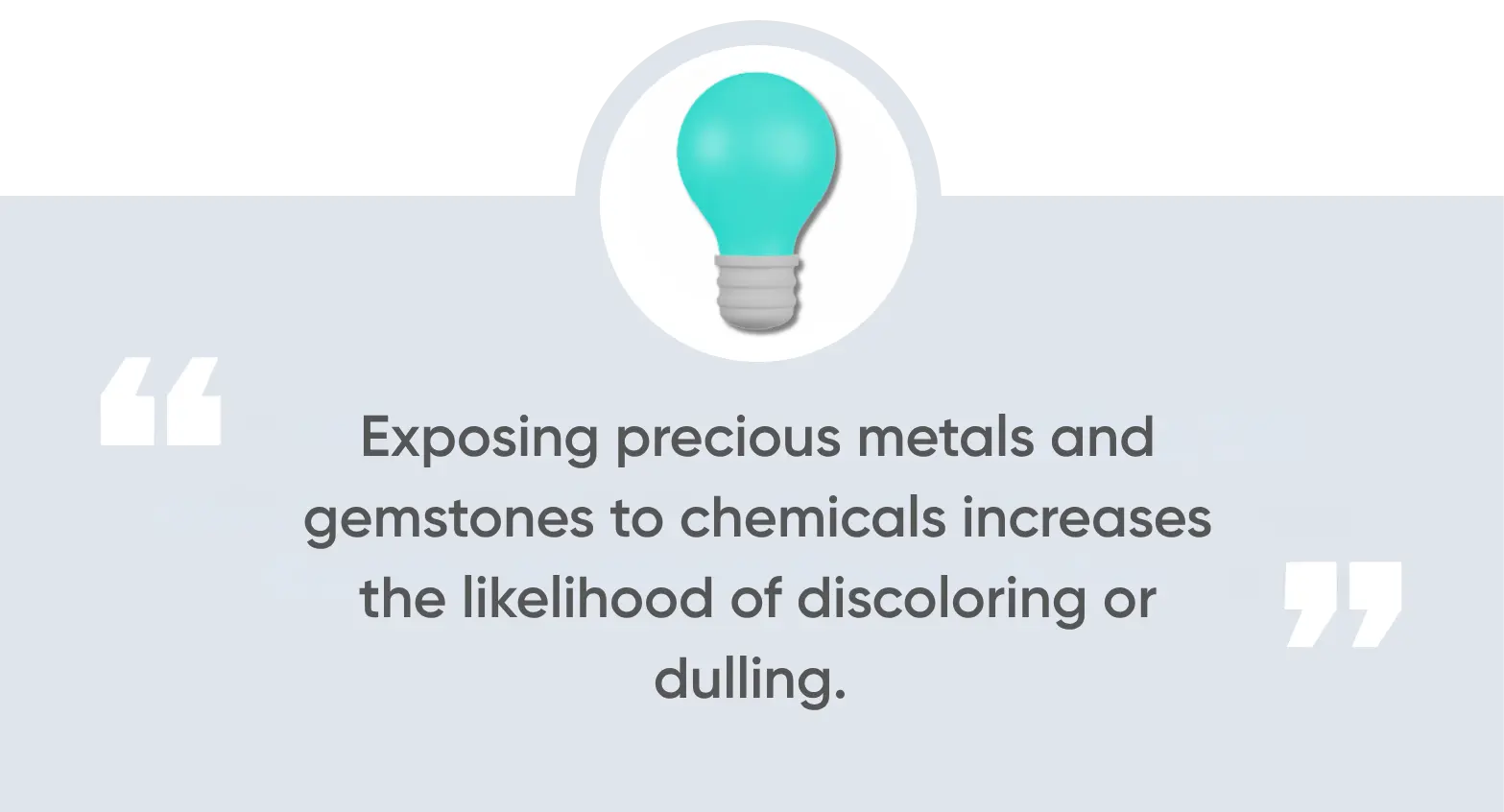
Exposing precious metals and gemstones to chemicals increases the likelihood of discoloring or dulling. That means your beautiful earrings, necklaces, or bracelets are more prone to losing their shine and taking on tarnish.
Chlorine, in particular, is a strong chemical that can negatively react with certain metals, causing them to tarnish — and it’s not just pools you have to watch out for. Hot tubs are also treated with chlorine, and this environment can cause even more damage more quickly due to the extreme temperatures.
If you care about your jewelry, consider keeping it out of any chlorinated water to keep it in tip-top shape.
2. Other Chemicals Could Discolor and Dull Your Jewelry, Too
Chlorine and pool water aren’t the only chemicals and chemical-laden substances that your skin will come into contact with at the pool. You’re probably lathering on sunscreen throughout the day. Maybe you’re applying tanning lotion. Perhaps you’re getting ahead of a sunburn by throwing on some aloe vera.
None of these products are a good fit for your jewelry and can further increase the risk of discoloration.
3. There’s a Chance of Losing Your Jewelry
You might not lose your jewelry if you’re just lounging on a pool float by yourself. But if you’re at a pool party, hanging with friends, or splashing around with the kids, there’s a high likelihood that at some point in the day, you’ll realize that you have lost a piece of jewelry.
This is especially risky if you’re wearing a ring and your fingers tend to expand and contract with the various temperatures or water exposure. While your ring may have felt like it fit snugly in the summer heat, once you’ve been in the pool a while and cooled down, your fingers could shrink — and there goes your jewelry.
4. You Could Damage Your Jewelry or Injure Yourself or Someone Else
Another big reason to avoid wearing jewelry to the pool is that all the splashing and shenanigans could damage your jewelry or injure yourself or someone else. Think about it: You’re swimming and accidentally smack your hand against the hard pool wall. Now, you have a very obvious scratch across the top of your ring. Or, you grab a pool noodle, and your long necklace gets caught up in the movement, and it snaps in half. As you’re swimming, maybe your dangly earring gets caught in your hair, painfully pulling at your earlobe.
Metals and Gemstones That May Be Okay in Pool Water
While all of the above are good reasons never to take any jewelry into the pool, if you really had to, some metals and materials are less likely to experience pool-related or chlorine-related damage:
- Stainless steel: Known for its durability, stainless steel is generally considered one of the safer options to wear into the pool. If you have a stainless steel body piercing, for example, you may feel comfortable wearing it while swimming.
- Titanium jewelry: Similarly durable, titanium jewelry should be mostly safe for wearing in chlorinated water — so long as it’s not an alloy.
- High-karat gold: The higher the karat weight and purity, the less likely chlorine will affect your gold jewelry. Though, you won’t want to take any gold-plated or gold-filled jewelry into the pool. Overall, gold is risky unless you’re confident in its high purity.
- Silicone or rubber: Jewelry that doesn’t contain any precious metals or gemstones whatsoever, like bracelets made from silicone or rubber, may not be impacted by water or chemicals.
- Costume jewelry: If you have a cheap piece of costume jewelry and don’t care if it gets damaged, you might choose to wear it in the pool.
Jewelry to Always Leave at Home
Then again, some metals and gemstones are so reactive to chlorine that you really should avoid taking them to the pool at all costs:
- Platinum: Platinum jewelry turns dark and discolored when exposed to pool water.
- Sterling silver: Sterling silver will tarnish quickly and may not be reversible.
- Gold-plated or gold-filled jewelry: As mentioned, these are at risk for discoloration.
- White gold: While high-karat gold may be fine, white gold features a rhodium coating that chlorine may discolor or weaken.
- Gemstones: Harder gemstones can lose their shine in the pool; softer gemstones can change color or even crack.
What About the Ocean and Other Bodies of Water?
While you might think that the ocean may be better for your jewelry than the pool, natural bodies of water aren’t much better for precious metals and gemstones, even with a lack of chemicals. Not only is the ocean’s salt water corrosive, but it’s much easier to lose a piece of jewelry in the ocean (due to its waves) or in a natural body of water that you can’t see through, such as a lake or river.
How Can You Repair Jewelry That’s Been Exposed to Chlorine?
If you accidentally wore your jewelry into the pool and it dulled as a result, you can attempt to restore its shine.
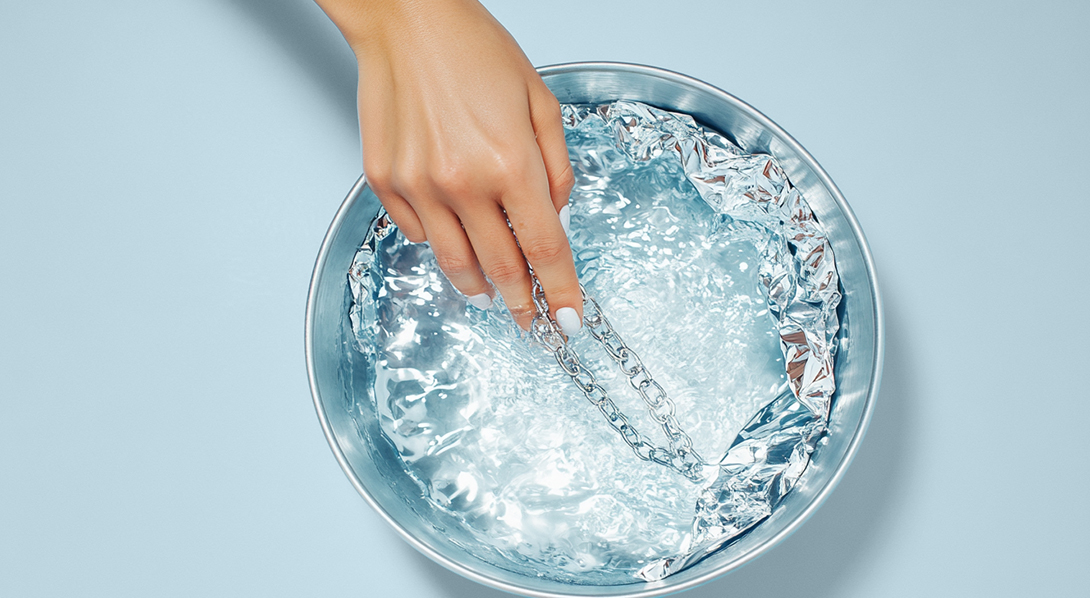
First, immediately rinse the jewelry in clean water. Then, clean the jewelry thoroughly using a mild soap and a gentle cleaning cloth. Finally, rinse it again and dry with a separate soft cloth.
If you took a piece of sterling silver jewelry into the pool and it’s now tarnished, clean the tarnished jewelry the same way as listed above. If that doesn’t work, consider using the baking soda method. Make a paste of three parts baking soda with one part water. Rub the paste into your jewelry, rinse, dry, and buff.
Top 3 Tips for Swimming with Jewelry
In summary, these are the three tips to keep in mind for wearing jewelry at the pool this summer:
- If you can avoid it, don’t wear jewelry in the pool or any other body of water.
- If you must wear jewelry in the pool, opt for costume jewelry you don’t care about or jewelry made from water-resistant, tarnish-free materials, such as stainless steel, silicone, or rubber.
- If you accidentally expose jewelry to chlorinated water, rinse it immediately and clean it using a gentle cloth and mild dish soap.
Swimming with Jewelry FAQs
Can You Wear Jewelry in the Pool?
While you can wear some jewelry in the pool, the risks are too great and extend beyond damage to loss and even injury. As such, consider removing all jewelry before entering the pool or any other body of water.
Can You Put On Sunscreen While Wearing Jewelry?
It’s a good idea to limit your jewelry’s exposure to cosmetics and similar products. As such, you should put on any jewelry as the last step as you get ready for the day, especially after applying any and all cosmetics.
Can You Save Jewelry That’s Been Exposed to Chlorinated Water?
Sometimes, yes. However, it’s important to rinse and clean the affected pieces as soon as possible.
Can You Wear Jewelry in the Ocean?
You really shouldn’t. The salt in ocean water is corrosive, and due to the volatile waves, jewelry can be easily lost.
Can Jewelry Insurance Help if I Lose Jewelry in the Pool or Ocean?
Yes! BriteCo’s jewelry insurance policies cover mysterious loss, meaning you’re covered if you accidentally lose your jewelry in the pool or ocean.
Protect Your Jewelry from All of Life’s Mishaps with Specialized Insurance from BriteCo
Even if you’re careful to keep your jewelry out of the pool, summertime brings many other potential risks to your jewelry. From outdoor adventures to international travel, jewelry damage and loss can occur when and where you least expect it. When it does, BriteCo is here to help with specialized jewelry insurance that protects you from loss or damage.
Want to learn more? Get your free and easy quote now.
Also Check:
Are Americans Using Travel Jewelry Dupes
Jewelry Ideas for Your Halloween Costume
How to Protect Your Jewelry in Winter Weather?
The Biggest Jewelry Heists in History
How to Find a Lost Earring
The 5 Best Jewelry Storage Ideas
How Often Should Jewelry Be Appraised?
What You Should Know about Silver’s Increasing Value
Get a Quote:
The Easy Way to Insure Your Jewelry - and Save Money!
UP NEXT: How to Remove a Link from a Jewelry Chain Bracelet

Author