Your jewelry holds significant value beyond the price tag. While you want to show off your favorite pieces, the mere thought of traveling with important jewelry can ignite an internal debate between the desire to accessorize with your beloved pieces and the fear of losing them while away from home.
This conflict has ignited the travel jewelry dupe trend, where people buy stylish, but less expensive versions of jewelry to wear when traveling. Its allure lies in its ability to provide peace of mind. While jewelry insurance remains a steadfast option to protect your priceless pieces, travel dupes offer an additional layer of comfort, allowing you to leave your most valuable pieces in a jewelry safe at home.
Insure the real thing, wear the lookalike — it’s a simple philosophy gaining traction, as BriteCo’s 2025 Travel Jewelry Dupe Survey results show. But how do your habits compare to others? Continue reading to learn more about how jewelry owners in the US feel about and use travel dupes.
What You Will Learn
- Key Takeaways
- Beauty Vs. Anxiety: An Emotional Tug-of-War
- Join the Travel Dupe Trend for Peace of Mind
- Lost Memories Are Worse Than Lost Money
- Lost Travel Jewelry Concerns Extend Beyond Theft
- Insurance Is an (Underused) Game-Changer
- Protect Your Jewelry When Traveling with BriteCo
- Travel Jewelry FAQs
- Methodology
Key Takeaways
- More than half of Americans admit feeling anxious about bringing their cherished jewelry on trips, revealing a widespread emotional burden behind the desire to sparkle in new destinations.
- Half of Americans are either already using or seriously considering travel jewelry dupes, revealing the desire for peace of mind over risk when exploring the world.
- A staggering 60% of Americans believe losing sentimental jewelry is worse than losing expensive pieces, underscoring the profound emotional value we place on our most cherished pieces.
- Nearly 1 in 5 Americans have never even considered jewelry insurance, exposing a surprising blind spot that leaves many vulnerable.
Beauty Vs. Anxiety: An Emotional Tug-of-War
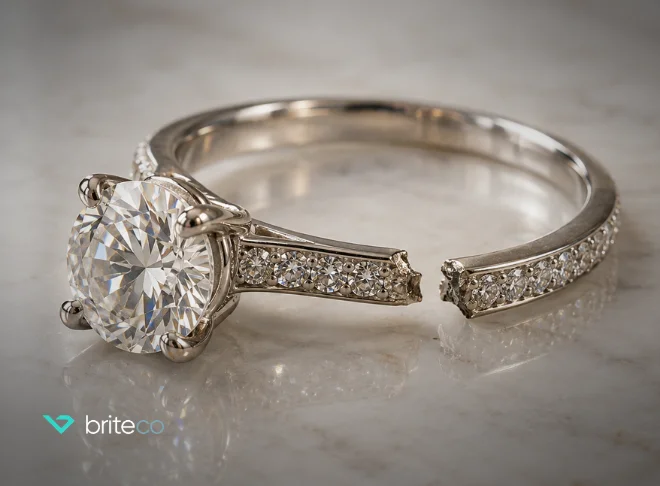
Jewelry isn’t just an accessory, it’s a source of cherished memories connected to special moments and loved ones. Your most meaningful pieces — like your engagement ring or the necklace that’s been in your family for generations — should bring joy, not stress. However, when traveling with jewelry, many feel an emotional tug-of-war.
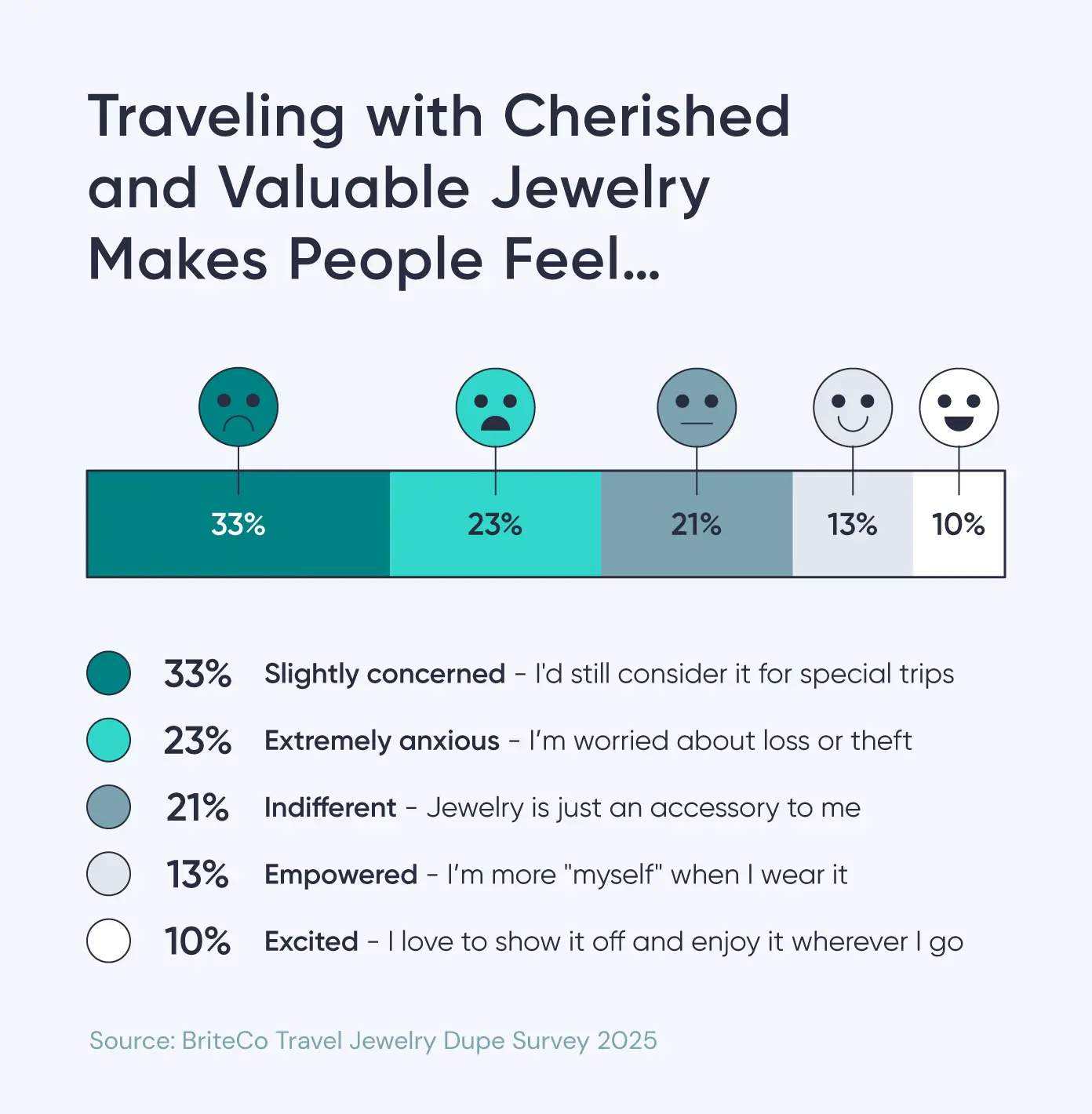
A significant number (56.3%) of Americans feel at least slightly concerned about traveling with cherished or otherwise valuable jewelry. This puts into perspective that losing these pieces can overshadow the joy of a trip, especially for the 1 in 4 people who feel extreme anxiety about the loss or theft of their valuable pieces when traveling.
On the other hand, only 10% are excited to show off their valuable jewelry when traveling, and one-fifth view jewelry as just an accessory and are indifferent toward the thought of traveling with it.
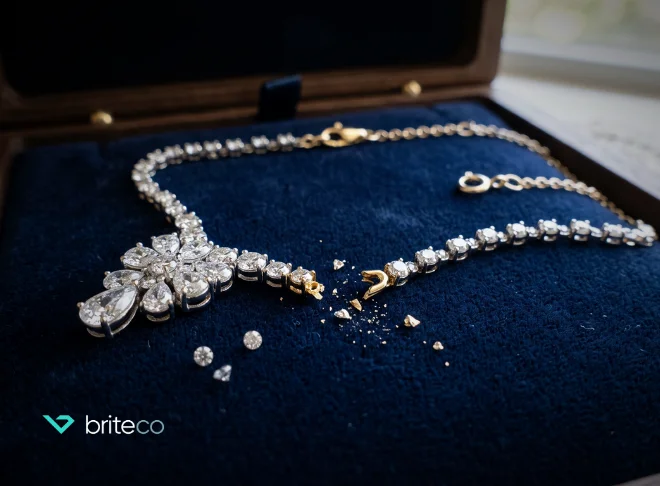
It’s clear that a majority are haunted by the fear of looking down to see an empty finger where their engagement ring should be after a night out on vacation, or touching their neck and not finding their sentimental necklace after being in a crowded tourist area. When you travel with expensive jewelry, the fear of loss can outshine the experiences you should be having.
Join the Travel Dupe Trend for Peace of Mind
Travel jewelry dupes aren’t meant to replace your beloved, expensive pieces. Instead, they offer an alternative option for smart, strategic travel with jewelry. Using quality dupes provides you with the sparkle and style you desire, plus peace of mind that you won’t lose or damage your most valuable pieces.
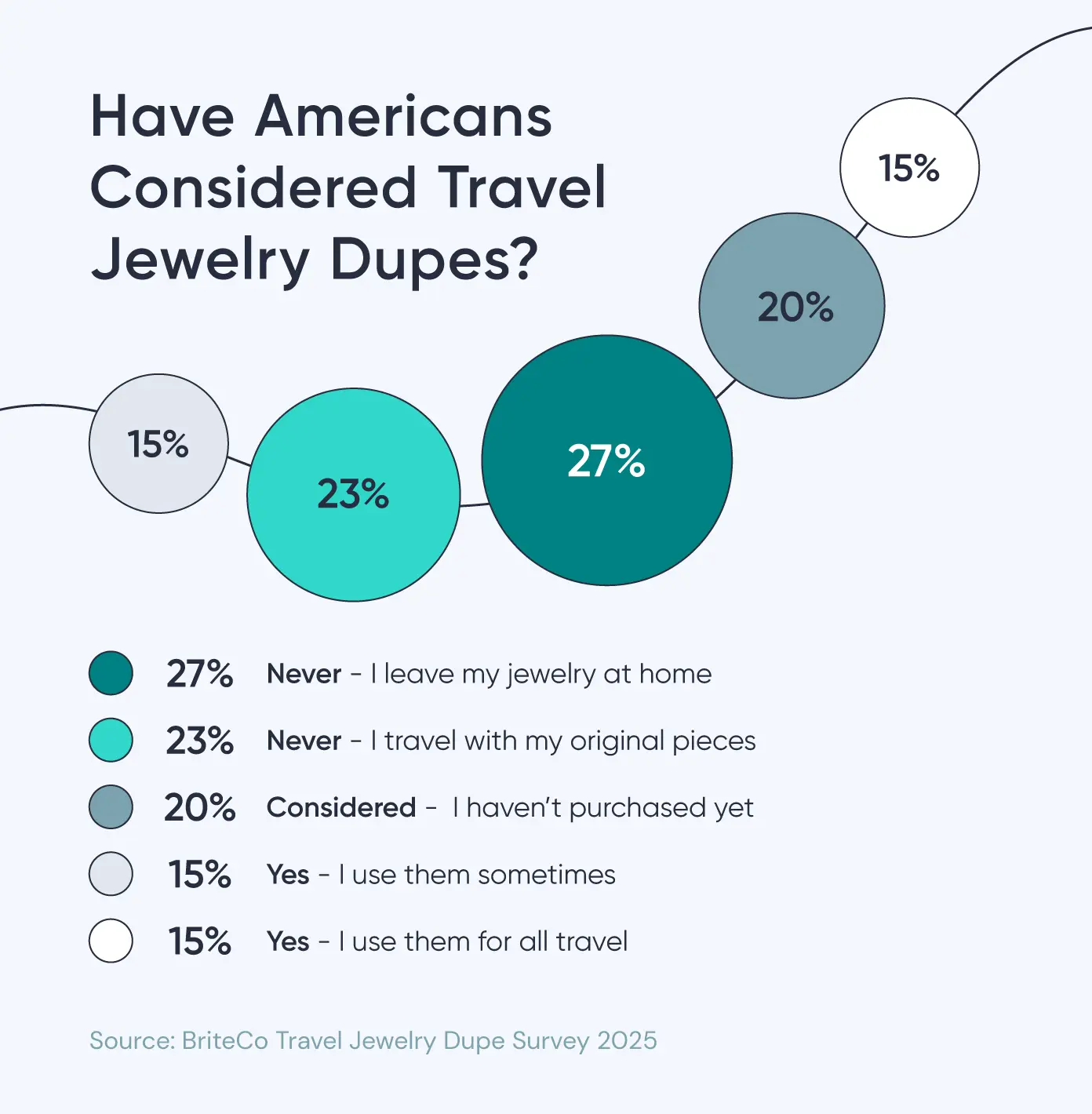
Our study found that 30.3% already own and use travel jewelry dupes, and an additional 20.1% are seriously considering making the purchase. Furthermore, travel jewelry dupes are particularly popular with younger generations.
Over 38% of those aged 18-29 use dupes at least sometimes when traveling. This age group understands the importance of protecting their valuables to maintain peace of mind. This is proven with 61% of Gen Z and Millennials insuring their engagement ring. With travel dupes, younger generations know they can have a good time on their trip without worries.
Some popular dupes to consider from affordable jewelry brands include:
- Dupe rings for your bachelor or bachelorette party
- Quality and chic necklaces and earrings
- Fake wedding rings for your honeymoon
Lost Memories Are Worse Than Lost Money
Many pieces of jewelry are valuable beyond their price tag as they’re connected to significant life moments. An engagement ring isn’t just a diamond ring; it’s the symbol of a promise and a lifelong commitment. A watch is often more than an accessory; it could be a graduation gift celebrating years of hard work or a family heirloom passed down from previous generations.
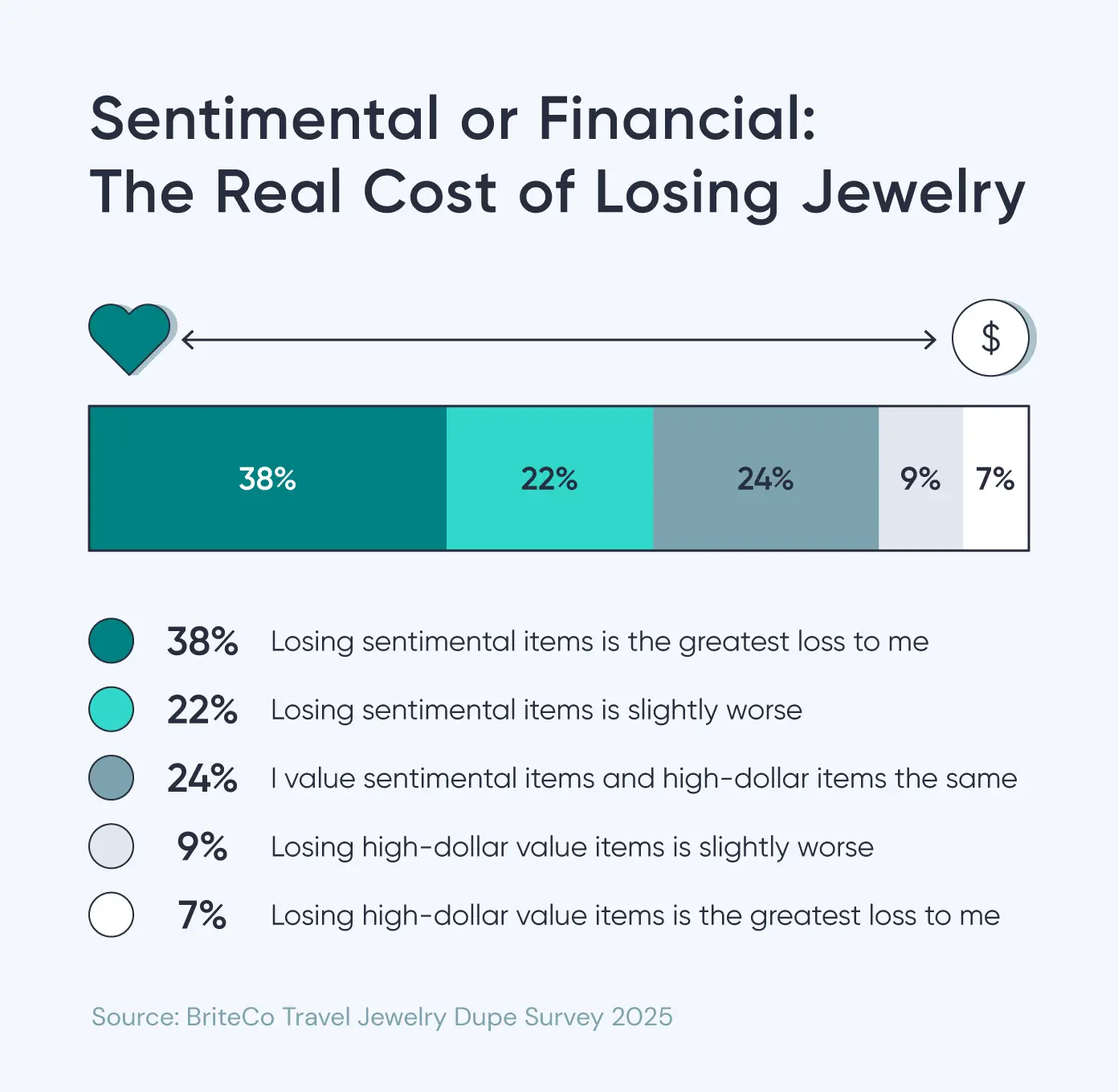
Since 60% of Americans believe losing sentimental jewelry is worse than losing expensive jewelry, it’s clear there’s a special attachment to specific pieces of jewelry. They hold memories, stories, and emotions that go far beyond what a price tag can capture.
Older generations best understand this feeling the most, with nearly half of those 60+ believing sentimental loss is the greatest loss, even more than the financial aspect. Comparatively, other age groups had similar views as seen in these findings:
- 1% of those aged 18-29
- 4% of those aged 30-44
- 1% of those aged 45-60
Lost Travel Jewelry Concerns Extend Beyond Theft
If you’ve seen one of the many social media videos of pickpockets targeting tourists, you know theft is a valid concern when traveling. But it’s far from the only concern for your jewelry. It’s often that simple mistakes from being distracted in a new environment or being taken out of your normal routine can factor into jewelry loss when traveling.
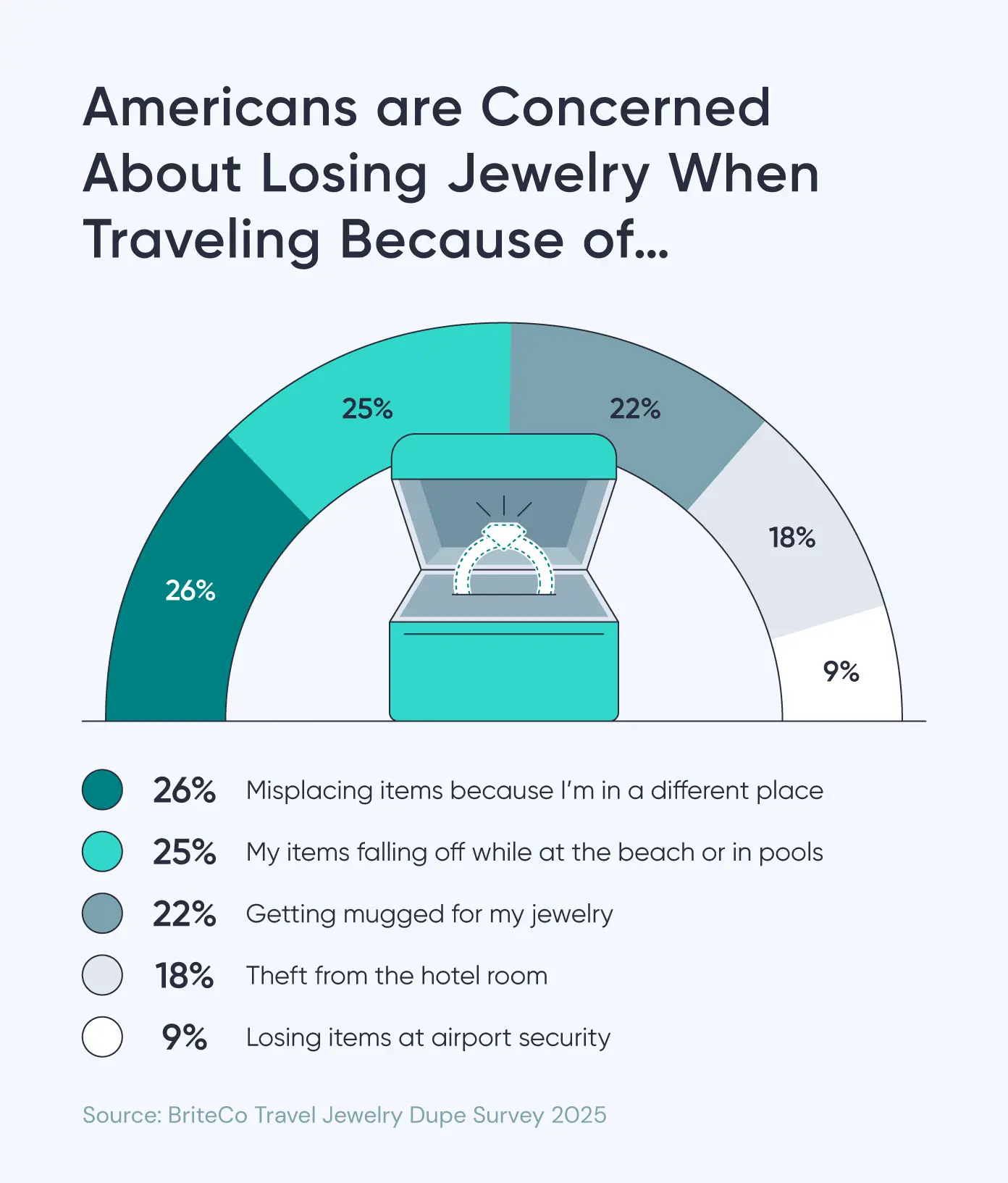
New data in BriteCo’s survey revealed the common anxieties people have about losing their jewelry when traveling, including:
- Misplacing items in unfamiliar places (26.5%)
- Losing items at the beach or pool (24.6%)
- Getting mugged (21.9%)
Beyond being in a new place and outside your daily routine, being around water also poses a particular threat for jewelry loss. Rings can slip off in cold water or when applying sunscreen, and necklaces or bracelets can easily unclasp in the waves or sand. Notably, younger travelers are most concerned about this, with 33.8% of those aged 18-29 citing losing jewelry at the beach or pool as their top concern.
Insurance Is an (Underused) Game-Changer
Traveling can cause the unexpected, and we’re only human — things happen, and jewelry gets lost. Insurance can help give you peace of mind and protect your wallet from many types of loss, including if you’re one of the over 1 in 5 Americans worried about jewelry being stolen from your hotel room.
While travel insurance coverage often won’t include higher-value items like engagement rings or luxury watches, comprehensive jewelry insurance will provide the coverage you need for these items.
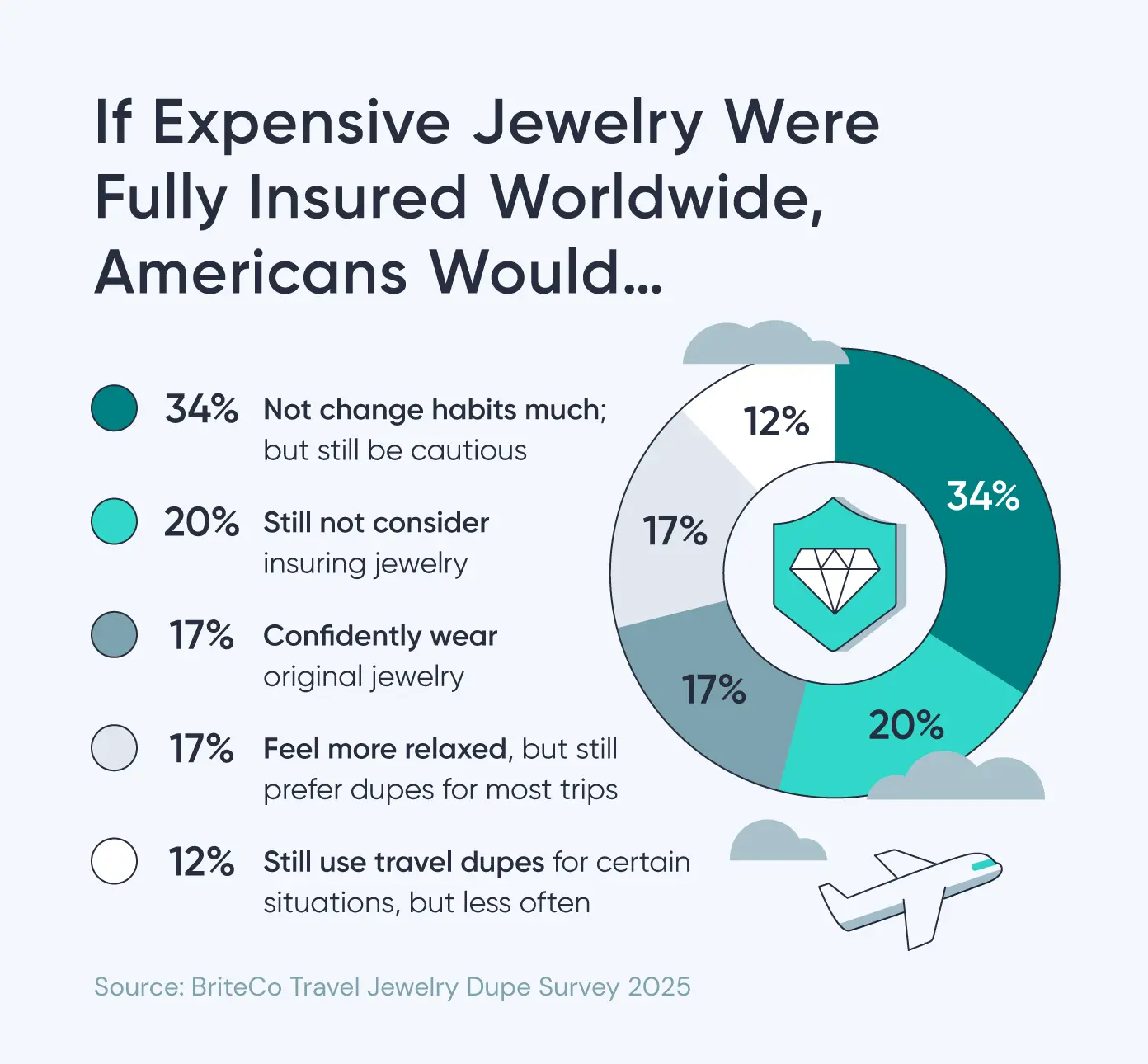
With comprehensive jewelry insurance, you can enjoy both style and security when traveling. You can leave the real thing at home and travel with a fake engagement ring or other travel jewelry dupe for full peace of mind. Then you can relax on your trip knowing your valuables are safely protected at home.
Surprisingly, nearly 20% of Americans haven’t even considered jewelry insurance. Even more shockingly, of those aged 18-29, 1 in 4 haven’t considered jewelry insurance for expensive jewelry despite their higher adoption of dupes for travel and the likelihood of insuring engagement rings.
Full coverage jewelry insurance is a game-changer for those who still wear their favorite pieces everywhere. Insurance gives you control and peace of mind, knowing you’re covered when wearing your jewelry collection wherever and whenever you desire. As Rachel Akmakjian, Director of Jeweler Relations at BriteCo, explains:
“When you’re traveling, your jewelry faces more risks than usual — whether it’s an engagement ring slipping off while swimming, a necklace getting tangled and broken in your luggage, or a watch going missing at airport security. Jewelry insurance is essential because most homeowners or travel insurance policies don’t fully cover these kinds of incidents. With comprehensive jewelry insurance, like what BriteCo offers, you’re protected against loss, theft, and damage anywhere in the world — so you can enjoy your trip without worrying about your valuables.”
Protect Your Jewelry When Traveling with BriteCo
Whether you choose to embrace the trend of travel jewelry through realistic dupes, or you prefer to wear your original cherished pieces no matter where you go, insuring your expensive and sentimental jewelry provides the ultimate peace of mind.
Specialty jewelry insurance providers like BriteCo offer comprehensive coverage against life’s unpredictable moments with fully covered repairs and replacement, so the fear of loss doesn’t have to overshadow your trip. Get a quote today to protect your favorite jewelry before your next trip.
Travel Jewelry FAQs
Learn more about traveling with your jewelry below:
What Is a Jewelry Dupe?
A dupe (short for duplicate) is a piece of jewelry that closely resembles the look of a more expensive or valuable piece. They serve as stylish and affordable stand-ins for your higher-end jewelry, especially when traveling or when you want extra peace of mind.
Jewelry dupes are made to look like the real thing, but using less expensive materials; for example, cubic zirconia, sterling silver, or plated metals instead of diamonds, gold, or platinum.
How Should I Pack Jewelry for Travel?
To pack jewelry for travel, you should:
- Keep each piece separate and secure.
- Use a dedicated travel case with separate compartments for different types of jewelry.
- Pack jewelry in your carry-on luggage or a bag that’s with you at all times.
- Lay necklaces flat and clasped to prevent knotting.
Can You Bring Jewelry on a Plane?
Yes, it’s actually highly recommended that you pack valuable jewelry in your carry-on bag instead of checked luggage.
You’re also generally allowed to wear jewelry through TSA checkpoints as long as they don’t set off the metal detector or aren’t too bulky — in which case, you may be asked to remove the jewelry and place it in a bin for screening. Typically, small pieces like wedding rings, earrings, and thin necklaces don’t pose an issue.
Which Pieces Should I Consider Getting Travel Jewelry Dupes for?
Some of the pieces you should consider for dupes include:
- Engagement and wedding rings
- Family heirlooms
- Luxury watches
- Diamond necklaces and earrings
- Tennis bracelets
- Precious gemstone pieces
- Gold pieces of 14 or more carats
These travel dupes are an excellent solution for traveling with jewelry without anxiety.
Methodology
The survey was conducted by SurveyMonkey Audience for BriteCo. The survey was fielded on July 18, 2025, and results are based on 1,012 completed surveys. In order to qualify, respondents were screened to be residents of the United State and over 18 years of age. Data is unweighted, and the margin of error is approximately +/-3% for the overall sample with a 95% confidence level.
Related Articles:
How to Protect Your Jewelry in Winter Weather?
US States with the Most Jewelry Theft
Top 10 1940s Jewelry Trends
How Much Does Custom Jewelry Cost
What Color Jewelry Should I Wear?
The Emotional Impact of Losing Jewelry
Odds of Losing or Damaging Jewelry
Appraisal Tool:
The Easiest Way to Get a Professional Jewelry Appraisal Valuation!
UP NEXT: Why Waiting to Buy Insurance Puts Your Jewelry at Risk

Author