How to Protect Your Jewelry in Winter Weather: 5 Threats to Watch Out For
Caring for your jewelry during the winter requires being mindful of fluctuating temperatures and how they might impact certain gemstones or materials. This requires removing jewelry before engaging in winter sports and activities and always keeping your jewelry dry and clean.
Here are the five biggest winter threats that could harm or cause you to lose your jewelry, plus how to best avoid them.
What You Will Learn
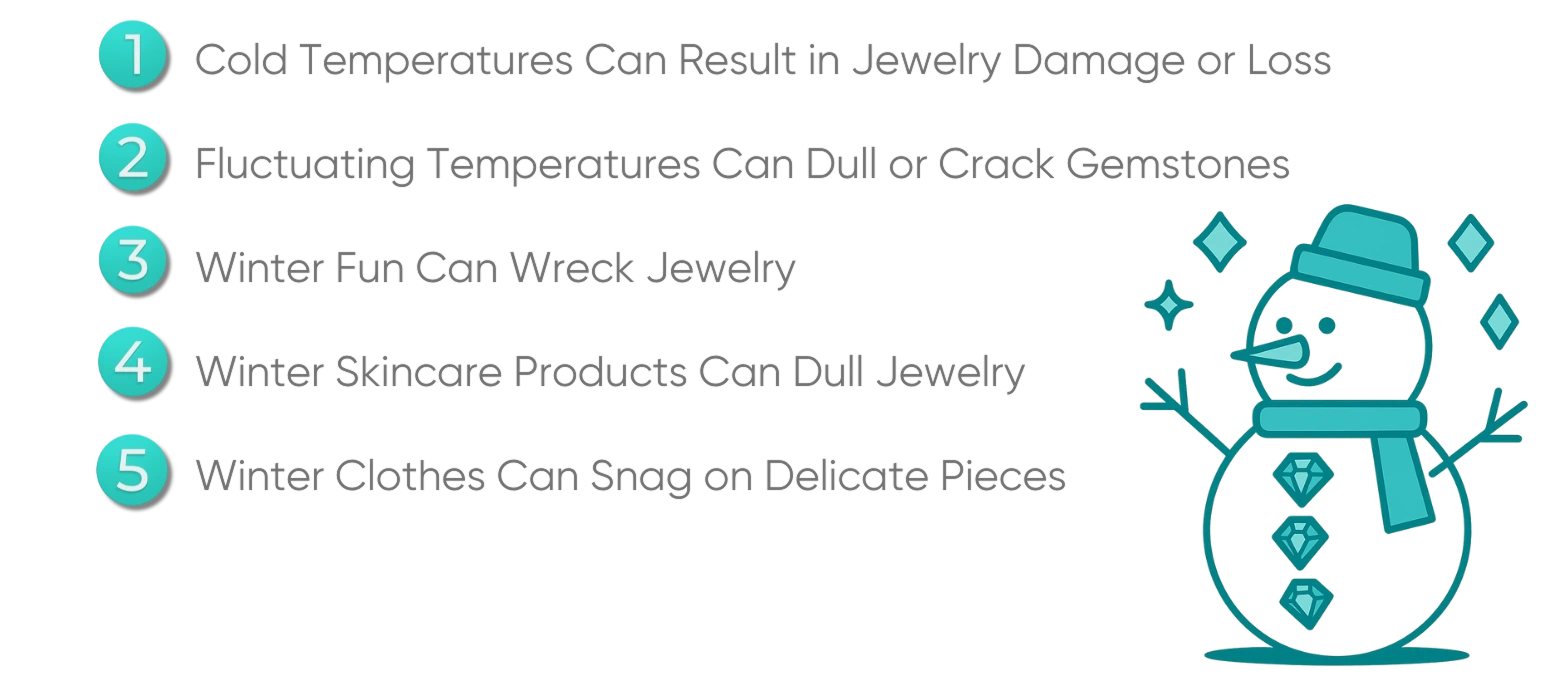
- 1. Cold Temperatures Can Result in Jewelry Damage or Loss
- 2. Fluctuating Temperatures Can Dull or Crack Gemstones
- 3. Winter Fun Can Wreck Jewelry
- 4. Winter Skincare Products Can Dull Jewelry
- 5. Winter Clothes Can Snag on Delicate Pieces
- What Jewelry Can Best Handle Winter Weather?
- Schedule a Professional Jewelry Inspection During the Winter
- Winter Weather Jewelry Protection FAQs
- Winter Weather Is No Match for Jewelry Insurance!
1. Cold Temperatures Can Result in Jewelry Damage or Loss
If there are cold temperatures when you’re wearing or even storing your jewelry, it can cause material damage or total loss. As such, it’s important to refrain from wearing certain pieces in extremely cold temperatures and to always store your jewelry at room temp.
Risk of Loss
If you wear a loose ring out in the cold, it can easily slip off and become lost in the snow and ice.
It’s not just loose rings you have to worry about, either. Any ring could be at risk. As you may have noticed, when your fingers are cold, your rings fit a little looser than they might otherwise. The cold weather causes skin to contract just enough, so a ring that fits snugly in the summer may suddenly become too big as the mercury drops.
Risk of Damage
Certain metals, like silver, can also become compromised when exposed to extreme cold temperatures. As precious metals contract, delicate prong settings may no longer securely hold your gemstones. Similarly, delicate designs like thin chains could also be at risk for breaking.
Avoid wearing loose or delicate jewelry in cold temps, and refrain from storing your jewelry in any part of your home that becomes particularly cold during the winter (such as a poorly insulated closet).
2. Fluctuating Temperatures Can Dull or Crack Gemstones
The sudden change in temperature that occurs when going from a heated building to a cold car or frigid winter weather can dull or crack gemstones.
Gemstones that are particularly at risk for this phenomenon include:
As such, you might want to wear these stones only when you know you’ll be sticking to one spot versus going in and out of the cold.
3. Winter Fun Can Wreck Jewelry
Your favorite winter activities like sledding, skating, or hot tubbing can lead to jewelry loss or damage from exposure to rough movements, hard impacts, or unsafe chemicals.
Imagine you’re spending a day on the slopes and you take off your mittens every so often to go to the restroom, grab a hot chocolate, or readjust some of your gear. At the end of the day, you’re getting ready to go home and realize that when you pulled off your mittens, you also pulled off your engagement ring and now it’s gone.
Or, when you hit the hot tub at your cabin and forget to remove your luxury watch, the chemicals discolor the metal band.
Another scary possibility? You’re wearing some long earrings while playing in the snow with your kids and, as you rush to grab another snowball, your hand catches your hoop, resulting in a painful injury.

4. Winter Skincare Products Can Dull Jewelry
During the winter months, your skin is more apt to become dry and chapped, and you’re naturally more likely to reach for a bottle of lotion or moisturizer. But unless you take off your rings when doing so, you put them at risk. Even the gentlest of skincare products can dull your jewelry’s shine, necessitating more frequent at-home cleanings.
In winter and all year-long, make sure you remove any jewelry before applying cosmetics or beauty products. Only put the jewelry back on once your skin is dry. And when you’re getting ready at the beginning of the day, apply all beauty products and cosmetics first before putting on your jewelry.
5. Winter Clothes Can Snag on Delicate Pieces
Winter wardrobes often include big, bulky sweaters made with a thick, chunky weave — but, while warm, those sweaters are likely to snag on delicate pieces such as thin chain necklaces or diamond shapes that feature sharp edges (like a marquise-cut diamond).
While a diamond is likely no match for your sweater, the snagging could potentially damage the diamond’s setting, pulling prongs loose, which could result in the loss of your center stone. For more delicate pieces like a chain necklace, the snagging can cause the piece to break entirely.
What Jewelry Can Best Handle Winter Weather?
Some jewelry materials, such as precious metals and gemstones, are better at handling winter weather than others. Durable, weather-resistant precious metals include:
- Platinum
- Titanium
- Gold
For durable, weather-resistant gemstones, look for:
- Diamonds
- Sapphires
- Rubies
- Topaz
Schedule a Professional Jewelry Inspection During the Winter
Even if you take all of the necessary precautions to protect your jewelry during the winter, you may want to consider taking it in for a professional inspection and cleaning during the winter months.
Many jewelry warranties require that you take your piece in for inspection every six months for the warranty to remain valid. But even if your warranty is out of date, regular inspections and cleanings can keep your jewelry in tip-top condition, and winter is a great time to do so.
A jeweler can examine any ring settings for damage that may not be visible to the unseen eye (such as settings that are loosened due to a sweater snag), and they can clean your jewelry so it looks its best, in case you’ve accidentally dirtied it up with lotion.
Winter Weather Jewelry Protection FAQs
Is It Bad to Leave Jewelry in the Cold?
Yes! Exposing jewelry to extreme temperatures, whether hot or cold, can cause breakage, brittleness, and/or discoloration, depending on the materials used.
Why Is My Ring Looser in the Winter?
Your ring may be looser in the winter due to two factors: the metal contracting and your body reducing blood flow to your fingers to conserve heat. This makes the ring overall fit looser and more likely to slip off your finger without realizing it.
Can You Take Jewelry into the Hot Tub?
No! You should never wear jewelry in a hot tub, or any water source such as a pool that has been chemically treated. The harsh chemicals can discolor and damage precious metals and gemstones.
What’s the Best Time of Year to Take Your Jewelry in for Inspection?
Winter is a great time to take your jewelry to a professional jeweler for inspection, due to the number of seasonal threats that can compromise your jewelry without your knowledge. The jeweler can check for damage that’s invisible to the naked eye.
Can Jewelry Insurance Help if I Lost a Ring While Skiing?
Yes! Jewelry insurance can help you purchase a new ring if you lose one while engaging in winter sports like skiing. BriteCo’s jewelry insurance policies even cover mysterious losses if you have no idea where your ring may have disappeared in the snow.

Winter Weather Is No Match for Jewelry Insurance!
If a winter weather-related hazard leaves you with damaged jewelry, having specialized jewelry insurance can cover the cost of repairing or replacing it.
Additionally, if you happen to lose a piece of jewelry in the winter snow, jewelry insurance can help you replace the piece or find a comparable item with the same value.
From winter fun to holiday travel, there are so many ways your jewelry could be damaged, lost, or stolen this season. Let BriteCo help when the unexpected happens. Get your specialized jewelry insurance quote now!
Related Articles:
The Complex World Of Jewelry Stamps And What They Mean
How to Solder Jewelry?
How to Store Jewelry When Moving
How to Pick the Right Gender-Neutral Jewelry for You
How long does permanent jewelry last?
How Much is Permanent Jewelry?
What You Should Know about Silver’s Increasing Value
How to Identify Authentic 1940s Pieces
Get a Quote:
The Easy Way to Insure Your Jewelry - and Save Money!
UP NEXT: What are the Odds of Losing or Damaging Jewelry?

Author