What Is an Epaulette Diamond? Everything You Need to Know
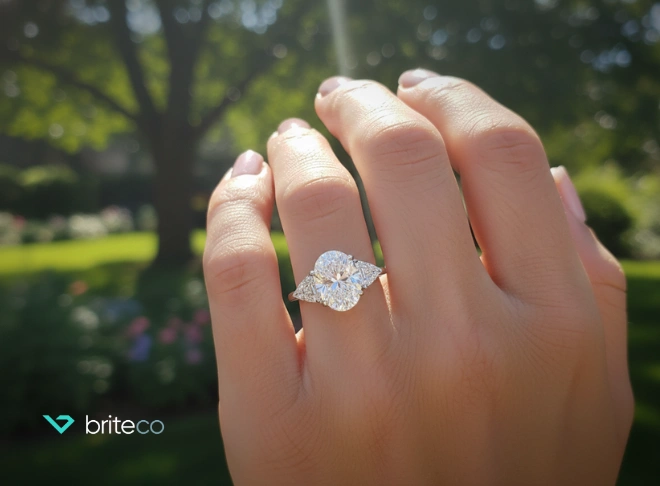
The epaulette diamond is a historically popular cut often used for side stones on either side of a ring’s center stone. This diamond style can also by the name of a Cadillac-cut diamond, due to its resemblance to the brand’s logo.
Epaulette diamonds aren’t widely used in the present day, as far as mainstream engagement ring designs go. But they are very eye-catching and, frankly, deserve a resurgence. Here’s everything to know about the epaulette-cut diamond so you can determine whether or not diamond epaulettes are a good fit for you.
What You Will Learn
- What Do Epaulette Side Stones Look Like?
- How Are Epaulette Cut Diamonds Used in Jewelry?
- What Are the Benefits of Epaulettes Ring Designs?
- Other Side Stone Options Beyond Epaulettes
- The Best Matches for Side Stones & Center Stones
- Diamond Ring Shopping FAQs
- Protect Your Perfect Engagement Ring with Jewelry Insurance
What Do Epaulette Side Stones Look Like?
An epaulette-cut diamond features a five-sided shield shape, with three sharp corners on one side of the stone, while the opposite side is completely flat.
The result is a design that looks just like the shape of an actual epaulette, an ornamental piece found on the shoulder of military uniforms throughout history (think Napoleon Bonaparte’s era).
Because of the geometric appearance, these stones have a somewhat Art Deco feel. As such, they’re not often used for more romantic or feminine of engagement ring styles, but can be a favorite for those looking for an engagement ring that’s particularly unique.

How Are Epaulette Cut Diamonds Used in Jewelry?
Epaulette diamonds can be used to compliment any variety of other diamond shapes. You might see an oval diamond with epaulettes, an emerald-cut diamond with epaulettes, etc.
Typically, you won’t see a solitaire epaulette diamond on its own on a ring band. If this diamond cut does appear somewhere other than flanking a ring’s center stones, it’s likely on a pair of earrings or a brooch.

Most often, an epaulette stone is used in conjunction with a main center stone that’s a different shape. The epaulette stones are placed on either side of the center diamond, forming a three-stone ring. Typically, the flat side is flush with the sides of the center stone, allowing the epaulette’s multiple sharp corners to point outward.
What Are the Benefits of Epaulettes Ring Designs?
A diamond ring with epaulette side stones will appear larger on the finger, and these brilliant-cut diamonds also make for an overall flashier, more sparkly ring.
Compared to a step cut like you might see with an emerald side stone, for example, a brilliant-cut epaulette involves diamond cutters using brilliant facets to achieve maximum sparkle. Pair those epaulette side stones with a round brilliant shape, and you’ll have a ring that’s highly eye-catching.
Other Side Stone Options Beyond Epaulettes
You might decide that, while you want to explore three-stone or even five-stone rings, epaulettes just aren’t a good fit for you, and that’s totally okay. You can always explore other side stone shapes, including trillion cuts, trapezoid cuts, half-moon cuts, and/or straight bullets.
Trillion Cut
The trillion cut is essentially a triangle shape, which comes with some pros and cons. On the pro side, the larger surface area gives the illusion of a bigger diamond, but a con is that the three pointed edges make for a less durable diamond.
Trapezoid Cut
The trapezoid cut is very similar to the epaulette. But rather than one long flat side and three points rising up off it, the trapezoid features two points rising off the long flat side with another, shorter flat side parallel to the longest side.
Half-Moon Cut
Half-moon cuts are exactly what they sound like — side stones shaped like a half moon crescent, though the length-to-width ratio will depend on the individual gemstone. As a brilliant-cut design, half moons offer a sparkly but more feminine alternative to an oval diamond with epaulette side stones.
Straight Bullets
Straight bullet side stones are elongated, bullet-shaped gemstones that feature one pointed short end and one flat short end. The flat end sits flush with the center diamond, and the rest of the bullet sits along the ring’s band before tapering off into a point.
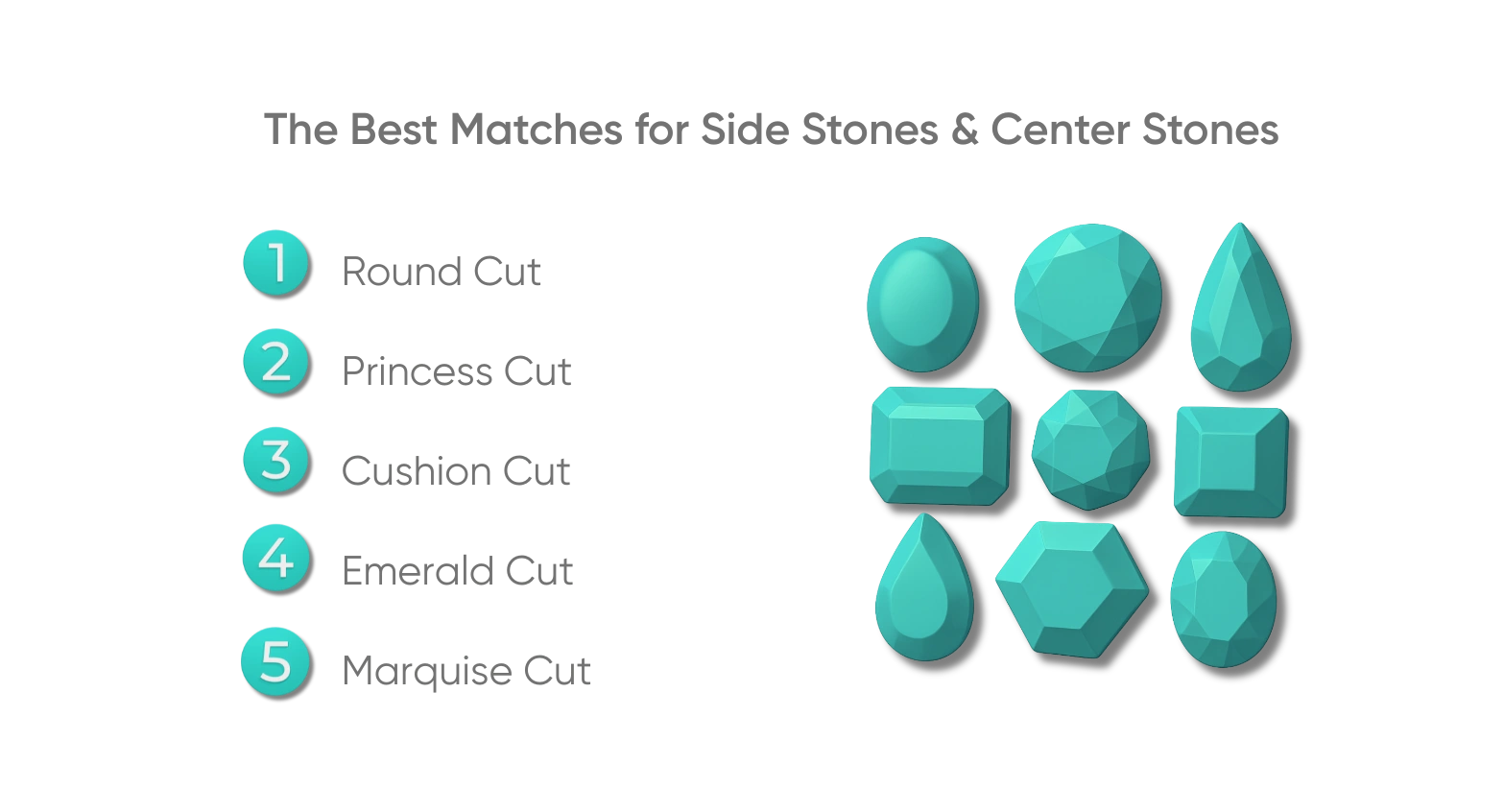
The Best Matches for Side Stones & Center Stones
Wondering about the best side stones to complement the center stone in your engagement ring? We’ve matched them up below, using some of the most popular engagement ring designs.
- Round cut: Baguette, pear, or half-moon side stones make excellent accents for round cuts.
- Princess cut: Smaller princess cuts, baguettes, trillions, bullets, and half-moon side stones create a symmetrical and eye-catching three-stone ring when paired with a princess-cut center stone.
- Cushion cut: While most diamond shapes work well with side stones, a cushion cut looks best with a halo or bezel setting instead.
- Emerald cut: Baguettes, trapezoids, and epaulettes can complement an emerald’s unique length and width.
- Marquise cut: A marquise-cut diamond pairs well with pear and round brilliant side stones.
 If you have a particular vision in mind and you’re not finding it while engagement ring shopping, you may want to work with a jewelry designer to produce a custom ring.
Diamond Ring Shopping FAQs
What Is an East West Diamond Cut?
A traditional elongated diamond shape (such as an emerald-cut diamond) is considered “north south,” i.e. the diamond’s long sides follow the length of your finger, and the short sides face the back of your hand/palm and tips of your fingers. But an east west diamond swaps this position around, so the long side is perpendicular to the length of your finger.
What Is a Diamond Pavilion?
The diamond pavilion is the V-shaped triangular bottom if you’re looking at a typical round diamond from the side, sitting directly opposite its circular top. It’s important to note that a shallow or deep pavilion is undesirable as it negatively affects the diamond’s sparkle.
What Are the Four Cs of Diamond Shopping?
“The four Cs” refers to the four factors that impact a diamond’s value and price tag: carat weight, clarity, color, and cut. Subtle differences in each can greatly impact both diamond price and appearance.
What Are the Downsides of Side Stones?
The downsides of side stones are that they can come with a higher price tag and lessened ring durability, especially if you choose side stones with pointed edges. But some people still prefer them for the way they make the overall ring appear larger.
Do Side Stones Have to Be Diamonds?
No! A ring with a diamond center stone can be flanked by side stones such as rubies, emeralds, or sapphires. Since this is not a particularly popular option for engagement rings, however, the best way to find a diamond engagement ring with non-diamond side stones is to work with a jewelry designer to craft a custom ring.
Protect Your Perfect Engagement Ring with Jewelry Insurance
Whatever engagement ring you choose, make sure your engagement ring is protected with specialized fine jewelry insurance.
Designed to match the unique risks that come with owning and wearing jewelry, specialized jewelry insurance ensures you can repair or replace a piece in the event of damage, loss, or theft.
Simply complete BriteCo’s short request form and get a quick jewelry insurance quote now.
Related Articles:
Is an Antique Cut Diamond Right for You?
What are French Cut Diamonds?
Appraisal Tool:
The Easiest Way to Get a Professional Jewelry Appraisal Valuation!
UP NEXT: What are the Odds of Losing or Damaging Jewelry?

Author