Some jewelry insurance policies place coverage amount limits on individual pieces or total collections, based on items’ current monetary value. A BriteCo jewelry insurance policy, however, comes with no such maximum insured value restriction, and will cover jewelry, watches, and full collections — from everyday pieces to a million-dollar stash — subject to underwriting review and approval.
(Note that, just because there is no predetermined dollar ceiling preventing a customer from applying, that does not mean that every insurance application is automatically approved for coverage.)
Learn more from BriteCo founder and CEO Dustin Lemick about jewelry insurance limits and how specialized jewelry insurance works to fill in the gaps left behind by other coverage. Then, check your price for a policy in seconds.
What You Will Learn
- Quick Self-Assessment: Do Insurance Limits Matter to You?
- Coverage-Gap Math: What a Limit Can Cost You
- The 5 Types of Jewelry Insurance Limits You Need to Understand
- What “No Maximum Insured Value” Means at BriteCo
- Key-Decision Scenario Table
- Scenario Vignettes
- How to Insure High-Value Jewelry or a Full Collection
- Quick Comparison: Specialty Jewelry Insurance Vs. Alternatives
- FAQs
- Go Beyond the Limits with BriteCo Insurance
Quick Self-Assessment: Do Insurance Limits Matter to You?
If you can answer “yes” to two or more of the below questions, common insurance limits for high-value items may impact your coverage:
- Is any individual piece of your jewelry worth tens of thousands of dollars or more?
- Do you own multiple, valuable personal belongings that together represent a significant collection?
- Do you own luxury watches, rare gemstones, heirlooms, or hard-to-replace jewelry?
- Does your existing homeowners or renters policy have a jewelry sublimit?
- Has your jewelry appreciated significantly since it was purchased or last appraised?
- Would replacing even one piece out of pocket create financial strain?
Coverage-Gap Math: What a Limit Can Cost You
Common jewelry insurance coverage limits can result in higher, out-of-pocket replacement costs in the event of an insurance claim.
Your potential uninsured exposure = Your jewelry’s current replacement value − Your insurance policy limit
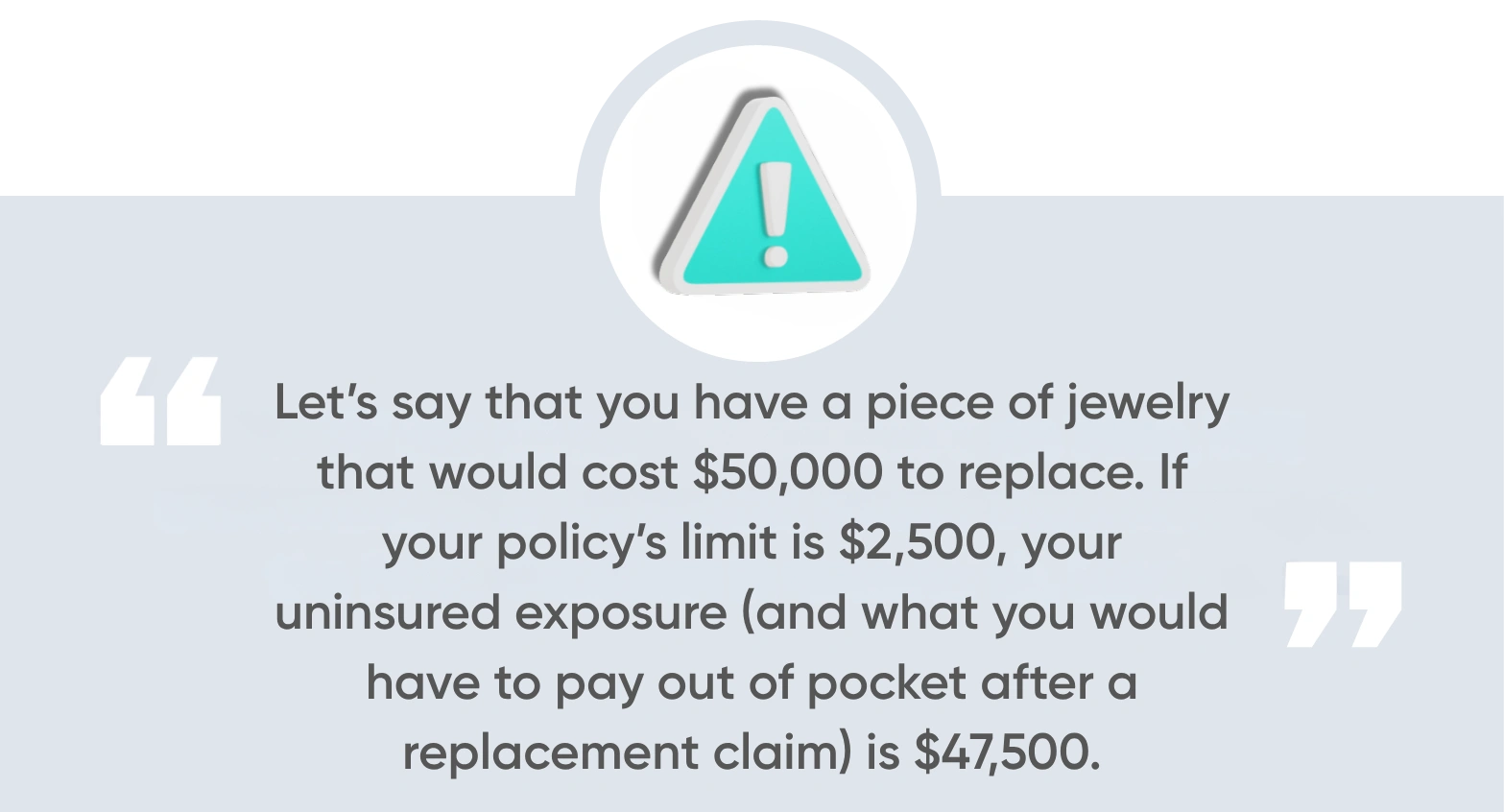
Let’s say that you have a piece of jewelry that would cost $50,000 to replace. If your policy’s limit is $2,500, your uninsured exposure (and what you would have to pay out of pocket after a replacement claim) is $47,500.
| Jewelry / Collection Value | Hypothetical Policy Limit | Potential Uninsured Exposure |
|---|---|---|
| $10,000 | $2,500 | $7,500 |
| $50,000 | $5,000 | $45,000 |
| $250,000 | $100,000 | $150,000 |
As such, when considering whether or not you need extra insurance for your high-value jewelry, first and foremost consider the financial investment that you need to protect, before making a decision based on jewelry insurance cost alone.
The 5 Types of Jewelry Insurance Limits You Need to Understand
A jewelry insurance limit can refer to one of five different types of coverage boundaries.
1. Maximum Insured-Value Limit
A policy’s maximum insured-value limit is the highest value of an item that an insurer is willing to consider for coverage. Some carriers will publish their maximums online, but BriteCo currently has no pre-defined maximum insured value for jewelry, watches, or scheduled collections, though coverage is still subject to underwriting review.
2. Per-Item Limit
Some insurers may also have per-item coverage limits, treating a single $500,000 ring differently from a $500,000 collection of 50 pieces. In other words, they may refuse to cover the $500,000 ring for its full value, but they may fully cover 50 pieces that are collectively worth $500,000.
3. Aggregate or Collection Limit
An aggregate or collection limit is a limit upon the value that an insurer will cover across multiple pieces. BriteCo’s current no-maximum policy applies to both individual pieces and full scheduled collections.
That latitude is valuable to clients with a substantial net worth, people who typically need to cover “a high-end engagement ring, a bunch of other high-end pieces, some really nice watches, and a pretty good schedule of other jewelry and watches,” Lemick says.
4. Homeowners or Renters Jewelry Sublimit
While standard homeowners insurance covers jewelry and personal property, there are often sublimits within that coverage, with restrictions that apply to jewelry only; often, a typical homeowners or renters policy will only cover jewelry’s value up to a few thousand dollars, necessitating additional coverage. “Your standard homeowners policy has a very low limit for jewelry,” Lemick says.
Furthermore, insurance jewelry limits around covered losses can restrict homeowners and renters coverage to natural disasters and theft, leaving out mysterious disappearance, loss, accidental damage, etc.
5. Claim or Replacement Limit
A claim or replacement limit is how much an insurer will consider paying out for a specific claim type during the claims process.
This differs from other potential policy limits that determine whether the insurer will accept the risk amount and/or claim type in the first place (such as limits surrounding normal wear and tear).
- Eligibility limit = How much value the insurer is willing to consider covering
- Claim/replacement provision = How much an approved covered claim can pay under the policy
What “No Maximum Insured Value” Means at BriteCo
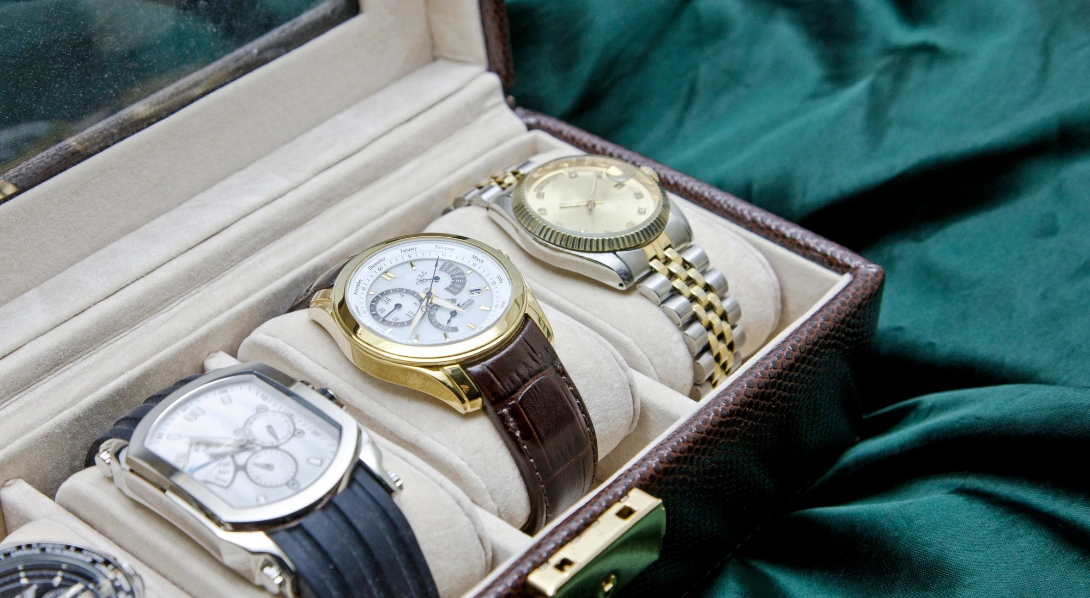
BriteCo offers coverage for jewelry, watches, and full collections, with no maximum insured value. This includes everything from everyday pieces to million-dollar collections.
Can BriteCo Insure Jewelry of Any Value?
BriteCo does not restrict coverage to any predefined maximum insured value, regardless of if the coverage is for jewelry, watches, individual pieces or full scheduled collections.
This rule applies to coverage for:
- Everyday jewelry
- Engagement rings
- Wedding bands
- Fine jewelry
- Heirloom pieces
- Rare gemstones
- Luxury watches
- High-value individual items
- Extensive scheduled collections
- Million-dollar collections
Coverage is subject to underwriting review and insurance agent approval.
No Maximum Does Not Mean No Underwriting
While there is no predefined maximum insured-value cap when insuring jewelry with BriteCo, applications still remain subject to BriteCo’s standard underwriting review and approval process. “No company would straight-through process a million-dollar application,” Lemick says.
High-value applications are individually reviewed. Factors such as documentation may affect eligibility, coverage structure, and final approval.
Key-Decision Scenario Table
| If you own… | Check current coverage for… | What to do next… |
|---|---|---|
| A $5,000 engagement ring | Whether or not your current policy covers full replacement value | Compare standard home coverage against specialty insurance |
| A $100,000 individual piece | Per-item maximums and underwriting requirements | Look for a specialist able to evaluate high-value individual items (a preferred jeweler or appraiser) and get an appraisal to match coverage needs |
| Several pieces totaling $500,000 | Aggregate/scheduled collection limits | Confirm both per-item and total-schedule treatment |
| A six-figure luxury watch | Whether watches share jewelry limits | Use a watch-specific policy or insurer that expressly covers high-value watches |
| A million-dollar jewelry collection | Maximum schedule values, valuation documents and underwriting | Avoid assuming a standard homeowner rider can accommodate the full collection and discuss the collection with a specialist insurer |
| Jewelry that has risen significantly in value | Current insured value and replacement value | Update valuations so the policy reflects today’s replacement cost |
Scenario Vignettes
Scenario 1: The Everyday Engagement Ring
A couple owns a ring worth $7,500, within their homeowners personal-property limit. They discover that jewelry has a much lower sublimit within that existing policy, and the ring’s full value is not covered after a claim.
Lesson learned: Overall personal-property coverage and jewelry coverage are not necessarily the same.
Scenario 2: The Collector Watch
A collector purchases a six-figure watch and discovers that the insurance company used earlier for lower-value jewelry imposes a per-item threshold.
Lesson learned: Ask specifically about individual-item maximums before assuming collection coverage applies to all jewelry items.
Scenario 3: The Million-Dollar Collection
A collector’s jewelry portfolio grows over years and reaches seven figures in current value.
Lesson learned: Collection values can outgrow traditional coverage limits. With BriteCo, there is no predetermined maximum insured value, but the collection still undergoes underwriting review and approval.
How to Insure High-Value Jewelry or a Full Collection
1. Inventory What You Own
Record each piece separately where practical and, in your jewelry inventory, include:
- Item type
- Brand/designer
- Gemstones
- Metal
- Serial/reference number where applicable
- Purchase information
- Current photos
2. Establish the Correct Insurance Value
Your insurance needs and coverage are generally based on items’ replacement / appraised value, rather than the items’ original purchase price, actual cash value, or what they would sell for on the current market. As such, before shopping for insurance, it’s important to have jewelry and all other valuables appraised.
3. Gather Supporting Documentation
Potential documentation necessary for an insurance provider’s underwriting review may include:
- Appraisals
- Sales receipts
- Lab reports
- Certificates
- Photos
- Proof of ownership/provenance where relevant
- Details regarding storage and security (such as whether you store the jewelry in a safe deposit box)
4. Apply for the Amount You Actually Need
Apply for coverage that reflects the full value of your jewelry. Do not deliberately under-insure a large collection merely to stay beneath an assumed threshold. Furthermore, apply for coverage related to the risks that matter most to you — such as theft, mysterious disappearance, and/or accidental damage.
5. Complete Underwriting Review
Then, allow the insurer to review all items and documentation, as well as your risk profile, answering any questions that they may have. From there, the insurer will approve or deny coverage. Because of its best-in-class underwriters, Lemick says, BriteCo is the kind of company that “should be able to underwrite at really any level.”
6. Keep Values Current
Jewelry, gemstones, metals, and luxury watches can change in value, so review your pieces’ insured values at policy renewal time or following any major appraisal/value change. Then, adjust coverage appropriately.
Quick Comparison: Specialty Jewelry Insurance Vs. Alternatives
How much jewelry does homeowners insurance cover as opposed to specialty jewelry insurance? As you compare your coverage options …
DO
- Check the policy for per-item limits
- Check total collection limits
- Verify whether watches are treated differently from jewelry
- Ask what documentation high-value underwriting requires
- Confirm how replacement value is determined
- Use specialty insurance when standard policies cannot accommodate the necessary coverage for an item’s full value
DON’T
- Assume your homeowners personal-property maximum applies fully to jewelry
- Assume scheduling a rider eliminates every cap or restriction
- Confuse a “no maximum insured value” policy with automatic policy approval
- Confuse insured-value eligibility with the amount payable under every claim scenario
FAQs
Can I Insure a Million-Dollar Jewelry Collection?
BriteCo allows customers to apply for coverage on full collections and has no maximum insured value restriction, enabling you to insure million-dollar collections. However, the collection must still pass the standard underwriting review and approval process.
Can I Insure One Extremely Expensive Piece of Jewelry?
Yes, specialty insurers may cover individual high-value pieces. BriteCo currently has no predefined maximum insured value restriction for an individual jewelry or watch item, with new policies subject to underwriting review.
What Documents Might I Need to Insure High-Value Jewelry?
Depending on the piece and underwriting requirements, you may need to have the jewelry appraised, sales documentation, photographs, certificates, or other information establishing ownership, condition, and value.
Can a Homeowners Policy Cover an Extremely Valuable Jewelry Collection?
Homeowners or renters insurance may provide jewelry coverage or scheduled riders, but sublimits, deductibles, exclusions, and maximums can apply.
What Happens if My Jewelry Increases in Value After I Insure It?
Review your jewelry’s insured value periodically and after significant market changes or new appraisals. Then, adjust coverage accordingly.
Go Beyond the Limits with BriteCo Insurance
“Your jewelry’s value shouldn’t be reduced to one generic insurance limit,” Lemick says. “The right policy should account for what you actually own, whether that’s one meaningful ring, a luxury watch, or an extensive collection.”
In summation:
- There is no universal jewelry insurance limit across all insurers and policies.
- Jewelry owners need to evaluate individual-item, aggregate, homeowners sublimits, and claim/replacement provisions within policies, separately, before relying on them.
- BriteCo offers coverage for jewelry, watches, and full collections with no maximum insured value, including everyday pieces through million-dollar collections, subject to underwriting review and approval.
Check your price and explore jewelry insurance options now.
Get a Quote:
The Easy Way to Insure Your Jewelry - and Save Money!
UP NEXT: What are the Odds of Losing or Damaging Jewelry?

Author