Gems and minerals have always fascinated people because of their dazzling beauty, their rarity, and the intricate natural processes that create them. Each mineral or gem is unique, with specific features that determine its appearance and value. To truly appreciate these natural wonders, it’s important to understand their characteristics and the technical terms used to describe them.
Adamantine Luster: A sparkling shine seen in gemstones, such as diamonds and garnets
Alluvial Gem Deposits: Gems found in water after being separated from their mother rock
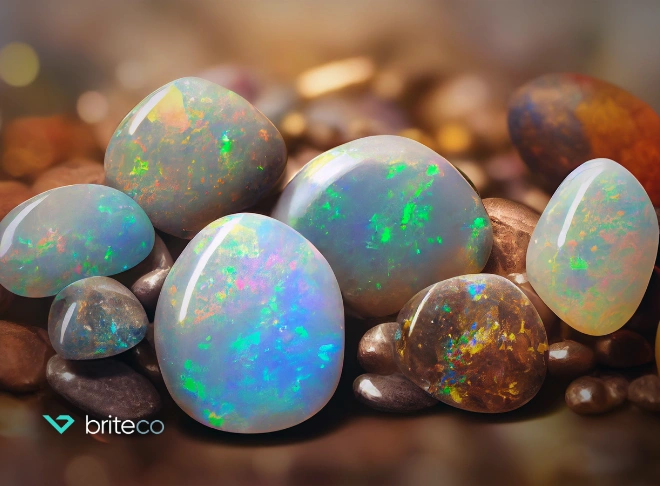
Amorphous Gemstone: Gemstones that lack a crystal structure, including coral, amber and opal
Baguette: A rectangular gemstone shape that resembles a loaf of bread
Bicolor: Gemstones that display two color zones, like ametrine and tourmaline
Birthstone: A gemstone linked to the month in which someone was born
Cabochon Cut: A round gem without facets, resulting in a smooth, polished dome shape
Carat Weight: A unit of gemstone weight, where one carat equals 0.2 grams
Center Stone: The centerpiece in a jewelry setting with multiple gemstones
Clarity: A measure of a gemstone’s lack of visual defects
Color Zoning: Uneven color distribution in gemstones, often seen in bicolor gems like ametrine
Cornflower Blue: A rich, light, and bright blue color found in high-quality Sri Lankan sapphires
Crown: The top part of a gem directly above the girdle
Copper-Bearing: Rare gemstones containing copper, resulting in intense blue, blue-green, or violet colors
Culet: The lowermost part of a gem, resembling a tip or point
Ceylon Blue: A light to medium blue sapphire from Sri Lanka, a major producer of fine sapphires
Dichroism: The ability of certain gems to display two colors when observed from different angles
Dispersion: The separation of light into the various spectral colors, causing the “fire” of a gemstone
Eye Clean: A gem that doesn’t display any inclusions or imperfections when viewed with the naked eye
Facet: A gemstone’s cut and polished flat plane. Some stones may have dozens of facets.
Fancy Cut: A term for gemstones cut in any shape besides the typical round cut
Fissure: A surface crack on a gem
Full Cut: A round-shaped, perfectly cut gemstone
Gemstone Rough: A gem in its raw, natural state, before being cut
Girdle: The widest point of a gemstone
Greasy Luster: When a mineral looks shiny and oily
Heat Treatment: Applying high heat to improve a gemstone’s color and clarity
Indicolite Tourmaline: A rare blue tourmaline, ranging from a bright blue to bluish-green
Iridescence: The color effect caused by light interference within a gemstone
Irradiation: Using radioactive rays to change or enhance a gemstone’s color, as seen in blue topaz
Karat: A measure of the purity of gold, distinct from carat weight used for gemstones
Lab-Created: Gemstones made in a laboratory, chemically identical to their natural counterparts
Lapidary: The art and science of cutting and polishing gemstones
Light Refraction: The bending of light upon entering a medium and slowing down
Marquise Shape: An elongated oval gem shape with pointed ends
Opaque Clarity: Gemstones that do not transmit light, such as lapis lazuli and malachite
Organic Gemstones: Gems formed by plants and animals, like amber and pearl
Pavilion: The lower section of a gemstone, starting below the girdle
Pear-Cut Gemstone: A teardrop-shaped cut with one rounded end and one pointed end
Pigeon’s Blood Ruby: A prized ruby color, pure red with a bit of blue, often associated with Burmese rubies
Pleochroism: The ability of gems to show multiple colors when observed from different angles
Refractive Index: A measure of the speed and angle of light entering a stone
Rutile: Needle-like inclusions in stones that can create a star or cat’s eye effect
Sheen: An effect resembling luster that is caused by light reflection from texture inside the gem
Solitaire: A single stone in a simple setting, usually found in pendants and rings
Swiss Cut: A gem cut with 33 facets
Table: The flat top part of a gemstone, typically its largest facet
Tone: A characteristic describing the lightness or darkness of a gem’s color
Treated Stones: Gems that have undergone treatments like heating, dyeing, or irradiation to improve appearance
Vitreous Luster: A glass-like sheen, common in many gemstones
Waxy Luster: A wax-like appearance, seen in gems like turquoise
Further Reading
- Organic Gemstones
- Glossary of Selected Gem Terms
- Understanding Gem Luster
- Physical Characteristics of Minerals
- Mineral Identification Key
- Understanding Colors in Minerals
- Introduction to Synthetic Gem Materials
- Is a Karat the Same as a Carat?
- How Do Gems Form Underground?
- Methods Used to Identify Minerals
- Clarity Grades in Gemstones
- Insurance for Fine Jewelry
- Lapidary Terms and Types
- What Is Color Zoning in Gemstones?
- Appraising the Value of Jewelry
- Minerals, Crystals, Rocks, and Stones: What’s the Difference?

Author