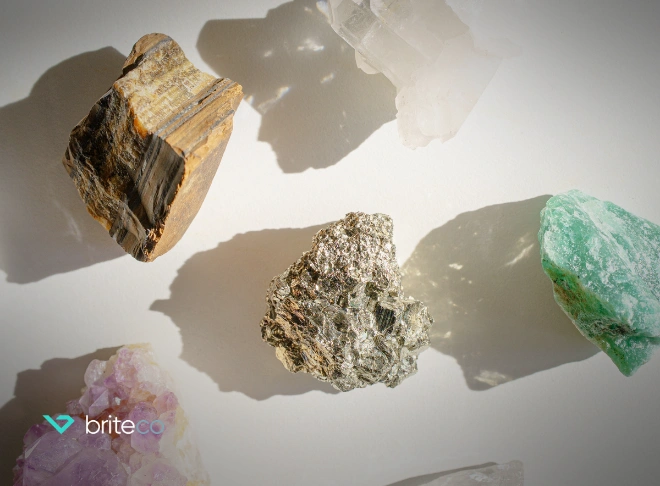
From Craters of Diamonds State Park in Arkansas to Crystal Park in Montana, there are quite a few parks and public mines around the United States where you can dig up your very own, real gemstones, straight from the Earth.
While you might think of hands-on, physical mining as a thing of the past, there are actually lots of mining hobbyists around. The activity is technically called “rockhounding”, and those invested travel far and wide to visit specific spots hoping to find a gemstone of note. Take Scott and Jennifer Freitas, who, in the summer of 2025, unearthed a 3.36-carat white diamond during one such excursion.
Curious to give it a try? Grab your pickaxe (yes, you may actually need a pickaxe in some situations) and head to one of these 6 public gemstone mines to hunt for your very own hidden treasure. Take note of our tips for having the best, most successful experience possible.
What You Will Learn
6 Public Gemstone Mines Where You Can Find Hidden Treasures
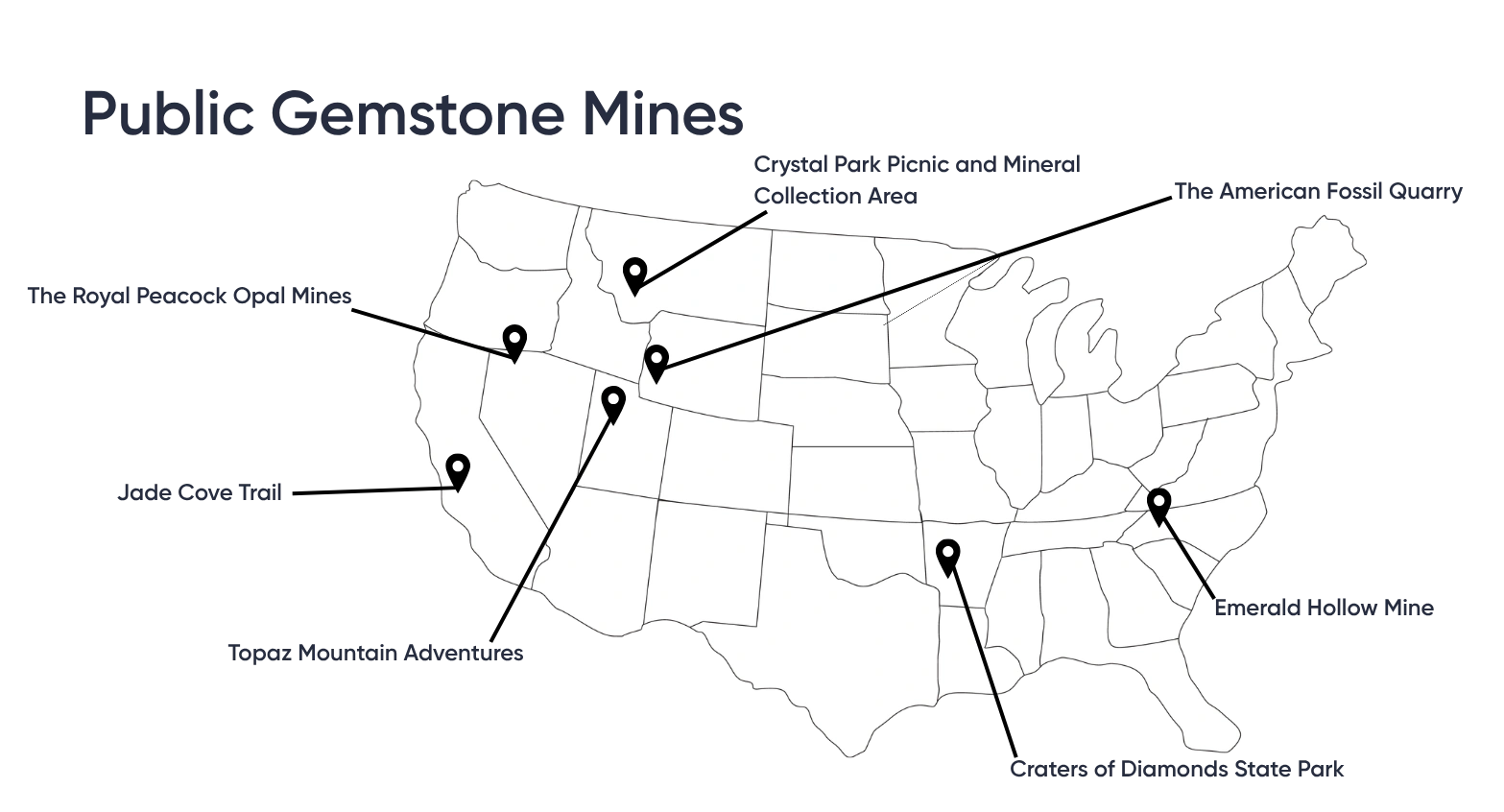
1. Craters of Diamonds State Park
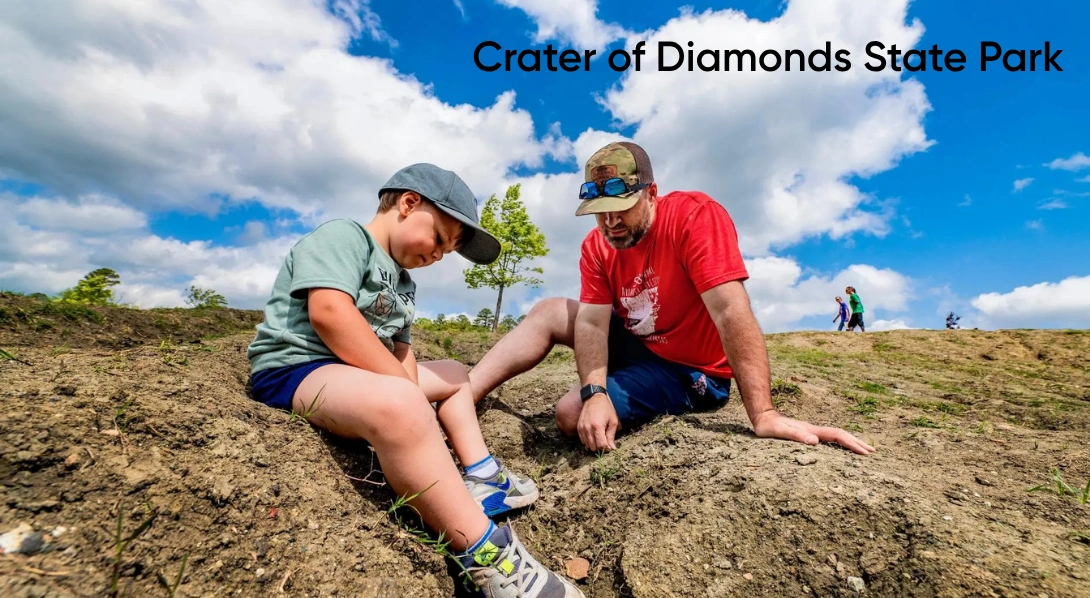
Probably the most well-known public mining spot, Craters of Diamonds State Park in Murfreesboro, Arkansas, is, as the park says, the “only place in the world where the public can search for real diamonds in their original volcanic source.”
Visitors are encouraged to bring their own mining equipment (that’s where that pickaxe is going to come in handy), but you can also rent tools from the park. Then, you head out to the 37-acre volcanic crater surface to have a gander. In addition to white, yellow, and brown diamonds, you can also find other gemstones at the park, including amethyst, garnet, jasper, agate, and quartz. The best part? Whatever you find is yours.
Your chances of finding something are actually pretty good, too. Visitors have uncovered more than 35,000 diamonds since the site’s designation as a state park, including, most notably, the largest diamond ever found in the United States: Uncle Sam, weighing in at more than 40 carats.
2. Emerald Hollow Mine
Care more for emeralds than diamonds? The world’s only public emerald mine is located in Hiddenite, North Carolina.
Emerald Hollow Mine offers three mining experiences. You can saddle up to the sluiceway and wash through buckets of soil taken from the mine, prospect directly in the creek running through the property, or dig in one of the designated areas. All tools are included in your permit price.
In addition to emerald, other stones you can find here include aquamarine, sapphire, garnet, topaz, amethyst, citrine, rutile, tourmaline, quartz, and hiddenite. The latter was named such because it’s a stone you can only find in Hiddenite, North Carolina, and it really is a sight to behold.
3. The Royal Peacock Opal Mines
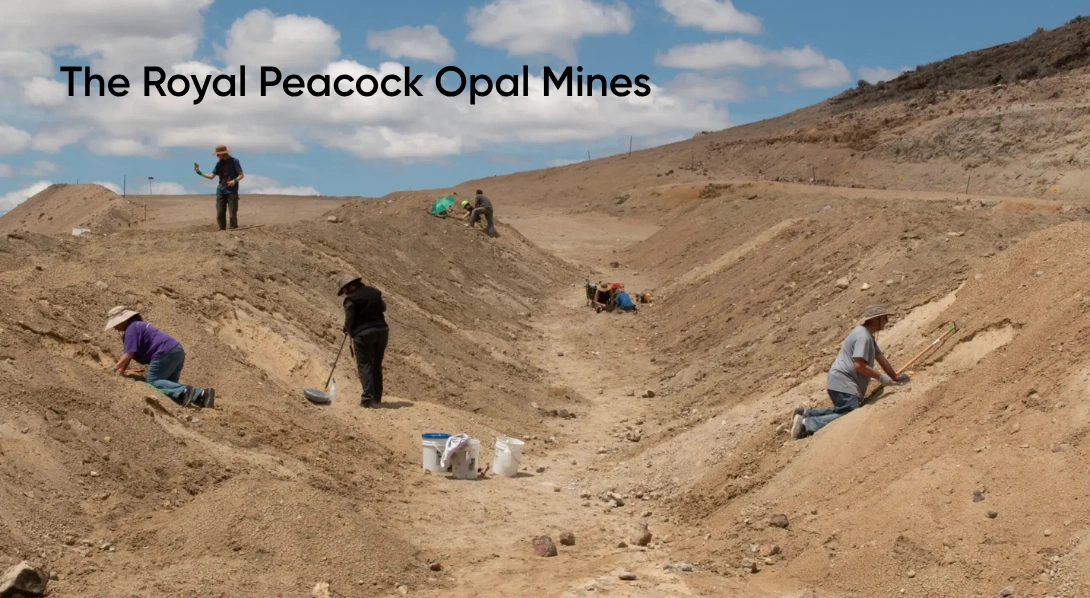
In Denio, Nevada, you can mine for opals throughout the summer at the Royal Peacock Opal Mines, weather permitting. You’re encouraged to bring your own gear, including picks, shovels, rakes, and buckets, though a limited amount of supplies is available on site for rental, too.
The mine touts that it’s the world’s only known source of fluorescent opal, which appears green under black lights, as well as claims that it produced the 130-pound gingko log opal, one of the largest opals ever discovered.
There are also accommodation options on site, in the event that you’re considering an extended adventure.
Can’t make it to the Royal Peacock during its open season? There are other opal mines scattered throughout the rest of Nevada that are definitely worth exploring.
4. Topaz Mountain Adventures
In Delta, Utah, Topaz Mountain Adventures offers recreational mining and prospecting tours, including both public and private tours. During a tour, your guide will take you to the best claim sites, made possible thanks to recent blasting and digging.
Keep your eyes peeled, and you may just find topaz or bixbyite. If you do, these museum-quality specimens are yours to keep.
5. Crystal Park Picnic and Mineral Collection Area
An area under the purview of the National Forest Service, Crystal Park sits at about 8,000 feet in elevation in southwest Montana. There, quartz crystals are scattered across a 220-acre site, with 30 acres opened for digging at one time. Guests are invited to come out and search for smoky quartz and amethyst, among other varieties.
While some of the above rockhounding locations are more built up as tourist sites, Crystal Park is relatively low-key, with facilities limited to picnic areas, toilets, and an ADA-accessible paved trail.
6. Jade Cove Trail
While not an official mining site or park, Jade Cove Trail in Big Sur, California, is a moderate hiking trail that’s well known for being a good spot to hunt for jade.
The cove is protected by the National Oceanic and Atmospheric Administration, so you can’t actively dig here. However, if you see a piece of jade that’s easily accessible, you’re permitted to take it home without repercussion.
Check reviews of the trail before you head out and ensure that it’s within your fitness level.
Bonus: The American Fossil Quarry
As a fun bonus, if you’re spending time traveling around the country in the specific interest of digging things up, you might as well visit the American Fossil Quarry while you’re at it.
Located in Wyoming, the quarry is home to ancient marine life and plant fossils, and you can keep anything that you find.
Do note that the quarry is only open seasonally, during the summer.
Best Practices for Visiting a Public Mine Site
- Make sure you’re dressed appropriately.
Wear sturdy, closed-toe shoes, comfortable clothing, and layers suitable for the weather conditions. You may also need to bring along water, snacks, and a comfortable backpack, depending on how the site is outfitted. - Keep an eye out for color and texture in your environment.
Pay attention to colors and textures that don’t quite “belong” in the landscape. A bright, gem-colored hue or a smooth, glassy texture in the earth may be a sign that there’s something to be uncovered. - Check with the site as to what equipment will be available, and what you might need to bring.
Some places will rent you everything you need and do not allow outside equipment, while others have limited equipment available and encourage you to bring your own gear. - Be patient.
You likely won’t find a gemstone right away, and that’s okay. The actual process is half the fun!
What You Should Never Do When Visiting a Public Mine Site
Every mine site will have its own guidelines, and it’s wise to follow them closely. They’re in place to keep both you and the landscape safe.
Many of these mine sites are in rugged or remote areas; just being on the site can be a safety hazard. This is especially true if you’re in the woods or in the desert, where you might encounter uneven, difficult-to-navigate terrain, as well as wildlife.
By following the rules in place, you can ensure that you fully enjoy your experience and avoid causing any harm to the environment.
Protect Your Gemstone and Jewelry Collection
If you’re one of the lucky travelers who manages to snag a seriously impressive diamond, you’re going to want to protect it. Whether you keep it loose or have it set in a piece of jewelry, specialized insurance policies can help you in the event your precious items are ever stolen, lost, or accidentally damaged.
Get your gemstones and jewelry appraised and then get a quick and easy jewelry insurance quote today.
FAQs About Public Gemstone Mines
What is the Park Where You Can Dig for Diamonds?
Famously, Crater of Diamonds State Park in Murfreesboro, Arkansas, is a great place to dig for diamonds. In fact, this is where the largest diamond ever found in America was dug up!
Are Mines Open to the Public?
Most mines are not open to the public, but you can find some government-overseen parks that offer mining experiences, as well as tourist sites that offer mining.
How Much Does it Cost to Go on a Mining Excursion?
The cost of a mining excursion varies wildly. In some cases, you may only pay a small entry or parking fee at a government-run park where mining is popular. For tourist experiences and tours, though, you could pay $20–$50 for a short experience or over $1,000 for a private, more intensive experience.
Can You Take Crystals from National Parks?
No, in national parks, it is illegal to remove any gems, rocks, or fossils from the environment.
How Do You Know What Kind of Crystal You’ve Found?
You can often have an on-site expert identify your findings if you’re looking for gemstones and crystals at a dedicated site. Otherwise, you can seek out the expertise of an appraiser, jeweler, or even sometimes gem and mineral clubs.
Related Article:
A Complete Guide to Gemstone Certification
Buying Guide:
The Secret to Diamond Buying: Natural vs Lab Grown

UP NEXT: How Does Location Affect Jewelry Insurance Cost?

Author