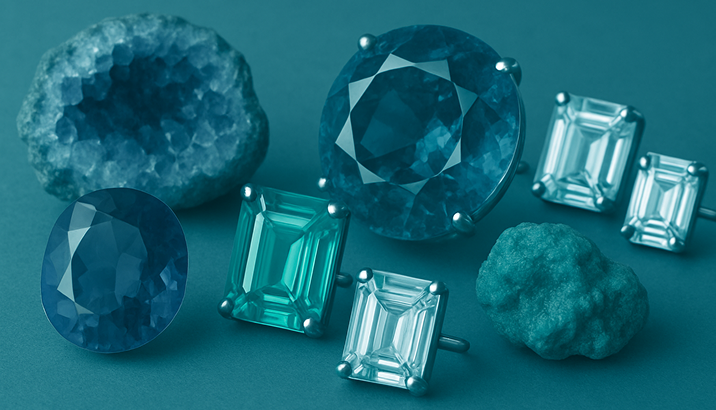
Crystals are among nature’s most stunning creations. From deep purple amethysts to vivid green emeralds, the spectrum of crystal colors is nearly endless. But where do these colors come from, and why do some crystals stay one color while others vary so widely?
Crystals form when minerals solidify from liquids or gases under specific temperature and pressure conditions. Over time, atoms bond in highly structured, repeating patterns that give crystals their distinctive shapes. As they grow, crystals can incorporate other elements or compounds, and the presence, or absence, of these materials can drastically affect their final appearance. Among the most visible results of this variation is color.
What Gives a Mineral its Color?
The color of a crystal is the result of how it interacts with light. When white light hits a mineral, some wavelengths are absorbed by the electrons in the atoms, while others pass through or reflect back. The specific wavelengths that reach our eyes determine the color we perceive.
This absorption and reflection of light is often linked to the movement of electrons between energy levels in atoms. When an atom’s electrons absorb energy from light, they can become “excited” and jump to a higher energy level. The wavelengths absorbed in this process are removed from the visible spectrum, and what remains is the color we see.
Even a small change in a mineral’s chemistry, such as the addition of a trace element, can affect how light is absorbed and result in a completely different hue.
Transition Metals and Their Colorful Effects
One of the biggest influences on crystal color is the presence of transition metals, elements like iron, chromium, copper, manganese, nickel, and cobalt. These elements have loosely held electrons in their outer shells that can easily absorb certain wavelengths of light, producing vibrant colors.
Take emeralds, for example. The base mineral, beryl, is colorless in its pure form. But when trace amounts of chromium are present, they absorb red, orange, yellow, blue, and violet light, leaving only green wavelengths visible. That’s why emeralds shine with such a rich green color, even though chromium isn’t listed in beryl’s core chemical formula.
Even a tiny substitution of a transition metal for a common element in the crystal structure can be enough to transform the crystal’s color entirely. For instance, if you could take all of the chromium out of an emerald and replace it with manganese, you’d get morganite, a pink gemstone popular in wedding jewelry.
- Transition Metals
- Why Are Rubies Red and Emeralds Green? Their Colors Come From the Same Metal in Their Atomic Structure
- Transition Metal Complexes and Color
- Wedding Jewelry Protection
Why Some Crystals Are Always the Same Color
While many minerals can appear in a range of colors, some are remarkably consistent. Metallic minerals like pyrite or galena tend to keep the same appearance due to their uniform composition and structure. Non-metallic minerals can vary more widely, but certain ones, like malachite, are almost always green. This consistency often comes down to the stability of the crystal’s chemistry. For example, malachite always contains copper, which reliably absorbs the same wavelengths of light, producing its signature green color. In contrast, minerals like fluorite or quartz can incorporate a variety of elements and defects, making them more prone to color variation.
Because of this, color alone is not always a reliable identification tool for identifying and appraising gemstones, but it can still offer important clues when combined with other features.
How Oxidation Can Alter Crystal Color
Exposure to the elements can change a mineral’s appearance, especially its color. One major factor in this process is oxidation. When minerals containing metals are exposed to oxygen and moisture, chemical reactions can cause tarnishing or staining. A great example of this is pyrite, which has a bright, metallic luster when fresh but can dull to brown or rusty yellow over time due to oxidation. Similarly, white quartz near streams or iron-rich soil can take on a reddish hue from surface staining. This coloration is often only skin-deep, and a freshly broken edge will reveal the mineral’s true color.
- What Is an Oxidation-Reduction Reaction?
- Oxidation
- Colourful Chemistry: Redox Reactions With Lollipops
How Environment and Weather Shape Crystal and Geode Formation
Crystals don’t form in a vacuum. Their size, shape, and color are all influenced by the surrounding environment. Temperature, pressure, the chemical composition of groundwater, and even the presence of nearby organic material can affect how a crystal grows.
Geodes are a perfect example. These rock cavities are lined with crystal growths, often formed when mineral-rich water seeps into hollow spaces and slowly deposits material layer by layer. Depending on what minerals are present in the water, the resulting crystals will vary in color and size. Over time, environmental factors like weathering, soil composition, and groundwater acidity can also lead to staining, coating, or even the introduction of impurities, all of which contribute to the final appearance of the crystal.
Crystals are the result of complex processes influenced by chemistry, geology, and time. From the role of light and electron behavior to the presence of transition metals, oxidation, and environmental conditions, countless factors shape the final appearance of gemstones and influence their value. Science explains why even two specimens of the same mineral can look entirely different. Whether you’re an avid collector, a casual admirer, a jeweler, or just someone who enjoys the beauty of gemstones, understanding what gives crystals their color can deepen your appreciation for these natural wonders.

Author