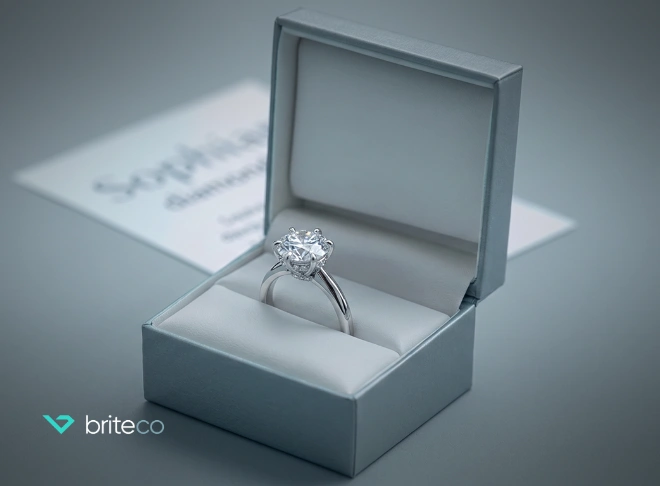
Jewelry insurance protects your jewelry from real-life events like loss, theft, damage, and mysterious disappearance, while a jewelry warranty usually covers defects, repairs, or limited maintenance.
Warranties are linked to the piece’s seller or manufacturer and often require regular jewelry inspections to remain valid, are only valid for a certain amount of time, and/or may only cover certain repairs. Jewelry insurance, meanwhile, is a separate, stand-alone insurance policy designed to help repair or replace jewelry after a covered event.
Jewelry insurance vs. warranty:
- Warranty = Helps with defects and maintenance
- Insurance = Helps with loss, theft, damage, and disappearance
- Many valuable pieces need both
Keep reading for BriteCo founder and CEO Dustin Lemick’s thoughts on warranty vs. jewelry insurance in terms of coverage, cost, and claims, and how to choose between the two.
What You Will Learn
- Insurance Vs. Warranty
- What is a Jewelry Warranty or Care Plan?
- What is Jewelry Insurance?
- Jewelry Warranty Vs. Insurance: Direct Comparison
- Coverage Breakdown: What Each One Protects
- Engagement Ring Warranty Vs. Insurance
- Store Warranty, Extended Warranty, and Jewelry Care Plans: Are They the Same?
- Homeowners/Renters Insurance Rider Vs. Stand-Alone Jewelry Insurance
- Cost: Jewelry Insurance Vs. Warranty
- Appraisals, Receipts, Photos, and Maintenance Records
- Claims Process: Warranty Claim vs Insurance Claim
- Common Pitfalls and Red Flags
- Do You Need Both Jewelry Insurance and a Warranty?
- Jewelry Insurance Vs. Warranty | FAQs
- Jewelry Insurance Vs. Warranty: Final Recommendation
Insurance Vs. Warranty
If you’re weighing up jewelry warranty vs. jewelry insurance, it’s important to be mindful of the difference between the two. Warranty protects you if there are problems with the product, while insurance provides financial protection if something happens to the product.
- Jewelry warranty: A warranty or care plan that is usually a seller’s or manufacturer’s promise to repair certain defects or provide limited services under specific rules
- Jewelry Insurance: A policy that can cover financial loss related to common risks such as loss, theft, damage, and mysterious disappearance
| Does It Cover…? | Warranty | Insurance |
|---|---|---|
| Product Issues | Yes | Likely not |
| Unexpected Events (like accidental damage or theft) | Never | Yes |
| Repairs or Maintenance | Sometimes | Sometimes |
| Replacement | Rarely, under limited, specific circumstances | Yes, in the event of a covered claim |
What is a Jewelry Warranty or Care Plan?

A jewelry warranty is a service agreement from a retailer or manufacturer that may cover manufacturing defects, repairs, inspections, cleaning, or routine maintenance services for a limited time (even with extended warranties) or under specific conditions.
Retailer or manufacturer warranty coverage typically includes:
- Manufacturing defects
- Loose prongs/settings if within terms
- Cleaning/inspection services
- Resizing or repair services
“Service plans are valuable in that they might cover some wear and tear,” Lemick says. “They might cover stones popping out, faulty locks, or faulty clasps. These are things that insurance might not cover.”
Note that warranty coverage varies heavily. For example, some warranties that cover routine maintenance may require annual inspections. Some warranties may be non-transferable, or they may be voided if unapproved work is performed on the jewelry (such as by a third party).
What is Jewelry Insurance?
Specialized jewelry insurance is jewelry coverage designed to help repair or replace pieces after covered events and unforeseen circumstances such as loss, theft, accidental damage, or mysterious disappearance.
How does jewelry insurance work? In most cases, it will…
- Cover theft if, say, your engagement ring is stolen during a burglary or from a hotel room while traveling
- Cover damage, so long as it’s accidental rather than intentional
- Cover loss and mysterious disappearance, when you’re just not sure how a piece went missing
“Mysterious disappearance is the largest cause of loss,” Lemick says. “If you don’t have that coverage, then you’re really not fully covered.”
Jewelry Warranty Vs. Insurance: Direct Comparison
A warranty helps maintain jewelry; insurance protects its value if something happens to it.
| Jewelry Warranty | Jewelry Insurance | |
|---|---|---|
| Primary Purpose? | Repairs or replaces jewelry in the event of a manufacturer’s defect, and covers some routine maintenance | Provides comprehensive protection of jewelry’s financial value in the event of unexpected circumstances, such as loss, mysterious disappearance, theft, or accidental damage |
| Provided By? | The jewelry brand or seller | A third-party stand-alone insurance provider |
| Covers Defects? | Yes | No |
| Covers Maintenance? | To a degree | Sometimes |
| Covers Theft? | No | Yes |
| Covers Accidental Loss? | No | Yes |
| Covers Mysterious Disappearance? | No | Yes |
| Covers Accidental Damage? | No | Yes |
| Requires Inspections? | Often | No |
| Needs Appraisals and Similar Documentation, Such as Receipts or Photos? | No | Yes |
| Where to Make a Claim? | With the brand or jeweler | Often online, via the claims portal |
| Best for? | Ensuring a piece of jewelry can be repaired if something goes wrong related to its manufacture, as well as keeping up with maintenance | Reducing financial risk for valuable pieces |
If a piece of jewelry is valuable enough that replacing it after a loss or theft would hurt financially, a warranty alone will not provide truly comprehensive coverage, and you need the complete protection that stand-alone jewelry insurance offers.
Before choosing any warranty or jewelry coverage, be sure to read the fine print and understand exactly what you’re getting.
Coverage Breakdown: What Each One Protects
The easiest way to compare coverage is to look at real-life scenarios that might require using either your warranty or jewelry insurance.
A Manufacturing Defect
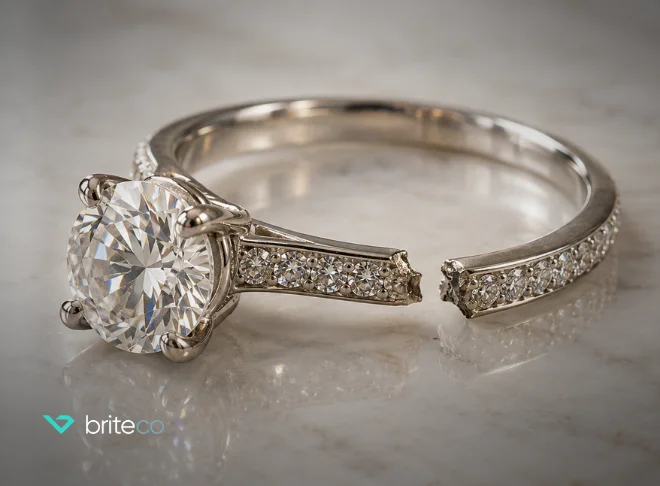
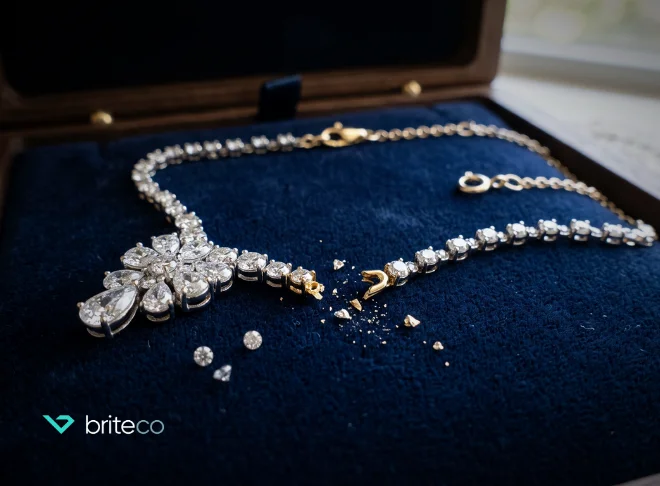
Warranties primarily cover manufacturing defects, so if your watch or necklace breaks due to a manufacturing issue, you’d use your warranty.
Loose Prong on a Ring
Coverage depends on the cause of the loose prong and the terms of your warranty. If it’s due to a manufacturing defect (such as an improperly placed prong), the warranty would apply. Some retailers also offer services like prong tightening as part of their complimentary maintenance, as do some jewelry insurance providers.
Routine Cleaning
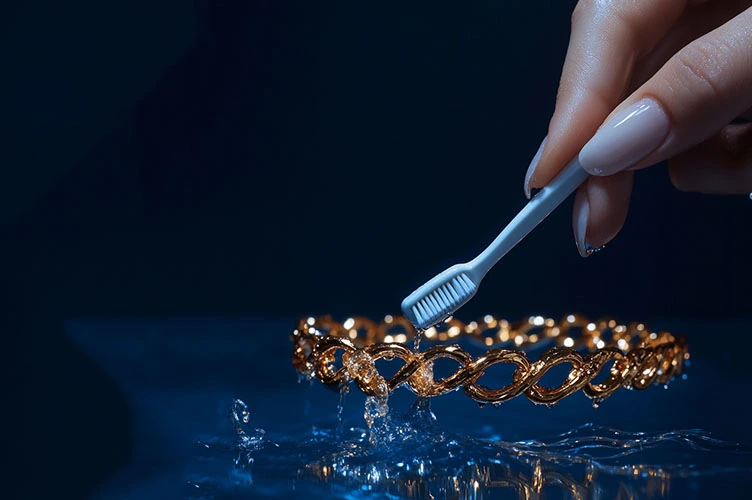
Many jewelry warranties include routine cleaning as part of their terms.
Lost Ring
If you lose a ring, your warranty won’t help. Specialized insurance is required.
Stolen Ring
Likewise, warranties do not cover stolen jewelry. Specialized insurance, however, can help you replace the stolen ring with one of the same type.
Lost Center Stone
Warranties often focus on defects, settings, inspections, or maintenance, so they may not cover a missing center stone. An insurance policy, however, will.
Mysterious Disappearance
Warranties will not assist with mysterious disappearance, but jewelry insurance does. The mysterious disappearance is best explained as jewelry vanishing for no apparent reason.
Accidental Damage
Specialized jewelry insurance covers repairs related to accidental damage, while warranties do not.
Normal Wear and Tear
Neither a warranty nor jewelry insurance (which is designed to cover sudden events) typically covers normal wear and tear.
Engagement Ring Warranty Vs. Insurance
Engagement ring warranties often cover seller-approved maintenance or defects in a new ring, while engagement ring insurance is meant for larger real-life losses, such as theft, accidental damage, or disappearance.
A warranty may also not apply to an engagement ring’s center stone or to prongs or the setting. You may also need to have any necessary repairs completed at specific locations, as third-party repairs will permanently void the warranty.
“A lot of them have these gotchas where you have to bring your item back to the store, like once every six months, once every 12 months,” Lemick says. “If you miss even once, then your warranty’s void. You’re going to want to make sure you’re aware of things like that.”
When considering any type of coverage for an engagement ring, a wedding ring, or your wedding bands, ask the following questions:
- Is the center stone covered?
- What happens if the ring is lost or stolen?
- Are inspections required to keep coverage valid?
Store Warranty, Extended Warranty, and Jewelry Care Plans: Are They the Same?
A care plan, extended warranty, or lifetime warranty may all sound like insurance, but these are usually service agreements rather than full loss-and-theft coverage.
- Store warranty: Many jewelers offer a store warranty that covers manufacturing or craftsmanship defects for a limited time (typically a few years) and is subject to the jeweler’s terms. For example, if you go to a third party for repairs, most warranties are voided, or warranties may only be available to the original purchaser.
- Extended warranty: An extended warranty may offer additional protection for a longer period, with potential features such as covered maintenance or repairs, but it must be purchased separately.
- Lifetime care or protection plan: A jewelry care plan provides lifetime maintenance, cleanings, and basic repairs, subject to certain conditions, such as bringing the item in for regular inspections.
Do not assume that any type of jewelry protection plan covers theft, loss, disappearance, or major accidental damage unless the written terms stipulate that this is the case. Most protection plans do not function as true jewelry insurance. Before relying on such a plan, read the fine print and check for any hidden clauses.
Homeowners/Renters Insurance Rider Vs. Stand-Alone Jewelry Insurance
If you decide a warranty does not offer sufficient protection for your jewelry, the next question you’ll likely ask is if you should use homeowners insurance or renters insurance coverage, a rider on your existing homeowners or renters policy, or stand-alone jewelry insurance to protect your pieces.
When it comes to whether homeowners insurance covers jewelry sufficiently, it really depends on your jewelry’s value. A base renters or homeowners policy will likely cover your jewelry to a degree, but there are limits.
For example, it may only cover your pieces in cases of theft or natural disasters, but not in cases of mysterious disappearance, and it may pay out only a fraction of your jewelry’s worth, while also requiring you to pay a deductible. Additionally, a claim could negatively impact your policy in the future.
You can add on a scheduled rider for valuable items, which will increase coverage, but you can still see those negative impacts, like increased premiums, if you make a claim.
In contrast, stand-alone jewelry insurance like BriteCo provides coverage that standard homeowners and renters policies often lack, paying out the full replacement or repair cost of jewelry in a broader range of circumstances, including theft, mysterious disappearance, and accidental damage.
What’s Best?
- Standard homeowners and renters insurance is best for low-value, low-risk jewelry.
- A jewelry rider is suitable for those who want a convenient policy bundle and are unbothered by the potential impact on claims.
- Stand-alone jewelry insurance is best for jewelry worth more than $1,000–$2,000, and for worldwide coverage
Cost: Jewelry Insurance Vs. Warranty
A warranty may feel cheaper because it is often bundled with your jewelry purchase and you pay upfront, but jewelry insurance offers broader coverage limits and protects you from paying more in the long run in the event of a loss or theft, when you need to fully replace a piece.
Warranties may be included in your purchase at no cost, sold as a one-time add-on for a flat fee, or sold as an extended service plan. The cost can range.
In contrast, how much does jewelry insurance cost? Jewelry insurance is priced based on your item’s appraised value, your location, chosen deductible amounts, and coverage terms. BriteCo’s engagement ring insurance costs approximately 0.5%-1.5% of a ring’s appraised value per year.
Even as affordable as this is, though, it may still feel like you’re paying higher premiums as compared to the flat fee that comes with some warranties.
So, what are you getting for that price?
- Coverage that will help you recoup the full value of your piece after you make a claim
- Protection against theft, mysterious disappearance, loss, and accidental damage
- No deductibles or out-of-pocket costs when making a claim
- No hits to your homeowners or renters insurance premiums when making a claim
When comparing jewelry insurance to warranties and homeowners or renters riders, you’re getting far more for your money.
Appraisals, Receipts, Photos, and Maintenance Records
Making either a jewelry insurance or warranty claim will require some paperwork, but the necessary paperwork will differ depending on which type of claim you’re making.
Necessary documentation for a warranty claim:
- Your purchase receipt
- Warranty card or warranty registration
- Inspection records for your affected jewelry items
- Maintenance records (such as if you had your rhodium plating reapplied)
- Repair history showing your fine jewelry has not been repaired by a third party
Necessary documentation for a jewelry insurance claim:
- Documents from having your jewelry appraised, or a detailed receipt
- Photos of the jewelry
- A thorough item description
- Proof of ownership
- A police report (if the claim is for a theft)
Find a jewelry appraisal near me if you’ve yet to secure this necessary documentation.
Claims Process: Warranty Claim vs Insurance Claim
When making a jewelry claim, warranty claims usually go back to the jeweler or manufacturer, while insurance policy claims go to the insurance companies.
To make a warranty claim:
- Verify your warranty terms to gauge whether the claim will be accepted.
- Gather and provide all necessary documentation, such as warranty cards and inspection history.
- Follow the seller or manufacturer’s repair process.
To make an insurance claim:
- File your claim online, submitting all documentation and incident details.
- Receive a repair or replacement decision from the insurer based on your policy terms.
- Work with your chosen jewelry to have the piece repaired or replaced.
Learn more about how to file a jewelry insurance claim and receive coverage for your valuable pieces.
Common Pitfalls and Red Flags
The biggest mistake that many buyers make is assuming a warranty, care plan, homeowners policy, and jewelry insurance all protect you against the same risks.
To ensure you have adequate protection, look out for these coverage red flags:
- A warranty is non-transferable
- Mandatory frequent inspections are required
- Coverage does not apply to the center stone
- No coverage for loss or theft
- The protection wording is vague
- High or hidden deductibles
- Low sub-limits
- No mysterious disappearance coverage
- Appraisal and update requirements
If any of these red flags apply to your current jewelry protection, it’s likely that you have limited coverage that’s putting you at risk, and additional coverage is necessary. As you peruse your coverage options, always carefully read the written terms, rather than trusting sales and marketing language.
Do You Need Both Jewelry Insurance and a Warranty?
For valuable jewelry, the strongest protection is often a blend of both: a warranty for maintenance or defects, and stand-alone jewelry insurance for loss, theft, damage, or disappearance.
| Jewelry Type | Do you need a warranty? | Do you need insurance? |
|---|---|---|
| New, low-value fashion jewelry | If it automatically comes with your purchase, it definitely doesn’t hurt | Not typically, unless the cost of repairing or replacing the jewelry would be a financial hit; however, this is not the case for most low-value fashion jewelry |
| An engagement ring worn daily | Yes, to ensure repairs can be quickly made if there is a manufacturing-related issue | Yes, as engagement rings are generally worth more than your existing homeowners or renters insurance would pay out in the event of a claim, and daily wear increases risks |
| A luxury watch | Yes, to ensure repairs can be quickly made if there is a manufacturing-related issue | Yes, as luxury watches are generally worth more than your existing homeowners or renters insurance would pay out in the event of a claim, and regular wear increases risks |
| An inherited high-value heirloom | No, a warranty would typically not be available for an heirloom | Yes, as no other coverage will apply to the piece’s full value and to all risks |
So, is jewelry insurance worth it? If replacing the piece out of pocket would hurt your finances, prioritize specialized stand-alone insurance, even if you already have a warranty.
Jewelry Insurance Vs. Warranty | FAQs
Is a jewelry warranty the same as insurance?
No, a jewelry warranty is not the same as insurance, as the former is provided by the seller or brand and provides repairs in the event of a manufacturer’s defect, while the latter is offered by specialized insurers who pay to repair or replace your jewelry in the event of theft, loss, mysterious disappearance, or accidental damage.
Does a jewelry warranty cover theft?
No, jewelry warranties never cover theft.
Does a jewelry warranty cover a lost diamond?
No, typically a jewelry warranty will not cover a lost diamond from, say, an engagement ring, unless the diamond was lost specifically due to a manufacturer’s defect. Check the terms of your warranty and watch for center-stone exclusions.
Does jewelry insurance cover wear and tear?
No, jewelry insurance does not generally cover wear and tear.
Should I buy stand-alone jewelry insurance?
Yes, stand-alone jewelry insurance costs only a small percentage of your jewelry’s value per year (0.5%-1.5%) and will fully cover the cost of repairing or replacing it after a loss, theft, or damage.
Jewelry Insurance Vs. Warranty: Final Recommendation
A warranty covers certain product defects, maintenance, and seller-approved repairs, while jewelry insurance protects against real-life risks like loss, theft, damage, and mysterious disappearance. If your jewelry is valuable, sentimental, or worn often, rely on your warranty for maintenance, but then also insure it for greater financial protection.
“When you want really full, comprehensive coverage for expensive items that goes beyond damaged items, then you definitely want insurance,” Lemick says.
- Read your warranty terms to understand how you’re currently protected.
- Gather your appraisal, receipt, and photos.
- Then, get your jewelry insurance quote today.
Check your jewelry insurance price now.
Appraisal Tool:
The Easiest Way to Get a Professional Jewelry Appraisal Valuation!
UP NEXT: Why Waiting to Buy Insurance Puts Your Jewelry at Risk

Author