Common reasons why people delay insuring their jewelry include having false confidence in their existing homeowners or renters insurance, cost concerns, difficulty getting an appraisal, uncertainty about who should actually insure the item, sentimental hesitation, and simple procrastination.
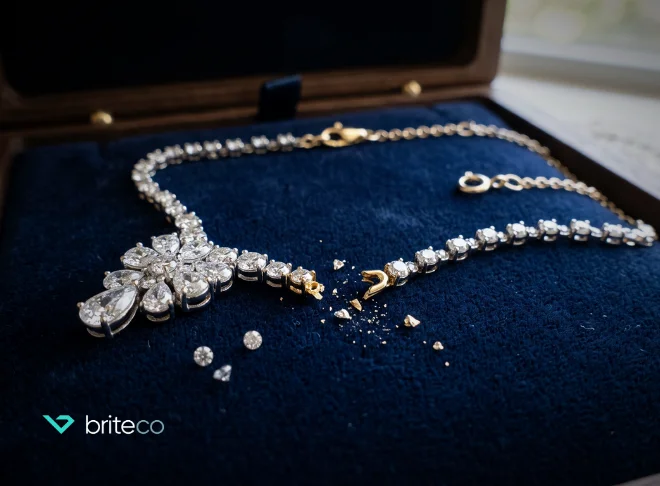
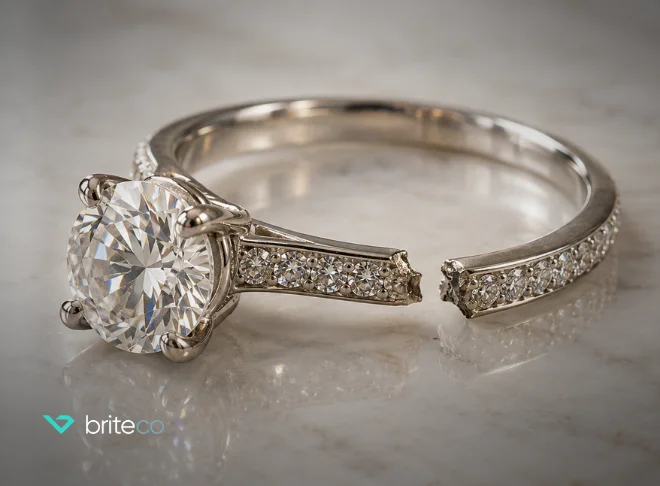
However, the longer you delay insuring jewelry, the more your jewelry (and finances) are at risk. Dedicated jewelry insurance can protect you in the event of accidental damage or mysterious disappearance, as well as if your jewelry is ever lost or stolen, and often with zero deductibles and coverage of up to 125% of your jewelry’s replacement value.
Keep reading as BriteCo founder and CEO Dustin Lemick explains the benefits of jewelry insurance coverage and the primary reasons some jewelry owners may delay insuring jewelry, including:
- Incorrect assumptions about homeowners/renters insurance
- Cost concerns
- Apprehension about appraisals and documentation
- Engagement ring insurance confusion
- Hesitation related to heirlooms or sentimental pieces
- Procrastination
- Underestimating loss, theft, damage, or disappearance risk
Let’s explore why none of these are an ideal reason to wait.
What You Will Learn
- Common Reasons People Delay Insuring Their Jewelry
- The Homeowners Policy Illusion
- Why a Homeowners Claim Can Be a Hidden Cost
- “It’s Too Expensive”: Why the Cost Objection is Usually Bigger Than the Quote
- The Appraisal and Paperwork Roadblock
- Why Engagement Rings Often Go Uninsured
- The Heirloom Problem: When Sentimental Value Makes Action Harder
- The Real Cost of Waiting
- Stand-alone Jewelry Insurance Vs. Homeowners Riders
- How to Stop Delaying and Insure Jewelry Quickly
- Real-World Scenarios Where Delaying Jewelry Insurance Hurts
- FAQs About Delaying Jewelry Insurance
- Conclusion: Waiting Does Not Protect Your Jewelry
Common Reasons People Delay Insuring Their Jewelry
Jewelry owners often delay insuring their jewelry for one of seven common reasons:
- False confidence in homeowners/renters coverage: They think their existing insurance policy is enough to cover their jewelry and risks.
- Cost anxiety: They worry jewelry insurance is going to be just another bill.
- Paperwork or appraisal apprehension: They don’t want to bother with the perceived hassle of getting what’s called insurance appraisals, or other necessary paperwork for a quote.
- Emotional avoidance related to a piece’s sentimental value: Putting a monetary value on a special family piece just feels wrong.
- Confusion over who should insure an engagement ring: Does the buyer or the wearer pay for the insurance?
- Risk minimization: It just doesn’t seem like their jewelry is all that at risk, leaving them asking, basically, is jewelry insurance worth it?
- General procrastination: Life gets busy, so sometimes jewelry insurance isn’t a top-of-mind priority.
“The best time to buy jewelry insurance is as soon as you take ownership of the piece,” Lemick says. “Not after the proposal. Not after the honeymoon. Not after you get back from a trip. As soon as the jewelry is in your possession, it can be lost, stolen, or damaged.”
The Homeowners Policy Illusion
A big misconception is that homeowners insurance and renters insurance automatically provide sufficient jewelry protection, but while an existing homeowners policy or renters policy may provide some jewelry coverage, these policies come with limits, deductibles, exclusions, and future consequences after making a claim. They often do not cover the full value of your jewelry.
Does Homeowners Insurance Cover Lost Jewelry?
Standard home insurance does not cover lost jewelry. You may be able to add a rider/floater to your home coverage that may expand your covered events to include loss, but other coverage limits will still exist.
Why Coverage Limits Create False Confidence
Many homeowners or renters may not read the fine print and realize they only have very limited coverage under their general homeowners or renter policy. For example, while jewelry may be covered under events such as fire or theft, low sub-limits could mean insurance payouts top out at $1,000-$2,000, well under the value of most precious pieces.
Why a Homeowners Claim Can Be a Hidden Cost
Making a jewelry-related claim on your homeowners policy can result in higher premiums later, as well as potential policy non-renewal. Likewise, when it comes to specialty jewelry insurance vs. your homeowners policy, you’ll pay a higher deductible when making a homeowners claim than you would when making a claim on a separate jewelry policy.
| Myth | Reality |
|---|---|
| “My home insurance covers my ring.” | Your home insurance covers your ring to a limited degree, under limited circumstances, and will require a deductible. |
| “A jewelry rider is the same as stand-alone jewelry insurance.” | A jewelry rider exists under your home insurance policy and will affect it in the event of a claim. |
| “I can just file a claim later.” | Many policies have time limits surrounding when you can make a claim. |
“That’s why stand-alone jewelry insurance can make sense for high-value or meaningful pieces,” Lemick says. “It is built around the jewelry itself, not as a small add-on to a broader property policy.”
“It’s Too Expensive”: Why the Cost Objection is Usually Bigger Than the Quote
Many people delay insuring jewelry because they overestimate their jewelry insurance cost. In reality, the premium is often much lower than expected. And the price of insurance will ultimately be much, much less than a protected piece’s replacement cost if it’s ever lost or stolen.
Let’s look at some examples of how much jewelry owners stand to save, if they need to replace a piece of jewelry and are able to make a claim on their stand-alone jewelry insurance policy.
| Jewelry’s Estimated Value | Estimated Annual Premium (at a rate of 0.5%-1.5%) | Out-of-Pocket Replacement Cost Without Insurance | Out-of-Pocket Replacement Cost with a $0 Deductible Jewelry Insurance Policy | Amount Saved Through Jewelry Insurance in the Event of a Claim |
|---|---|---|---|---|
| $5,000 | $25-$75/year | $5,000 | $0 | $4,925-$4,975 |
| $10,000 | $50-$150/year | $10,000 | $0 | $9,850-$9,950 |
| $20,000 | $100-$300/year | $20,000 | $0 | $19,700-$19,900 |
While one’s actual quote depends on policy terms (pricing is subject to underwriting and factors such as value and location), when you consider how much jewelry insurance costs on average, and the way it covers the full replacement value of your jewelry, while also offering inflation protection … well, the math speaks for itself.
The Appraisal and Paperwork Roadblock
Getting jewelry insurance may require having jewelry appraised and compiling some necessary documentation, deterring some jewelry owners, as they assume this process is more complicated than it is. But it’s actually quite simple.
What You Actually Need to Start
- An appraisal or detailed receipt
- Clear photos of the piece
- An item description
- Metal and stone details
- Brand/designer details, if relevant
- A diamond grading report, if available
How to Insure Heirloom Jewelry Without Receipts
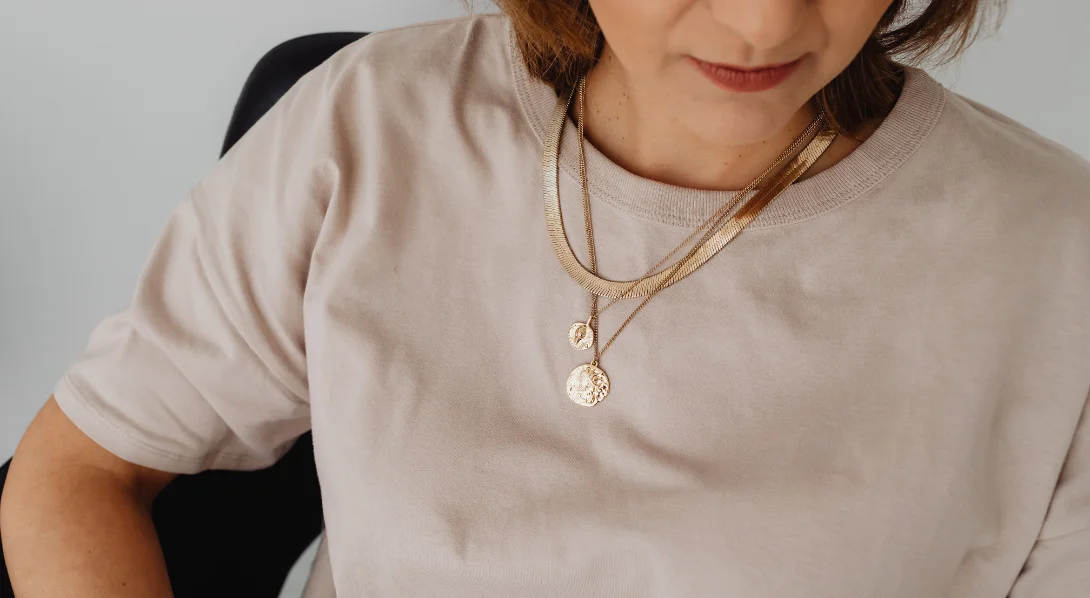
For pieces like heirloom jewelry for which receipts are not available, the best course of action is to seek out a professional appraisal. This thorough document will often provide the majority of details an insurer will require for the underwriting review.
In fact, anytime you’re wondering, do I need an appraisal to get jewelry insurance, it’s probably a smart idea to go ahead and check out appraisers. They’re the best, most credible source for details surrounding your item’s value and what it should be insured for.
Why Waiting for Perfect Paperwork Can Backfire
Waiting for “perfect” paperwork and jewelry documentation can leave your jewelry at risk, as every day without comprehensive protection comes with the threat of loss, mysterious disappearance, theft, or accidental damage.
If you’re unsure if the documentation you currently have on hand is enough for an insurance quote, don’t put it off any longer. Gather whatever proof of value you have, decide on your coverage needs, compare relevant policies and payment options, and then get your quote and start the underwriting process.
Why Engagement Rings Often Go Uninsured
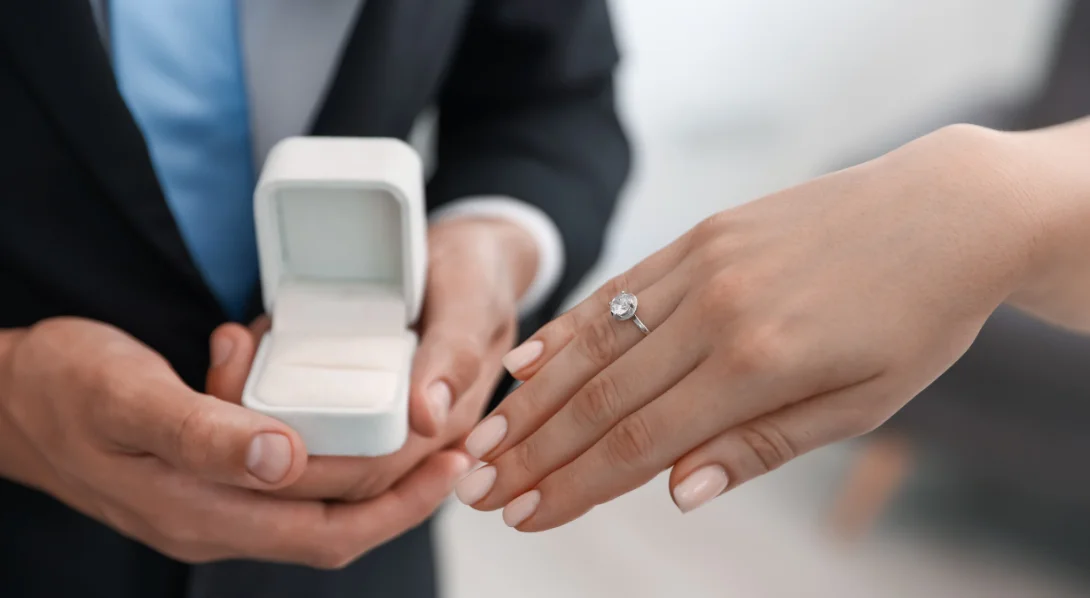
An engagement ring may go uninsured due to confusion surrounding who should pay to insure the ring (the ring buyer or the owner), as well as the tendency to wait until after the proposal has actually taken place to think about coverage.
For full protection, you should start exploring your jewelry insurance options as soon as the ring is in your possession; don’t wait until after the proposal or even the wedding. If it’s a question of who pays for engagement ring insurance, note that either party can pay the premium, and the policy can be transferred over after the proposal, if necessary. But a policy still needs to be secured ASAP.
Who’s Supposed to Insure It?
Anyone can insure the engagement ring. The important thing is to insure the ring as quickly as possible after purchase, to reduce risks.
Why Waiting Until After the Proposal Creates a Gap
A lot can happen to an engagement ring between purchase and proposal — loss, mysterious disappearance, theft, accidental damage — and waiting until after the proposal to purchase insurance leaves the ring and your financial investment vulnerable.
Why Waiting Until the Wedding Is Too Late
While you might be tempted to wait to reach out to an insurance company for quotes until you’re ready to insure both the engagement ring and your wedding bands, the time between engagement ring purchase and the actual wedding can add up to months if not years, and that’s an extremely long time to leave the ring at risk.
So, is it the right time for you to purchase engagement ring insurance?
- You bought the ring but haven’t proposed: Yes, this is the best time to buy engagement ring insurance.
- You’ve already proposed: Still a good time to get coverage.
- You’re newly married: It’s still not too late to purchase insurance against future risks.
- The ring has been upgraded, resized, or reset: Yes, now is a good time to purchase coverage, as well as to update any previously purchased coverage.
The Heirloom Problem: When Sentimental Value Makes Action Harder
For those with family heirlooms, perhaps of historical significance, they may delay insuring jewelry because assigning a replacement value to the piece for insurance purposes can feel impossible or even uncomfortable.
It’s important to note that replacement value is in no way tied to sentimental or emotional value. You’re not reducing Grandma’s expensive jewelry to a dollar amount when you seek out appraisals or coverage quotes; you’re doing your best to document and protect the piece. Insurers require a piece’s accurate and updated financial value in order to provide the right level of coverage for any needed future repairs or replacements.
If hesitancy surrounding insuring the family’s high-value items is more about a lack of receipt or current records (maybe the valuable pieces have been sitting in a safe deposit box or bank vault for decades and you have little information), a current appraisal can document the items’ materials, condition, craftsmanship, and replacement value, easily allowing for coverage.
Plus, you probably have more valuable knowledge of the piece than you think; photos and ownership history can help create stronger documentation.
Not sure what is heirloom jewelry, exactly? It doesn’t have to be something overly expensive or fancy. Any piece passed down through generations can be considered an heirloom.
The Real Cost of Waiting
The cost of waiting to insure jewelry is your jewelry’s replacement cost minus the premium you would pay for full coverage. So, if your jewelry’s replacement cost is $5,000, and you would have paid a $50 premium annually, the cost of waiting could add up to $4,950 in the case of a loss.
Cost of Waiting = Replacement Cost at Risk − What You Saved By Not Paying a Premium
So, sure, waiting to purchase jewelry insurance may save you the cost of a small premium now, but it leaves the full jewelry repair or replacement price exposed.
What Happens if Uninsured Jewelry Is Stolen?
If, for instance, you have a break-in and your jewelry or watch is stolen before you’ve had a chance to update or purchase insurance, you can potentially make a jewelry claim against your homeowners insurance. But you’ll pay a deductible and the payout will only be $1,000-$2,000, on average. That’s much less than is needed to replace most fine jewelry and luxury watches. You’ll have to pay the remaining replacement cost out of pocket.
What if It Is Lost or Mysteriously Disappears?
If your jewelry is lost or mysteriously disappears, you’ll likely not be able to make a homeowners or renters claim.
“Mysterious disappearance refers to jewelry that is missing without a clear explanation,” Lemick says. “Maybe you were running errands and realized your ring was gone. Maybe you got home from dinner and one earring was missing. Maybe you unpacked after a trip and your bracelet wasn’t in your travel case. Those situations happen more often than people think.”
Many homeowners and renters policies offer limited protection for this (and they definitely don’t offer protection for valuable items during worldwide travel). Mysterious disappearance jewelry insurance is necessary to fill in the gap.
What if It Is Damaged?
If jewelry covered by a homeowners or renters policy is damaged (for example, a stone falls out of a ring before you have coverage), it’s typically not protected. Even if you purchase jewelry insurance at a later date, it will not cover previous damage.
The only case in which you might have a hope of coverage is if the damage occurred during an event covered by your homeowners insurance. The policy may offer a small pay-out for jewelry damage resulting from fires, some natural disasters, etc.
Stand-alone Jewelry Insurance Vs. Homeowners Riders
Some jewelry owners delay purchasing a separate jewelry insurance policy because they don’t necessarily understand the differences between a stand-alone jewelry insurance policy, homeowners and renters coverage, and a scheduled rider/floater.
| Coverage Option | Best Fit For | Main Limitation | Why Jewelry Owners May Hesitate to Use It |
|---|---|---|---|
| Standard Homeowners or Renters Insurance Coverage | People with lower-value jewelry who want some protection without purchasing more coverage | Small payouts ($1,000-$2,000) and often does not include accidental damage and loss/mysterious disappearance coverage | Filing a claim could affect future premiums, as well as policy renewal |
| Homeowners Insurance Rider or Floater for Jewelry | Owners of higher-value pieces who already have a homeowners policy and want more protection | Coverage is tied to the homeowners policy, and deductibles and future premium consequences still apply | There’s an added premium cost, and a claim could still impact premiums |
| Stand-alone Jewelry Policy | Individuals with valuable, sentimental, heirloom, frequently worn, or multiple jewelry items | Is a separate policy and premium, and may require an appraisal and certain documentation | Many overestimate the cost, while underestimating how easy it is to get insured |
How to Stop Delaying and Insure Jewelry Quickly
Learn how jewelry insurance works and secure coverage in these six easy steps:
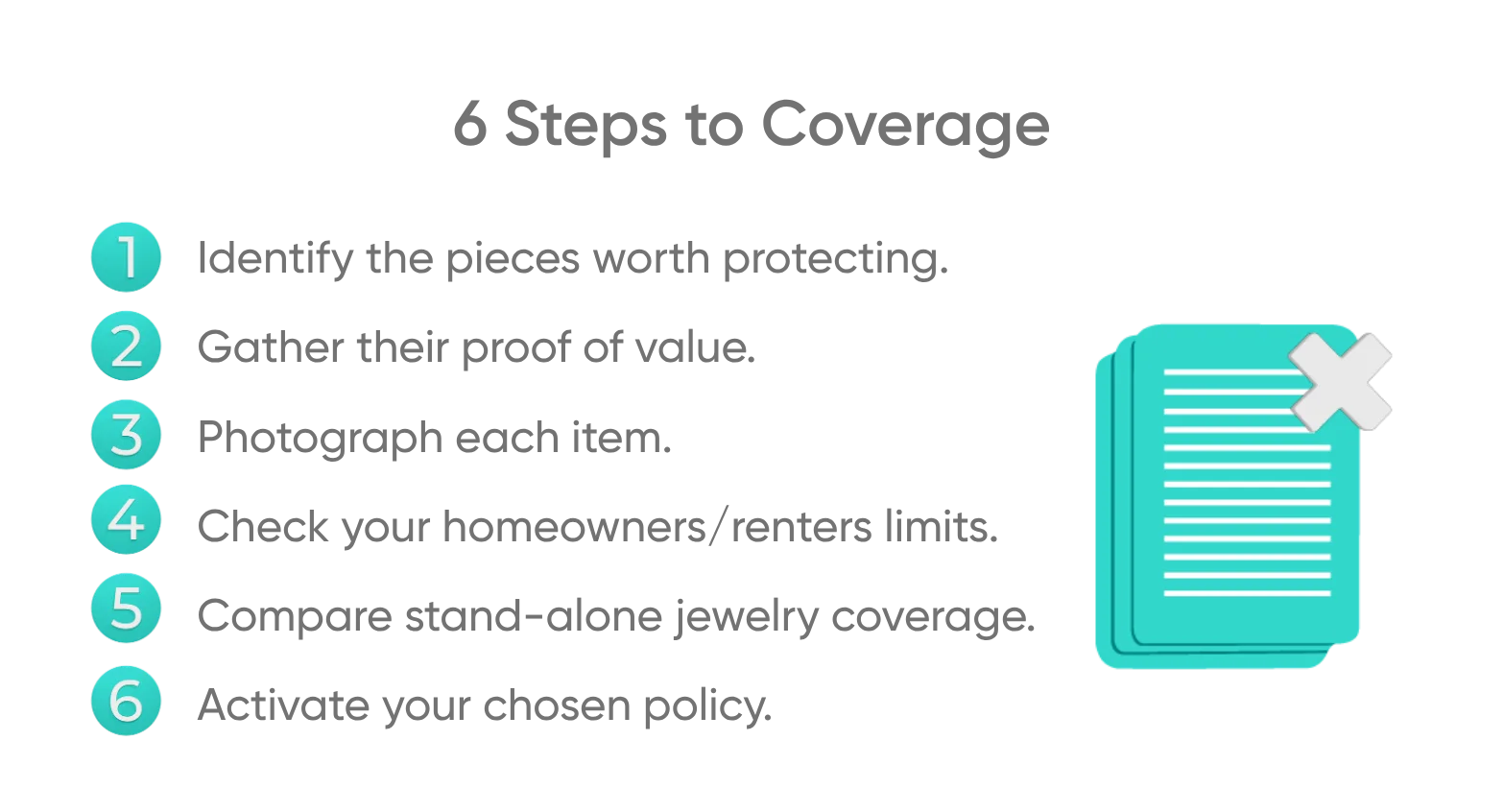
With BriteCo, you can get a quote in as little as 60 seconds, and full coverage in under two minutes.
Real-World Scenarios Where Delaying Jewelry Insurance Hurts
The Lost Engagement Ring
You weren’t sure if you or your fiancé should insure the engagement ring, so you held out on buying an engagement ring policy. You plan a vacation proposal, but lose the ring from your suitcase during transit. Now, you have no ring for the proposal and have to pay for a new one out of pocket. If you’d purchased ring insurance immediately after purchase, you’d be able to secure a new ring for no cost.
(Lost ring? Here’s what to do next.)
The Disappearing Heirloom Necklace
You love your family’s heirloom pearl necklace, but don’t have a lot of documentation surrounding its provenance or value. You’ve been thinking you’d eventually get around to gathering that for insurance purposes. You never did, though, and now the ring has gone mysteriously missing during a move. You’re devastated and wish you’d pursued an appraisal and coverage years ago.
The Homeowners Claim Surprise
You’ve always thought you’d rely on your existing policy for jewelry coverage. After all, how much coverage could you really need? All you have is a luxury watch. Then a burglary occurs and you submit a claim, only to find your homeowners policy comes with a $1,000 deductible and this is going to impact your premium next year. If you’d had a stand-alone policy, you’d be paying no deductible and your premium would be unaffected.
FAQs About Delaying Jewelry Insurance
Why do people delay insuring their jewelry?
People delay insuring their jewelry for many reasons, including cost concerns, difficulty getting an appraisal or proper documentation, and overreliance on homeowners or renters policies.
Is it risky to wait to insure an engagement ring?
Yes, there can be a substantial amount of time between engagement ring purchase and the proposal. Every day you wait to insure the ring, it’s exposed to risks like theft, loss, and accidental damage.
Does homeowners insurance cover lost jewelry?
No. Most homeowners insurance policies do not cover lost jewelry.
How much does jewelry insurance cost?
Jewelry insurance costs typically 0.5-1.5% of the jewelry’s total value, per year. Exact cost will depend on factors such as location. You can get discounts for security measures such as using a home security system.
Can I insure heirloom jewelry without a receipt?
Yes, so long as you have an accurate, professional appraisal, you can generally insure heirloom jewelry even without the original receipt.
Conclusion: Waiting Does Not Protect Your Jewelry
Most delays in insuring jewelry come from incorrect assumptions. Once you understand the low cost of your jewelry coverage options, the necessary documentation, the limitations of homeowners insurance, and the very real-world risks to your jewelry, purchasing specialized jewelry insurance seems like a simple next step.
“It’s not complicated, but it is important,” Lemick says. “Because once jewelry is lost, stolen, or damaged, it’s too late to go back and get the right coverage.”
Jewelry risk begins as soon as you own the item and it’s in your possession, and increases as you wear and travel with the jewelry. Check your jewelry insurance price now.
Get a Quote:
The Easy Way to Insure Your Jewelry - and Save Money!
UP NEXT: Cost to Repair or Replace Jewelry Out of Pocket: What You Might Pay

Author