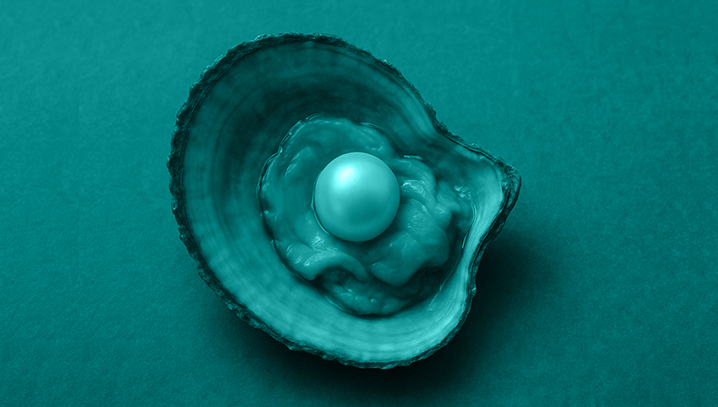
Pearls are among nature’s most beautiful and mysterious creations. Unlike other precious gemstones that are mined from within the earth, pearls are created by living organisms, specifically by mollusks, soft-bodied marine animals that are often protected by a hard shell, such as oysters and mussels. For centuries, pearls have been prized for their lustrous appearance and elegance. But behind their beauty lies a fascinating process grounded in biology and chemistry.
The Science of Pearl Formation
The formation of a pearl begins as a defense mechanism, the automatic protective response of a living organism (in this case, the mollusk) to guard against a perceived threat. When a foreign substance, such as a grain of sand, a parasite, or a stray piece of shell, enters a mollusk’s shell and irritates its soft tissue, the animal responds by secreting nacre, a shiny substance that forms the outer coating of pearls, also known as mother-of-pearl. Nacre consists primarily of calcium carbonate (CaCO3) that’s arranged in microscopic platelets and held together by a protein called conchiolin. The mollusk secretes nacre to surround the irritant in order to protect itself. Over time, thousands of layers of nacre are deposited, and eventually, this forms a pearl. If the mollusk is part of a pearl farm, this is when the gemstone can be harvested.
Different Types of Pearls
Pearls are categorized by their environment and can be formed in either saltwater or freshwater. They can also be categorized by how they are formed. There are two main methods of pearl formation: natural and cultured. Natural pearls form in the wild without human intervention, triggered by the accidental entry of an irritant into the mollusk. This type of pearl is extremely rare and highly valued. Cultured pearls, which make up the overwhelming majority of pearls that are sold today, are formed with human assistance. To do this, pearl farmers surgically implant a nucleus, often a bead made of shell, into a mollusk, which then covers it in nacre to produce a pearl.
Environmental Factors Impacting Pearl Formation
Pearl formation is highly sensitive to environmental conditions. Pollution, especially from heavy metals and plastics, harms the aquatic environments where mollusks thrive. Rising ocean temperatures, an effect of global warming, can also stress mollusks, potentially reducing their ability to produce nacre and affecting the quality of the pearls they produce. Ocean acidification, caused by increased carbon dioxide (CO2) in the atmosphere, lowers pH levels in seawater and reduces the availability of calcium carbonate, making nacre secretion more difficult; it also weakens mollusks’ shells, forcing the animals to use their nacre to repair them. Responsible human intervention and pearl farming practices can help to support mollusk populations and coastal economies. However, poor or irresponsible pearl farming practices, such as overharvesting and habitat destruction, can further harm the environment in which mollusks thrive.
The Historical and Cultural Significance of Pearls
Throughout history, pearls have been valued as symbols of wealth, purity, and social rank. In ancient Rome and Egypt, only the elite could afford to wear pearls, and they were often used in burial rites. In China and India, pearls were sacred and often associated with health, wisdom, and spiritual power.
Pearls have also played a prominent role in fashion and art. In the 20th century, they became iconic symbols of elegance and sophistication, worn by fashion icons including Coco Chanel, Grace Kelly, and Jackie Kennedy. Today, pearls remain popular in modern fashion and ceremonial jewelry. By understanding the science behind pearls, we can appreciate not just their beauty but also the intricate biological and environmental systems that create them.
- Pearls and Other Organic Gems
- Intro to Mollusks
- Pearl Oysters
- How Pearls Get Their Color
- Natural and Cultured Pearl Formation
- How Do Pearls Form?
- How Might Oysters Impact Materials Used in Solar Panels and Spacecraft?
- The Culture of Freshwater Pearls
- Marine Pearl Farming
- A History of the Cultured Pearl Industry
- Find a Local Jewelry Appraiser
- Pearls: Background, Growth, and the Pearl Industry
- Pearls: What They Are and How They Are Formed
- Jewelry and Wedding Insurance
- Mollusk-Made Gems
- How Do Oyster Makes Pearls?

Author