Types of Meteorites
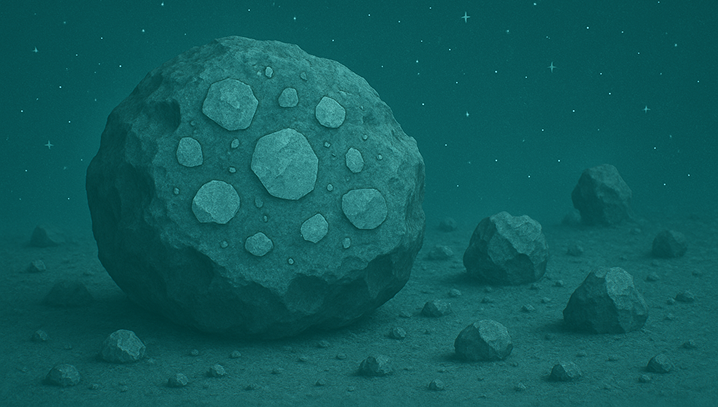
Meteorites are classified into three main types, each with unique identifying characteristics:
- Iron Meteorites: Composed almost entirely of metal
- Stony-Iron Meteorites: Contain nearly equal parts metal and silicate crystals
- Stony Meteorites: Primarily made up of silicate minerals
Each of these three categories can be further divided into subtypes depending on several factors, including their mineral composition, chemistry, and structure.
- Meteorite Identification and Types
- Exploring the Three Types of Meteorites
- Meteorite Identification
- Space Debris: Meteorites and Meteors
- Getting a Meteorite Classified
Iron Meteorites
Iron meteorites provide valuable insight into the formation and evolution of planetary cores. They are differentiated meteorites made up mostly of iron-nickel metal along with lesser amounts of sulfide and carbide minerals. It’s thought that iron meteorites originate from the metallic cores of asteroids that melted early in their existence due to the heat produced from radioactive decay. Dense iron sank to the middle, forming the metallic core, which is similar to the internal structure of Mercury, Venus, Earth, and Mars.
A hallmark of iron meteorites is their distinctive Widmanstatten pattern, a crystalline structure of iron-nickel alloy that reveals unique bands formed by different concentrations of nickel. Variations in texture and mineral makeup have led to many recognized subtypes within this group.
- Iron Meteorites
- Iron Meteorite “Fingerprints” Offer Important Details About Planet Formation
- Iron Meteorites Teach Us About the Early Solar System
Stony-Iron Meteorites
Stony-iron meteorites are a visually interesting class of meteorites that are composed of near-equal parts silicate minerals, including semiprecious gems, and iron-nickel metal. They are split into two primary subtypes: pallasites and mesosiderites.
Pallasites
Pallasites feature large, olive-green crystals of olivine, a magnesium-iron silicate, embedded in a metal matrix. These olivine crystals may appear individually or in clusters and can form vein-like patterns within the metal.
How pallasites formed is still debated, but one theory suggests that they formed in differentiated asteroids, capturing the boundary between the iron core and the olivine-rich mantle. If this is true, these unique stony-iron meteorites offer important clues about the structure and formation of Earth and other rocky planets. A second theory suggests that pallasites may have formed from impact-related melting, citing their abundance compared to olivine-rich meteorites in the asteroid belt.
Mesosiderites
Mesosiderites are breccias, made up of cemented fragments of rock and metal. These centimeter-sized fragments of igneous silicates and metal clasts form when debris from asteroid collisions is fused together. These collisions can mix molten metal with solid rock, making mesosiderites integral to the understanding of both the history of meteorites and the processes behind asteroid differentiation and melting.
Stony Meteorites
Stony meteorites, composed mainly of silicate minerals, are the most commonly found type of meteorite and fall into two broad categories:
- Chondrites: Some of the oldest unmelted materials in our solar system
- Achondrites: Igneous rocks from differentiated meteorites that originated from asteroids, the moon, and Mars
- The Definition of a Stony Meteorite
Chondrites
Chondrites are among the oldest known materials in our solar system, dating back more than 4.5 billion years. What’s really unique about these meteorites is that unlike most matter in space, they have never undergone melting, preserving their original structure.
These meteorites are made up of small chondrules, round droplets of silicate minerals, like olivine and pyroxene, mixed with grains of sulfides and iron-nickel metal. The term “chondrite” comes from the Greek word “chondres,” which means “sand grains.”
Different varieties of chondrites exist, each distinguished by their mineralogy and parent bodies. They represent the raw material from which our solar system formed and have remained largely unaltered, unlike the rocks of larger, geologically active planets.
Carbonaceous chondrites, the most basic type of chondrite, are rich in water, sulfur, and organic compounds. These meteorites may have played a critical role in delivering the volatile and valuable ingredients needed for early life to Earth.
Achondrites
Achondrites can provide essential information about planetary formation, internal structures, and geological evolution. They are igneous meteorites that were once molten and then cooled, and they may include samples from asteroids as well as the moon and Mars. Through the process of igneous differentiation, molten rock cools and crystallizes to form distinct concentric layers: the core, the mantle, and the crust, just like the rocky planets in our solar system.
Additional Readings on Meteors, Meteorites, and Space Exploration
- Meteorites and Meteor Wrongs
- Facts About Meteors and Meteorites
- Meteorites Are Messengers From Space
- Learn About Meteorites
- An Introduction to Meteorites
- What Is a Meteorite?
- Meteorites: Rocks From Space
- A Lesson on Comets, Meteors, and Meteorites
- Meteors and Meteorites for Kids
- Jewelry Insurance
- Engagement Ring Insurance
- Meteoroids, Meteors, and Meteorites
- Let’s Learn About Meteorites
- Meteors: Nature’s Fireworks
- One Student’s Field Trip to Learn About Meteorites
- The Differences Between Asteroids, Comets, Meteors, and Meteorites
- Why Do We Observe Meteors?
- Online Jewelry Appraisals
- An Activity for Students Learning About Meteoroids, Meteors, and Meteorites
- What Is a Meteor Shower?
- Wedding and Jewelry Insurance
- Physical Characteristics of Meteorites
- Local Jewelry Appraisal
- Have I Found a Meteorite?

Author