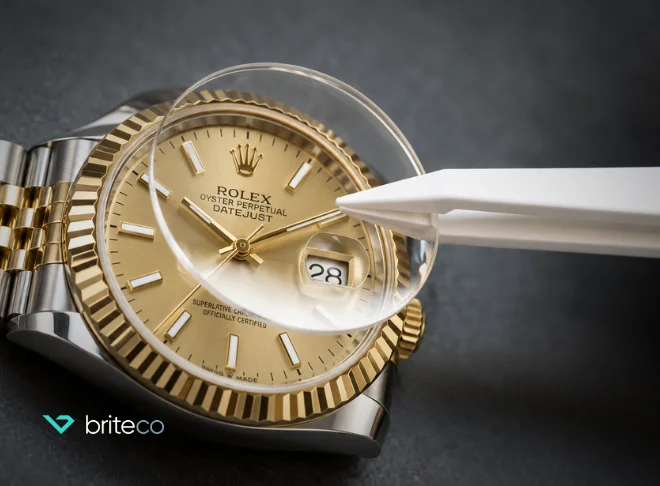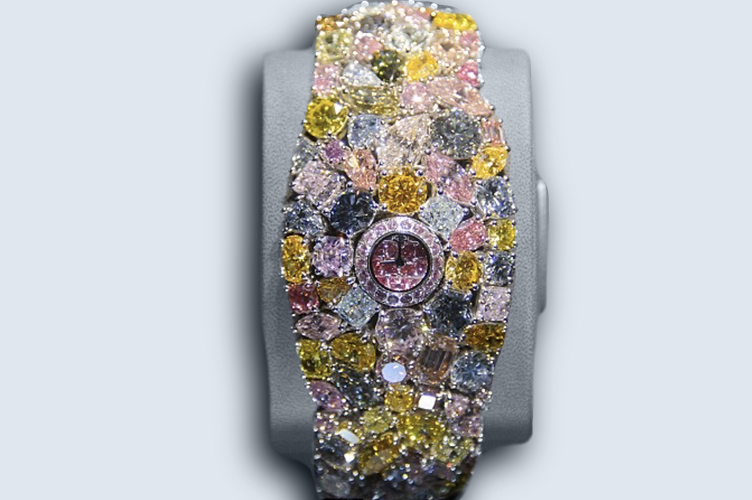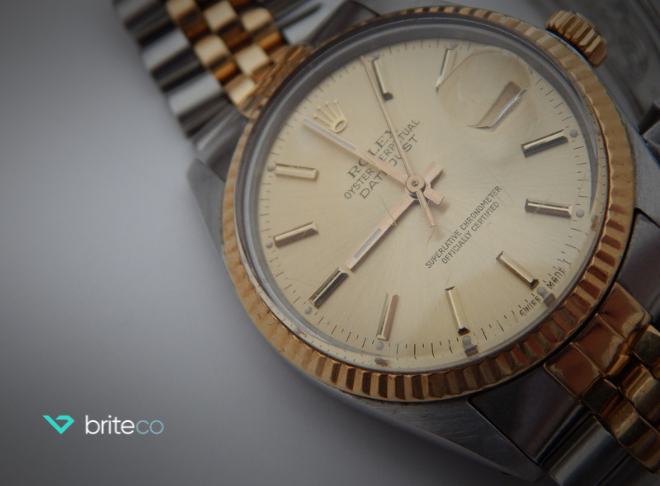
A watch insurance policy insures a watch for its documented value, and then helps cover the cost of approved repairs or a replacement if the watch is ever lost, stolen, or damaged (dependent upon policy terms).
How does watch insurance work?
- The owner of the watch provides relevant details, photos, receipts, appraisal documents, and serial information to the insurer.
- The insurer uses this information to determine the watch’s insured value and the insurance coverage needed.
- After reviewing the policy’s covered risks, exclusions, deductibles, and claim rules, the customer will then activate and pay a premium for the policy.
- If a covered event occurs, the customer files a claim and submits claim-related documentation.
- The insurer then either does or does not approve the requested repair, replacement, or reimbursement, based on policy terms.
BriteCo founder and CEO Dustin Lemick here offers a closer look at how insurance for luxury watches works, how much money it costs, and how to secure coverage.
What You Will Learn
- How Does Watch Insurance Work?
- What Does Watch Insurance Cover?
- What Does Watch Insurance Not Cover?
- How Much Does Watch Insurance Cost?
- Do You Need an Appraisal for Watch Insurance?
- Watch Insurance Vs. Homeowner’s Insurance
- Watch Insurance Vs. Manufacturer Warranty
- How Do Watch Insurance Claims Work?
- Repair Vs. Replacement: What Happens After a Covered Claim?
- How Watch Insurance Works for Collections
- How to Compare Watch Insurance Providers
- How to Buy Watch Insurance
- Conclusion: Watch Insurance Works Best When the Policy Matches the Watch’s Real Value
How Does Watch Insurance Work?
When you purchase specialized coverage in the form of comprehensive watch insurance, this is how it works:
- First, you’ll document your valuable timepieces. Gather information regarding the watch’s type, brand, and model; its serial number; photos; your purchase receipt; and an appraisal, if needed.
- Then, the insurer confirms the watch’s value and coverage needs. The insurer also uses the watch’s value to determine policy pricing.
- You’ll choose the coverage that’s right for you. Review how the policy will protect you from covered risks, along with its exclusions, deductibles, and replacement terms.
- You buy the policy and pay a premium. Coverage then becomes active according to the policy start date.
- If ever needed, you’ll file a claim and then the insurer will cover your repair or replacement costs. Provide details, photos, police report if applicable, and supporting documents when submitting a claim online.
Remember that your policy cost will depend on your watch or watches’ value, so an appraisal will likely be necessary before you begin requesting coverage quotes, just as it is when purchasing jewelry insurance.
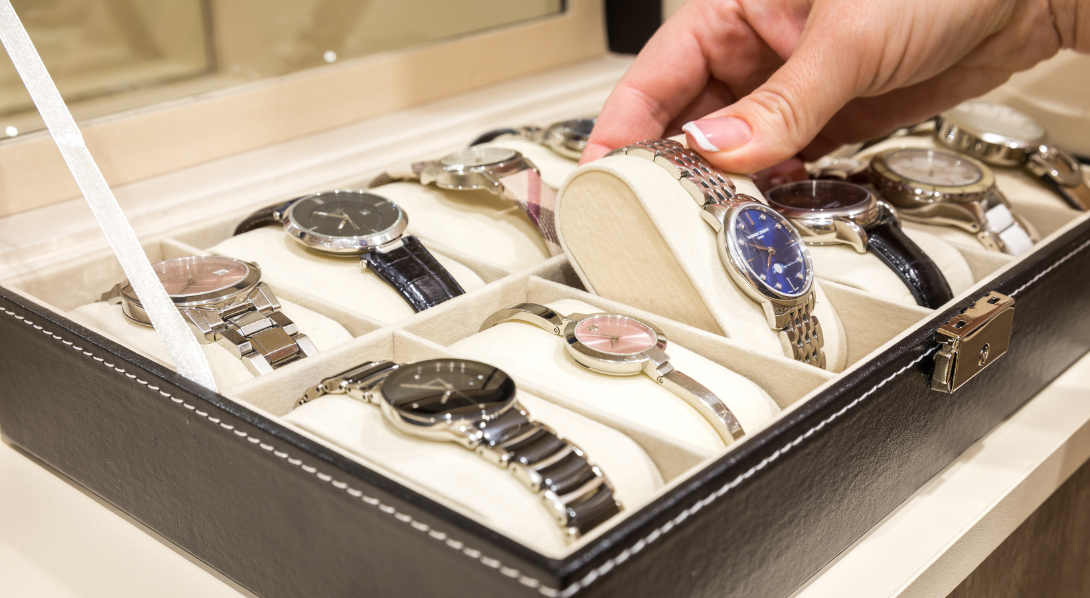
What Does Watch Insurance Cover?
Typically, specialized watch insurance covers theft, loss, accidental damage, and mysterious disappearance, worldwide.
| Covered Risk | When It Applies | Why It Matters |
|---|---|---|
| Theft | Watch is stolen | Expensive watches can be targets for theft |
| Loss | Watch is lost and cannot be recovered | Watches are worn, removed, and traveled with, so loss risks are high |
| Accidental damage | Watch is damaged in a covered accident | Repair costs can be high for luxury watches |
| Mysterious disappearance | Watch vanishes without a clear explanation | This is often not covered by homeowners or similar insurance |
| Worldwide travel | If a covered event occurs while traveling | Important for luxury timepieces worn outside the home |
BriteCo’s watch insurance covers replacements after theft, loss, and mysterious disappearance, and provides worldwide coverage. “Whether you drop it, it’s stolen, or it just — poof! — vanishes, which happens more than you’d think, you’re covered for the full appraised value,” Lemick says. “We even adjust your coverage annually for inflation and market appreciation.”
What Does Watch Insurance Not Cover?
Watch insurance may not cover:
- Normal wear and tear
- Intentional damage
- Pre-existing damage
- Maintenance or routine servicing
- Some mechanical watch failures better handled by the manufacturer warranty
- Military combat or extraordinary excluded events
- Damage outside the policy terms
Keep in mind that watch insurance is not the same as a maintenance plan or warranty. Warranties cover mechanical failures and manufacturing defects, while insurance covers loss, theft, accidental damage, and other covered events not attributed to normal wear and tear.
How Much Does Watch Insurance Cost?
Your policy cost will be based on the watch’s value, as well as factors such as your chosen insurer, location, coverage options, underwriting review, deductible choice, and policy terms — but most premiums cost about 1%-5% of the watch’s total value per year.
| Watch Value | Example Annual Cost Range at 1%-5% |
|---|---|
| $5,000 | $50-$250 |
| $10,000 | $100-$500 |
| $25,000 | $250-$1,250 |
| $100,000 collection | $1,000-$5,000 |
Exact premiums depend on your insurance application details. At BriteCo, Lemick says, “on average,you’re looking at about 0.5-1.5% of your watch’s appraised value per year. So for a $10,000 Rolex, that’s somewhere around $100 or $150 a year, or potentially less than what you’d spend on a weekend dinner out.”
Do You Need an Appraisal for Watch Insurance?
Often, yes, you do need to get an appraisal, as the watch’s appraised value helps the insurer determine how much coverage you need and the premium you should pay.
While a sales receipt may be accepted as a proof of value by some insurers, a current, up-to-date appraisal is often preferable for higher-value, vintage, rare, discontinued, or appreciating watches, to avoid over- or underinsurance.
Before shopping for watch insurance, undergo the appraisal process and gather the following documentation:
- Watch brand
- Watch model
- Reference number
- Serial number
- Photos of the watch from all angles
- Your sales receipt
- Prior appraisal documents, if you have them
- Service records
- Original watch box and papers, if available
- Current market documentation for rare models
- Contact details for both the watch’s owner and jeweler/appraiser

Watch Insurance Vs. Homeowner’s Insurance
When it comes to stand-alone jewelry insurance vs. a homeowners policy, the former offers more comprehensive coverage, while the latter’s limited coverage often caps claim payouts at around $1,000-$2,000 (not nearly enough to repair or replace most luxury watches).
Additionally, watch claims made through home insurance can lead to rate hikes or policy cancellations.
| Coverage Option | Pros | Cons |
|---|---|---|
| Standard homeowner’s policy | Convenient and may include some personal property coverage | Claims are often limited and tied to a deductible |
| Homeowner’s rider / floater | Can schedule specific items for greater coverage on the same home policy | Claims may still affect your homeowner’s account, leading to rate hikes or policy cancellation |
| Stand-alone watch insurance | Designed for high-value watches | Protection requires a separate insurance policy |
| Specialized jewelry/watch insurer | Built around watch-specific risks | You must review insurance providers’ policy terms carefully |
Watch Insurance Vs. Manufacturer Warranty
A warranty is useful, but differs from insurance. While a warranty helps take care of defects and mechanical issues, a specialized insurance policy protects you from theft, loss, and accidental damage. “The warranty won’t replace your watch if it slips off your wrist on a vacation or disappears from a hotel room,” Lemick says. ”That’s when watch insurance becomes essential.”
| Protection Type | Usually Helps With | Usually Does Not Help With |
|---|---|---|
| Manufacturer warranty | Defects and mechanical issues during warranty period | Theft, loss, mysterious disappearance |
| Watch insurance | Covered theft, loss, accidental damage, and replacement | Normal wear or warranty-only defects |
| Home policy | Some property losses | Replacing the full value of the watch |
| Service plan | Maintenance or repairs | Loss or theft protection |
How Do Watch Insurance Claims Work?
If you need to make a claim on your watch insurance after an unfortunate event:
- Stop using the damaged watch (if damage occurred and the watch is still in your possession), or file a police report if a theft occurred.
- Contact the insurer or start the claims process online.
- Provide photos, incident details, and documentation to your insurer.
- Submit watch’s appraisal, receipt, or saved policy records, if requested by your insurer.
- Work with the insurer on a repair, replacement, or settlement.
- Keep all damaged watch parts until the claim is resolved.
Repair Vs. Replacement: What Happens After a Covered Claim?
After a covered claim, your insurer may pay for the watch’s full replacement cost or a repair with your local jeweler, depending on your policy details.
| Claim Outcome | When It Applies | What to Confirm |
|---|---|---|
| Repair | Watch is damaged but repairable | Your insurer has approved your repair provider and any necessary parts |
| Replacement | Watch is lost, stolen, or not repairable | You will receive a watch of the same kind, quality, and insured value |
| Cash or settlement | If allowed by policy and you have a damaged or lost watch | Amount of the settlement, valuation basis, and restrictions |
| Preferred jeweler repair | If the insurer permits it (some will require you to work with their chosen jeweler rather than your preferred jeweler) | Whether the owner can use a trusted jeweler for the repairs |
How Watch Insurance Works for Collections
If you’re insuring a whole collection of watches, you may need to insure them either under one policy or scheduled individually. Ultimately, your policy should reflect the current market value of your entire collection, especially if you have investment watches that will appreciate, fluctuate in value, or are limited-edition models.
Before purchasing coverage, check that you have the following for all of the watches in your collection:
- Appraisals for each piece
- All serial numbers
- Photos of all pieces
- Documented storage and travel habits
- Updated valuations
Make sure that you also know the potential insurer’s collection-level claim procedures and whether agreed value or replacement value will apply to your policy.
How to Compare Watch Insurance Providers
Once you’ve narrowed down potential insurance companies, compare providers by asking the following questions:
- What events are covered under my policy?
- Is mysterious disappearance covered?
- Are there deductibles after a claim?
- Is worldwide coverage included?
- How is my watch’s insured value determined?
- Is replacement based on current market value, agreed value, or appraised value?
- Can I use my preferred jeweler after a claim?
- How fast are claims reviewed?
- Are multiple watches covered under one policy?
- What exclusions apply?
- What is the insurer’s financial strength?
- What documentation is required?
How to Buy Watch Insurance
 Watch Insurance FAQs
 Watch Insurance FAQs
What Does Watch Insurance Cover?
Watch insurance can cover theft, loss, accidental damage, and mysterious disappearance, worldwide.
Is There a Deductible with Watch Insurance?
Some insurers may require you to pay a deductible at claim time. Unlike other insurance companies, BriteCo offers $0 deductible policies.
Does Homeowner’s Insurance Cover Luxury Watches?
Homeowner’s insurance may cover luxury watches to some degree, but payouts after claims may not be enough to cover the full value of a watch, and approved claims are likely limited. Other providers with specialized watch coverage are more equipped to protect your watch’s full value under a broader range of circumstances.
Do I Need an Appraisal for Watch Insurance?
Yes, appraisals are helpful for securing watch insurance, as they prove the watch’s current market value, ensuring you have the exact right amount of coverage.
How Much Does Watch Insurance Cost?
While cost varies based on watch value, location, security measures, underwriting review, and more, most watch insurance policies cost about 1-5% of the watch’s value per year.
Conclusion: Watch Insurance Works Best When the Policy Matches the Watch’s Real Value
“Watch insurance works by turning a high-value timepiece into a documented, protected asset,” Lemick says. “If loss, theft, or accidental damage happens, the claim process starts with a documented value and coverage already in place.”
Watch insurance works best when the chosen policy reflects the watch’s documented value, real-world risk, and likely repair or replacement needs. Check your price for watch insurance and protect your luxury watch, valuable daily-wear watch, or watch collection.
Get a Quote:
The Easy Way to Insure Your Jewelry - and Save Money!
UP NEXT: How Often Should You Service a Watch? Signs, Costs, and Timing

Author