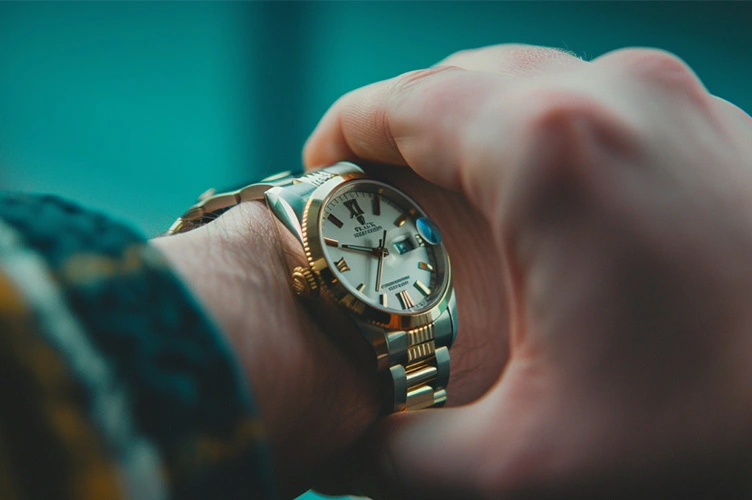
What Hand Does a Watch Go On? The Hard and Fast Rule You Need to Know
If you don’t really consider yourself “a watch person,” and you’re a far cry from one of those horological enthusiasts who boast a huge collection of timepieces, then you might not know where to begin when it comes to buying and wearing your first legitimate watch.
Beyond picking the perfect timepiece for your style, budget, and lifestyle, you’ll need to know how to wear your watch once you get it home and out of the box — and wearing your watch all starts with picking the correct wrist on which to wear it.

What You Will Learn
What Hand Does the Watch Go On?
When asking “Which hand does the watch go on,” you’ll need to ask yourself another question: Which is your dominant hand? Right handed people and left handed people wear watches differently.
While we’re not always quick to claim any hard and fast jewelry rules, such as how you have to wear your engagement ring or how you have to layer jewelry, it is generally considered officially correct to wear wristwatches on your non-dominant wrist.
This means that if you’re a right handed person (like the vast majority of watch wearers), your non-dominant hand is your opposite hand or the left hand, and you should wear a watch on your left wrist. In contrast, if you’re a left handed person, you’d wear your wristwatch on your right wrist.
Why Do We Wear Watches on Whichever Wrist is Non-Dominant?
There are many reasons why the answer to “What hand does your watch go on?” is simply the opposite wrist of whichever wrist is your dominant side.
History
First, there are the historical reasons. Wristwatches aren’t precisely an ancient accessory. Before wristwatches became widespread, many individuals carried pocket watches instead. However, there were certain instances wherein a pocket watch wasn’t all that convenient, like during wars.
As such, in the 1880s, Emperor Wilhelm I of Germany asked watch manufacturers to produce wristwatches for his naval officers, making it easier for them to complete their tasks while also keeping an eye on the time. Then, right before World War I, during the Second Boer War, wristwatches were further adopted throughout the world for military use (via Seiko).
It was easiest to figure out on what hand for a watch by determining their non-dominant hand, on their left or right wrist, to allow for easier maneuvering.
Convenience
Now, men wear watches for various active tasks and can quickly look at their watches without interrupting their actions, so long as the watch is not on their dominant wrist.
Think about it. If you’re one of the many right handed individuals out there, if you wear your watch on the left, you can quickly look down and see the watch crown or watch face at any time of the day without interrupting your dominant hand’s task. Driving, typing, writing, cooking, carrying a briefcase, or just grocery shopping—you can keep at it without stopping your right hand completely.
Safety
On what hand does a watch go on? Typically, the non-dominant hand is the answer, but this placement can also be for safety purposes—not necessarily yours.
Sure, if you wear watch bands on your non-dominant side (so on your left side if you’re right handed and on your right arm if you’re left handed), it will minimize distractions if you check the time while performing some other task. Doing so will also keep the watch case safe. If, as a right handed individual, you move your left arm less, your watch will likely encounter fewer bumps, scrapes, and other actions that could damage it.
Are There Left Handed Watches and Right Handed Watches?
Given that you’ll want to wear your watch on your non-dominant hand, do right handed individuals and left handed individuals need to buy different types of watches? Possibly!
Most watches are designed with right handed individuals in mind, as that’s the vast majority of the population. The design features on a mechanical watch are done in a way so that they’re most comfortable and best used while on the left hand. However, left handed watches do exist!

What Hand Does Watch Go On FAQs
What Wrist to Wear a Watch?
The general rule is to wear your wristwatch on your non-dominant hand. This means that if you’re right handed, you wear your watch on your left hand. Wear your watch on your right hand if you’re left handed.
Do Men and Women Wear Watches Differently?
Not necessarily. It’s still the general rule that you should wear your watch on your non-dominant wrist, regardless of gender.
Do Left Handed Watches Exist?
Yes! There are left handed watches with designs that are more friendly for wearing a watch on your right hand. However, most watches are made with right handed individuals in mind, so they’ll be more comfortable to wear on your left wrist.
Why Do We Wear Watches on Our Non-Dominant Hands?
We wear watches on our non-dominant hands because doing so makes it easier to look at the time while completing other tasks. It also keeps the watch itself safe from bumps, scratches, and other general daily wear and tear.
A Quick Disclaimer on Which Wrist Does Your Watch Go On
All of the above said, though, when it comes to which hand are you supposed to wear your watch on, you may have a differing personal preference — and that’s okay! If you prefer to wear your watch on your right hand as a right handed person or on your left hand as a left handed person, go for it.
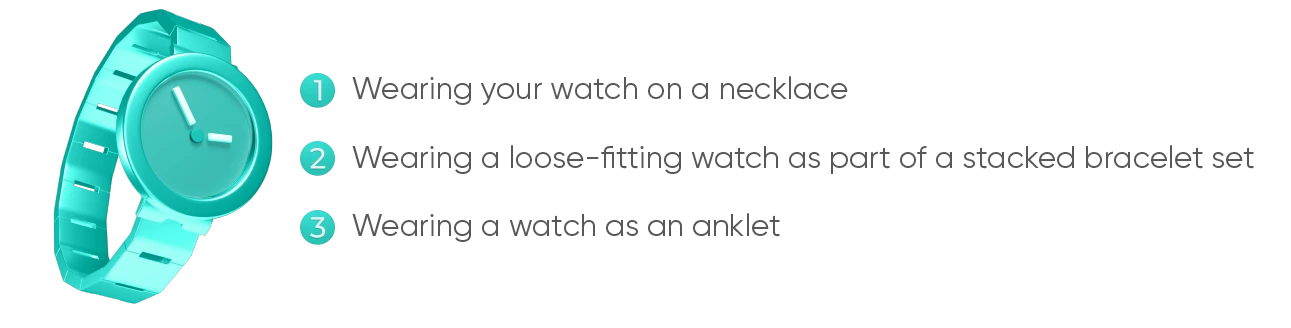
Beyond this, though, there are plenty of other ways to wear your watch. If you’re looking for a unique way to accessorize with a watch, consider:
- Wearing your watch on a necklace (a style choice sported by tastemakers such as Taylor Swift and Emma Chamberlain)
- Wearing a loose-fitting watch as part of a stacked bracelet set
- Wearing a watch as an anklet (a style choice that Rihanna has made in the past)
However you decide to wear your watch, be sure to protect it with luxury timepiece insurance from BriteCo.
BriteCo’s specialized jewelry insurance protects your luxury watches in the event of damage, theft, or loss.
Must check how watch insurance works to understand what’s covered and how it keeps your investment safe.
Related Articles:
How Should a Watch Fit?
How to Remove Watch Links
How to Clean Stainless Steel Watch?
Is a Watch Considered Jewelry?
Types of Watches By Movement and Function
The Best Investment Watches for Collectors
Do Omega Watches Hold Their Value?
How to Tell if a Rolex Is Real
Expert Tips on How to Store a Watch!
Get a Quote:
The Easy Way to Insure Your Jewelry - and Save Money!
UP NEXT: Watch Crystal Replacement Cost: The Price of Scratches, Chips, and Cracks

Author