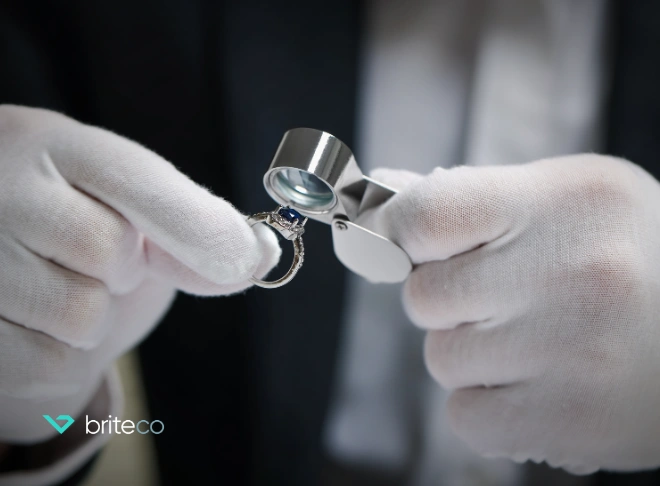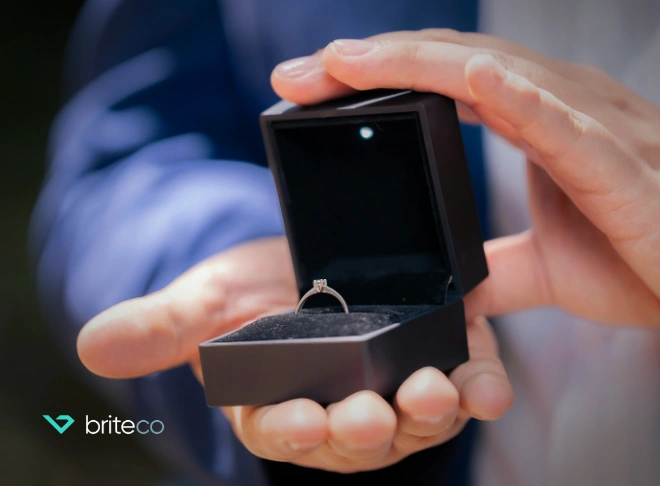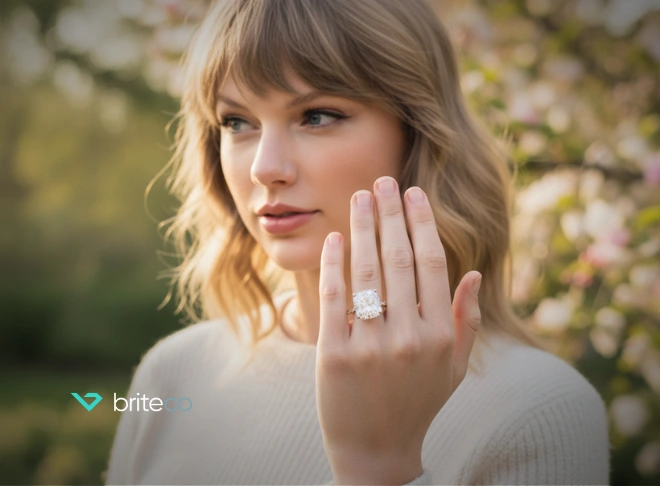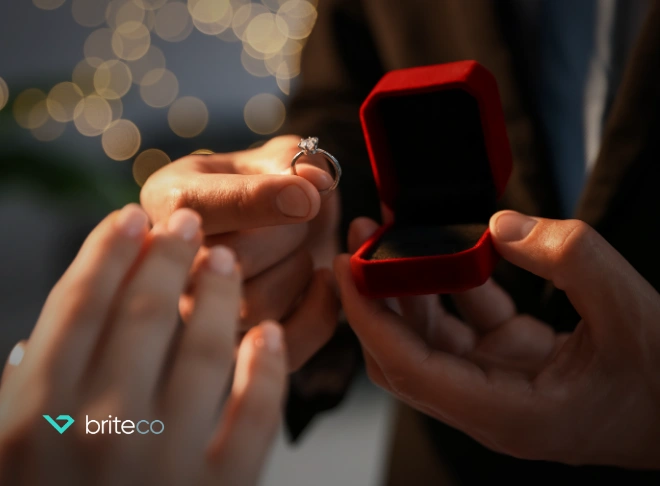

You should insure an engagement ring as soon as you buy it, take possession of it, or become financially responsible for it. Don’t wait until after the proposal to protect this investment.
Risk begins well before the proposal occurs. The ring may mysteriously disappear or be lost, stolen, damaged, or misplaced, all while you’re hiding or storing it, showing it to family and friends, and otherwise preparing to pop the question.
When to insure an engagement ring:
- The best time? Immediately after purchase or when the ring comes into your possession
- Before the proposal? Yes, if you have the ring in your possession
- After the proposal? Yes, still get coverage as soon as possible
- After the wedding? Yes, and go ahead and add wedding rings to your jewelry insurance policy, too
- After resizing, resetting, or appraisal changes? Often, yes; review your existing coverage options
“Your engagement ring isn’t just jewelry,” BriteCo founder and CEO Dustin Lemick says. “It’s both a financial investment and a symbol of commitment. But the truth is: Life happens.”
For the greatest peace of mind, let’s review when to get engagement ring insurance, how to get it, and what the process typically looks like.
What You Will Learn
- The Golden Rule: Insure the Ring as Soon as You Buy It
- Can You Insure an Engagement Ring Before You Propose?
- Who Should Hold the Engagement Ring Insurance Policy?
- Should You Wait Until After the Proposal?
- What Does Engagement Ring Insurance Cover Once It Starts?
- Homeowners or Renters Insurance Vs. Specialized Jewelry Insurance
- What You Need Before You Insure the Ring
- Engagement Ring Warranty Vs. Insurance
- When to Update Coverage After the Proposal
- Is It Ever Too Late to Insure an Engagement Ring?
- How Much Does Timing Affect Cost?
- How to Insure an Engagement Ring Step by Step
- When to File a Claim
- Engagement Ring Insurance FAQs
- Conclusion: The Best Time to Insure the Ring Is Before Anything Happens
The Golden Rule: Insure the Ring as Soon as You Buy It
The best time to insure new rings is the same day the rings are purchased or picked up. The ring and your financial investment are at risk as soon as you leave the jewelry store or the ring is shipped to your home.
- The ring could be stolen from your car right after you purchase it
- The ring could be misplaced while you’re showing it to a family member
- You might drop the ring and lose it while practicing your proposal
- If you’re traveling for your proposal, the ring could be lost during transit
These and other associated risk factors mean that you should secure coverage precisely when you purchase the ring. Anything can happen once the ring leaves the store.
Can You Insure an Engagement Ring Before You Propose?
Yes, a ring can typically be insured before a proposal if you own it and have the necessary documentation to secure coverage. Then, if desired, the coverage can be transferred over to your fiancé after the proposal. As for who pays for engagement ring insurance from there, it can be either of you, just depending on your unique situation.
The needed documentation for purchasing an engagement ring insurance policy may include:
- An appraisal report after you have the ring appraised
- Sales receipts
- Photos
- A diamond grading report
- Your jeweler’s details
Keep these documents hidden away if you’re planning a surprise proposal, and make sure you secure coverage before you travel with the ring, take it out into public, and, yes, propose.
Who Should Hold the Engagement Ring Insurance Policy?
Who holds the engagement ring insurance policy depends on who bought the ring, who technically owns and wears it, and who has an insurable interest in the ring.
| Timing | Who usually handles coverage | What to check |
|---|---|---|
| Before the proposal | The buyer/proposer | The ring is actually in the policyholder’s possession and documented appropriately for coverage purposes |
| After the proposal | The wearer or buyer, depending on ownership and payment status | Policyholder and address details are up to date and match the individual handling coverage |
| After marriage | The couple or spouse with an insurable interest | That the policy contract is updated accordingly, if needed |
| After a breakup or ownership change | The ring’s new legal owner | How to update the policy to reflect a new owner, or how to start the policy cancellation process |
Should You Wait Until After the Proposal?
No. While it may feel convenient to wait until after the proposal to insure your engagement ring, waiting exposes your ring to a range of risks and unforeseen circumstances.
The ring is at risk from the moment you pick it up at the store or when it’s shipped to your house, and then continually while hiding it, traveling with it, proposing, and finally celebrating afterward.
- Your ring could go missing from your luggage as you travel to a destination proposal
- The ring could suffer accidental damage while you’re showing it off to family and friends
- The ring could be stolen from your hiding place, or you could experience a mysterious disappearance, with no sign of theft
- Even after the proposal, the ring could be misplaced during wedding planning, before you have time to secure that engagement ring coverage
Risk of theft, loss, damage, and more all begin as soon as you own the ring, so coverage should ideally begin at that moment, too.
What Does Engagement Ring Insurance Cover Once It Starts?
While exact coverage will depend on your policy, specialized engagement ring insurance typically covers:
- Loss
- Theft
- Accidental damage
- Mysterious disappearance
- Worldwide coverage while traveling
Furthermore, this comprehensive coverage specifically often allows you to have your jewelry replaced or repaired through your preferred jeweler.
Homeowners or Renters Insurance Vs. Specialized Jewelry Insurance
Some couples delay purchasing engagement ring insurance because they assume their standard homeowners insurance or renters insurance policy will cover their ring automatically, but these policies often offer limited coverage that’s no match for standalone jewelry insurance. “Those policies rarely pay out enough to replace an engagement ring,” Lemick says.
| What to Consider | Standard Renters and Home Insurance | Scheduled Jewelry Rider/Floater | Specialized Jewelry Policy |
|---|---|---|---|
| Who It’s Best For | Those with jewelry of a lesser value who are okay with the coverage limits of a standard homeowners or renters insurance policy. | Those who want coverage for individual pieces and the convenience of adding coverage to an existing policy that they already pay for. | Those with high-value items (including engagement rings, luxury watches, and heirlooms) or collections that require the most comprehensive coverage possible. |
| Coverage Limits | Policy payout is typically $1,500–$2,500, and coverage is limited to theft from the home and certain covered events, such as fires. | Coverage will depend, but the full value of the jewelry should be covered, and you should have coverage for theft, loss, mysterious disappearance, and accidental damage. | Coverage will pay out up to 125% of a piece’s appraised value in the event of a claim; theft, accidental loss, mysterious disappearance, and accidental damage are all covered worldwide. |
| Deductible | You will need to pay a deductible when making a claim, often in the hundreds or thousands of dollars. | Deductible options vary. | Low or zero deductibles are common. |
| Claims Impact on Home Policy | A claim will impact your future homeowners/renters policy, potentially resulting in higher premiums, and may result in policy non-renewal. | A claim will impact your future homeowners/renters premiums and may result in policy non-renewal. | Claims do not impact homeowners policies at all. |
| Premium Cost | The premium cost will be whatever you’re already paying for your homeowners or renters insurance. | You’ll pay an additional premium on top of your homeowners or renters base coverage, often based on the value of the insured items. | The premium will often be 0.5–1.5% of your jewelry’s appraised value per year. |
What You Need Before You Insure the Ring
Once you have the ring, gather the following documents, which are often necessary for purchasing engagement ring insurance:
- Your sales receipt
- Documentation from having your engagement ring appraised, showing the appraisal value
- A diamond or gemstone report, if available
- Photos of the ring
- Metal, setting, and stone details
- Jeweler information
- Address where the ring will be stored or worn
Do I need an appraisal to get jewelry insurance? Many insurers will ask that you have your jewelry appraised, as they’ll set your premium based in part on your piece’s appraised value. If you’ve yet to get an appraisal, ask an insurer if they will accept other temporary documentation in the meantime.
“Many jewelers will give you an appraisal at the time of purchase, but if not, BriteCo can help with quick online appraisals,” Lemick says.
Engagement Ring Warranty Vs. Insurance
Your engagement ring’s warranty ensures you can repair or replace your ring with one of the same kind in the event of manufacturing issues. It may also cover maintenance, resizing, and cleaning. In contrast, insurance covers loss, theft, mysterious disappearance, and major accidental damage.
| Protection Type | Usually Helps With | Does Not Usually Help With |
|---|---|---|
| Warranty Coverage | Certain repairs, manufacturing defects, and maintenance | Loss, theft, full replacement, broad accidental damage |
| Insurance | Covered loss, theft, accidental damage, and mysterious disappearance | Normal wear and tear or excluded maintenance issues |
Combining the protection of both a warranty and an insurance policy is best. Keep documents for both forms of protection safely stored and easily accessible.
When to Update Coverage After the Proposal
While securing initial coverage is crucial, you may choose to update your coverage or purchase additional coverage after the proposal or even later on in your relationship, if, for example:
- You want the policy to reflect the individual actually wearing the ring, post-proposal
- The ring will live at a new address not listed on your policy
- The ring is resized
- The setting is changed
- Stones are added or upgraded
- You purchase wedding rings and want to add them to your policy
- Your preferred jeweler changes
- Policyholder or billing information changes
Is It Ever Too Late to Insure an Engagement Ring?
It’s usually never too late to insure an engagement ring, so long as the ring has not been recently lost, stolen, or damaged; a new insurance policy will not cover a loss, theft, or damage that occurred prior to policy activation.
| Your Potential Scenario | What to Do |
|---|---|
| Ring is safe but uninsured | Get documentation and a quote for coverage now |
| Ring was recently resized or repaired | Update your appraisal or repair records with your insurer |
| Ring is already lost | Review any existing coverage (such as an existing homeowners or renters policy), and your claim options, and then file a claim |
| Ring was stolen | File a police report and contact your current insurer |
| Ring is damaged | Stop wearing it and seek the advice of your insurer and jeweler before investing in a repair |
How Much Does Timing Affect Cost?
Timing often does not affect engagement ring insurance costs; several factors take precedence in determining your premium. These include your ring’s value, your location, your deductible choice, the amount of coverage, and the underwriting review. Don’t wait too long to purchase a policy, as going uninsured exposes you to costly risks.
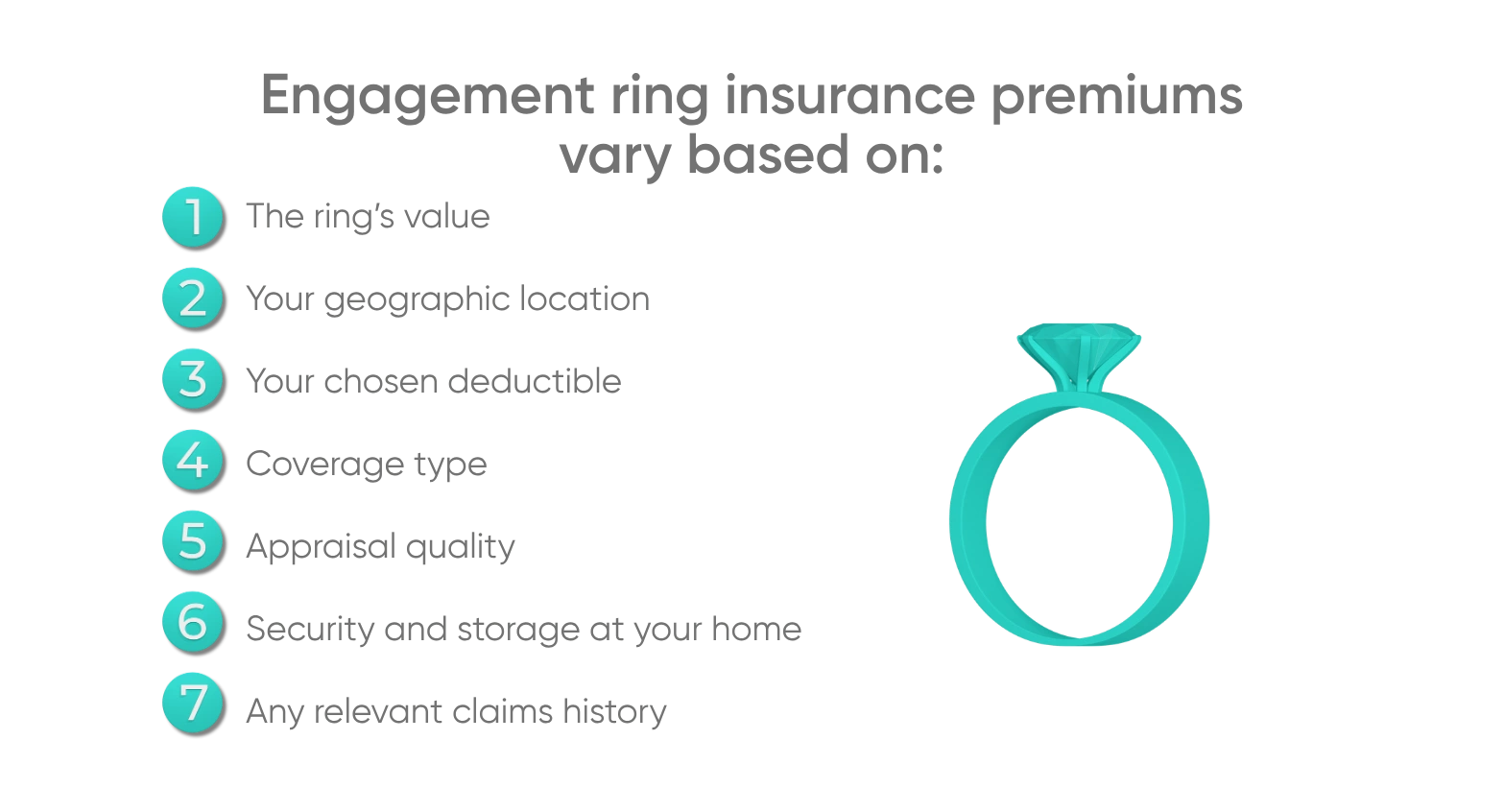
Protection should cost between 0.5% and 1.5% of the ring’s appraised value, with the exact amount depending on the above factors.
How to Insure an Engagement Ring Step by Step
- Gather your receipt, appraisal, photos, and ring details.
- Decide who should hold the policy.
- Compare policies against existing homeowners/renters options.
- Review your options for loss, theft, accidental damage, and mysterious disappearance coverage.
- Complete the quote request and underwriting review.
- Save your policy contract, appraisal, and claim instructions.
“The key here is that you’re covered at full replacement value,” Lemick says.
If you have a specialized jewelry insurance policy and you ever need to make a claim, you’ll simply contact your insurance company, and they’ll handle the replacement or repairs from there. Read more about how jewelry insurance works here.
When to File a Claim
A jewelry claim should be filed as quickly as possible after a covered loss occurs, following your policy’s claim requirements.
- File a claim promptly after theft, loss, damage, or mysterious disappearance.
- File a police report if theft is involved.
- Photograph any claim-related damage before having repairs completed.
- Save your receipts, appraisal, and policy documents.
- Ask before repairing or replacing your piece if the policy requires approval in order to pay for the repair or replacement.
- Confirm any deductible or out-of-pocket responsibilities.
BriteCo charges no deductibles on standard policies and provides coverage of up to 125% of your item’s appraised value, which can reduce any out-of-pocket replacement concerns.
Engagement Ring Insurance FAQs
When should you insure an engagement ring?
Insure an engagement ring as soon as possible after it comes into your possession.
Can you insure an engagement ring before you propose?
Yes, and you absolutely should insure an engagement ring pre-proposal, as the ring is at risk as soon as you take possession of it.
Who should insure the engagement ring?
Whoever is responsible for the ring should insure it. This may mean the individual who initially plans to propose, and then the policy can be turned over to the one who actually wears the ring.
Is it too late to insure a ring after the proposal?
It’s never too late to insure a ring. Keep in mind, though, that a policy will not cover previous damage, theft, loss, or disappearance that occurred before policy activation.
Do you need an appraisal before insuring an engagement ring?
Most insurers request an appraisal before providing you with coverage, as they base your premium in part on your ring’s appraised value.
Conclusion: The Best Time to Insure the Ring Is Before Anything Happens
Insure your engagement ring as soon as it becomes your responsibility, not after your first loss or damage scare. The ring is a financial investment as much as it is an emotional one, so it deserves full protection, with insurance coverage that kicks in before the proposal, travel, daily wear, or wedding-planning chaos.
“At the end of the day,” Lemick says, “we’re not just protecting jewelry, we’re protecting some of life’s biggest and most meaningful moments.”
Get your engagement ring insurance quote now.
Quiz:
The Engagement Ring Calculator You’ve Been Searching For and it’s FREE!
UP NEXT: How Much Does Engagement Ring Insurance Cost?

Author