Okay, real talk: Life’s biggest questions usually arrive in sparkling little packages. When you’re ready to pop the question, snagging the perfect ring is important — but so is crafting a moment that’ll be cherished forever, all while making smart financial moves.
With a third-generation retail jeweler as one of our founders, we know how stressful the entire proposal process can be and have learned a few things about what goes into a successful plan. And with the average engagement ring cost at just over $6,500, you want to invest time into planning your proposal!
From decoding ring trends to nailing that ‘yes,’ consider this your ultimate, no-BS guide to an unforgettable (and financially savvy!) proposal.
Step 1: Know When It’s Time To Propose
We’ve all met the couple that got engaged after a month and are still together years later, or the couple that finally tied the knot after a decade of dating. The right time to propose varies between couples and customs. What matters is that you’ve thought things through and aren’t feeling pressured in the moment.
With that said, here are some examples of when it may not be the best time to propose:
- At someone else’s wedding, baby shower, or significant event. We said it —you don’t want to be the couple stealing someone else’s thunder!
- During periods of significant stress, such as transitions or personal losses.
- When there are any conflicts or unresolved issues in your relationship.
- When you feel unduly pressured to propose, either by your partner or by outside influences.
- During periods of financial instability or uncertainty.
As for knowing when it’s the right time to propose, we offer these tried and true suggestions:
Signs You’re Ready for Marriage
Is marriage the right next step for you? These are some signs that may suggest so:
- You’ve discussed your future together and understand whether your partner likes the idea of marriage.
- Your relationship is built on trust and healthy communication.
- You are aware of and support one another’s goals and ambitions.
- You’re comfortable together. You each feel you can be yourselves, through the good, the goofy, and the bad.
- You love being together and can also accept each other’s needs for personal space.
- You’re excited to get engaged. You don’t find the idea scary.
- You’re comfortable with the financial commitment of a wedding. Yep, even the smallest wedding can be expensive!
Pre-Proposal Conversations: What to Discuss Before Popping the Question
So you’ve thought about it and decided that getting engaged is the next step for your relationship. Having a few honest, open conversations about your future helps ensure you’re both on the same page and that no one is surprised after you say, “I do.”
First of all, it’s important that you’ve already had some of the “deal-breaker” conversations that are key for marital success. These include aspects like:
- Where you’ll live
- Whether either of you will have a name change
- Whether you both want to have kids or not
Secondly, money and finances are common areas of conflict, and it’s important for serious couples to have a frank conversation about their plans and philosophies. You should each understand your financial situations, right down to salary, debts, and financial goals. Know how you will operate your finances once married, including bank accounts and paying bills. Do you need a prenup? This is an important question to answer.
Thirdly, you should each have an intimate understanding of each other’s major desires and life goals and be comfortable with supporting them. Lifelong dreams of starting a garage band? Ambitions to build a multi-national company? A desire to farm on remote acreage? You should know what makes each other tick.
Family Traditions: Navigating the “Permission” Conversation
Engaged couples often value the support of family and friends. Although “asking for their blessing” is an old-fashioned concept, many people still cherish it.
The place to start is with your partner’s wishes. If they would like to respect family traditions or simply have a close connection with them, then consider involving their family. If your partner has a strained relationship with their family or finds asking permission to be an outdated concept, then skip it.
Here are some tips to consider when navigating the “permission” conversation:
- Choose the right setting. It’s best to have a private conversation in person at a time and place that works for you.
- Express your respect and acknowledgement of the parents’ (or other family members’) role in your partner’s life.
- Consider framing. Rather than “asking permission,” requesting their blessing may be more respectful. One implies that it is necessary for the engagement to go ahead, while the other suggests it’s “nice to have” and a courtesy.
- Be respectful and expect different reactions. Remain understanding of any questions.
- Be prepared to address any potential concerns with grace.
Expert Tip: Is “asking permission” not quite right for your relationship? Consider alternative ways to include close family members that fit with your values. For example, by involving them in the proposal or hosting a family celebration afterwards.
Step 2: Buy an Engagement Ring
Buying an engagement ring is better when you have a plan. This can save you from jitters and uncertainty, and help ensure you get a ring that truly says, “You’re my person.” On top of that, a plan helps you to make a financially savvy decision, hopefully starting this new chapter on the right foot!
Set an Engagement Ring Budget
How much to spend on an engagement ring is a common question among couples. Not sure what to spend? Here are some common approaches:
- The percentage approach: Base the engagement ring purchase on a percentage of savings or income.
- The “dream ring” approach: Pick out the ideal ring first and work backwards to create a savings plan.
- The collaborative approach: Discuss a budget with your partner, especially if you already share finances.
- The financial goals approach: Base your engagement ring budget on an analysis that includes future financial goals, such as saving for a down payment. You probably don’t want a ring purchase to derail a big goal!
While we’re at it, let’s bust a common myth right now. Forget the old advice of spending two or three months’ salary on a ring. Seriously, that was a marketing ploy from back in the day, brought to you by the diamond company De Beers. Today, most couples are building their financial future together, so a transparent chat about a ring budget is actually the smartest play.
Factors that go into the ring budget include:
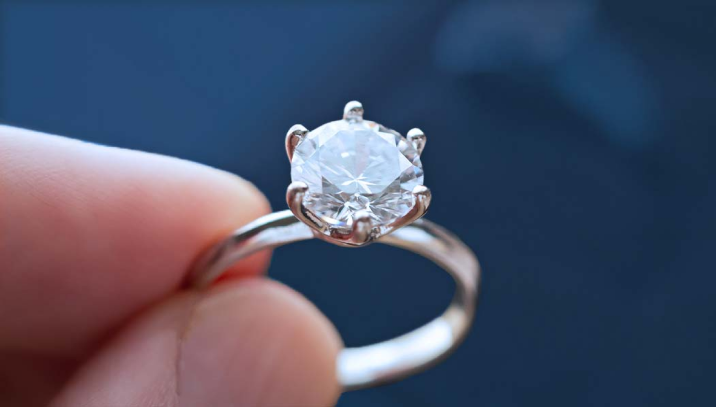
Desired center stone type and weight. Our data showing engagement ring purchasing habits between 2019 and 2025 shows that white diamonds are still the most popular engagement ring type, accounting for around 93% of purchases. White diamond prices on average range from $5,000 to $15,000, depending on quality and whether they are lab-grown or natural diamonds. Lab-grown diamonds account for around 45% of all US engagement ring purchases and are considered a beautiful, yet more budget-friendly choice.

- Your partner’s style. Custom ring or purchased from a jeweler’s cabinet? Diamond or colored gem? Emphasis on the “four C’s:” color, cut, clarity, and carats? Style factors like these will impact the cost of the ring, along with choices like vintage or heirloom rings.
- Your financial situation and timeline. If you’re planning to propose years from now, you have more time to save for the ideal ring and can even make investments work for you in the process. If you’re proposing next month, then you need to work with the resources you already have available. Importantly, have a plan for how your ring purchase fits into your budget.
Decode Your Partner’s Style
The ideal engagement ring becomes a staple of your partner’s everyday wardrobe, so understanding their style is important. What really matters to them? Small, classic designs? Stylish, outgoing styles?
If you’re not sure, look for clues:
- Observe the styles or designers they love. Take pictures or get notes if you can as they may help a jeweler help you.
- Look at their current jewelry — do they favor statement pieces or more subtle, minimalist jewelry?
- If you can’t find many fashion or jewelry clues, look at their broader tastes in art, design, and music — what inspires them?
- Talk to others they are close with — a best friend or sibling may have some clues!
How to Get Their Ring Size — Secretly
If you have visions of the perfect proposal, where the ring slips seamlessly onto your partner’s finger for a snug fit, then you need to figure out the right ring size.
Here are some tips for secretly gauging ring size:
- Borrow a ring they currently wear. Make sure it is a ring they wear on a ring finger rather than an index or other finger; otherwise, it may be bigger or smaller than what you need.
- Take a quick snapshot. If you only have a minute, take a picture of their ring set on top of a ruler or tape measure.
- Estimate based on your fingers. For example, if you think their ring finger is about the size of the first knuckle on one of your fingers, you can get a size by measuring that part of your finger.
Timing Your Engagement Ring Purchase
Prepare a timeline before you propose so that you have plenty of time for your ring purchase. You need to allow time for any work to be done, such as custom detailing or resizing of the ring. As a general rule, we suggest the following minimum timeline:
- Three or four months before proposing: Know your budget and research the type or style of ring you think will suit your partner.
- Two months before proposing: Decide on your ring style and compare jewelers, before ultimately making a choice.
- One or two months before proposing: Order the ring, allowing time for delivery and for any resizing or customization.
Protect Your Investment: When to Insure the Engagement Ring
When should you insure an engagement ring? The short answer is as soon as possible after purchasing it. Ideally, you should have the ring insured before you take possession of it, but at a minimum, get it insured as soon as it’s in your hands.
Here’s the truth: Your precious engagement ring needs its own dedicated protection. Why? Because most homeowners or renters policies are seriously lacking when it comes to covering high-value jewelry — think tiny limits, usually around $1,000 or $2,000. That’s a drop in the bucket compared to your ring’s real value. Plus, making a claim on your home policy can actually ding your record, making renewals a headache. A specialized jewelry insurance policy is literally built for this, offering comprehensive coverage that truly protects your investment
Expert Tip: Most people assume that their homeowners or renters policy will provide comprehensive coverage for their engagement ring, but the truth is, there are usually a lot of gaps. Many times, a homeowners or renters policy have high deductibles and won’t cover important issues like mysterious disappearance or maintenance. As well, submitting a claim against your homeowners insurance can put your policy at risk of large premium increases or even cancellation. With specialized jewelry insurance, you get real protection for loss, theft, damage, and mysterious disappearance without any effect on your homeowners policy.
– Dustin Lemick
Step 3: Plan Your Proposal
You’ve ordered the ring, now it’s time to consider how you’ll propose. Take some deep breaths (and some basic steps) to prepare:
Setting the Scene: Choosing the Location
First, consider where you’d like to propose. Many couples like to choose somewhere that is already meaningful to them, such as the location of their first date or a joint favorite place.
If you’re an adventurous couple, it might be appropriate to propose somewhere new, for example, on a romantic balloon ride or after hiking to the top of a mountain. Just make sure it’s an adventure that your partner will love, not be scared of! Scenic locations are popular, but remember to consider the weather. You don’t want to plan an elaborate proposal only to be blown away by gale-force winds!
Consider the overall setting for your proposal. Do you want private and intimate or public and shared by witnesses? If your partner isn’t a fan of PDA, stick with a small and intimate setting.

The Surprise Factor: Tailor the Moment to Their Personality
We’ve all seen the movie moments, the gasps of surprise cueing in the strings to cap a romantic proposal, but is that something your partner would like? There are many people who dislike surprises and feel anxious about them, so make sure your partner is expecting a proposal if they are one of them.
Remember, low-key can be just as romantic and memorable as a grand gesture. Tailor the proposal to your partner’s personality — if a big fuss is not their scene, create an intimate moment just for them, where they can feel relaxed and comfortable.
Capturing the Moment: The Value of a Photographer
Capturing your proposal through photography or videography can be a great way to preserve your special moments. You might choose to hire a professional, or some couples ask a friend or family member to record the moment, especially if they are known to take good pictures.
Hiring a professional can be worth it for capturing high-quality photos. Here are a few things you should know beforehand:
- Ask around for local recommendations. Know someone who recently got great wedding or engagement photos? Ask them who they used.
- Look at online portfolios to find a style you like. Every photographer tends to have their own style, so look for one that suits your preferences.
- Book your photographer at least a month in advance. Good photographers are in high demand!
Communicate clearly. You should share your ideas with the photographer and show examples of what you like. Be very clear about the time and place they are needed to avoid confusion.
Expert Tip: Give your proposal photographer plenty of notice of your vision so they can scope out the lay of the land. A photographer will want to determine the best spots for remaining discreet and getting good photos. They may also want to help you map a route or decide which direction to face to get good pictures.
Crafting Your Words
Whether you prefer to speak off-the-cuff or feel more comfortable writing down and practicing an entire speech, putting some preparation into what you’re going to say can help ease nerves. Here are some basic points to consider:
- Think about your story as a couple. What has helped to strengthen your bond?
- What qualities do you admire about your partner?
- Are there significant milestones or memories you want to remind your partner of?
- Verbalize your emotions and intentions. How will you express to your partner that you’re ready to start a new chapter together?
Step 4: Pick Your Proposal Moment
By this stage, you’ve put a lot of thought into planning the perfect proposal, so it all comes down to those last few “in-the-moment” steps. Here are some tips for minimizing anxiety during the proposal.
Staying Calm Under Pressure: Tips for a Relaxed Proposal
This is it, the moment you’ve been building up to, so naturally, your palms are sweaty and you’re worried the ring will slip out and fall down a grating. Besides avoiding gratings, waters’ edges, or other spots where a ring can slip away, here are some tips to keep composure:
- Acknowledge that feeling nervous is normal and take some deep breaths. Regulating your breath can help reduce the physical effects of anxiety on your body by regulating your nervous system.
- Focus on your partner and the love you share. Ultimately, that’s why you’re doing this, because you want to share your life with them.
- Be kind to yourself. Remember that the “perfect proposal” is something of a myth. Your partner will appreciate effort and sincerity — you’re not being graded on perfection!
Navigating the Environment: When Crowds Are a No-Go
The environment you propose in should be comfortable for both of you. When you plan your proposal location and time, check for any events happening that might lead to more company than you bargained for. That way, you can try to time your proposal for when there are fewer people.
If you get to your spot and find there are lots of people, have a Plan B. Can you walk somewhere a short distance away? If you feel uncomfortable in the environment, there’s a good chance your partner will, too, so be prepared to make a change on the fly.
Logistics of the Ring: Keeping It Safe
Leading up to proposing, make sure the ring is kept safe and secure — no loose rings in pockets! A small, secure pouch inside a bag or a pocket of your clothing that securely fastens shut are generally the best places to keep the ring. For security, keep it inside its box or in a small jewelry pouch if you need it to be more discreet.
Expert Tip: For an extra discreet and secure way to keep the engagement ring safe, consider a travel ring holder. These usually have a clip that secures to a loop in your bag or pocket.
Step 5: Make Post-Proposal Plans
After your proposal, savor the initial joy by making plans to celebrate. Plan something that will be special for both of you — it doesn’t have to be big!
Plan an Immediate Celebration
Your partner just said “yes,” and you’re both feeling excited, so have something planned to linger on that moment. Here are some examples:
- Enjoy a romantic picnic
- Partake in a favorite activity
- Have a reservation for a favorite restaurant
- Have a small party with family or friends (if they have prior knowledge)
- Have a date night at home with your favorite foods and beverages
Share the News
Somewhere in the aftermath of the proposal, you need to share the news with family and friends. Take the time to personally tell those closest to you, either by phone or in person. It’s generally best to do that before updating your social media status!
Enjoy the Engagement Bubble
Make the most of the time you have in the engagement bubble. There will be time for color palettes, buffet menus, and guest lists, but people often get frantically caught up in wedding planning without taking time to just be.
You might find that scheduling date nights and favorite activities where you both focus on non-wedding things helps. Make plans to enjoy one another’s company without agonizing over seating arrangements or other wedding details. Remember why you are engaged in the first place!
Expert Tip: If you have the means, many couples enjoy an “engagement moon,” where they take a trip to celebrate. This helps to create new memories together and ease any potential stress over wedding planning.
Protect Your Perfect Proposal with BriteCo
Buying an engagement ring is just the start of planning your proposal. Remember, there’s really no such thing as perfect; there’s just the proposal that fits you both as a couple. Enjoy your blissful moments and take the time to savor being together.
For peace of mind before and during your engagement, make sure the engagement ring is protected in case of loss, mysterious disappearance, damage, or theft. Look into engagement ring insurance with BriteCo and rest easy, knowing your ring is covered.
Buying An Engagement Ring FAQs
Here are some FAQs people ask about buying an engagement ring.
How Much Should You Spend On An Engagement Ring?
The short answer to that is you should spend within your means. Make a clear budget and work within that to choose a ring that suits your partner’s style. If you plan ahead, you can save up for longer, especially if you want to buy a more expensive ring.
Which Finger Does Your Engagement Ring Go On?
The tradition in Western cultures is to wear the engagement ring on the fourth finger of the left hand (or “ring finger”). That said, many couples choose to break away from tradition and choose a finger they’re most comfortable with.
What Is The “Three-Month” Rule For Engagement Rings?
The “three-month rule” refers to the idea that you should spend three months’ salary on an engagement ring. This idea originated in the 1930s as a marketing campaign for a diamond company, so they obviously had a vested interest! These days, the three-month rule is considered to be outdated, and it is suggested that couples work with a budget they’re comfortable with.
What To Avoid When Buying An Engagement Ring?
Avoid common mistakes when buying an engagement ring, such as focusing too heavily on trends rather than your partner’s style, failing to set a budget, rushing the purchase decision, or failing to insure the engagement ring.

Author