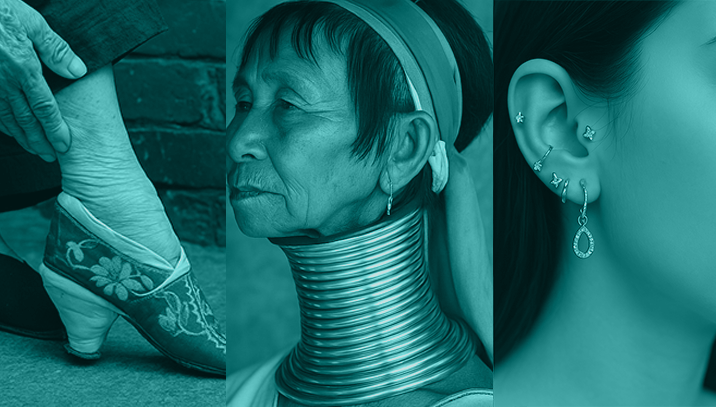
What we think of as beautiful isn’t set in stone: It changes from place to place and from one generation to the next. One way people try to match their culture’s beauty standards or break away from them entirely is through body modification. Some of these changes are subtle and familiar, while others might seem more extreme or be tied to specific traditions. What might seem bizarre in one place can be completely normal in another. In fact, things like tanning, bodybuilding, cosmetic surgery, dieting, or even ear piercing are all considered forms of body modification, even if we don’t usually think of them that way.
Why Do People Choose to Modify Their Bodies?
There’s no single reason why people change their appearance. Some do it to fit in, others do it to stand out, and still others do it just to please themselves. Motivations behind body modification can include:
- Meeting beauty standards in their culture
- Showing they belong to a group
- Signaling status or achievement
- Expressing their personality, values, or creativity
- Regaining control after a traumatic experience
Sometimes, body modification is about correcting or perfecting something a person is self-conscious about. Other times, it’s a creative outlet. Some people even view their bodies as a kind of canvas, a way to show the world who they are.
Body Modification Within Different World Cultures
Around the world, different cultures have come up with different types of body modifications, some of which have deep historical roots. Some notable types of body modification that can be found around the globe include:
- Neck elongation, which is a cultural norm in select areas of Africa and Thailand
- Tooth filing, which is practiced in Bali
- Earlobe stretching or gauging, found in African cultures
- Male and female circumcision, practiced for cultural or religious reasons around the world
Historical beauty practices like foot-binding and corseting have also left lasting impacts on both people’s bodies and the cultures in which they lived.
Foot-Binding in China
For hundreds of years before it was outlawed in the mid-1900s, young girls in China went through a painful process to bind their feet in order to achieve a cultural standard of beauty. Their toes and foot bones were broken and tightly wrapped so that over time, their feet would deform into a permanently small shape, sometimes measuring just a few inches long. Small feet and the resulting delicate sway in the way they walked made them appear fragile and beautiful, which appealed to Chinese men of the time. Having bound feet greatly improved a girl’s marriage prospects, but it came at the cost of lifelong pain and limited mobility.
Corseting
European women in the Victorian era also modified their bodies to conform to cultural beauty standards, cinching their waists with tight corsets to create the hourglass figure that was trendy at the time. The look was seen as feminine and elegant, featuring a very narrow waist, broad hips, and accentuated and lifted breasts, but tight corseting often resulted in bruising and fainting, and over time, the practice changed the shape of women’s ribs and shifted their internal organs. Like foot-binding, corseting promoted an image of beauty based in fragility.
Cosmetic Surgery as a Form of Body Modification
Modern beauty culture still encourages people to make big changes to their appearance. Cosmetic surgery, like nose jobs, liposuction, or face lifts, has become increasingly common. According to the American Society of Aesthetic Plastic Surgeons, more than 10 million Americans had a cosmetic surgical procedure in 2008, spending around $12 billion in total. Most cosmetic surgeries are performed on women, although interest in these procedures has grown in men. While some people say these surgeries help boost confidence and self-esteem, others argue that they perpetuate harmful beauty standards. Critics also point out the risks to a person’s mental health as well as the risk of surgical complications that can cause lifelong damage.
Piercings, Tattoos, and Scarification
Not long ago, piercings and tattoos were seen as subversive or taboo, but they’ve become increasingly mainstream, especially in Western cultures. A 2008 study of college students in the U.S. showed that 42% of men and 60% of women had at least one body piercing. Common types of piercings include earrings and nose, eyebrow, tongue, lip, or navel rings. Many people choose to add body jewelry for fashion, while others do it as a way to take control of how their bodies look.
Tattoos have followed a similar path. Once associated with gangs or criminals, they’re now a popular way to honor someone, remember something important, or simply express yourself. According to the Pew Research Center, nearly a third of American adults have at least one tattoo. That said, not everyone stays happy with their ink forever, and some people eventually get tattoos removed.
Scarification is a type of body modification performed by intentionally cutting or burning the skin to create permanent designs. It’s less common but has been growing in popularity, especially among people who see it as an intense, meaningful experience.
Tanning Trends
Ideas about beauty don’t just vary across cultures; they also change over time. In 1800s America, pale skin was considered a sign of wealth, since it meant that you didn’t have to work outdoors. Women wore hats and gloves and carried parasols to avoid exposure to the sun. But in the 20th century, that flipped: Tanned skin started to symbolize health, leisure, and a glamorous lifestyle. Tanning became so popular that it grew into a multi-billion-dollar industry. However, while many other forms of body modification can be performed with minimal harm or even undone later on, tanning carries serious health risks. Excessive tanning can damage the skin, speed up signs of aging, and raise the risk of skin cancer.
Additional Resources on Body Modification
- Body Modification and the Need to Be Unique
- The Health Implications of Body Modification
- Body Modification in America
- A Body Modification Glossary
- Considerations When Making Body Modifications
- Body Modification Across Cultures
- Tattoos and Permanent Makeup Fact Sheet
- Piercings and Tattoos
- Tattoo Aftercare
- Foot-Binding in China
- The History of the Corset
- Body Piercings
- Facts About Tanning
- Jewelry Insurance
- The Birth of Plastic Surgery
- Cosmetic Surgery Timeline
- Teens and Body Modification
- Everything You Need to Know About Scarification
- The History and Risks of Body Branding

Author