8 Types of Ear Piercings to Consider
Maybe you’ve already gotten the standard lobe piercing and are looking for something new. Perhaps you’ve never been interested in ear piercing at all. Still, you’re coming around to the idea and wondering what suits you.
Beyond the traditional lobe piercing, many types of ear piercings are available. To help you decide which is ideal for you, here’s everything you need to know about your ear piercing options, including the various ear piercing types, what they’re called, and what you can expect after your piercing appointment.

8 Popular Kinds of Ear Piercings
1. Lobe Piercings
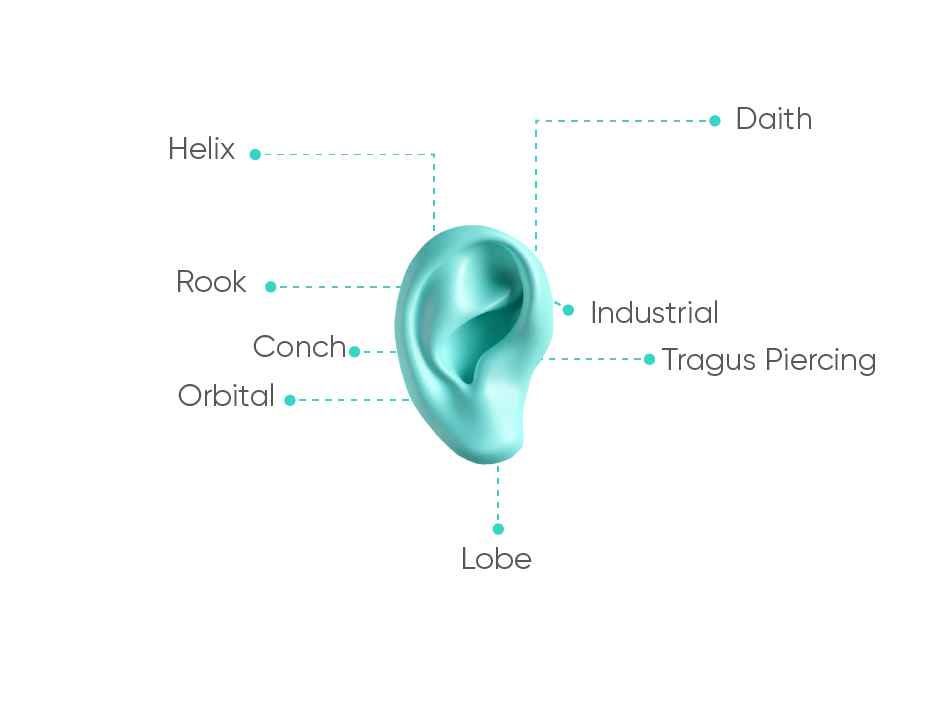
First up in the most basic of earring piercing types is your standard lobe piercing. This type of ear piercing is usually one’s first foray into the world of ear piercings, as it’s extremely popular, relatively painless, and available to even children, with a parent’s consent. Additionally, compared to the other types of ear piercing, a lobe piercing takes a relatively short time to heal with proper care.
Want to shake things up a bit?
You can get two piercings or more in your ear lobe if you ask for an upper or high lobe piercing. While this type of piercing goes slightly beyond the standard lobe since it only really affects the fleshy part of your ear, it’s pretty painless, easy to care for, and quick to heal.
You can also go even more untraditional and unusual with transverse lobe piercings. Transverse lobe piercings are from one side to the side rather than front to back on the lobe. This way, an earring sits horizontally along your ear rather than facing an outside viewer.
2. Helix Piercing
After lobe piercings, many piercing enthusiasts’ next chosen ear piercing is a helix piercing.
A traditional helix piercing sits on the outer cartilage of the upper ear, closest to the back of the ear. As is the case with the lobe, you can get multiple helix piercings if they’re placed correctly. While you can get a double or triple helix piercing for your outer cartilage, other types of helix piercings impact other areas of the ear’s upper cartilage.
For example, forward helix piercings are also located on the upper ear’s cartilage but on the forward-facing part of your ear (so think directly across from a traditional helix piercing). A floating helix piercing, meanwhile, is located between the two, right in the middle of your upper ear’s cartilage. An anti-helix, or a snug piercing, goes slightly lower and closer to the inner ear.
Do note that cartilage piercings like these hurt substantially more than a lobe piercing and likewise take much longer to heal and require more care.
3. Daith Piercing
You know that bit of cartilage that sticks out right above your ear canal? That’s where daith piercings go.
While this may sound like a painful place to put a piercing (the most popular options are eye-catching, small hoop earrings), some say they’re less painful than helix piercings and require less time to heal.
4. Tragus Piercing
Tragus piercings sit as close to your face as possible. If you run your finger from your ear lobe up the side of your ear closest to your face, you’ll find a small, nubby piece of cartilage next to your ear canal. That’s where a tragus piercing goes.
While a tragus piercing isn’t exceptionally painful, it can be difficult to heal. During the healing period, you may need to avoid using earbuds — which can be a major turnoff for some considering these ear piercings.
Anti-tragus piercing is one alternative to consider. An anti-tragus piercing sits directly opposite a tragus piercing on the opposite side of the ear canal. Do note that anti-tragus piercings are more painful than tragus piercings and take longer to heal.
5. Conch Piercing
Conch piercings sit in the inner part of your ear. If you run your finger from your ear canal backward and find a slight dip, that’s wh ere a conch piercing sits.
You can opt for an inner conch or outer conch piercing, but the placement won’t be far apart. An inner conch is closer to your inner ear, while the outer conch is closer to the outer ear. As such, the different ear piercings may be best suited to other types of earrings, such as a stud for an inner conch piercing and a hoop for an outer conch piercing.
6. Rook Piercing
A rook piercing is very similar to a daith piercing. The only difference is that a rook piercing sits on a bit of cartilage slightly higher than where a daith piercing goes.
Looking at your ear and unsure where another inner ear cartilage piercing might go? Not everyone has enough cartilage for both a rook piercing and a daith piercing. Sometimes, your ear’s unique form can only accommodate one or the other.
7. Industrial Piercing
An industrial piercing is technically multiple piercings, but the term refers to a specifically curated ear piercing and earring combo. A straight rod is pierced through the cartilage at the top of the ear closest to the face and across through the outer back edge of the ear.
The look is distinct and eye-catching, but remember, you’ll need to keep the rod in place for months. If you tire of your accessories quickly and prefer to follow trends, this might not be the piercing for you. Additionally, it takes a long time and a lot of care to heal.
8. Orbital Piercing
Like industrial piercings, orbital piercings refer more to a curated combination of piercings than one particular piercing. An orbital piercing connects two piercings via a hoop and a dangling chain.
Different Types of Ear Piercings FAQs
Out of all types of ear piercing, which is the least painful?
If you want to get your ears pierced and prefer as little pain and maintenance as possible, go with a lobe piercing. The most painful types of piercings for ears include helix piercings, which impact the lower and upper cartilage.
Do different ear piercing types require different care?
While different piercings can lead to more painful healing and take longer to heal, the essential aftercare is still the same. Avoid touching or fiddling with your piercing as much as possible, keep it clean, disinfect it regularly, and don’t expose it to dirty environments, such as unwashed bed sheets/pillowcases or sweat.
Are the types of ear piercing for women different from the kinds of ear piercing for men?
No, men and women can get the same types of piercings.
Do any ear piercings come with health benefits?
Yes! Many believe that daith piercings come with myriad health benefits, with some reporting fewer migraines and lessened anxiety.
Is there any reason not to get a new ear piercing?
If you know you’re unlikely to take good care of a new piercing, it’s best not to get one. Daily, frequent care is necessary to prevent infection.
Need More?
Now you know your piercing options, and you can choose the best fit for your aesthetic and needs. For more on everything-you-need-to-know jewelry, check out the BriteCo blog.
Are you looking for specialized jewelry insurance? BriteCo can help, with coverage available at an affordable cost. Learn more and get your quote today!
Related Articles:
Types of Earring Backs
Different Types of Silver and Price Guide
How to Stack Earrings with Multiple Piercings
What Is a Tourmaline Gemstone?
Different Types of Ring Mounts
How to Find a Lost Earring
How to Clean Gold Earrings
Get a Quote:
The Easy Way to Insure Your Jewelry - and Save Money!

Author