Exposing the Hidden Costs and Risks of Insuring Jewelry Through a Homeowners Policy
BriteCo Research Report
BriteCo Research Report

As insurance premium costs continue to rise, 50% of homeowners are worried their insurance will soon become unaffordable. That anxiety can lead people to cut corners — especially when it comes to insurance for jewelry.
As such, many homeowners are growing increasingly confused about items like a jewelry rider on a homeowners policy, including what it covers and whether it’s worth it. Adding jewelry to home insurance policies can help cover your most valuable possessions, but it’s far less protection than people may think. Homeowners and renters insurance typically only covers jewelry in the case of theft inside the home and often caps payouts at $1,000-$2,500, which may not cover the full value of a luxury piece such as an engagement ring.
BriteCo’s survey of more than 1,000 homeowners found that a large majority are opting to rely solely on homeowners insurance for protection, leaving some of their most valuable assets vulnerable to loss or theft. Even when adding a jewelry rider or floater to a homeowners policy, making a jewelry claim can impact insurance policies for home or auto, raising premiums or risking cancellations.
This report captures BriteCo’s data and highlights what Americans misunderstand most about jewelry coverage — and where the most significant gaps and risks lie.

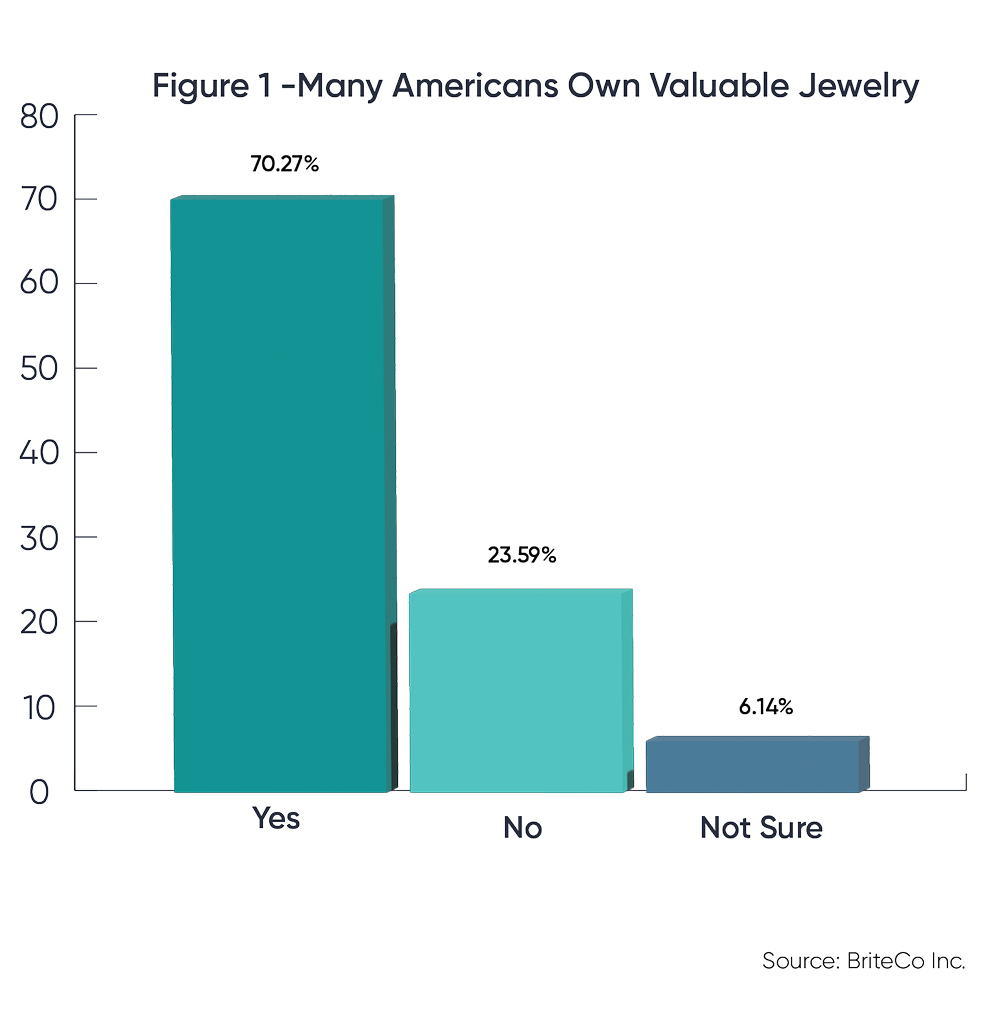
70% of Americans own jewelry or watches worth more than $1,500; however, only 55% of those people insure their items against loss or theft

53% of Americans cover their jewelry under their homeowners insurance policy, whether it is insured through a standard homeowners policy, a jewelry rider attached to that policy, or a separate jewelry floater.

Nearly a quarter (23%) of Americans think the payout for a jewelry claim on their homeowners insurance policy is higher than it actually is, and almost a third (30%) admit they weren’t aware of any payout limit.

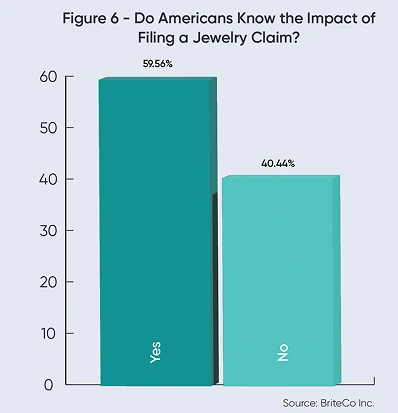
40% of Americans don’t know that filing a jewelry claim could increase their homeowners premiums or even lead to cancellation of coverage.

A stand-alone jewelry insurance policy separate from a homeowners rider or floater can offer better coverage for jewelry and watches, at less cost. Another big advantage of a stand-alone jewelry policy from BriteCo: no reporting to loss-history data services such as CLUE or A-PLUS, so no risk of impacting a homeowners policy with higher premiums or a non-renewal.
Most Americans mistakenly believe their homeowners policy fully covers their jewelry — but for many, it doesn’t. Our survey found that, while 70% of Americans own jewelry or watches worth more than $1,500, one in four or 26% rely on a standard homeowners policy to protect their valuables, which will only cover from $1,500 to $2,000 minus any deductible that may apply. That means millions of Americans are leaving sentimental treasures underinsured, often without realizing it.
Another 27% of consumers get higher amounts of jewelry coverage through a rider or floater policy associated with their homeowners policy. But making even one jewelry claim with these types of policies can result in higher homeowners premiums or a non-renewal.
Many people have questions about protecting their valuables, from how to insure an engagement ring to understanding what their homeowners policy actually covers. Yet coverage caps, deductibles, and exclusions often leave them exposed, creating an unknown risk for hidden costs and claim impacts.
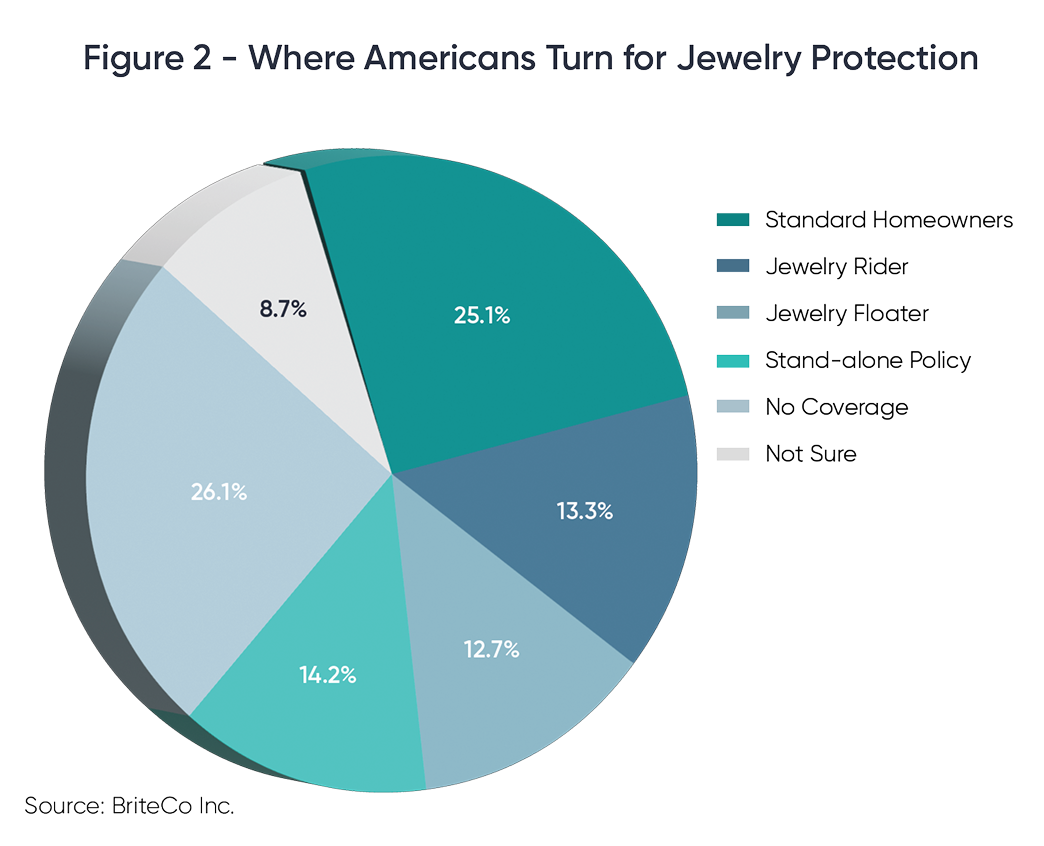
Americans who insure their jewelry are overwhelmingly putting their trust in their homeowners insurance policy for protection. More than half of Americans among survey respondents (53%) rely on their homeowners policy to protect their jewelry.
Of that group, 25.1% depend on standard homeowners policy limits, while only 13.3% have an insurance rider, and 12.7% use a jewelry floater or endorsement. Keep in mind, another one-fourth (26.1%) of survey respondents assume the risk that their jewelry will be safe without any insurance protection.
Although an insurance rider for jewelry may provide some additional coverage, it often falls short of offering the robust protection needed if your valuables are lost or stolen. Homeowners insurance riders or floaters typically have a total cap amount for insured items regardless of their appraised or replacement value.
Many riders or endorsements also use the main homeowners deductible or a separate one, which can meaningfully decrease the value of coverage for partial losses such as a damaged ring or necklace.
Another concern for jewelry owners is that HO riders and floaters likely do not cover jewelry items for accidental loss or mysterious disappearance compared with specialized stand-alone jewelry policies. Riders and floaters also typically have more claim handling restrictions, and making a jewelry claim will likely impact a homeowners insurance loss history.
That’s why experts recommend separating coverage of your valuables from your home insurance. Choosing a stand-alone jewelry insurance policy separate from your homeowners policy can help you get broader coverage without impacting your home insurance premiums or renewal if you need to file a jewelry claim.
One of the big misconceptions about homeowners insurance concerns payouts. Almost 57% of Americans are unaware or don’t know the limits that most homeowners insurance policies place on jewelry coverage.
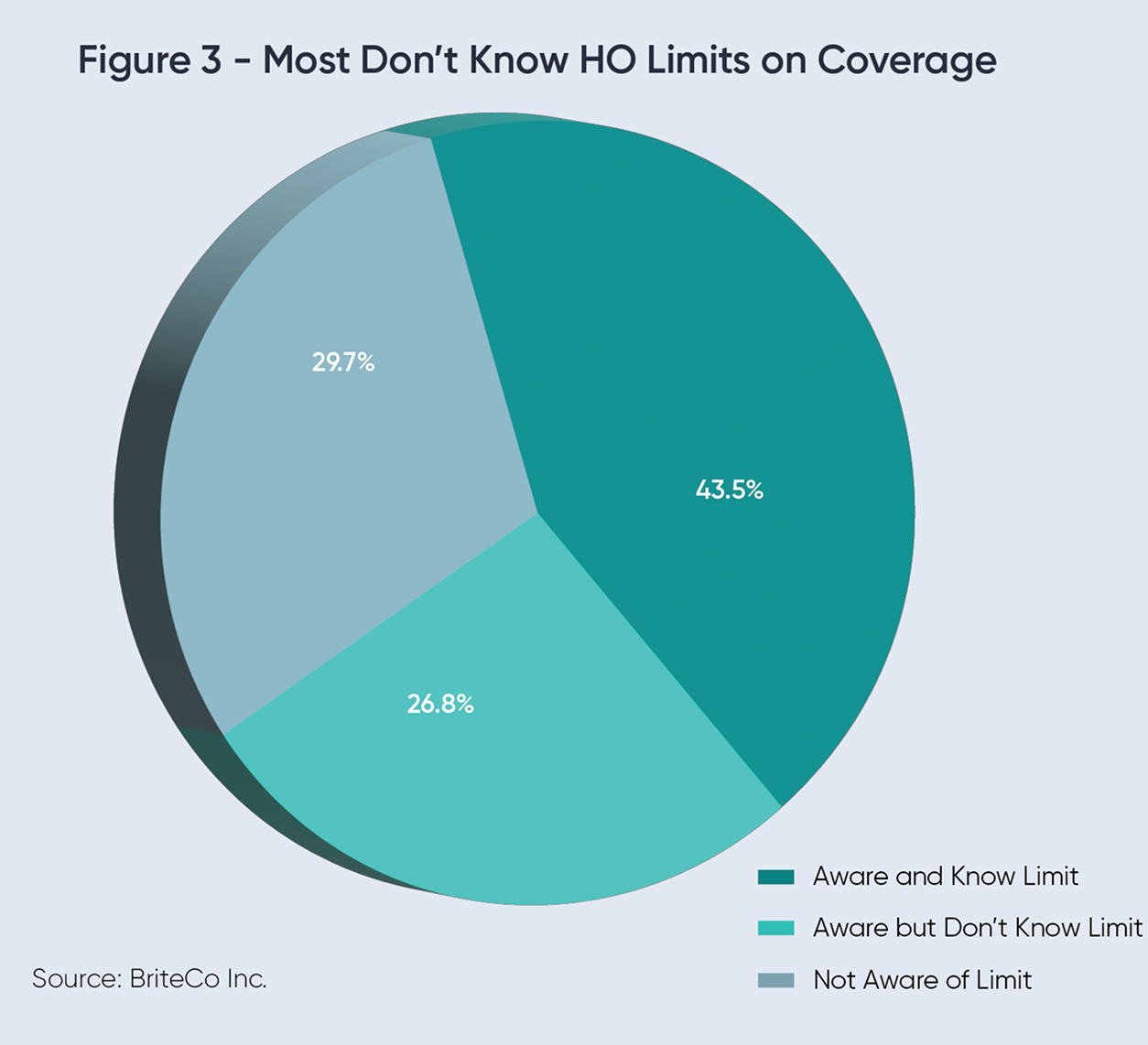
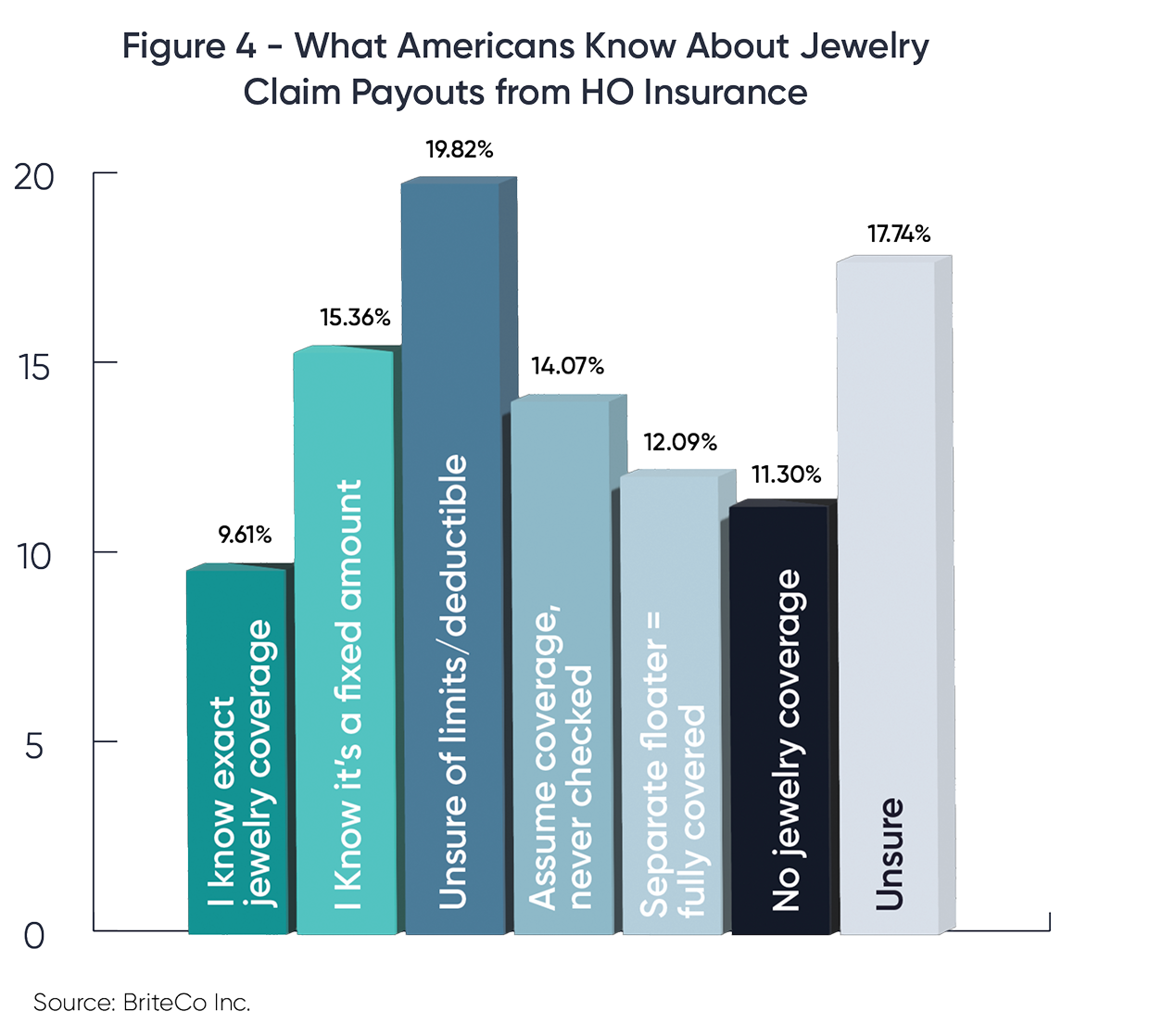
Standard homeowners insurance provides limited jewelry coverage, typically $1,000 to $2,500 per item. However, nearly one-quarter (23%) of Americans think the maximum payout for a single piece of fine jewelry is higher than that, and 27% admit they have no idea what the maximum payout is. BriteCo’s survey reveals that most people wouldn’t know their true coverage until it’s too late.
While you can file a claim, you may only receive a fraction of the value of the jewelry piece, leaving the owner responsible for paying the remainder for a replacement—with a potential for thousands of dollars in out-of-pocket expense.
Bottom line
Most people with jewelry insured through their homeowners policy are unaware of the risk exposure and coverage gaps in the event they have to make a claim. They would likely only discover coverage limitations once their items have been lost or stolen.
Figure 5 – HO Insurance Jewelry Coverage Misconceptions

Nearly 40% of homeowners also don’t know that filing a jewelry claim could increase their homeowners insurance premium or even result in the policy being canceled.
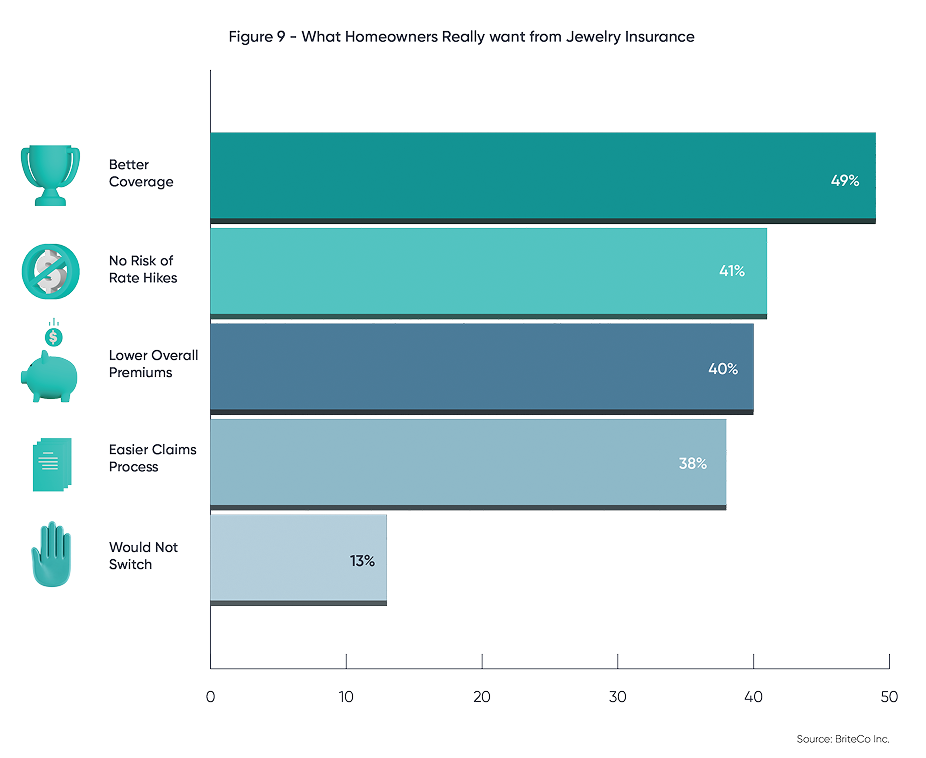
J.D. Power’s 2024 report revealed that 47% of homeowners insurance customers said their premiums rose in the past year, and 98% of insurance agents in BriteCo’s 2025 Agent Survey said their clients need to be made aware of the potential impact from filing a jewelry claim through a homeowners rider or floater. See the sidebar and Figure 8 to understand how even small claims can have long-term impacts on a homeowner’s insurability.
Even one jewelry claim can impact an HO policy when it’s reported to data loss-history services like CLUE (Comprehensive Loss Underwriting Exchange) or A-PLUS, loss-history reporting services for personal lines such as auto and property. This data loss history is typically used by insurance carriers to assess an individual’s risk profile and determine (and often increase) premium costs, or to possibly trigger a policy non-renewal. Both loss-history data services provide about seven years of claim history for underwriting and rating decisions.
The best way to protect valuables (and keep your homeowners insurance intact) is with separate jewelry coverage. It keeps your homeowners coverage untouched while providing faster, more tailored protection for jewelry loss, theft, damage, or even “mysterious disappearance.” BriteCo does not report claims to either CLUE or A-PLUS so there is no impact on your homeowners or renters insurance. With BriteCo, you get coverage based on your jewelry’s appraised value (up to 125%), often with zero deductibles and no risk of a claim impacting your homeowners coverage. It’s a simple way to safeguard your valuables and keep costs affordable.
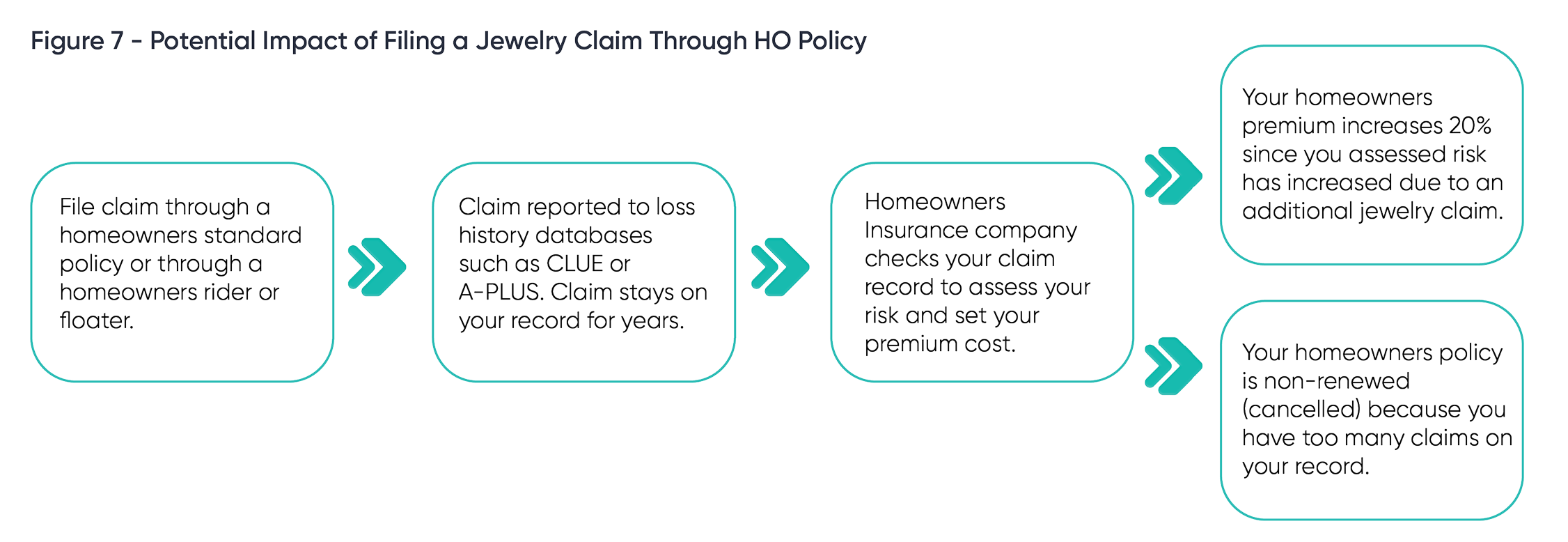
To avoid the risk of rising homeowners premiums, homeowners are taking their own precautions with jewelry to avoid filing a claim:
These choices reflect how little trust people have in their current coverage.
The data shows that, to some extent, avoidance has replaced confidence. People are choosing to take on emotional and financial risk because they fear their coverage won’t protect their cherished valuables. Instead of relying on insurance, Americans are adopting a do-it-yourself approach to safeguarding their most meaningful possessions, which can be a costly decision. BriteCo’s stand-alone jewelry insurance offers a better solution.
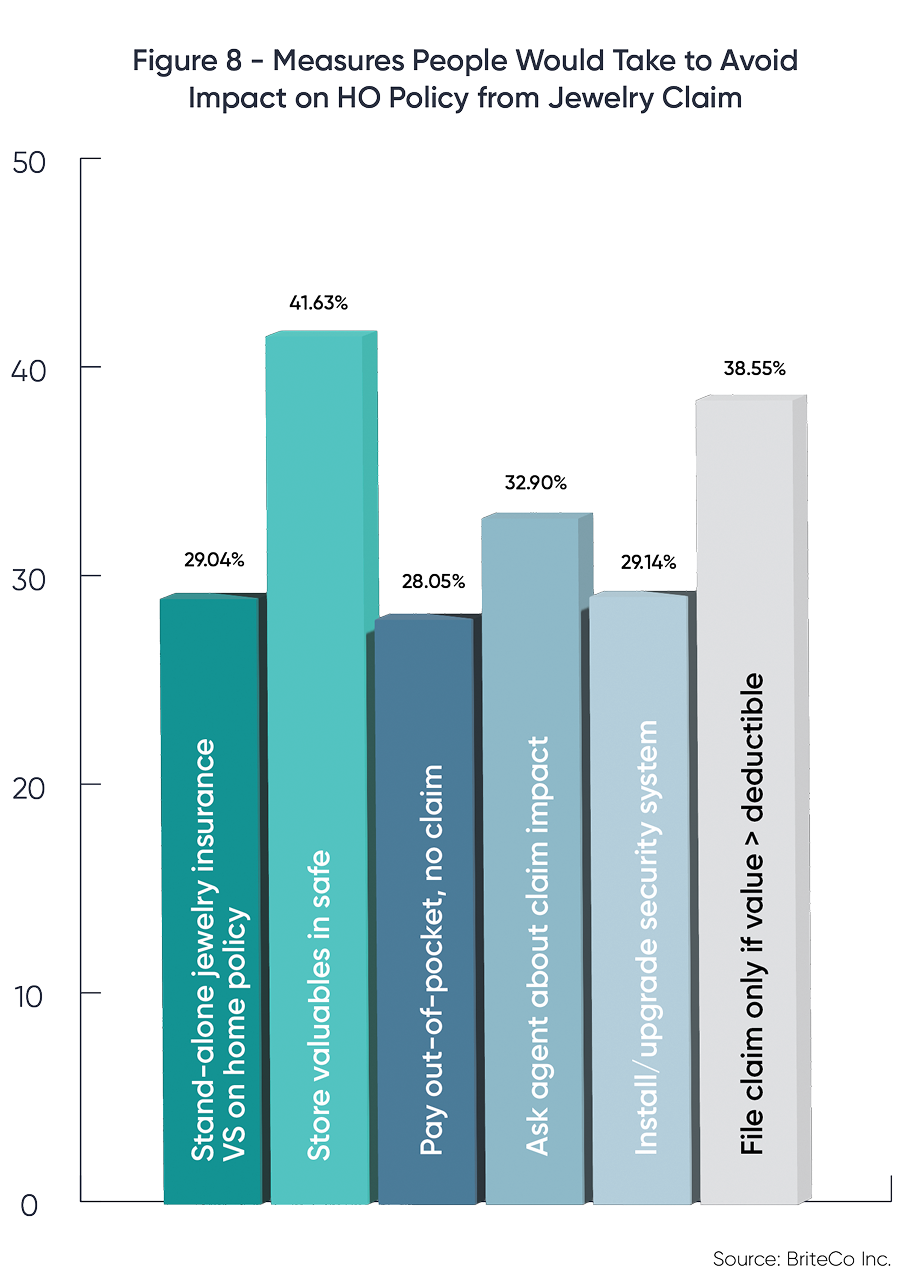
It’s proof that Americans want jewelry protection without risking an increase in their homeowners policy costs from a claim. That’s what BriteCo delivers — peace of mind, simplicity, and control.

BriteCo jewelry insurance specifically states that it does not report claims to either CLUE or A-PLUS; thus, anyone considering other stand-alone jewelry providers should confirm in writing that these providers do not report to CLUE and A-PLUS
Our survey shows what homeowners have quietly suspected: Homeowners insurance isn’t built to protect jewelry. From low payout limits to claim risks, a jewelry rider or floater on homeowners insurance can cost more than it saves. Our data makes it clear that your jewelry deserves protection designed for it. BriteCo’s stand-alone jewelry insurance offers a better way, providing worldwide coverage, fast claims, and zero deductibles, worldwide — all without affecting your homeowners premiums. Protect your jewelry with confidence — get a quote today.
The survey of 1,009 American homeowners ages 18 and over was conducted via SurveyMonkey Audience for BriteCo on October 31, 2025. The data is unweighted, and the margin of error is approximately +/-3% for the overall sample, with a 95% confidence level.
BriteCo is a leading provider of modern jewelry and event insurance. Offering comprehensive jewelry and watch worldwide coverage for loss, theft, and damage, BriteCo also provides liability and cancellation insurance for weddings and events.
With policies backed by an AM Best A+ rated insurer, BriteCo delivers peace of mind for life’s milestones through fast online quotes, affordable monthly premiums, and full-value coverage.