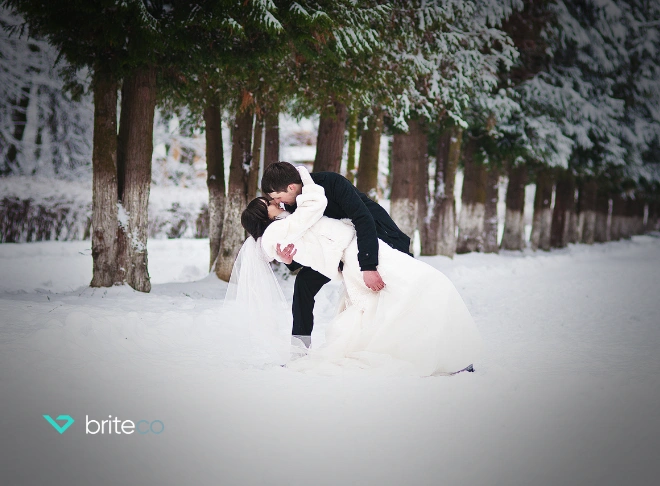
Winter Wedding Guest Attire: What to Wear for Cold Weather Events
Winter wedding guest attire can be just as fun and flattering as your favorite summer wedding sundress, but picking your cold-weather outfit requires more care than just pulling out your favorite long-sleeved dress.
For the perfect winter wedding ensemble that is fashionable yet functional, you’ll want to seek out rich fabrics, jewel tones, and layers that allow you to go from blustery, snowy conditions to the warmth of a packed reception space with ease.
Our guide can help you determine what to wear to a winter wedding as a guest, and which accessories to bring along for the day.

What You Will Learn
First, Consider the Wedding Dress Code
Before you consider a single garment from your wardrobe for the winter wedding you’ve been invited to, check the dress code. Whether it’s formal, semi-formal, or casual, the dress code will determine appropriate fashion options for the event.
The wedding dress code should be listed on the wedding invitation you received or the couple’s wedding website. If it’s not, don’t be shy about reaching out to the couple and asking for more details.
1. Formal Weddings
Formal weddings may be classified as black-tie, white-tie (increasingly rare), or black-tie optional. For white-tie and black-tie weddings, women typically must wear floor-length gowns (sometimes, particularly elegant cocktail dresses or a tux are acceptable, but it’s not the rule). For men, go for tuxedos with tails for white-tie weddings and tuxedos sans tails for black-tie weddings.
Black-tie optional is the least formal of these, and guests can choose to go the tux and gown route if desired, but other suits and dresses are also permitted.
2. Semi-Formal Weddings
At semi-formal weddings, expect everyone to be wearing regular suits (no tuxes), cocktail dresses, slacks, or even skirts if they’re dressy enough.
3. Casual Weddings
At casual weddings, men can wear dress pants or khakis, collared shirts, and sports jackets. Women can wear similarly casual dresses or pant suits. Just know that despite the name, a “casual” dress code does not allow for jeans, flip-flops, or T-shirts (not that you’d want to wear those in winter any way).

What to Wear to a Formal Winter Wedding
If you’ve consulted the invitation and found the wedding will be black-tie or black-tie optional, consider a gown in a jewel tone or a similarly winter-appropriate color. Steer clear of pastels and bright, summery tones as well as, obviously, white. Depending on the wedding and the couple, black dresses may also be frowned upon. Instead, consider a deep maroon, dark green, navy blue, or eggplant purple hue instead.
As for fabrics, velvet is a great choice both for floor-length gowns as well as for suit jackets for the men.

What to Wear to a Semi-Formal Winter Wedding
If you’re attending a semi-formal winter wedding, there’s no need to go shopping for a gown. Instead, consider something that you may already have on hand for Christmas or New Year’s Eve parties. Cocktail dresses, skirts, and slacks are welcome, and you can be a little more creative in terms of the fabrics and accessories featured in your look, given the dress code’s lessened formality.

What to Wear to a Casual Winter Wedding
As you decide on what to wear to a casual winter wedding, keep upscale comfort in mind. But think of what you might wear to an elegant dinner at a luxury ski resort rather than what you’d wear to go holiday shopping.
The casual wedding dress code is typically reserved for outdoor weddings held in a setting where suits and long dresses would be uncomfortable — like a beach or boat. For a casual winter wedding, a cold outdoor locale isn’t out of the question, perhaps domed igloos or heated and tented terraces. No matter the season or setting, though, it’s important to note that “casual” probably still means dressier than you might expect.
Jeans and tennis shoes are out of the question. Instead, consider luxury knitwear, slacks, and/or a knit dress.
Accessories to Bring to a Winter Wedding
When picking accessories for a winter wedding, choose those that provide extra warmth and will complement your outfit. For example, consider layering a warm shawl with a dress or choosing a suit blazer in a heavier fabric. As noted, layering is key, so incorporate elements that will keep you warm as you go from ceremony space to reception space (but that you can remove if the heat is on full blast).
As for jewelry, incorporate winter-forward accents like leaning into rich jewel tones, including sapphire or ruby, or by going all out with the sparkle through lots of glittering gold, silver, and/or diamonds.
Lastly, for shoes, you don’t have to resort to snow boots, but be sure to pick elegant footwear that will provide both stability and warmth.
Winter Wedding Guest Attire FAQs
What Should You Never Wear to a Winter Wedding?
When attending a winter wedding, avoid extra-casual winter attire, such as jeans, snow boots, or puffy jackets, as well as the color white, even if the wedding has a winter weather theme. Additionally, while some modern couples may not mind you wearing black to their wedding (unless it’s a tux), other couples may stick to the traditional notion that black is too “funeral-esque” for their celebration. If you’re in doubt about what to wear to a wedding, always feel free to ask the couple for their preferences.
What Colors Are Best to Wear to a Winter Wedding?
Avoid white and black and lean into winter hues such as gray, silver, and blue, as well as deep, dramatic tones like pine-y green, eggplant purple, or maroon. Always avoid wearing pastels or bright, neon colors.
How Can You Stay Warm at a Winter Wedding?
Rather than relying on a giant, unsightly puffer jacket at a winter wedding, pick fabrics and accessories that will keep you warm, such as a thick shawl, fur, or thick fabrics such as velvet, wool, and corduroy.
What Shoes Should You Wear to a Winter Wedding?
Look for shoes that will provide you with stability, comfort, and warmth. Avoid anything open-toed and ultra-high high heels. Instead, go for closed-heel shoes or, if the wedding is casual, dressier ankle boots.
Can You Wear a Floral Dress to a Winter Wedding?
You can wear a floral dress to a winter wedding, but it needs to be the right combination of colors. For example, avoid any design that incorporates a lot of pastel pinks and light greens, nor would you want to wear one that’s primarily white, blue, and yellow. If it looks and feels like “spring,” it’s a no. Instead, opt for florals in darker colors, such as dark-hued blooms on a black background.
The One Thing Every Winter Wedding Needs: Wedding Insurance
No matter how formal the winter wedding is or what guests are expected to wear, every event needs one key thing: wedding insurance to ensure that the big day can still go on, even in the event of treacherous weather.
Wedding cancellation insurance allows couples more freedom to make the call to cancel the big day if there’s an oncoming blizzard or similar weather event. The event can then be postponed and rescheduled for a later date — without losing out on venue and vendor deposits.
And once the celebration is over, having an organized guest list makes it easy to send thank you notes, especially with a free thank you note generator that turns your list into print-ready cards in minutes.
Along with choosing the right outfit, understanding modern wedding guest etiquette helps ensure you’re fully prepared for the celebration.
Learn more about wedding insurance and get a quick, free quote from BriteCo now.
Related Articles:
Questions to Ask Wedding Venue
Easy Steps to Create the Perfect Wedding Dinner Menu
Cute Wedding Outfits for Your Pets
Favorite Lifetime and Hallmark Holiday Weddings
6 Hidden Disasters to Avoid on Your Wedding Day
How to Postpone a Wedding Due to a Natural Disaster
How to Get Married in Vegas
Plan the Perfect Second Marriage Wedding
Affordable Wedding Insurance: More Coverage, Less Cost!

UP NEXT: What to Write in a Wedding Card: Templates & Examples

Author