Jewelry insurance works by helping pay to repair or replace your jewelry if it’s lost, stolen, damaged, or if it mysteriously disappears, as long as your insurance policy covers the event. The process typically starts with getting an appraisal to confirm your item’s value, then shopping around for the best jewelry coverage for your needs, and finally making a claim on your chosen policy if anything ever happens.
So, how does jewelry insurance work?
- You document the items’ value
- Buy the right coverage
- File a claim if a covered loss occurs
You may need specialized jewelry insurance if:
- You’d feel the financial hit of replacing a piece
- You wear jewelry often or travel with it
- Your jewelry has sentimental or heirloom value
- Your jewelry would be expensive to repair or replace
- Your homeowners or renters policy will not fully cover your jewelry
Is jewelry insurance worth it? Often, yes. Here are some tips on how to insure jewelry and what it entails.
What You Will Learn
- How to Get Jewelry Insurance and Keep Your Coverage Current
- What Jewelry Insurance Covers, Includes, and Excludes
- How Much Jewelry Insurance Costs and How Deductibles Affect the Price
- How to Insure a Jewelry Collection
- How to Document Your Collection for Insurance
- How to Insure Inherited and Heirloom Jewelry
- What Happens When You File a Jewelry Insurance Claim
- Why BriteCo is a Strong Choice for Jewelry Insurance
- Insuring a Jewelry Collection | FAQs
- Get Your Quote Now
How to Get Jewelry Insurance and Keep Your Coverage Current
Insuring jewelry begins with gathering all the documentation you’ll need for a quote.
Step-by-Step: How Jewelry Insurance Works When You Buy It
If you’re wondering how to insure jewelry initially, the process couldn’t be simpler and can be broken down into five easy steps:
- Gather proof of value (often through a jewelry appraisal for insurance purposes).
- Decide how much coverage you need.
- Compare policies (like specialized jewelry insurance vs. itemized coverage on a homeowners policy).
- Pick your payment and deductible options.
- Buy the policy that’s best for you and save your documents in a safe place (both physical copies and digitally).
What You’ll Need
In order to purchase jewelry insurance, you’ll likely need:
- A jewelry appraisal or detailed receipt from a recent purchase
- A diamond or grading report (if relevant)
- Clear photos of the piece
- Basic item details
When To Buy Coverage
Buy coverage as soon as you take ownership of the piece, even before a proposal if the ring is currently in your possession.
- If you just purchased the piece, buy coverage immediately.
- If you received an heirloom gift and it’s not already covered? Buy coverage ASAP.
- If you recently upgraded a piece, buy or update coverage accordingly, to reflect the piece’s new value.
- If the piece was recently appraised, similarly, buy or update coverage to reflect the piece’s current value.
You always want to be sure that your jewelry is fully covered, at all times, for its accurate value, so if the unexpected happens, and the jewelry is damaged, lost, or stolen, you’re not stuck with the financial ramifications.
Do You Need to Mail the Jewelry?
Most shoppers can apply for insurance coverage using documentation and photos, with no need to mail the item to the potential insurer. If an insurer ever requires you to ship the jewelry for their review, confirm the protections they have in place for that process.
How to Keep the Policy Up to Date
Once you have jewelry insurance, keep the policy up to date by providing your insurer with new paperwork and appraisals anytime the piece is updated or changed materially, in any way, as this will confirm your jewelry is insured for the correct value.
You’ll need to provide your insurer:
- An updated appraisal or receipt
- New photos
- New details regarding stone or setting upgrades
- The date that the upgrade or changes were made
So do I need an appraisal now?
Generally, it’s just a good idea to seek a new appraisal every three to five years, but always after upgrading a piece, if there are any significant market or value shifts, or if you lose your last appraisal.
For more, check our ring appraisal guide and our guide to how to insure jewelry.
Suggested Read: How Often Should Jewelry Be Appraised?
What Jewelry Insurance Covers, Includes, and Excludes
Stand-alone jewelry coverage typically covers theft, accidental loss, mysterious disappearance, and more, but some events will fall outside of policy terms.
What Jewelry Insurance Usually Covers
Most policies are designed to cover the real-life risks owners worry about most.
What does jewelry insurance cover?
- Theft or robbery
- Accidental loss
- Accidental damage
- Stone loss
- Mysterious disappearance
- Sometimes broader event coverage depending on the policy
What “Includes” Means vs. What “Covers” Means
When an insurance policy uses the word “covers,” that refers to the events your policy protects against, while “includes” refers to how the policy works in practice.
A policy might include:
- Repair or replacement coordination
- Documentation requirements
- Claims support
- Payment schedule
- Policy documents
- Jeweler/replacement process terms
What Mysterious Disappearance Means
Mysterious disappearance means the covered item is missing, but there’s no clear explanation as to why, such as confirmed theft or a witnessed accident.
Examples of mysterious disappearance might include:
- Noticing your engagement ring is gone after you were wearing it while running errands
- Going out for the night and coming home to find that you’re missing an earring
- Unpacking after a trip and realizing a bracelet is no longer in your travel case
“Mysterious disappearance is more common than you’d imagine,” says BriteCo Chief Actuary Conor Redmond. “It happens far more frequently than theft. And it’s a total loss that can be financially devastating without insurance.”
This coverage is important because many homeowners insurance policies do not treat mysterious disappearance the same way that a specialty jewelry policy might, and may have stricter coverage limits and conditions as to when they’ll accept a mysterious disappearance claim.
Are Lost Diamonds, Necklaces, and Other Pieces Covered?
Yes, you can insure a necklace, lost diamonds, and other jewelry pieces under most specialty jewelry insurance policies.
Let’s say that a prong in a diamond setting loosens and now you have a lost diamond — that would be a covered loss.
Or, let’s say that your center diamond chips after an accident; that would likewise be covered.
“Doors and counters are the enemy of diamonds! Diamonds are hard, which really means they don’t scratch, but they’re still subject to chipping and cracking,” Redmond says. ”People have chipped their diamond knocking it on a counter, getting it jammed in doors, and wearing it during physical activity.”
Insurable items beyond rings include:
- Necklaces
- Bracelets
- Earrings
- Pendants
- Watches
- Heirloom Pieces
What is Typically Not Covered
Jewelry insurance typically does not cover:
- Intentional damage
- Fraud or misrepresentation
- Normal wear and tear
- Issues already covered under a manufacturer warranty (learn more about a jewelry warranty vs. insurance)
- Events outside policy terms
Learn more about exclusions in this jewelry insurance overview.
How Much Jewelry Insurance Costs and How Deductibles Affect the Price
Jewelry insurance generally costs 0.5%-2% of the jewelry’s value annually, and opting for a policy with a deductible may result in a lower monthly or annual premium — though keep in mind that opting for a deductible also means more out-of-pocket costs for you in the event you make a claim.
What Jewelry Insurance Usually Costs
Jewelry insurance usually costs a small percentage of an item’s value each year, with the exact price depending on factors like location, item value, and policy structure.
Ranges vary by provider and the underwriting process, as well as factors such as your jewelry’s value, your location, and risks. Expect pricing to increase with the item’s value and better coverage terms.
| Your Jewelry’s Value | Potential Annual Cost | Potential Monthly Cost |
|---|---|---|
| $2,500 | $12.50–$50 | $1–$4 |
| $5,000 | $25–$100 | $2–$8 |
| $10,000 | $50–$200 | $4–$16 |
What Changes the Price
Jewelry insurance cost may vary based on:
- Location
- The piece’s insured value
- Risk factors
- Deductible choice
- Type of coverage chosen
- Replacement terms
What a Deductible Is and How to Choose One
What is a deductible in insurance? A deductible for jewelry insurance is the amount you pay out of pocket on a covered claim before your insurer pays the rest.
For example, if a covered repair costs $4,000 and your deductible is $500, you pay $500 and the insurer pays the remaining covered amount.
As such:
- Choose a lower or zero deductible plan if you want predictable claim costs.
- Choose a higher deductible if lower premiums matter more to you, and you can absorb a claims expense.
Check your price and learn how much does jewelry insurance cost in your specific circumstances.
How to Insure a Jewelry Collection
You can insure a jewelry collection three different ways: schedule each piece individually, schedule only the valuable pieces (and use blanket coverage for the rest), or raise the jewelry limits on your homeowners or renters policy.
Which choice is best for you depends on exactly what’s in your jewelry collection, not just how much you love it.
| Structure | Best When | Typical Cost | Key Trade-Off |
|---|---|---|---|
| Scheduling each piece of jewelry individually | You own multiple pieces of primarily high-value jewelry | 0.5–1.5% of each item’s appraised cost per year | Professional appraisals often required; getting coverage may be more time-consuming or complicated |
| Scheduling the most valuable pieces of jewelry and using blanket coverage for the rest | You have maybe one or two high-value pieces, but a range of lower-value pieces | 0.5–1.5% of each scheduled item’s appraised cost per year; 1–2% of the total value of the items covered under blanket coverage per year | Blanket coverage comes with a per-item limit, including caps on individual item payouts |
| Raising the jewelry limits on your homeowners or renters policy | You have a limited number of lower-value pieces | 0.5–1.5% of the additional coverage requested per year | Coverage limits (an increased limit still may not include coverage for mysterious loss or disappearance) |
Say you have a jewelry collection worth $3,500 total, but it’s only made up of two pieces, and the most valuable is $2,800. In this case, you could simply raise your homeowners policy limits.
If, though, your collection has a combined value of $12,000, with pieces ranging from $500 to $8,000, you might choose to schedule the $8,000 piece and blanket the rest.
At the end of the day, the goal is to ensure you’re covered for the full replacement value of every piece in your collection. If your collection is worth $45,000+ and has no pieces worth less than $1,500, it’s worth scheduling each piece individually. Read more about using a stand-alone policy vs. a standard homeowners policy here
“We see people not insuring their items until far down the line, and that’s a huge mistake,” BriteCo founder and CEO Dustin Lemick says. “If you have expensive items, they really should be insured, and early on. It’s a super good value.”
At BriteCo, insuring your entire jewelry collection is easy: you can add pieces to your policy at any time through your online dashboard, and each piece is covered from the day it’s added.
Whatever your chosen coverage option, it’s important to understand how to document your collection for insurance purposes and how to go about insuring inherited jewelry collections.
Don’t forget that taxes may affect your inherited jewelry!
How to Document Your Collection for Insurance
Before an insurer can cover your collection or pay out when you file a claim, they need specific documentation for each piece of jewelry.
“It’s easy to lose track of items,” Lemick says. “We see it all the time. So it’s smart to have good record-keeping and paperwork. What we recommend is cataloging what you have and keeping track of appraisals, receipts, and photos.”
While it’s helpful to have a home inventory noted somewhere, there are a lot more details an insurance provider needs at claim time beyond just what you think you own. Note that the requirements in the checklist below apply to each item in your jewelry collection.
- Item Description
You’ll need a full, detailed, written item description that includes the item’s precious metal(s) and all stones, with details such as metal purity, carat weight, measurements, brand or designer, and any unique identifiers. - Purchase Receipt
If you still have it, include the purchase receipt for the piece in your documentation. - An Appraisal
For scheduled or stand-alone-insured pieces, an appraisal from a qualified appraiser is generally required. BriteCo may accept a detailed sales receipt, an appraisal, or a lab certificate; you don’t always need all three.
“When an appraisal is submitted for insurance, we look at the appraiser’s description of the piece, the definition of its condition, and its value at that given time, as well as any accompanying certificates of authenticity,” Lemick says. - Photos
Take comprehensive photos of each piece of jewelry from every side, including overhead views, and include an item for scale. Photos should be high-quality, in focus, and well-lit. Also, photograph any interesting or unique details that make the piece stand out. - Hallmarks, Maker’s Marks, and Serial Numbers
Examine your piece for any hallmarks, maker’s marks, and/or serial numbers and note those as well. You can often find these in hidden places, such as the inside of a ring band or the clasp of a necklace or bracelet. - Provenance Notes
Provenance documentation includes information regarding when, where, and how the piece came into your possession, as well as any information that you might have regarding previous owners. This is especially important for documenting inherited pieces or family heirlooms. - Condition and Pre-Existing Damage
While jewelry insurance (as well as homeowners personal property coverage) does not cover pre-existing damage, it’s vital that you include condition and any damage details in your documentation, to ensure easy coverage of future accidental damage. - Current Retail Replacement Value
Note that the current retail replacement value is not the same as fair market value, and when you have jewelry appraised, appraisers can use either approach. For jewelry coverage, though, you’ll want the former.
The current retail replacement value is what it would cost to replace the piece of jewelry with an identical (or as close as possible) piece at a jewelry store right now. Fair market value, on the other hand, is the price a willing buyer would pay for your piece, taking depreciation into account. Current retail replacement value is typically much higher than fair market value.
 - Photo of the Piece in Your Possession
In addition to photos of the piece on its own, some insurers, like BriteCo, will ask you to provide a photo of the piece in your possession, such as you wearing or holding it. - Storage and Security Posture
Lastly, you’ll want to document how you plan to securely store the piece. For example, if you plan to store jewelry items in a home safe when not wearing them, or if you have a home security system, these are details worth documenting.
 Fair market value, on the other hand, is the price a willing buyer would pay for your piece, taking depreciation into account. Current retail replacement value is typically much higher than fair market value.
Let’s take a closer look at how to go about insuring inherited and heirloom jewelry, since these types of pieces can be especially difficult to properly document.
How to Insure Inherited and Heirloom Jewelry
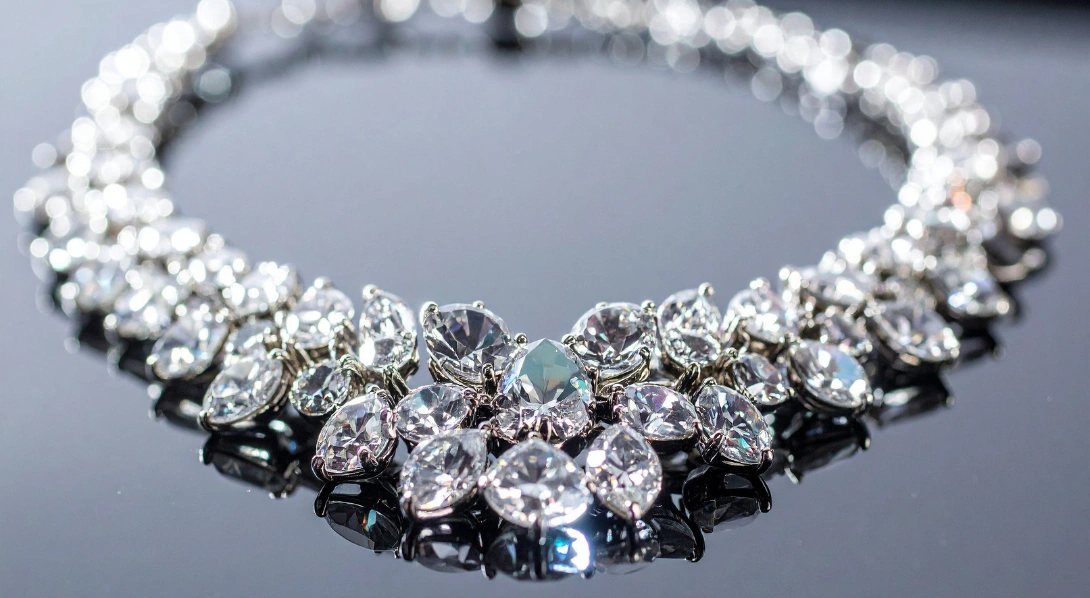
An inherited piece of jewelry can pose a problem when it comes time to insure it, but only due to a common lack of documentation. Those with inherited pieces typically have no receipt, no original appraisal, and often no paperwork proving the value of any kind.
That said, securing a jewelry insurance policy itself will establish the piece’s value in the process and provide coverage identical to what you’d have when insuring any other piece of jewelry.
There are three ways you might establish the value of a piece of fine jewelry that you’ve inherited:
- Get an in-person appraisal from a retail jeweler; BriteCo has 3,500+ retail jeweler partners who can provide quick, approved appraisals
- Use BriteCo’s online appraisal service, with appraisals starting at $26
- Locate provenance documents (if they exist) that confirm the piece’s value in a manner equivalent to a sales receipt
Knowing the piece’s replacement value is necessary to establish coverage and protects the piece’s sentimental value, too. (This is likely the whole reason you’re even seeking coverage in the first place!)
If you decide to find your own credentialed, qualified appraiser to appraise your inherited jewelry, ensure that they are a Graduate Gemologist (a credential awarded by the Gemological Institute of America), as well as an active member of industry organizations such as the National Association of Jewelry Appraisers (NAJA) or American Society of Appraisers (ASA).
“A lot of times appraisers will give you volume discounts,” Lemick says. “They’ll say, ‘Hey, it’s X amount of dollars for the first piece, and then you get 30% off for all the additional pieces after that.’ Or they’ll give you a bundle price for everything.”
Again, once the value is on paper, the piece gets the same coverage as anything else in your collection, including the mysterious-disappearance protection covered next.
What Happens When You File a Jewelry Insurance Claim
When you file a jewelry insurance claim, the insurance provider will review your claim and, if accepted, then inform you of necessary next steps, such as working with a jeweler to have the piece replaced or repaired.
What the Claims Process Usually Looks Like
When it comes to how to file a jewelry insurance claim, you’ll submit your claim, online, for review and the insurer will get back to you with your options. While submitting a claim may take only a few minutes, the full repair or replacement timeline usually depends on the complexity of the item and the jeweler involved.
You’ll submit a claim → The insurer reviews documents → If the claim is accepted, you can repair or replace the item
Can You Use Your Own Jeweler?
Sometimes, yes, you can use your preferred jeweler for jewelry repair or replacement after an insurance claim, but not every policy handles replacement the same way, so confirm a policy’s jeweler-choice rules before signing the dotted line.
Before choosing a jewelry insurance policy, ask:
- Who chooses the jeweler in the event of a claim?
- Does the policy replace the item or reimburse you?
- What quality standards apply to replacement?
- Can you work with a trusted local jeweler?
Whether you’re shopping for engagement ring insurance or more general jewelry coverage, the ideal policy allows you to work with a local jeweler, and provides replacements of an equivalent quality.
Jewelry Insurance vs. Homeowners or Renters Coverage
Homeowners or renters insurance may provide some jewelry coverage, but claim limits, deductibles, and narrower loss scenarios often leave gaps for valuable pieces — and specialized jewelry insurance fills those gaps by covering more claims, providing greater payouts, and insuring the full value of your pieces.
| Does it… | Homeowners/Renters Insurance | Specialty Jewelry Insurance |
|---|---|---|
| Offer Theft Coverage? | Yes, but the coverage is limited to thefts within the home and the full value of your jewelry may not be covered. | Yes, with 100% of your jewelry’s value covered, often worldwide. |
| Offer Accidental Loss Coverage? | When asking does homeowners’ insurance cover lost jewelry, the answer isn’t simple. It may or may not, depending on the policy. | Yes, always. |
| Offer Mysterious Disappearance Coverage? | It may or may not, depending on the policy. | Yes, always. |
| Impact Your Deductible? | Yes, you will have to pay a deductible if you make a claim. | Plans with both deductibles and no deductibles are available. |
| Impact Your Home Insurance Policy? | Yes, making a claim will negatively impact your home insurance policy, causing your premiums to go up or a loss of coverage. | So long as you have a provider that does not report claims to insurance industry databases, a claim will not impact your home insurance policy (BriteCo is currently the only provider that does not report claims). |
| Give You a Choice in Jeweler? | It may or may not, depending on the policy. | Plans with and without preferred jeweler options are available. |
| Provide Item-Specific Valuation? | It may or may not, depending on the policy. | Yes, every item is covered to its full value. |
When it comes to homeowners vs. specialty policy coverage, a stand-alone jewelry insurance policy is typically built for jewelry-specific risks and replacement needs, while home coverage is usually broader property coverage with narrower jewelry protection, even if you have homeowners insurance ring coverage through a rider or floater. Similarly, renters insurance and jewelry are not an ideal match.
Why BriteCo is a Strong Choice for Jewelry Insurance
BriteCo is built around stand-alone jewelry insurance, with coverage designed specifically for loss, theft, damage, and mysterious disappearance rather than as a small add-on to a home policy.
BriteCo’s comprehensive jewelry insurance includes:
- Stand-alone, jewelry-specific coverage
- $0 deductibles
- Coverage for up to 125% of pieces’ appraised value
- Fast online quotes
- The ability to work with your preferred local jeweler
BriteCo insures jewelry and watches at any appraised value, with no value cap on individual items or total schedules. Coverage is subject to the standard underwriting review process.
Need to know more before you purchase a jewelry insurance policy? Check out BriteCo’s excellent customer service (5-star reviews) for insurance purchasing process and claims handling, as well as our coverage in Fortune, Forbes, and more.
Then, check your jewelry insurance price now.
Insuring a Jewelry Collection | FAQs
At what total value should I insure my jewelry collection separately from my homeowners insurance?
Most homeowners policies cap jewelry coverage at around $1,500 total. If your collection’s total replacement value exceeds $1,500 and a single piece sits under that sub-limit, raising your homeowners jewelry limit is usually the simplest path. If any single piece exceeds the sub-limit — or if you want mysterious disappearance and worldwide loss coverage — a standalone jewelry insurance policy is best.
Should I schedule every piece or use blanket coverage for a collection?
Schedule any piece above your insurer’s per-item limit (typically $1,000–$2,500). Blanket coverage applies to the remaining lower-value pieces, subject to the same per-item limit. Mixed-value collections use both on one policy.
How do I insure inherited jewelry when I don’t have a receipt or original appraisal?
Binding coverage requires establishing value, which, for undocumented inherited pieces, means a fresh appraisal by a qualified appraiser. Look for a Graduate Gemologist (GIA) who is a member of a nationally recognized appraisal organization, such as NAJA or ASA. BriteCo operates an online appraisal service ($26) and a network of 3,500+ partner jewelers as two paths to that appraisal.
Get Your Quote Now
Jewelry insurance works by helping repair or replace your item after a covered loss, using your documentation and policy terms to guide the claim. If your piece would be expensive or upsetting to replace, the smartest next step is to get coverage in place early and confirm the details that matter most — what’s covered, how claims work, and whether you can use your preferred jeweler after a claim.
Check your jewelry insurance price now.
Related Articles:
Gender-Neutral Jewelry
Bvlgari Jewelry Insurance
Jewelry Appraisal Requirements For Insurance Coverage
Appraised Value Vs. Replacement Value Vs. Market Value for Jewelry Insurance
Get a Quote:
The Easy Way to Insure Your Jewelry - and Save Money!
UP NEXT: What are the Odds of Losing or Damaging Jewelry?

Author