How Do I Put on Cufflinks?
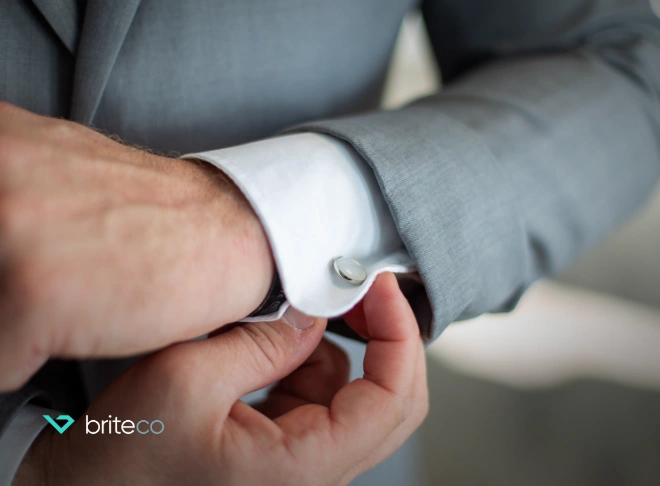
Putting on a pair of cufflinks as part of a formal outfit is pretty seamless. First, position the cufflink holes on your sleeve so that cuff edges overlap and then pass through the aligned holes, before fastening the cufflinks in place.
This simple, straightforward process will allow you to wear cufflinks with many shirts. However, the process can differ slightly depending on the type of shirt you’re wearing, as well as the type of cufflinks that you buy.
Here’s everything you need to know about different types available and what kind of dress shirt can accommodate the accessory, so you can put on cufflinks with confidence.

What You Will Learn
- What Types of Shirts Can Accommodate Cufflinks?
- How Do I Put Cufflinks on a Double Cuff Shirt?
- How to Make a Kiss Cuff Vs. Barrel Cuff
- Can You Wear Cufflinks with Single Cuff Shirts?
- Types of Cufflinks
- What Cufflink Style Is Right for You?
- How to Wear Cufflinks FAQs
- Protect Your Favorite Accessories with Comprehensive Jewelry Insurance
What Types of Shirts Can Accommodate Cufflinks?
Two types of shirts can accommodate cufflinks: French cuff shirts and shirts with convertible cuffs.
- French cuffs, or double cuff shirts, feature no existing button at the wrist. They only feature two holes in the cuff, designed specifically for cufflinks.
- A convertible cuff shirt, meanwhile, features a button already on the wrist, but there’s also a hole, giving you the option to wear cufflinks if you so desire (though it’s not a requirement).
How Do I Put Cufflinks on a Double Cuff Shirt?
To put cufflinks on a double cuff AKA French cuff shirt, follow these steps:
- Fold back the shirt cuff so that the bottom edges lay flat and straight against your wrist.
- Grab the two cuff edges with your thumb and pointer finger.
- Position the fabric until the cuff’s holes line up.
- Insert the cufflinks, ensuring the back is facing inward and the front is facing outward, and fasten them into place.
How to Make a Kiss Cuff Vs. Barrel Cuff
To form a kiss cuff, pinch the cuff material so that the holes line up as if the two insides of the cuff are “kissing.” In contrast, a barrel cuff is when you line the holes up one on top of the other.
The barrel method creates a cuff that appears most similar to a standard single cuff shirt, and is a more relaxed cuff fit commonly worn in everyday office settings. On the other hand, the kiss method is a more formal cuff style.
Can You Wear Cufflinks with Single Cuff Shirts?
Yes! Single cuff shirts typically have a button already threaded through the cuff holes and often sewed into place; however, if you really want to wear some stylish accessories, you can purchase a cufflink adapter.
A cufflink adapter fits onto the existing button and provides a hole where you can insert and affix the accessory, without creating an actual hole in your cuff fabric.
If you want to get more DIY, though, you can remove the buttons from your shirt fabric using a pair of sewing scissors. Then, put on the cufflinks in place of the buttons.
Types of Cufflinks
There are many different types of cufflinks available, including fixed back cufflinks, chain link cufflinks, locking closure cufflinks, reversible cufflinks, ball return cufflinks, bullet back cufflinks, and whaleback cufflinks. The various types will fasten differently, due to their unique cufflink backing. They may also be made from varying cufflink material. Here’s a closer look at each.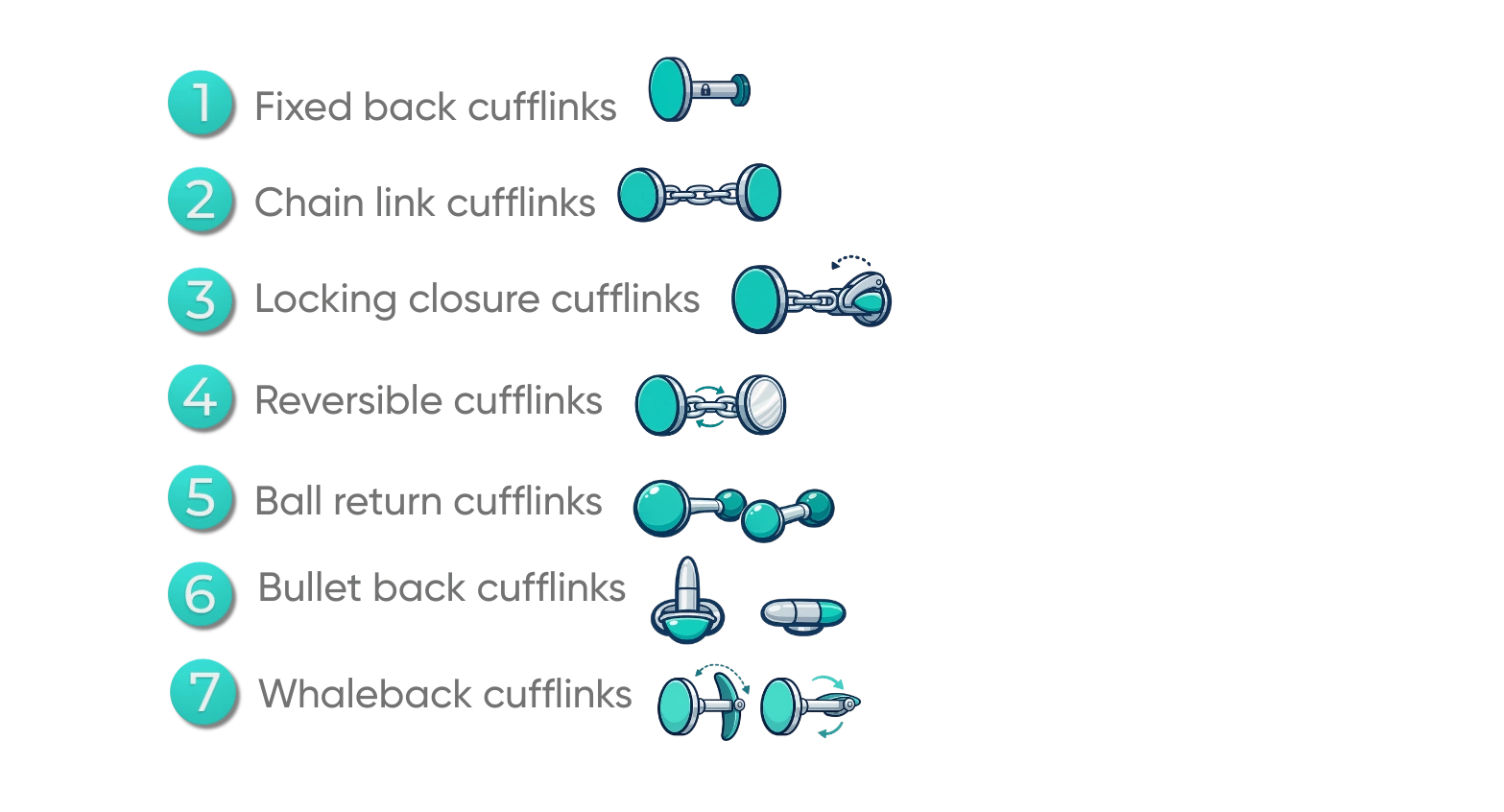
- Fixed back cufflinks feature a back that cannot be removed, unscrewed, rotated, etc.; instead, it stays in place because one side of the link is much larger than the other side, preventing movement.
- Chain link cufflinks feature a front and back connected by a chain that loops through the buttonhole.
- Locking closure cufflinks are hinged cufflinks that feature a watch-like mechanism that locks the link into place.
- Reversible cufflinks are exactly what they sound like: links that can be reversed so you get two styles from one pair.
- Ball return cufflinks have a type of fixed back that features balls on either side of the link, one smaller than the other.
- Bullet back cufflinks feature a bullet-shaped metal bar that can be rotated vertically when you pass the cufflinks through the hole, then rotated horizontally to keep the link in place.
- Whaleback cufflinks operate in much the same way as bullet back cufflinks, but the shape is slightly different.
What Cufflink Style Is Right for You?
When choosing a cufflink, typically you’d want to think about your broader outfit and then coordinate cufflinks with other accessories as well as the occasion.
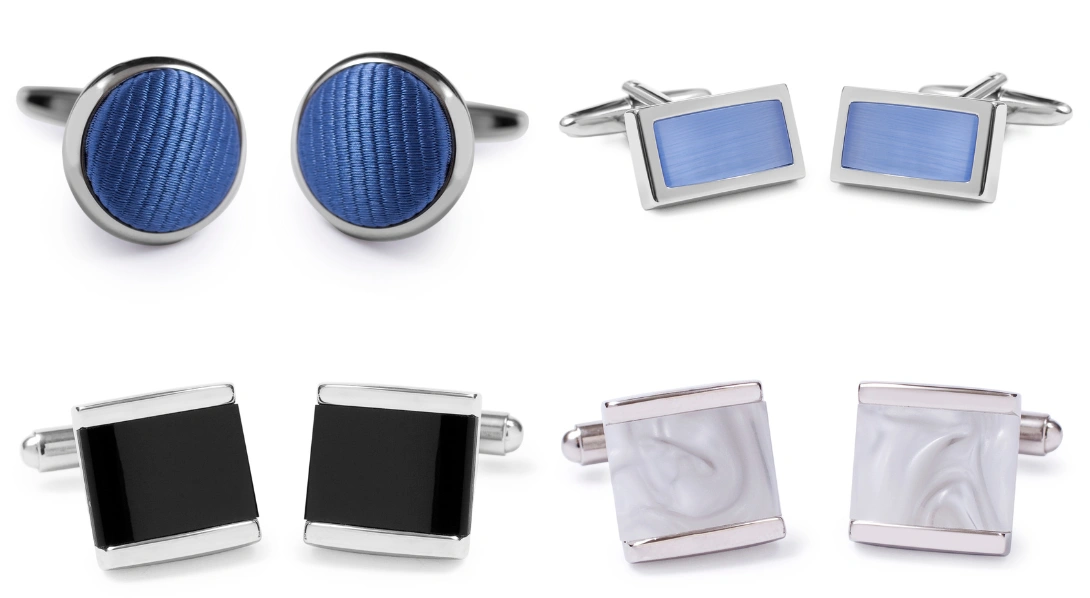
For example, if you usually wear gold or silver jewelry, such as with your wedding band, watch, or tie pin, you might want to pick cufflinks that utilize the same precious metal. Meanwhile, for formal occasions, you might want to avoid the more playful, unique cufflinks, like those made from reclaimed materials, depicting bold patterns, or featuring an uncommon shape.
If you’re just buying your first pair of cufflinks, you might consider purchasing a pair that’s easier for new wearers to put on, such as whaleback or bullet back styles. Additionally, you may want to purchase simple, staple, traditional cufflinks that can be worn in myriad situations, from the workplace to weddings, so you get the most use out of them possible as you begin building your collection.
How to Wear Cufflinks FAQs
What Do Cufflinks Consist of?
Most cufflinks include a decorative face, a connecting stem, and a back that holds the cufflink in place.
When Were Cufflinks Invented?
Cufflinks first became popular in the 1600s, particularly among nobility.
What Are Cufflinks Typically Made of?
Cufflinks typically are made of precious metals such as gold, stainless steel, silver, or platinum, but more unusual materials may also be used, such as glass, fabric, leather, or wood. Sometimes, novelty cufflinks are made from reclaimed materials, such as repurposed stadium seating or bourbon barrels.
Do You Have to Wear Cufflinks?
If you’re wearing a shirt with French cuffs, you will have to wear cufflinks in order for the cuffs to remain in place. But otherwise, no, it’s an optional accessory.
Can You Put Cufflinks in a Normal Shirt?
You can put cufflinks on any shirt that has the appropriate holes on the cuff, but even if your shirt already has sewn-in buttons, you can still use a cufflink adapter to create a temporary hole.
Protect Your Favorite Accessories with Comprehensive Jewelry Insurance
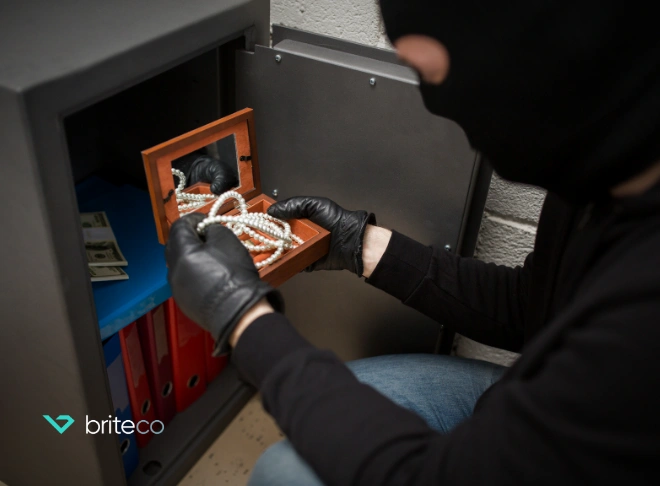
Cufflinks may seem like a very small part of your outfit, but they can be counted among some of the most valuable items in your home. Cufflinks from in-demand luxury designers can easily come with a price tag in the thousands for just one pair.
That’s why it’s important to protect precious jewelry and accessories in the event of theft, damage, or loss. When you opt for a specialized jewelry policy from BriteCo, you’ll enjoy complete coverage that will help you recover up to 125% of your jewelry’s value if it needs to be replaced. If it’s accidentally damaged and needs to be repaired, we’ll cover the full cost of working with your jeweler until your valuables are returned to you, good as new.
Get your free and easy jewelry insurance quote now!
Get a Quote:
The Easy Way to Insure Your Jewelry - and Save Money!
UP NEXT: When to Take Off Your Engagement Ring to Keep It Safe

Author