Learning how to address wedding invitations requires brushing up on wedding invitation etiquette and knowing how to best address your guests, both on the invitation’s outer and inner envelope. You’ll also need to be mindful of guests’ titles and familial relationships, especially if you have more conservative guests. It’s not just as easy as scribbling a name and address on the outer envelope and calling it a day.
“Etiquette can get a little tricky these days because everyone comes to it from a different place: how they were raised, what they believe, or simply what feels right to them,” says wedding planner Kelli Corn of Kelli Corn Weddings and Events in Bluffton, S.C. “There isn’t always one shared understanding of what’s appropriate anymore.”
We’re breaking down exactly how to address a wedding invitation, no matter who you’re sending it to, so your wedding invite makes the best first impression possible.
What You Will Learn
- How to Formally Address a Wedding Invitation: What You’ll Need to Get Started
- How to Address a Wedding Invite: Where to Put the Address
- How to Formally Address Wedding Invitations to a Couple
- How to Properly Address Wedding Invitations to Single Guests
- How to Address Wedding Invites to an Entire Family
- How to Address Wedding Invitations to Guests with Titles
- Formal Wedding Invitations FAQs
- Don’t Forget This Final Thing You’ll Need for Your Wedding
How to Formally Address a Wedding Invitation: What You’ll Need to Get Started
If you’re sending formal invitations, you’ll want to start by gathering key information about your entire guest list. Note each guest’s name with proper spelling, preferred title, correct mailing address, and relationships to other wedding guests in their household. This information is crucial to properly addressing each guest on the two envelopes included within your wedding invitation suite.
Then, you’ll need the actual wedding invitation suite itself, as well as several pens in the color and width of your choosing. A ruler can also come in handy, ensuring you keep your lines neat, tidy, and straight.
What’s in a Wedding Invitation Suite?
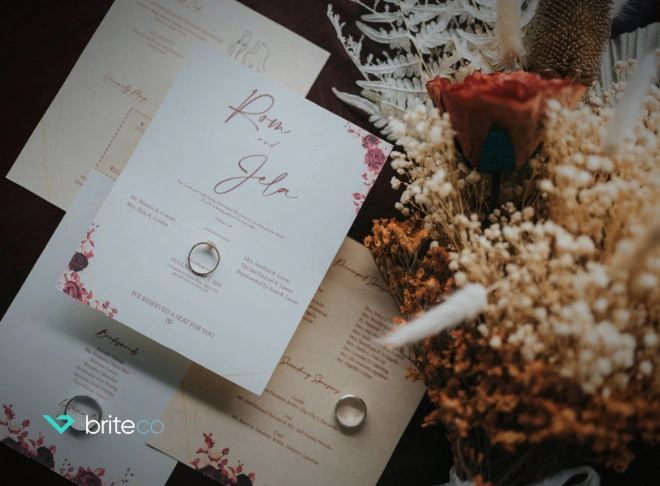
Formal wedding stationery typically includes:
- The invitation itself
- An RSVP card and envelope for the RSVP card (stamped and addressed to yourself)
- The outer envelope
- An inner envelope
You may also choose to include an invitation wrapper and additional cards with extra information about the wedding day. This may include reception details, accommodation options, directions to the venue, other wedding weekend events, and more.
A less formal invitation suite may include only a single envelope, rather than an additional inner envelope. If you include a QR code for RSVPing on a wedding website, even the single envelope might be unnecessary.
“Some of my couples only put the RSVP online,” Corn says. “They’re still including a card, but it just says to RSVP at the website.”
Whichever envelope format you choose is really up to personal preference.
How to Address a Wedding Invite: Where to Put the Address
Writing the mailing address on your wedding invitations will be the easiest, most straightforward part of the process, since you’ll follow the same rules for addressing any piece of mail. Write the house number and street name, as well as the city, state, and zip code, on separate lines in the middle of the envelope. The return address will go in the upper left-hand corner.

The outer envelope should be the only one to feature the actual mailing address. You’ll only include names on the inner envelope.
How to Formally Address Wedding Invitations to a Couple

When you address invitations to a couple — whether a married couple or an unmarried couple — you’ll want to put both individuals’ names on both the inner and outer envelopes.
If the couple shares the same last name, you can write ‘Mr. and Mrs. Last Name’ (or ‘Mrs. and Mrs.’ in the case of a same-sex couple) on the outer envelope, and then both individuals’ first names on the inner envelope.
If the couple has different last names, address both individuals by writing each guest’s first and last name on the outer wedding envelope. Put each name on its own line, with the individual you’re closest to on one line and the other individual on the second line.
On the inner envelope, you can write both individuals’ first names, on the same line, just as you might when sending an invitation to a married couple.
How to Properly Address Wedding Invitations to Single Guests

For single guests who have no significant other living with them, write their full name on the outer envelope, preceded by Ms., Mr., or their preferred title if they are a non-binary guest. E.g., Mr. John Smith.
On the inner envelope, drop the first name, keep the honorific, and include something along the lines of “and Guest.”
This lets them know they are free to bring the guest of their choice to the wedding without needing to send a separate invitation. However, you don’t necessarily have to let every single person bring a plus-one. If you’ve decided that you’d rather only allow certain guests to bring a plus-one, leave this information off the inner envelope, at your discretion. If you’re not using an inner envelope, you can include information about plus ones on your RSVP cards.
How to Address Wedding Invites to an Entire Family
If you’re addressing a wedding invite to a whole family, then you can either address the outer envelope with the parents’ names, just as you would go about addressing envelopes to married couples, or you can address the outer envelope to the entire family by just using the family name, like “The Smith Family.”
Then, on the inner envelope, you can include the first names of all family members, including the children, listed by age or alphabetical order, if you are unsure of the children’s ages.
If your wedding is child-free, address the wedding invitation to the parents only, using the married-couple invitation format. Traditionally, guests have understood that if children’s names aren’t on the invite, they’re not welcome.
“I’m finding that younger generations are not as familiar with the traditional etiquette around how these things are communicated,” Corn says. “You would never simply print ‘No children’ on a wedding invitation — that goes against all etiquette rules. This is where wedding websites have become such a helpful tool. On the FAQ page, we can address questions like, ‘Are children welcome at the wedding?’ and simply answer, ‘Please refer to the names listed on your invitation.’ It’s a gracious way to provide clarity without losing the etiquette and formality of the invitation itself.”
What if your wedding is child-free, but you want to invite adult children living at the same address as their parents? In these cases, proper etiquette rules dictate that adult children receive their own invitations, addressed in the single-guest format.

How to Address Wedding Invitations to Guests with Titles

If you’re sending a wedding invitation to a guest with a distinguished title, you’ll want to include that title on both the outer and inner envelopes, where you would normally write “Mr.” or similar courtesy titles. Distinguished titles include those for doctors, lawyers, military personnel, and any similar high-ranking title.
If you’re sending invitations to couples in which both individuals hold their own titles, such as married doctors, you’d recognize the two doctors by their own names and titles. Put the name of the person with the higher-ranking title first. If the titles are of equal status, list the individuals in alphabetical order.
When in doubt, Corn consults emilypost.com, which carries on the legacy of the late expert on proper behavior. “She is the guru of etiquette,” she says. “I have found that this site is the most accurate when it comes to checking the rules.”
Formal Wedding Invitations FAQs
Do you put middle names on wedding invitations?
No, there’s no need to write guests’ middle names on wedding invitations.
Do you need double envelopes for wedding invitations?
While double envelopes can certainly make a wedding invite feel more formal and luxurious, it’s not required. You can use just one envelope.
Do you have to follow formal wedding invitation etiquette?
No, if you’re hosting a fairly informal wedding like a backyard barbecue, it might feel like overkill to follow formal wedding invitation etiquette to the letter. Instead, you might simply write guests’ names on the envelope.
How do you address a wedding invite if you don’t know the relationship status of one of your guests?
Rather than pry, simply address the wedding invitation outer envelope to the primary guest and then add “and guest” on the inner envelope.
Do you use a guest’s maiden name or married name on the wedding invitation?
Always use the name that the guest actually goes by, whether that’s their maiden or married name.
Don’t Forget This Final Thing You’ll Need for Your Wedding
Now that you have a few simple guidelines to help you through the process of addressing your wedding invitations, you’re ready to get to writing and head off to the post office. Don’t forget the one final thing you’ll need ahead of your wedding date: wedding insurance!
If you need to cancel your wedding, you’ll need to do more than just inform each individual guest; you’ll have to deal with vendors and hope you get the refunds necessary to rebook your wedding at a later date.
Likewise, if your wedding goes awry, maybe a vendor no-shows or your venue backs out at the last minute, you want to ensure your big day can still go off without a hitch.
Wedding insurance helps in all these instances and more. Learn how you can get covered quickly, and get your wedding insurance quote now.
Related Articles:
Wedding Photo Booth Rental Guide
Wedding Late Night Snack Ideas
Bed and Breakfast Wedding Venues
How Much to Tip Wedding Vendors
Wedding Jewelry Trends for 2026
How to Choose a Wedding Venue
Affordable Wedding Insurance: More Coverage, Less Cost!

UP NEXT: What to Write in a Wedding Card: Templates & Examples

Author